
Vegetable vs Chrome Tanning: A Guide for Leather Bags
Vegetable vs Chrome Tanning: A Guide for Leather Bags
Two bags can use the same hide, the same thickness, and the same grade — and still behave completely differently for the next ten years. The difference is tanning, the chemical process that turns skin into leather.
Tanning is the step buyers hear about least and feel most. This guide compares vegetable tanning and chrome tanning from a bag manufacturer’s perspective: how each works, how each behaves, and which bags each method suits.
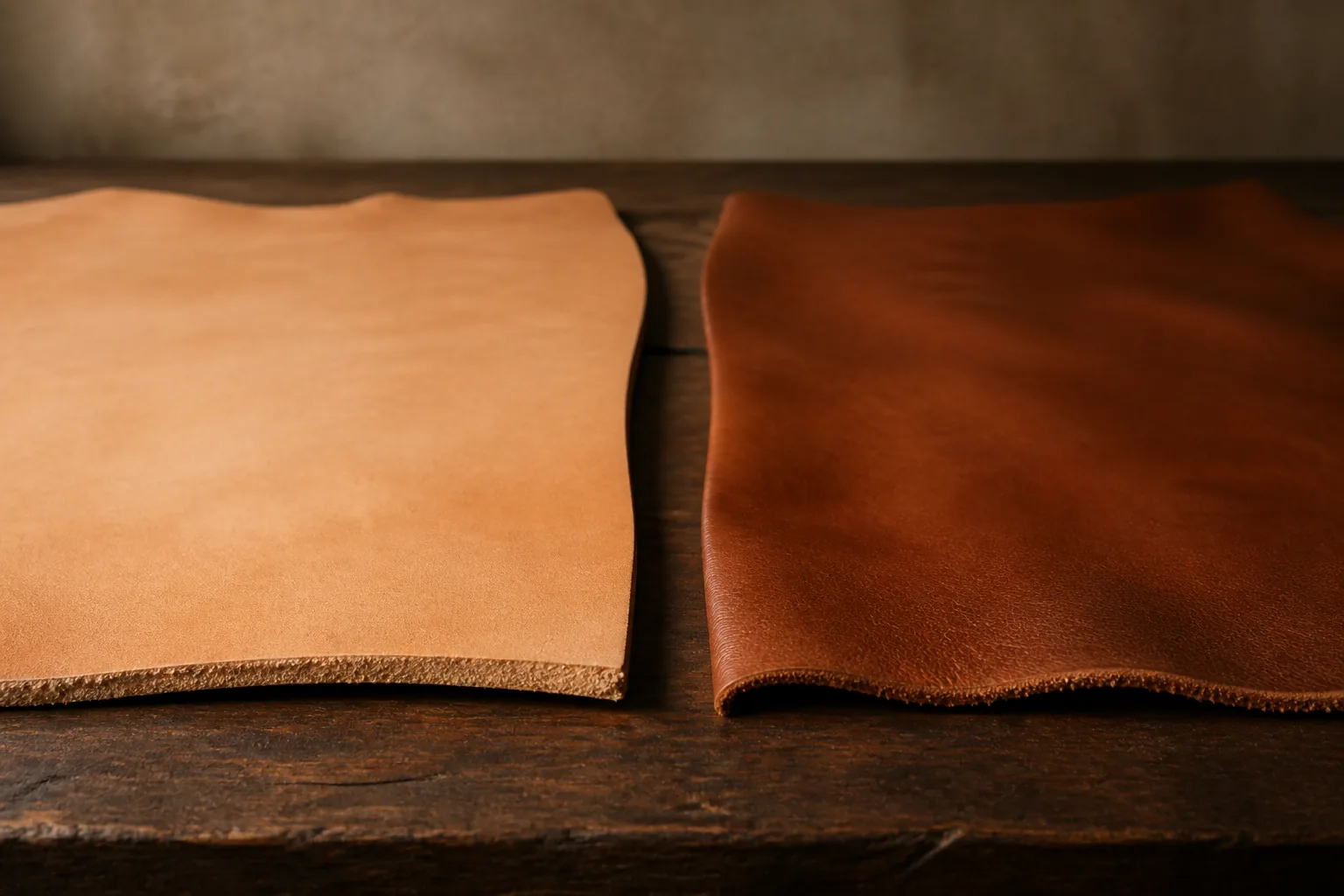
- What Tanning Actually Does
- Vegetable Tanning: The Slow Method
- Chrome Tanning: The Modern Standard
- The Head-to-Head Comparison
- How Tanning Affects Color and Finish
- Durability: Which Lasts Longer?
- Aging and Patina
- Manufacturing Differences on the Factory Floor
- Tanning and Different Hides
- Environmental and Health Questions Answered
- Care by Tanning Method
- Choosing for a Bag Line
- Frequently Asked Questions
- The Bottom Line
What Tanning Actually Does
Before comparing methods, it helps to know what tanning is solving. Every leather bag began as a raw hide that would have rotted within days.
From Raw Hide to Stable Leather
Tanning is a chemical treatment that changes skin protein so it resists decay, heat, and water permanently.
Raw hide is collagen: a protein structure that bacteria and moisture attack quickly. Tanning molecules bond with the collagen fibers and stabilize them. The hide keeps its fiber architecture but becomes inert, durable, and workable. Without tanning, there is no leather bag.
Why Untanned Hide Fails
An untanned hide stiffens as it dries, cracks when it flexes, and spoils when it gets wet.
That failure is not cosmetic. The protein bonds are still active, so moisture swells the fibers, heat denatures them, and bacteria digest them. Tanning locks those bonds open and stable, which is why leather can be rained on, flexed for years, and still hold its shape.
The Chemistry in Plain Terms
Tannins work by wedging themselves between collagen fibers and linking to them, preventing the fibers from sticking together when wet.
The result is a three-dimensional fiber network that stays supple and separated. Different chemistries achieve this differently: plant tannins link slowly over weeks, while mineral salts link quickly in days. Same goal, different route, and the route decides the leather’s personality.
Two Families of Chemistry
Almost all bag leather falls into one of two families.
- Vegetable tanning uses plant-derived tannins and takes weeks to months
- Chrome tanning uses chromium salts and takes hours to days
- Combination tanning uses both, in either order, for hybrid properties
- Alternative tans such as aldehyde and synthetic tannins fill niche roles
The two main families account for the overwhelming majority of bags sold worldwide, and understanding them explains most differences buyers notice.
Metal-Free and Alternative Tanning
A third family of tanning chemistry has grown quickly, driven by brands that want softer leather without chromium.
Aldehyde tanning uses organic compounds to stabilize collagen and produces white or pale leather that dyes brightly. Synthetic tanning agents, often called syntans, are frequently used alongside other methods to adjust feel and lightfastness. Metal-free tanning offers a genuine alternative for brands whose customers ask about chromium specifically.
These methods are not simply “better chrome tanning.” Each has its own performance profile, cost structure, and supply base, and tanneries usually run them alongside the two main families. For a bag brand, the practical question is whether the resulting leather meets the bag’s requirements, not whether the chemistry sounds modern.
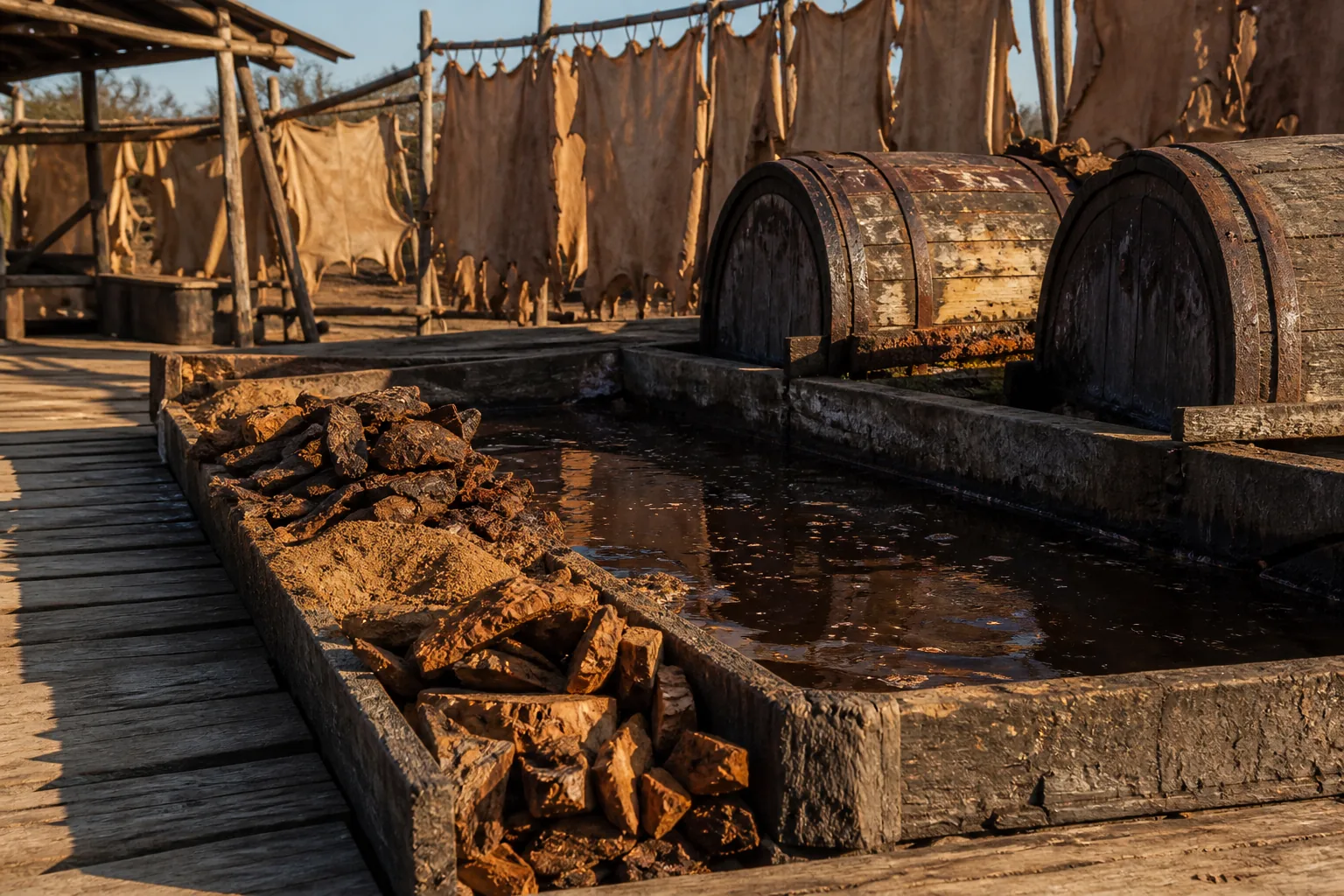
Vegetable Tanning: The Slow Method
Vegetable tanning is the older method, and it is the one that produces the leather most enthusiasts picture when they say “real leather.”
How Vegetable Tanning Works
Hides soak in progressively stronger baths of tannin solution, moving from weak to strong over weeks, so the tannins penetrate gradually and evenly.
The slow progression matters. Rapid tanning would tan the outer layers while leaving the core raw, producing leather that later rots from the inside. A properly vegetable-tanned hide is tanned all the way through, which is why the process cannot be rushed.
What the Tannins Come From
Vegetable tannins are extracted from plant material: bark, wood, leaves, and fruit pods.
Chestnut and quebracho are common sources for firm leather, mimosa gives a lighter color, and tara and sumac appear in specialty work. The tannin source influences color, firmness, and how the leather ages, which is why tanneries blend extracts to hit a target character.
Character of Vegetable-Tanned Leather
Vegetable-tanned leather is firm, dense, and matte, with a dry hand and a strong natural surface.
It smells earthy rather than chemical, holds tooling and stamping crisply, and takes a burnished edge beautifully. Its natural color is a warm tan that darkens dramatically over time. Nothing about it feels plastic or uniform.
Why It Takes Weeks or Months
The pace of vegetable tanning is set by diffusion: tannins must travel through the hide’s full thickness, one layer at a time.
Typical cycles run from several weeks to several months depending on hide thickness and desired tannin content. That long cycle ties up drums, space, and working capital, and it is the main reason vegetable-tanned leather costs more and has longer lead times.
Best Uses in Bags
Vegetable-tanned leather belongs where firmness, structure, and patina are the point.
- Structured totes and briefcases that must hold shape
- Heritage and craft-positioned bags
- Handles, straps, and trims that will acquire patina
- Bags intended to look better every year
- Products where tooling or embossing is a feature
Chrome Tanning: The Modern Standard
Chrome tanning is the method behind the vast majority of leather goods, and it earned that position by solving real problems.
How Chrome Tanning Works
Chrome tanning uses chromium salts that penetrate quickly and bond to collagen in hours, stabilizing the hide in days.
The chemistry is efficient: it works across a wide range of hide thicknesses, tolerates high heat, and produces consistently soft results. Tanneries can then dye, retan, and finish the leather into an enormous range of colors and temperaments.
Why It Dominates the Industry
Chrome tanning dominates because it is fast, versatile, and comparatively inexpensive at scale.
Where vegetable tanning takes weeks, chrome tanning takes days. That speed enables the volume, color variety, and soft-touch feel the market expects. It also makes soft leathers possible: most pliable sheepskin and goatskin bags could not be produced at scale without it.
Character of Chrome-Tanned Leather
Chrome-tanned leather is soft, uniform, and highly dyeable, with a smoother surface and a cooler hand.
It accepts bright and deep colors evenly, resists heat well, and drapes easily, which suits slouchy designs. Its trade-off is character: it changes little with age, and its surface can feel more processed than grown.
The Environmental Conversation
Chrome tanning carries legitimate environmental questions, and the industry has moved substantially on them.
Modern tanneries treat and recirculate process liquors, recover chromium, and operate under discharge regulations that did not exist decades ago. The gap between a compliant modern tannery and an unregulated one is enormous. Buyers should ask about tannery certification rather than assuming all chrome tanning is equivalent.
Best Uses in Bags
Chrome tanning suits the soft, colorful, and high-volume parts of the market.
- Slouchy handbags and shoulder bags
- Fashion bags in a wide color range
- Soft backpacks and lightweight totes
- Sheepskin and goatskin bags that need pliability
- High-volume lines requiring consistent color
The Head-to-Head Comparison
The table below is the summary we use when a brand asks which tanning method to specify.
| Property | Vegetable-tanned | Chrome-tanned |
|---|---|---|
| Process time | Weeks to months | Hours to days |
| Feel | Firm, dry, dense | Soft, supple, smooth |
| Color range | Limited, earthy | Very wide, uniform |
| Patina | Strong, dramatic | Minimal |
| Heat resistance | Moderate | High |
| Water resistance | Lower without treatment | Higher |
| Dye consistency | Variable shading | Highly consistent |
| Cost | Higher | Lower |
| Environmental profile | Plant-based, slow, water-heavy | Regulated chemistry, effluent-managed |
| Typical bag use | Heritage, structured | Fashion, soft, volume |
Reading the Comparison
The rows cluster into two stories: vegetable tanning wins on character and loses on consistency and cost.
Chrome tanning wins on consistency, softness, and price, and loses on patina and character. There is no row where one method wins everything, which is exactly why both still exist after more than a century of competition.
Where the Difference Shows in a Bag
In a finished bag, the tanning method shows up in four visible places.
The surface tells you how the leather will age. The edge tells you how it will finish. The flex point tells you how it will crease. The smell tells you which chemistry is inside. A trained eye can often identify the method before reading any label.
Misconceptions About Natural and Chemical
“Natural” and “chemical” are not opposites in tanning, and both labels oversimplify reality.
Vegetable tannins are plant-derived but still industrially processed, and chrome tanning is a controlled mineral chemistry with well-understood properties. What matters practically is the tannery’s standards, the leather’s performance, and honesty about which method was used.
Manufacturer’s point: When a brand insists on “natural tanning” as a marketing claim, we ask what the bag must actually do. If it must be soft, colorful, and affordable, chrome tanning serves the customer better. Choosing the right method for the job beats choosing the fashionable word for the label.
How Tanning Affects Color and Finish
Color behavior is one of the most practical differences between the two methods.
Color Range by Method
Chrome-tanned leather accepts a much wider and more uniform color range than vegetable-tanned leather.
Bright reds, deep blacks, saturated blues, and exact brand colors are routine in chrome tanning. Vegetable-tanned leather tends toward tans, browns, russets, and olives, and its colors shift with time. A brand needing a precise seasonal palette usually needs chrome tanning.
Dye and Finish Interaction
Finishes behave differently on each substrate, which changes what a factory can promise.
Chrome-tanned surfaces take coatings, prints, and embossing evenly, enabling uniform fashion finishes. Vegetable-tanned surfaces resist uniformity, so finishes look more artisanal and show more variation across a production run. Both are legitimate; they simply serve different merchandising plans.
Why Vegetable-Tanned Colors Shift
Vegetable-tanned leather darkens because residual tannins and oils continue to oxidize and migrate with light and handling.
That movement is the source of its famous patina and also the reason a production run can show visible shade variation. Brands must either embrace the variation as a feature or specify combination tanning to stabilize color.
Lightfastness and Color Fading
How a leather holds color under sunlight matters for retail displays and daily carry alike.
Chrome-tanned leathers with quality dyes and finishes generally hold their color well, though very bright shades can shift over years of direct sun. Vegetable-tanned leather is expected to change color, so fading is reframed as aging rather than damage. For any leather, prolonged direct sunlight accelerates change, which is why storage guidance matters as much as cleaning guidance.
Why Dye Penetration Varies
Some leathers are dyed through the full thickness, while others carry color mainly at the surface.
Through-dyed leather shows consistent color at the cut edge and tolerates scratches better, because damage does not reveal a pale core. Surface-dyed leather offers brighter, more uniform color at lower cost but is less forgiving in use. For bags that will be scratched, through-dyed leathers are the safer specification.
Durability: Which Lasts Longer?
Durability questions deserve precise answers, because each method wins different tests.
Resistance to Water and Heat
Chrome-tanned leather generally handles water and heat better out of the tannery.
Its chemistry is more stable against moisture cycling and higher temperatures, which is why it dominates automotive and footwear applications. Vegetable-tanned leather absorbs water more readily and can stiffen when it dries, though it recovers with conditioning.
Abrasion and Flexing
Both methods resist abrasion well; they differ mainly in how they store flex damage.
Vegetable-tanned leather is denser and firmer, so it resists surface abrasion strongly but can crack at a hard repeated fold. Chrome-tanned leather is more pliable, so it flexes without cracking but can stretch and sag under sustained load. The best choice depends on whether the bag folds or carries.
How Each Method Fails
Understanding the failure mode prevents nasty surprises.
- Vegetable-tanned: water staining, stiffening after soaking, cracking at hard folds
- Chrome-tanned: stretching at stress points, surface finish wear, sagging over time
- Both: stitching failure if the hide grade was too weak for the load
Failure modes are predictable, and a manufacturer who knows them can design around them.
Repairability Comparison
Vegetable-tanned leather is generally more repairable, and chrome-tanned leather is more replaceable.
A vegetable-tanned bag can be reconditioned, re-colored, and burnished back into service, often by hand. Chrome-tanned surfaces can also be restored, but heavily finished surfaces sometimes cannot be repaired invisibly. Either way, leather beats synthetic on repairability.
Aging and Patina
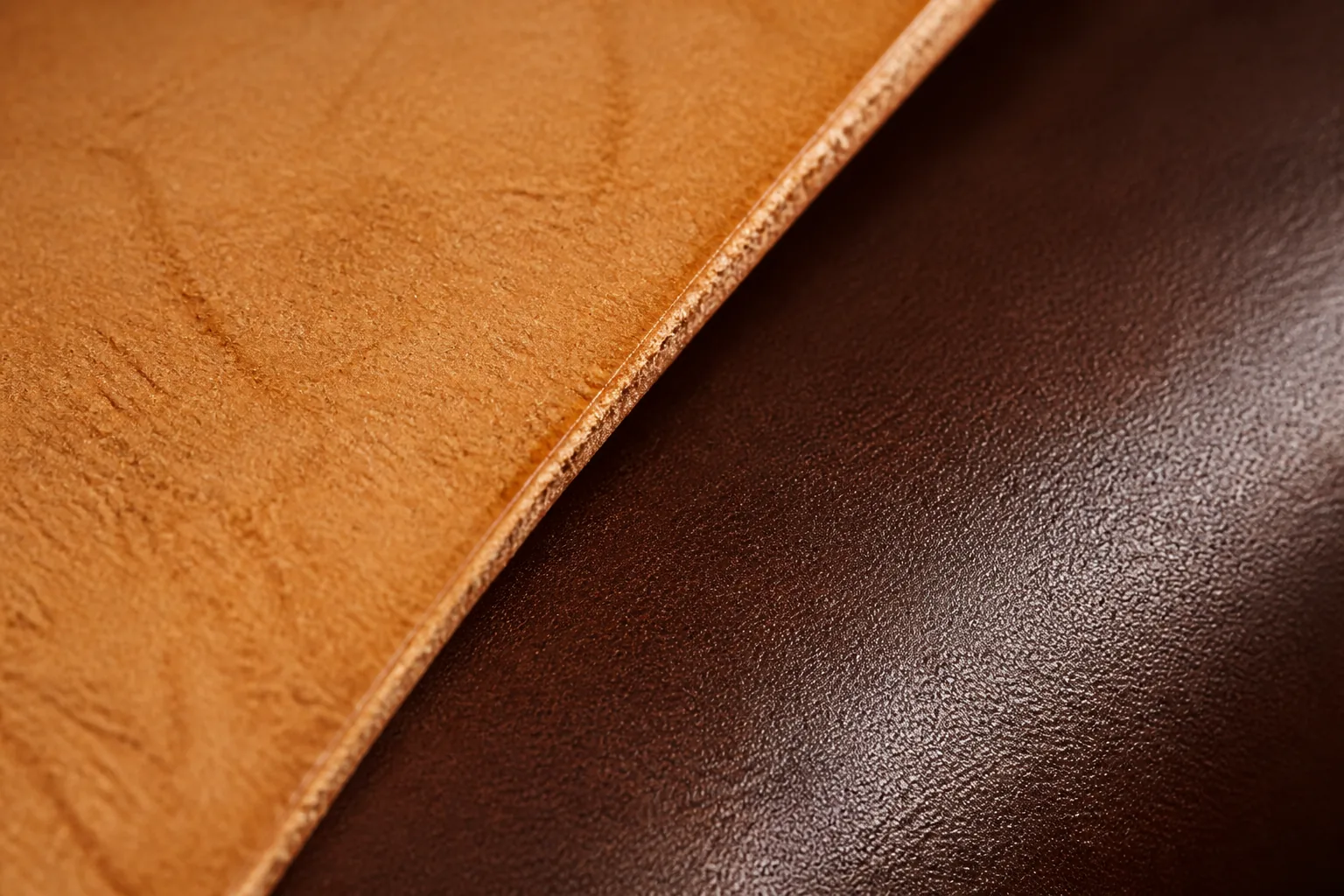
Aging is where the two methods diverge most visibly, and it is often the deciding factor for buyers.
The Vegetable-Tan Patina
Vegetable-tanned leather develops a deep, uneven patina: amber to russet to dark brown, with highlights where the bag is handled most.
This progression happens over months and years, and it is genuinely permanent. Two identical bags carried by two different people will look distinctly different within a year. For many buyers, that individuality is the entire reason to pay more.
Chrome-Tanned Aging
Chrome-tanned leather ages subtly: colors lighten or deepen slightly, creases soften, and the surface burnishes where handled.
It does not transform. A chrome-tanned bag at year five looks like a well-kept version of itself at year one. For buyers who want consistency and predictable appearance, that is exactly the right behavior.
What Buyers Should Expect
Setting expectations prevents disappointment, and honest guidance here builds long-term trust.
Buyers who want a bag that changes with them should choose vegetable-tanned. Buyers who want a bag that looks the same in five years should choose chrome-tanned. Neither expectation is unreasonable, and a good product page should state clearly which experience the customer is buying.
Manufacturing Differences on the Factory Floor
On the production line, tanning method changes tooling, timing, and error tolerance.
Cutting and Firmness
Vegetable-tanned hides cut cleanly and hold their shape on the table, which makes panel nesting predictable.
Chrome-tanned hides are more flexible and can stretch slightly during handling, so cutting requires more care and slightly different templates. Firm leather forgives a slow operator; soft leather rewards an experienced one.
Stitching, Skiving and Edge Work
Edge finishing is where the methods separate most on the line.
Vegetable-tanned edges can be sanded, burnished, and waxed to a glass-smooth finish that lasts. Chrome-tanned edges are usually painted, folded, or taped, because burnishing works best with the denser fiber structure. Both approaches produce good results, but they require different equipment and skills.
Molding and Shape Retention
Vegetable-tanned leather molds and holds shape with heat and moisture, which enables wet-forming and crisp structure.
Chrome-tanned leather drapes and recovers, which suits soft constructions but limits sharp molding. A factory asked to produce a sculpted bag will often specify vegetable-tanned or combination-tanned leather for exactly this reason.
Hardware and Linings Interaction
Hardware and linings must be matched to the leather’s firmness, not chosen independently.
A heavy rivet set into soft chrome-tanned leather needs a reinforcement layer, while the same rivet in firm vegetable-tanned leather needs less. Linings follow the same logic: firm leather tolerates structured linings, soft leather needs lighter ones so the bag does not become heavy and shapeless.
Cost and Lead Time by Method
Cost differences come from process time, yield, and labor, in roughly that order of magnitude.
| Cost factor | Vegetable-tanned | Chrome-tanned |
|---|---|---|
| Process time | Weeks to months | Days |
| Tannery capacity use | High | Low |
| Material price | Higher | Lower |
| Color matching effort | Higher | Lower |
| Edge finishing labor | Higher (burnishing) | Moderate (painting) |
| Minimum order flexibility | Lower | Higher |
Sampling and Approval Rounds
Because tanning chemistry drives so much of the finished look, sampling rounds matter more here than almost anywhere else in production.
We build first samples from the specified tannery lot, then compare them against the brand’s reference under both daylight and retail lighting. Color, hand, and edge behavior are checked panel by panel. Most disagreements between brands and factories trace back to a tanning detail that was never written down, which is why the approved sample becomes the contract.
Tanning and Different Hides
Tanning method and hide species interact, and the pairing changes what a leather can become.
Cowhide
Cowhide takes both methods well, and it is the most common hide in each.
Vegetable-tanned cowhide is the classic firm leather for belts, straps, and structured bags. Chrome-tanned cowhide dominates soft handbags, upholstery-style leathers, and volume production. If a bag design is unusual, cowhide in one of the two methods will usually solve it.
Sheepskin and Goatskin
Sheepskin and goatskin are overwhelmingly chrome-tanned, because their value is softness and drape.
Vegetable-tanned versions exist but are rare, because the slow process and firm result fight the hide’s natural character. When a brand wants a soft, colorful goat or sheep leather bag, chrome tanning is the practical answer, and there is no shame in it.
Specialty Combinations
Combination tanning — using both chemistries in sequence — produces hybrids that solve specific problems.
A chrome-tanned hide retanned with vegetable tannins gains some patina behavior while keeping softness. A vegetable-tanned hide finished with a light chrome retan gains water resistance. These hybrids are common in premium bags and are rarely disclosed, because “combination tanned” is not a marketing phrase.
Environmental and Health Questions Answered
Environmental questions deserve factual answers rather than slogans in either direction.
What the Regulated Chemistry Story Is
Modern chrome tanning operates under effluent and worker-safety regulations in most producing regions.
Compliant tanneries treat wastewater, recover chromium, and monitor air quality. The practical question for a buyer is not “chrome or no chrome” but “which tannery, under which certification.” Leather from a certified modern tannery is a different product from leather produced without controls.
What Vegetable Tanning Does and Does Not Promise
Vegetable tanning is plant-based, but it is not automatically low-impact.
It uses large volumes of water and long processing times, and its tannin extracts are themselves industrially produced. Its real advantages are biodegradability characteristics, worker-safety profile, and the absence of chromium. Those are meaningful, but they are not the same as zero impact.
How to Ask Suppliers the Right Questions
Four questions separate serious suppliers from marketing stories.
- Which tannery produced the leather, and is it certified?
- Which tanning method, or combination, was used?
- Can you provide the leather specification sheet?
- What is the intended care and lifespan for this leather?
A supplier who answers all four is a supplier worth keeping.
Care by Tanning Method
Care routines should follow the tanning method, because the two leathers respond differently to moisture and products.
Caring for Vegetable-Tanned Leather
Vegetable-tanned leather wants conditioning, protection, and patience with color change.
Condition it lightly two or three times a year, protect it from heavy rain, and let any water dry naturally away from heat. Do not fight the darkening: it is the point. Avoid silicone-heavy products that seal the surface and block the patina.
Caring for Chrome-Tanned Leather
Chrome-tanned leather wants gentle cleaning and moderate conditioning.
Wipe it with a soft damp cloth, condition sparingly, and avoid harsh solvents that attack the finish. Because chrome-tanned surfaces are often finished, aggressive cleaning can dull or strip them. When in doubt, do less.
The Care Comparison Table
| Care task | Vegetable-tanned | Chrome-tanned |
|---|---|---|
| Conditioning frequency | 2–3× per year | 1–2× per year |
| Water exposure | Avoid; dry naturally | Tolerates brief exposure |
| Color change | Expected and desirable | Minimal |
| Cleaning products | Natural waxes and oils | Mild leather cleaners |
| Burnishing | Effective for edges | Limited benefit |
| Best storage | Dry, dust bag, stuffed | Dry, dust bag, stuffed |
Choosing for a Bag Line
For a brand, the tanning decision is a merchandising decision as much as a technical one.
For Structured Bags
Structured bags favor vegetable-tanned or combination-tanned leather for firmness and edge quality.
Firm leather holds the architecture that defines a structured bag, and its burnished edges support a premium look. Brands selling craftsmanship and longevity find this pairing easiest to market honestly.
For Soft and Slouchy Bags
Soft and slouchy bags favor chrome-tanned leather for drape, color range, and consistency.
A slouchy bag in vegetable-tanned leather can feel stiff and fight its own design. Chrome-tanned leather flows the way these designs require, and its color consistency supports multi-color assortments.
For Family and Diaper Bags
Family bags favor chrome-tanned leather for water and stain resistance, with careful specification.
Daily wipes, spills, and repeated handling reward the more moisture-tolerant leather, and its finish options clean more easily. In this segment, practical performance outweighs patina romance, and buyers notice the difference quickly.
For Heritage and Patina Brands
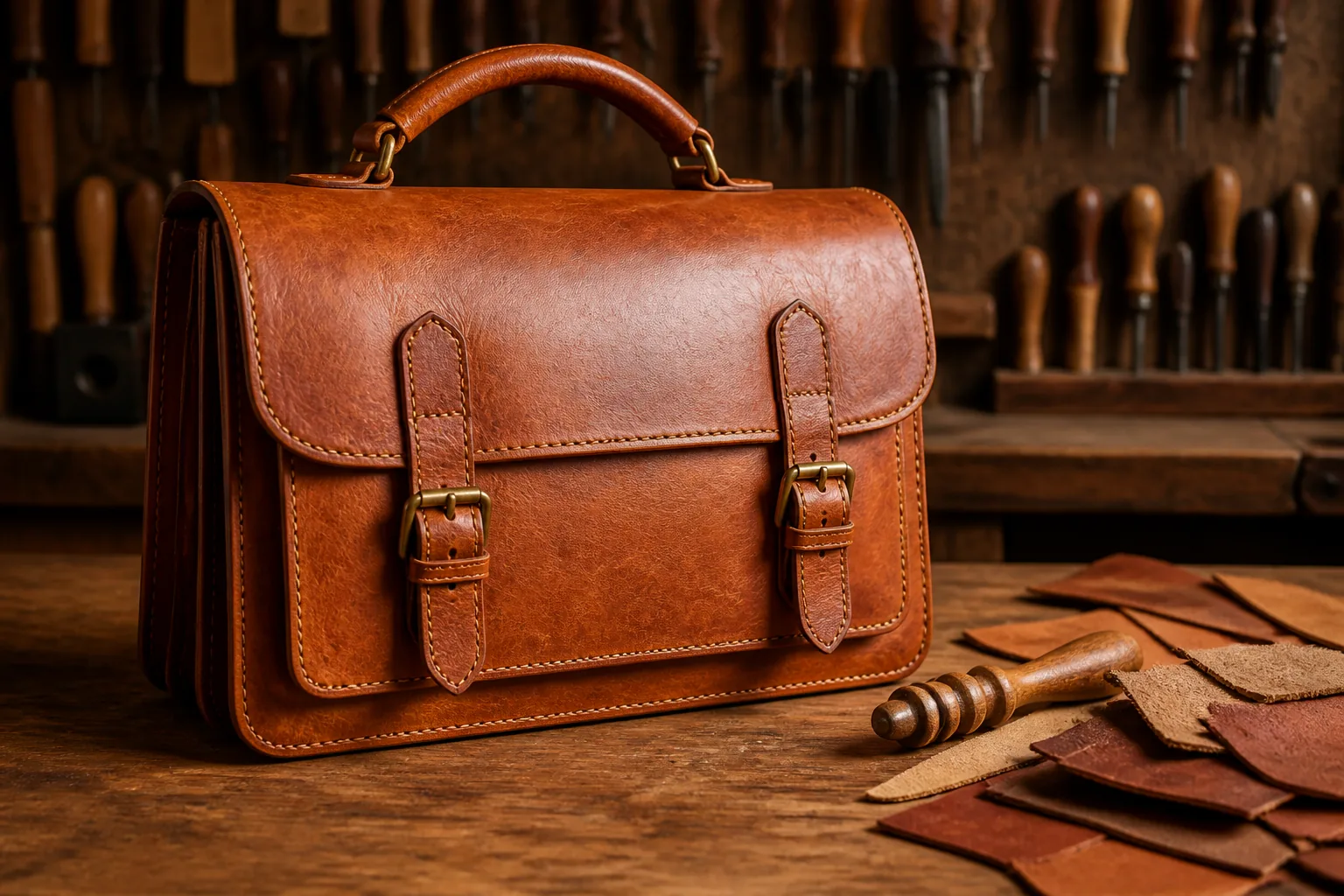
Heritage and patina brands are the natural home of vegetable-tanned leather.
Its aging story is a genuine product feature that cannot be copied by a competitor using finished leather. Brands built on craft narratives should specify it deliberately and explain the care it requires.
Writing Tanning Into the Specification
A purchase order that says only “brown leather” leaves the most important variable to chance.
Our specifications name the tannery, the tanning method, the hide grade, the thickness range, the color reference, and the acceptable batch tolerance. When a brand wants the patina story, the method is stated explicitly as vegetable-tanned so no substitution happens quietly. Written specifications protect both sides: the brand gets the product it marketed, and the factory gets a clear target to hit.
Frequently Asked Questions
What is the difference between vegetable-tanned and chrome-tanned leather?
Vegetable tanning uses plant-derived tannins and takes weeks to months, producing firm leather with earthy colors and strong patina. Chrome tanning uses chromium salts and takes days, producing soft, uniform, highly dyeable leather with high heat and water resistance. The method decides feel, color range, aging and cost.
Which tanning method is better for bags?
Neither is universally better. Vegetable-tanned leather suits structured and heritage bags where firmness and patina matter. Chrome-tanned leather suits soft, colorful and high-volume bags where drape, consistency and moisture resistance matter. Choose by what the bag must do.
Is vegetable-tanned leather stronger than chrome-tanned leather?
Vegetable-tanned leather is denser and firmer, so it resists surface abrasion strongly and holds shape well. Chrome-tanned leather is more pliable and resists cracking at flex points. Each is strong in a different way, which is why the right answer depends on the bag’s construction.
Does chrome-tanned leather last as long as vegetable-tanned leather?
Both can last for decades with good care and quality hide. Chrome-tanned leather resists water and heat better out of the tannery, while vegetable-tanned leather is more repairable and reconditionable. Lifespan depends more on hide grade and thickness than on tanning method alone.
Why is vegetable-tanned leather more expensive?
It takes weeks to months of processing, which ties up tannery capacity, capital and time. Yields and color consistency are also harder to control. Those process realities, rather than raw material rarity alone, drive the higher price.
Is chrome tanning bad for the environment?
All leather tanning has environmental impact. Modern regulated chrome tanneries treat effluent, recover chromium and operate under discharge limits, while unregulated operations do not. The meaningful distinction is tannery certification and compliance, not the chemistry family alone.
Can vegetable-tanned leather get wet?
It can get wet but tolerates it less well than chrome-tanned leather. Water can cause temporary stiffening and staining, especially before the leather is broken in. Let it dry naturally away from direct heat, then condition it lightly.
How can I tell if leather is vegetable-tanned?
Vegetable-tanned leather is firm and matte, smells earthy rather than chemical, shows natural color variation, and darkens noticeably with light and handling. Its cut edge is usually tan throughout rather than dyed. Chrome-tanned leather is softer, more uniform in color and often has a cooler feel.
Which tanning method is best for a diaper bag?
Chrome-tanned leather is usually the practical choice because it resists water and stains better and offers finishes that clean easily. If you prefer vegetable-tanned leather for its look, expect to protect it more carefully and accept color change over time.
What is combination tanning?
Combination tanning uses both vegetable and chrome chemistry in sequence. The result is a hybrid: for example, chrome-tanned leather retanned with vegetable tannins keeps its softness while gaining some patina behavior. It is common in premium bags but rarely mentioned on labels.
Does tanning method affect how leather creases?
Yes. Vegetable-tanned leather creases sharply and holds the line, which suits structured shapes. Chrome-tanned leather creases softly and recovers, which suits slouchy designs. Creasing behavior is one of the clearest ways to identify a tanning method in a finished bag.
The Bottom Line
Vegetable tanning and chrome tanning are two answers to the same problem, and each answer is exactly right for different bags.
Vegetable tanning delivers firmness, earth tones, repairability, and a patina that makes a bag personal. Chrome tanning delivers softness, color freedom, moisture tolerance, and consistency at scale. Neither is a compromise when it is specified for the right purpose.
As a manufacturer, our recommendation is simple: decide what the bag must do for its owner first, and let that decision choose the chemistry. The label should follow the function — never the other way around.
