
How to Choose the Right Leather for Your Bag Type: A Manufacturer’s Guide to Diaper Bags, Backpacks, Totes and More
How to Choose the Right Leather for Your Bag Type: A Manufacturer’s Guide to Diaper Bags, Backpacks, Totes and More
The most common question we receive at our factory is also the simplest: “What leather should I use?” The honest answer is always the same: it depends on the bag. A diaper bag that will be stuffed, wiped down, and thrown into stroller baskets needs a completely different leather than an evening clutch that lives in a closet. A commuter backpack needs structure and water resistance; a slouchy crossbody needs softness and light weight. There is no universal “best leather” — there is only the right leather for the bag’s job, and choosing it correctly is the difference between a product that delights customers for years and one that disappoints them within months.
Over our years of manufacturing, we have developed a repeatable way of thinking about this decision. Every bag type asks its leather a specific set of questions — about durability, weight, structure, water resistance, and care — and the leather that answers them correctly is the leather that bag should be made from. This guide walks through the major bag types one by one, from the perspective of the factory that builds them, and gives you the specific leather recommendations we use on real production orders.
- The Five Questions Every Bag Type Asks of Its Leather
- Diaper Bags: The Toughest Job in the Bag World
- Backpacks: Structure, Weight and Everyday Abuse
- Totes: The Shape-Shifting All-Rounder
- Crossbody and Shoulder Bags: The Daily Companion
- Wallets and Small Goods: The Patina Champions
- Beyond the Core Five: Clutches, Travel Bags and Work Bags
- The Bag Type Decision Matrix
- From the Factory Floor: How We Brief Leather for Each Bag
- Budget vs. Premium: Leather Choice by Price Tier
- When to Break the Rules
- How We Test a Leather Before Approving It for a Bag Type
- The Customer’s Perspective: What Buyers of Each Bag Type Value Most
- Frequently Asked Questions
- Final Word from the Factory
The Five Questions Every Bag Type Asks of Its Leather
Before we look at individual bag types, it helps to understand the framework we use for every material decision. Every bag type can be described by five questions, and the answers determine the leather specification:
1. How hard will this bag be used? Daily abuse, weekend elegance, or occasional occasion? Usage intensity sets the floor for durability — and the ceiling for how delicate the leather can be.
2. How much weight will it carry — and how is that weight distributed? A laptop backpack stresses the back panel and straps; a diaper bag stresses the base and handles. Weight determines the required thickness and reinforcement.
3. Must the bag hold its shape, or should it drape? Structure demands firmer leather and often vegetable tanning; softness demands supple leather and chrome tanning. The silhouette is a specification, not an accident.
4. What environment will it face? Rain, spills, sun, and cold affect the choice between water-resistant chrome tanning and delicate finishes. The environment sets the finish requirements.
5. How much care will the customer realistically provide? A bag that demands monthly conditioning is a poor match for a mass-market customer. Care requirements must fit the buyer, not just the product.
Keep these five questions in mind as we walk through each bag type. The answers are where every leather decision comes from — and they are the reason no single leather wins every category.
Diaper Bags: The Toughest Job in the Bag World
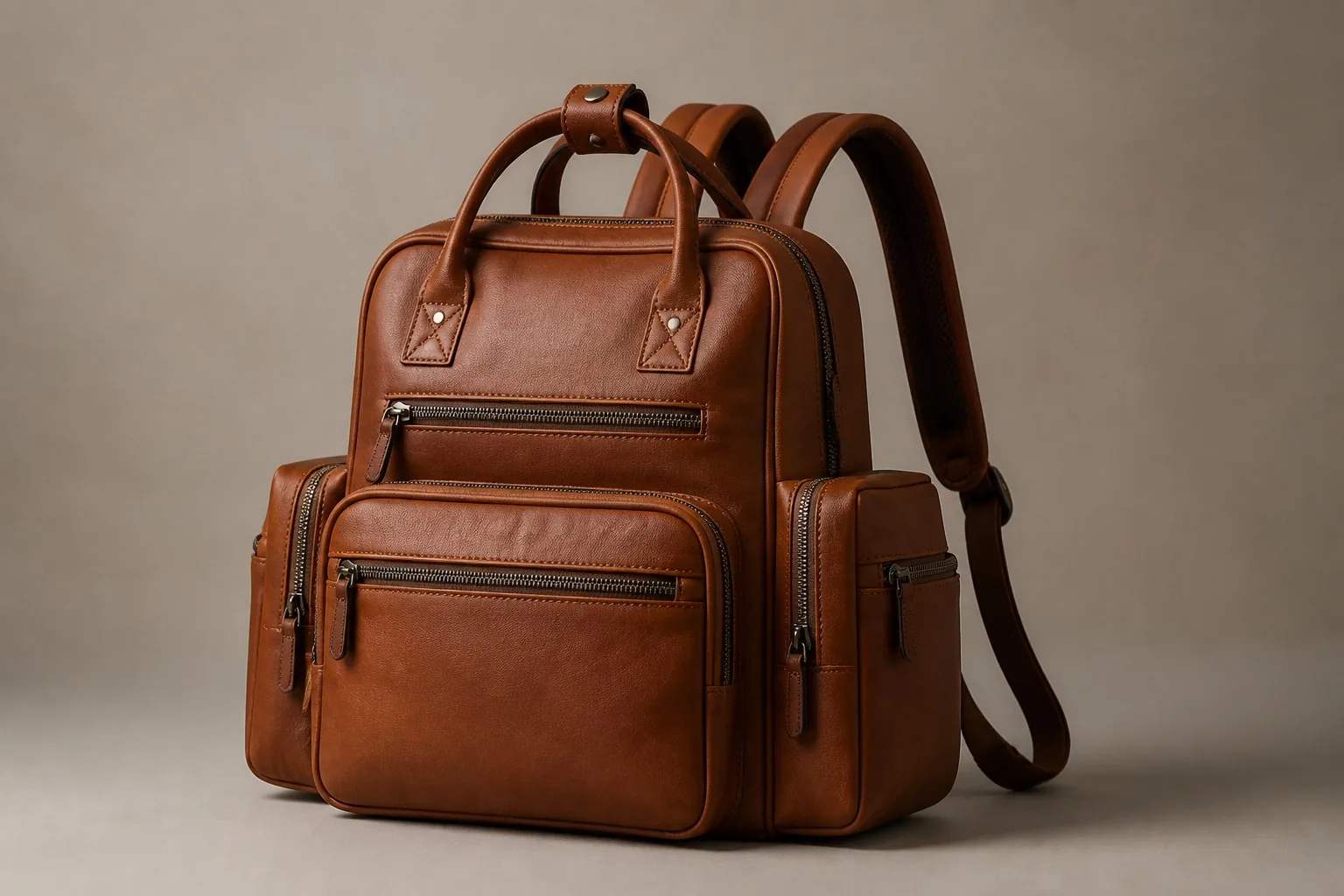
If we had to pick the bag type that asks the most of its leather, it is the diaper bag. No other bag is carried daily, overstuffed, wiped down with wet wipes, exposed to spills and weather, thrown into stroller baskets and car trunks, and expected to survive three years of parenting chaos.
What the diaper bag demands. The five questions answer themselves quickly. Usage intensity is extreme — this bag is used every day, often multiple times a day. Weight is heavy and unevenly distributed: bottles, wipes, changes of clothes, and a dozen other essentials. Structure matters because a collapsed diaper bag becomes an unreachable black hole. The environment is hostile: spills, rain, sun, and the back of a car. And the customer’s available care time is approximately zero — new parents have no patience for leather maintenance.
The specification that works. The leather we recommend for diaper bags is water-resistant chrome-tanned cowhide at 4–5 oz, with reinforced stress points at the straps, base, and corners. Chrome tanning gives the water resistance and easy cleaning the environment demands. Cowhide provides the durability and structure. Four to five ounces balances firmness — so the bag holds its shape — with a weight that is still comfortable to carry. And reinforcement is non-negotiable: the straps, base, and stress points carry the real loads, and a quality bag is engineered there.
The honest alternatives. For budget lines, high-quality microfiber PU is a legitimate choice for diaper bags — it is water-resistant, wipe-clean, and affordable — though it will not age as gracefully as leather. For premium lines, full-grain chrome-tanned cowhide adds character and longevity. What we advise against entirely is sheepskin (too delicate), vegetable-tanned leather without protective finishing (too water-sensitive), and any leather without reinforced stress points (the bag will fail exactly where the customer is holding it).
Backpacks: Structure, Weight and Everyday Abuse
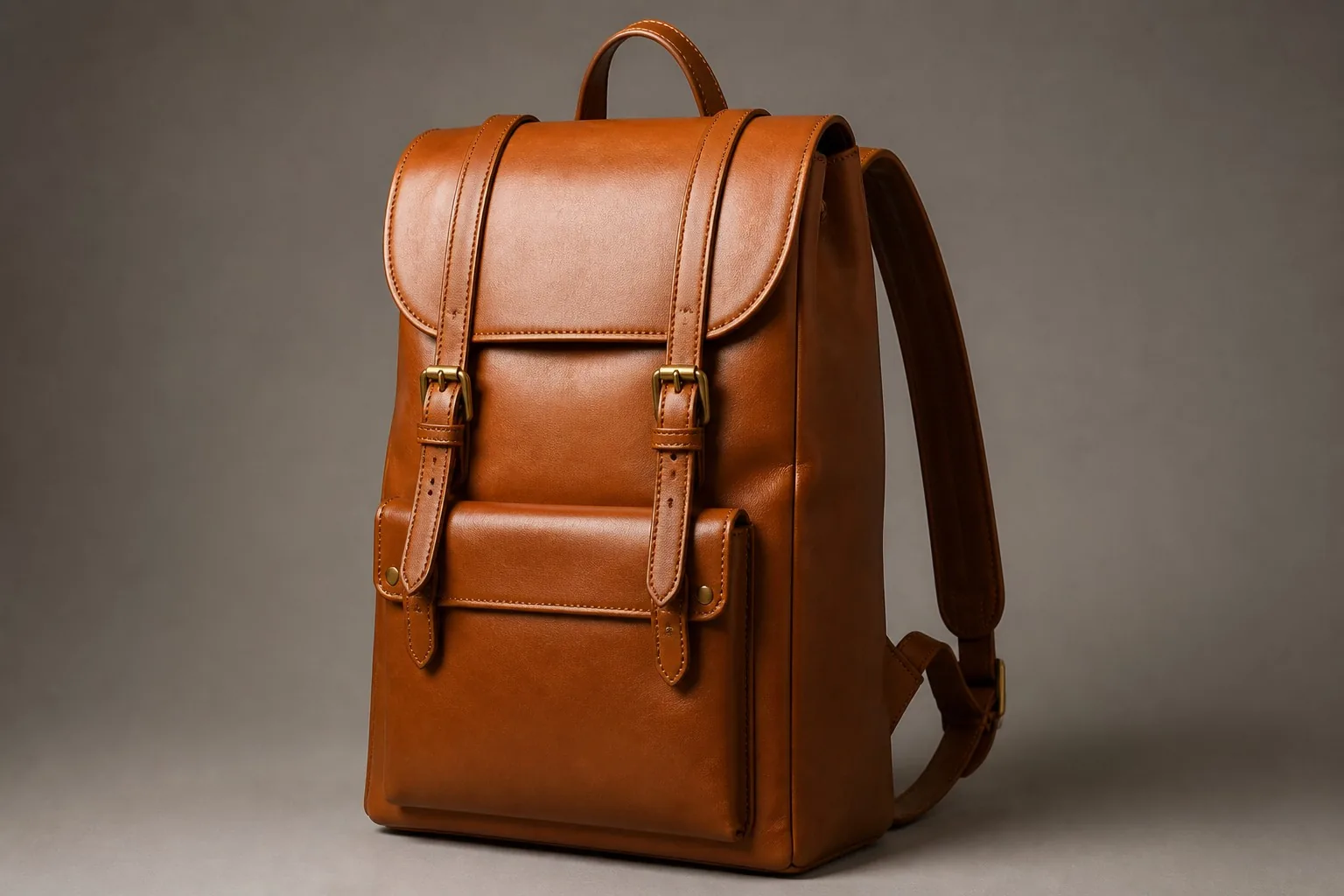
The backpack is the most engineered bag type in the industry — a load-bearing structure that must distribute weight across the body, survive daily commutes, and remain comfortable through years of use.
What the backpack demands. Usage intensity is high — most backpacks are carried daily, through weather, into offices, schools, and airports. Weight is the defining question: a backpack carries laptops, books, and gear, and the leather must hold that load without stretching or tearing at the seams. Structure is critical: the back panel must stay firm against the spine, the body must hold its shape, and the straps must bear tension without sagging. Environment matters — a commuter backpack faces rain, sun, and the rough surfaces of luggage racks and floors. Care expectations are moderate: owners will wipe it down, but they will not condition it monthly.
The specification that works. For everyday backpacks, we recommend chrome-tanned cowhide at 4–5 oz for the body, with the back panel and straps built at 5–6 oz or reinforced internally. Chrome tanning delivers the water resistance and suppleness that daily carrying demands; cowhide provides the durability; and the extra thickness at load-bearing points — back panel, straps, handle — is where a backpack’s lifespan is decided. For premium heritage backpacks, full-grain vegetable-tanned cowhide is the classic choice: it stiffens into structure, develops a beautiful patina, and becomes more personal with every year of use.
The design details that matter. The straps are the backpack’s most stressed component and deserve the best leather and the strongest reinforcement in the product. The base — which meets every surface the bag is set down on — needs the toughest finish or protective feet. And the top handle, surprisingly often the first thing to fail, needs reinforcement at both attachment points. A backpack’s quality is not in its panels; it is in its load-bearing engineering, and the leather specification must serve that engineering.
Totes: The Shape-Shifting All-Rounder
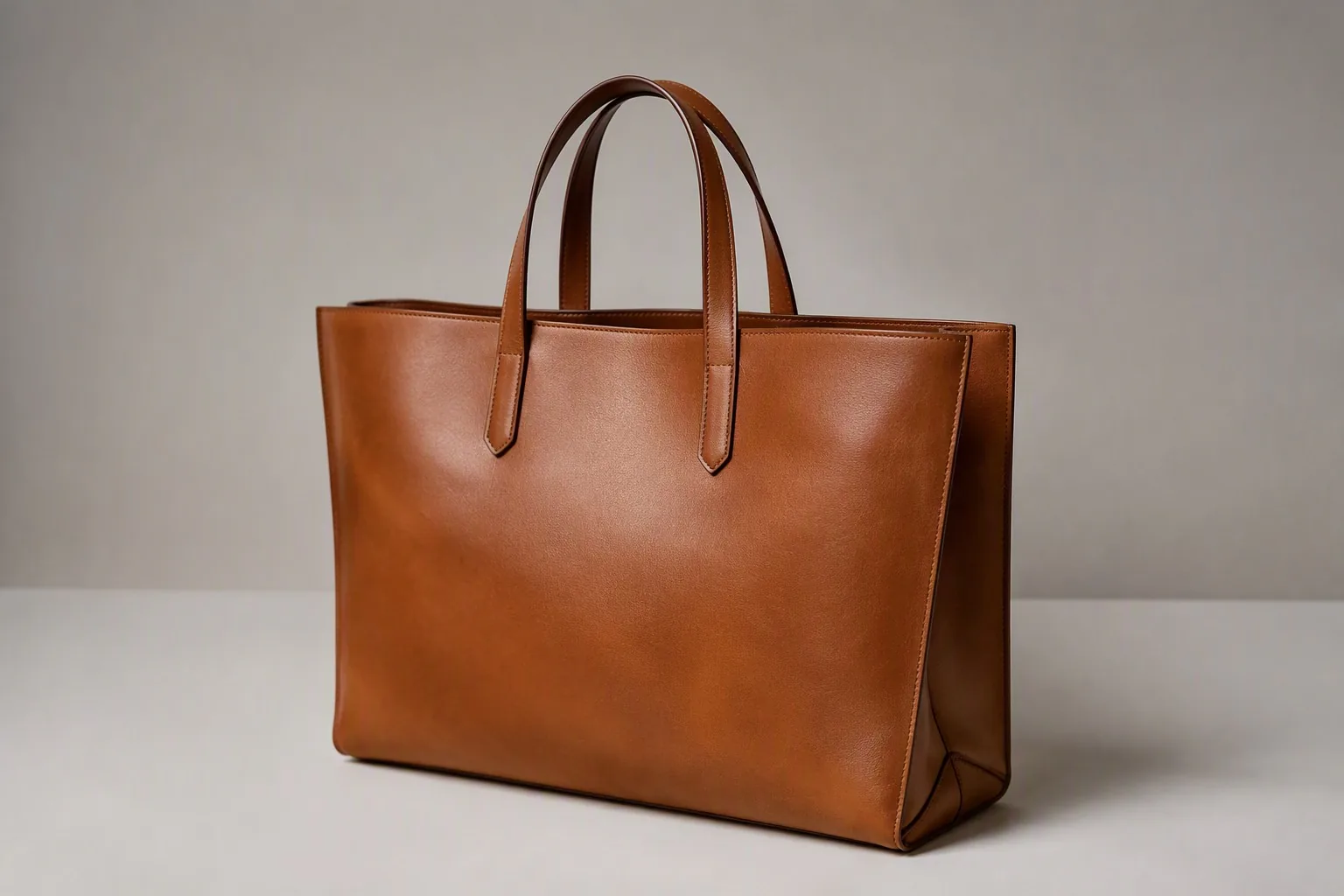
The tote is the most versatile bag type in the market — an open, usually unclasped bag carried by top handles, used for everything from work to shopping to travel. Its defining feature is flexibility: the same tote must look right in an office, a market, and an airport.
What the tote demands. Usage intensity is moderate to high — totes are carried frequently, though often with lighter loads than backpacks. Weight is moderate: laptops and books in work totes, groceries in market totes, and everything in between. Structure is where totes diverge: some designs must stand proudly on their own, while others are meant to slouch elegantly. Environment is usually mild, but totes do face rain and sun. Care expectations are low-to-moderate — most owners will wipe and occasionally condition.
The specification that works. The tote’s shape requirement splits the recommendation in two. For structured totes — the ones that must stand on their own when set down — we recommend vegetable-tanned cowhide at 4–5 oz, which provides the firmness to hold a silhouette and the edge-burnishing behavior that gives structured totes their refined finish. For slouchy, unstructured totes, chrome-tanned cowhide at 3.5–4 oz is the better choice — soft enough to drape, light enough for all-day carrying. The handles are the critical component either way: they carry the entire load and need to be built with reinforced, well-attached leather at 5–6 oz equivalent strength.
The honest guidance. The tote is the category where brands most often choose the wrong leather by accident — usually by picking a beautiful hide without considering whether the design needs structure or drape. Ask the structure question first, and the leather decision follows. A structured tote in slouchy leather collapses into a sad puddle; a slouchy design in structured leather feels like a board under the arm.
Crossbody and Shoulder Bags: The Daily Companion
Crossbody bags live against the body, carried for hours at a time, rubbing against clothing, and taking the occasional knock. They are the true daily companions of the bag world, and their leather must be comfortable before it is anything else.
What the crossbody demands. Usage intensity is high but the loads are light — phones, wallets, keys, and small essentials. Weight is the critical question: a crossbody is worn for hours, and leather weight translates directly into shoulder fatigue. Structure is minimal — these bags drape and conform by design. Environment is daily life: sun, light rain, and constant contact with fabric. Care expectations are low.
The specification that works. For crossbody bags, we recommend chrome-tanned goatskin or supple chrome-tanned cowhide at 3–4 oz. Goatskin is the standout choice: its tight fiber structure resists the constant abrasion of rubbing against clothing, it is light, and it is softer than cowhide at the same weight. Chrome tanning provides water resistance, and the 3–4 oz range keeps the bag light and supple while remaining durable enough for years of daily wear. The strap — the component that carries the entire bag for hours — deserves the best leather and reinforced attachment points in the product.
The design details that matter. The strap attachment is the crossbody’s life-or-death point: a strap that tears from its anchor ruins the bag completely. We reinforce the attachment with internal leather layers, bar-tack stitching, and quality hardware. The corners also deserve attention, since crossbody bags are set down and knocked around constantly. A quality crossbody is engineered around its strap and corners — and the leather specification supports both.
Wallets and Small Goods: The Patina Champions
Small goods — wallets, cardholders, pouches, and key holders — are the most personal leather products people own, carried in pockets or bags every day and touched constantly. They are also the products where leather choice is most forgiving of everything except one thing: the wrong weight.
What small goods demand. Usage intensity is extreme in frequency — a wallet flexes open and closed hundreds of times a year — but light in load. Weight is irrelevant; the product lives in the hand or pocket. Structure matters only for keeping a slim profile. Environment is mild: pockets and bags are protected spaces. Care expectations vary, but most owners never condition their wallets — the oils from their hands do the conditioning instead.
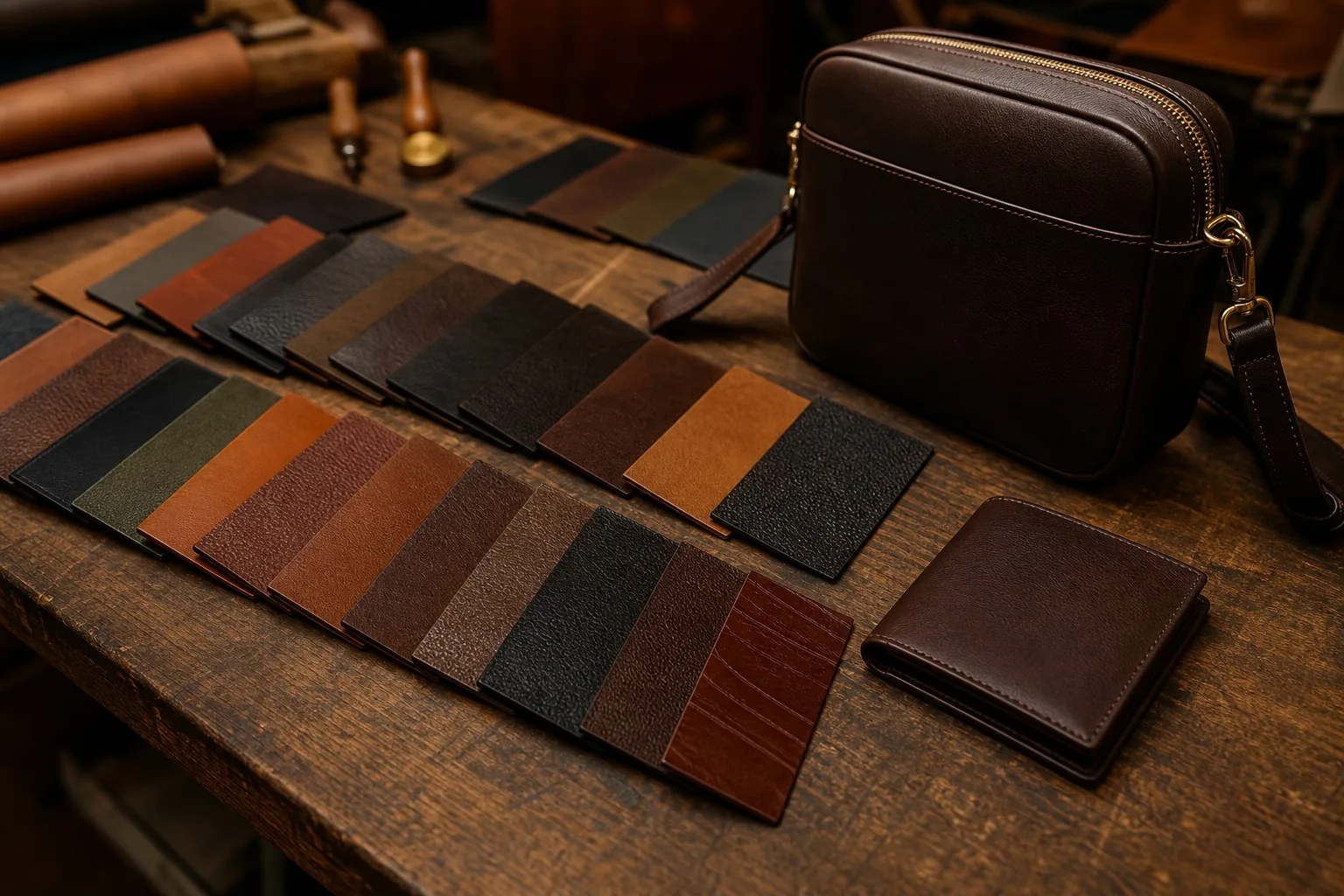
The specification that works. For wallets and cardholders, we recommend vegetable-tanned leather at 2–3 oz. This is the classic small-goods specification for excellent reasons: vegetable tanning gives the leather the firmness to hold a slim shape and the density to stitch tightly, and its patina development is the best in the industry — a vegetable-tanned wallet darkens and glows with every year of use, becoming the most personal leather product its owner owns. The 2–3 oz weight is thin enough to fold and skive beautifully, yet substantial enough to last for decades. For modern minimal cardholders, chrome-tanned leather at 2–2.5 oz offers a softer, lighter alternative.
The honest guidance. Small goods are the gateway product for many leather brands — the low-cost item that introduces customers to the brand’s quality. They are also the product where the patina story is easiest to tell and most visibly delivered. If a brand wants customers to fall in love with leather, the wallet is the best place to start the romance.
Beyond the Core Five: Clutches, Travel Bags and Work Bags
The five categories above cover most of the market, but a few specialized types deserve their own brief notes.
Clutches and evening bags. These are carried briefly, handled gently, and judged on beauty. Sheepskin is the classic choice — its fine grain and rich dye depth signal luxury instantly — though delicate finishes demand honest care messaging. Chrome-tanned goat and cowhide at 3 oz also work well.
Travel bags and weekenders. These face luggage racks, airline holds, and rough handling. We recommend durable chrome-tanned cowhide at 5–6 oz, with reinforced bases and handles, and preferably protective feet. Durability outranks elegance in this category.
Work bags and briefcases. Briefcases must hold structure and present authority. Vegetable-tanned cowhide at 5–6 oz is the classic specification — firm, dignified, and patina-friendly. Laptop compartments add structure and protect the load, and the handle and corners deserve the same reinforcement discipline as a backpack.
The Bag Type Decision Matrix
| Bag type | Recommended leather | Weight (oz) | Key reinforcement |
|---|---|---|---|
| Diaper bag | Chrome-tanned cowhide (or quality PU for budget) | 4–5 | Straps, base, corners |
| Backpack | Chrome-tanned cowhide (veg-tan for heritage) | 4–5 (5–6 at load points) | Straps, back panel, handle |
| Structured tote | Vegetable-tanned cowhide | 4–5 | Handles, base |
| Slouchy tote | Chrome-tanned cowhide | 3.5–4 | Handles |
| Crossbody | Chrome-tanned goatskin or cowhide | 3–4 | Strap anchors, corners |
| Wallet / small goods | Vegetable-tanned | 2–3 | Fold edges, card slots |
| Clutch / evening | Sheepskin or chrome-tanned | 2.5–3.5 | Closures |
| Travel bag | Chrome-tanned cowhide | 5–6 | Base, handles, feet |
| Work bag / briefcase | Vegetable-tanned cowhide | 5–6 | Handle, corners, base |
From the Factory Floor: How We Brief Leather for Each Bag
When a new bag type arrives in our order book, the leather briefing follows the same disciplined path every time. Here is the checklist we use, and that you can adapt for your own projects.
1. Answer the five questions in writing. Usage, weight, structure, environment, and care — written down, on paper, before any sample is requested. The answers force clarity and prevent the “just make it nice” trap.
2. Specify the tannage first, then the weight. Tannage determines behavior — structure or drape, water resistance or patina — and weight determines the rest. The order matters because the same ounce weight means different firmness in different tannages.
3. Choose the species for the abuse it will take. Cowhide for durability and structure, goatskin for abrasion resistance per unit of weight, sheepskin for elegance. Match the species to the bag’s real life, not to the label’s prestige.
4. Design the reinforcement before the leather. Decide where the stress points are — straps, handles, bases, corners — and specify the reinforcement for each before production starts. Reinforcement is a design decision, not a factory afterthought.
5. Request physical samples across the range. Ask for samples in the recommended weight, one step thinner, and one step thicker, and test them by hand. The hand test — drape, weight, flex, and structure — is the final authority that no specification sheet can replace.
6. Write the care card with the leather. The care instructions belong to the leather specification. Decide the care burden your customer can handle, and let it confirm — or veto — the material choice.
Budget vs. Premium: Leather Choice by Price Tier
Every bag type can be built at every price point, and the leather specification changes with the budget. The honest version of the matrix looks like this:
| Price tier | Leather strategy | What you gain | What you trade |
|---|---|---|---|
| Budget | Quality microfiber PU or economy top-grain | Affordable, consistent, easy to produce | Short lifespan, no patina story |
| Mid-range | Good top-grain or chrome-tanned cowhide | Real leather at a fair price, decent durability | Limited aging character |
| Premium | Full-grain cowhide, chrome or veg-tan | Durability, patina, brand story | Higher cost, more care needed |
| Luxury | Premium full-grain, goatskin, exotic options | Distinctive character, heirloom potential | Highest cost, pickiest customers |
The key insight from the factory floor: the price tier should be chosen deliberately and matched with an honest lifespan promise. A budget PU diaper bag that is honestly sold as a three-year product can satisfy customers completely; the same product sold as “leather” will destroy the brand. The leather specification and the price tier must tell the same story — and the customer must be able to read it.
What premium actually buys. At each step up the tier, the customer pays for three things: better material (finer hides, better tanning), better construction (more reinforcement, more skilled labor), and better aging (patina, repairability, longer lifespan). The value is real, but it is only visible over time — which is why premium brands must teach their customers to look at the long term. A five-year-old premium bag that looks better than the day it was made is the most persuasive marketing a brand can have.
When to Break the Rules
Every recommendation in this guide is a starting point, not a law. Leather is a creative industry, and some of the most successful products deliberately break the standard specifications — as long as the break is intentional.
Design-driven exceptions. A slouchy diaper bag in soft sheepskin, a structured crossbody in vegetable tanning, a work bag in waxed pull-up leather — each is possible, and each can be wonderful, when the design, the customer, and the care messaging all align. The rule-breaking that fails is the accidental kind: choosing a beautiful leather without asking what the bag must survive.
How to break rules safely. When a client wants to deviate from our recommendation, we ask three questions before agreeing: Is the deviation serving a specific design goal? Does the customer understand the trade-off — in durability, care, or lifespan? And have we reinforced the product to compensate for the material’s weaknesses? If the answers are yes, we build it enthusiastically. If the answers reveal a misunderstanding, we say so — because a factory that never challenges a client’s material choice is a factory that ships their mistakes.
The manufacturer’s duty. A good factory is a partner, not an order-taker. When a specification will not survive the bag’s real life, we say so plainly and explain why, with samples and test data. The brands that value this honesty are the ones that succeed — and the ones that punish honesty usually learn the lesson in their return rates.
How We Test a Leather Before Approving It for a Bag Type
Recommendations are only as good as the evidence behind them, so every leather we recommend for a bag type passes a physical test battery before it reaches production. These are the tests we run — the same ones you can ask any manufacturer to run on your samples.
The flex test. We fold and flex a sample of leather a hundred times along the lines it will actually flex in the bag — the opening of a tote, the fold of a wallet, the corner of a diaper bag. We look for cracking, delamination, and permanent creasing. The flex test is the fastest way to expose a finish that will fail at the bag’s natural stress lines.
The water test. A few drops of water on the surface tell us the leather’s true water resistance. Chrome-tanned and finished leathers bead the water and dry clean; vegetable-tanned and unfinished leathers darken and absorb. We then wipe the surface to confirm it cleans without staining — the behavior that matters when a customer’s bottle leaks or the sky opens up.
The abrasion test. We rub a denim swatch across the surface a fixed number of times, simulating the friction a crossbody bag endures against clothing or a backpack against rough surfaces. The result separates goatskin from sheepskin, and finished from unfinished leathers, faster than any specification sheet.
The load test. We attach the bag’s actual hardware — straps, handles, D-rings — to a weighted rig and let it hang under load for days. The test reveals stretching at stress points, seam failure, and hardware weakness before any customer ever sees them. Every new bag type in our factory runs a load test before it is approved for bulk production.
The aging preview. We expose samples to controlled heat and light to preview how the leather will age, then review the result against the brand’s expectations. A leather that cracks or fades badly in the preview will disappoint customers in year two — better to know now than after a thousand bags ship.
Why testing matters. A leather that looks perfect in a sample photo can fail in any of these tests, and a leather that passes them can be approved with confidence. Testing is not bureaucracy — it is the difference between a recommendation and a gamble. When a manufacturer offers to run these tests on your samples, take the offer. It is the mark of a factory that stands behind its material choices.
The Customer’s Perspective: What Buyers of Each Bag Type Value Most
Every bag type attracts a different buyer with different priorities, and the leather specification should serve the buyer’s psychology as much as the bag’s physics.
Diaper bag buyers value durability and ease. They are exhausted parents who need a bag that survives chaos and wipes clean. They value a leather that looks good after a year of abuse — and they abandon brands whose bags look worn after months. The leather’s water resistance and easy care are the features they feel every single day.
Backpack buyers value longevity and comfort. Commuters and students buy backpacks expecting years of service. They notice when straps stretch, when the back panel sags, and when the bag loses its shape. The leather’s structure and reinforcement are the features that convert a first-time buyer into a loyal one.
Tote buyers value versatility and beauty. Tote buyers are often style-led — they chose the tote because it goes everywhere. They value a leather that photographs well, feels substantial in the hand, and ages attractively. The patina story is powerful here: a tote that gets more beautiful with use becomes the customer’s favorite bag.
Crossbody buyers value lightness and comfort. These buyers carry their bag for hours and notice every gram. They value soft, supple leather that hugs the body and a strap that stays comfortable. Goatskin’s light weight and abrasion resistance are exactly what this buyer feels.
Small-goods buyers value the ritual. Wallet buyers are buying a daily companion they will touch hundreds of times. They value the leather’s feel in the hand and the patina it develops over years. The vegetable-tanned wallet is the product that creates leather enthusiasts — and enthusiasts become the brand’s most valuable customers.
Matching the leather to the buyer’s psychology is the final layer of the specification. The physics gets the bag built; the psychology gets it loved.
Frequently Asked Questions
What is the best leather for a diaper bag?
Water-resistant chrome-tanned cowhide at 4–5 oz with reinforced straps, base, and corners is the reliable choice — it survives spills, weather, and daily abuse while staying easy to clean. For budget lines, quality microfiber PU works well; avoid sheepskin and unsealed vegetable-tanned leather for this category.
Which leather is best for a backpack?
Chrome-tanned cowhide at 4–5 oz for the body, with the back panel and straps built at 5–6 oz or reinforced internally. It balances durability, water resistance, and comfort. For premium heritage backpacks, full-grain vegetable-tanned cowhide is the classic choice.
Should my tote be vegetable-tanned or chrome-tanned?
It depends on the silhouette. Structured totes that must stand on their own suit vegetable-tanned cowhide at 4–5 oz. Slouchy, unstructured totes suit chrome-tanned cowhide at 3.5–4 oz. Ask the structure question first — it decides the tannage.
What leather do you recommend for a crossbody bag?
Chrome-tanned goatskin or supple cowhide at 3–4 oz. Goatskin is the standout for crossbody bags: it resists the constant rubbing against clothing, is light, and stays supple. Reinforce the strap anchors — they carry the entire bag.
Why is vegetable-tanned leather recommended for wallets?
Vegetable tanning gives the firmness to hold a slim shape, the density to stitch tightly, and the most beautiful patina in the industry. At 2–3 oz, it folds and skives beautifully while lasting for decades. A vegetable-tanned wallet becomes more personal with every year.
Can one leather specification work for several bag types?
It can work, but it will be a compromise — too heavy for some designs, too soft for others. The five-question framework (usage, weight, structure, environment, care) shows why different bag types genuinely need different leather. Most brands run two to four specifications across their lines.
How do I choose between cowhide, goatskin and sheepskin?
Match the species to the abuse. Cowhide for durability and structure, goatskin for abrasion resistance per unit of weight, sheepskin for elegance and softness. A diaper bag needs cowhide, a crossbody benefits from goatskin, and an evening clutch suits sheepskin.
What is the most common leather-selection mistake brands make?
Choosing leather by appearance instead of by the bag’s real life — picking a beautiful hide without asking what the bag must survive. The result is a beautiful product that fails early. Answer the five questions in writing before choosing any leather, and the mistake disappears.
Final Word from the Factory
The leather for a bag should never be chosen in isolation. It should be chosen as part of the product’s whole design — its silhouette, its weight, its real life, its price tier, and its customer’s expectations. The five questions at the start of this guide — usage, weight, structure, environment, and care — are the same questions we ask on every order, and they have never failed to produce the right answer.
The bag types we have covered here are the pillars of the industry, and each has a well-established leather specification that serves it best. Diaper bags need the toughness of reinforced chrome-tanned cowhide. Backpacks need load-bearing engineering in durable leather. Totes need the tannage that matches their silhouette. Crossbody bags need the abrasion resistance of goatskin. Wallets need the patina story of vegetable tanning. None of these are arbitrary — they are the accumulated wisdom of decades of production, returns, and customer feedback.
When you plan your next product, bring the five questions to the conversation. Ask your manufacturer what leather they recommend for your bag type, and why. The specific, measured answer — with samples, weights, and reinforcement plans — is the mark of a factory that understands its craft. Because the right leather for the right bag is not a detail. It is the product.
