
Is Water Buffalo Leather Practical for Bag Manufacturing?
Is Water Buffalo Leather Practical for Bag Manufacturing?
Water buffalo leather arrives at a workshop looking like a challenge. It is heavy, the grain is deep and pronounced, and it does not bend the way a bag maker’s hands expect after years of cowhide. Half the people who see it want to make a briefcase from it; the other half want to send it back.
The material has a real place in bag production, but it is narrower than its reputation suggests. It is excellent where a bag must hold a shape and take punishment, and wrong where softness, low weight or a fine surface is the point.
This article looks at buffalo leather the way a factory does: what the hide is, what it does to cutting, sewing and edge work, where it earns its place on a bag, how it should be specified and cared for, and where it will cost more than it returns. It is a variety-level guide, not a comparison between hide types, which is covered separately on this site.
- What Water Buffalo Leather Actually Is
- The Hand and Weight You Get
- Durability: What It Does Well
- Where It Belongs on a Bag
- Where It Does Not Belong
- Cutting a Buffalo Hide
- Sewing and Needle Choice
- Edge Work on Dense Fibre
- Hardware Load and Reinforcement
- Finishing Options
- Buffalo Leather vs Cowhide in Practice
- Reading a Buffalo Hide at Goods-In
- Specifying Buffalo Leather
- Cost and Yield Reality
- Care Regime That Suits It
- Repair, Resale and Longevity
- Sourcing and Traceability Questions
- What Buyers Ask About Buffalo Bags
- Common Mistakes
- Specification Checklist
- Buffalo Leather by Bag Type
- What Good Looks Like on the Line
- Working With a Brand New to the Material
- Frequently Asked Questions
- Conclusion
What Water Buffalo Leather Actually Is
Not a Breed of Cowhide
Buffalo leather comes from the water buffalo, a different animal from the cattle that supply most bag leather. The hide is larger, the fibre bundles are denser and the grain is coarser, which is why the finished material looks and behaves differently even when the tannage is identical.
Fibre Structure and Why It Matters
Dense, tightly packed fibre is what gives a leather its resistance to abrasion and its ability to hold shape. The same density makes it stiffer to cut and harder to turn, so the advantage and the difficulty come from one property rather than two.
Where the Hides Come From
Supply is concentrated in South Asia and parts of Southeast Asia, where the animal is part of the agricultural economy. That geography shapes the material: hide size, scar patterns and the availability of consistent lots all follow from how the animals are raised and handled.
What the Labels Do Not Tell You
“Buffalo leather” describes the animal, not the quality. A buffalo hide can be full-grain, corrected, split or bonded, and it can be vegetable-tanned or chrome-tanned. The word alone says nothing about how the bag will perform.
The Hand and Weight You Get
Thickness Reality
Buffalo hides run thick. Most lots sit at the heavier end of what bag making uses, and thinning them is a deliberate step rather than an adjustment. A factory that plans for the thickness will produce a predictable bag; one that assumes it can split everything down will lose the grain that made the hide worth buying.
Firmness and Break
The material is firm and resists folding. Where a cowhide bag slumps into shape, a buffalo bag keeps its line, which is a benefit on structured shapes and a limitation on soft ones. “Break” in this material is slow, and a bag that is meant to soften quickly will disappoint.
Surface Character
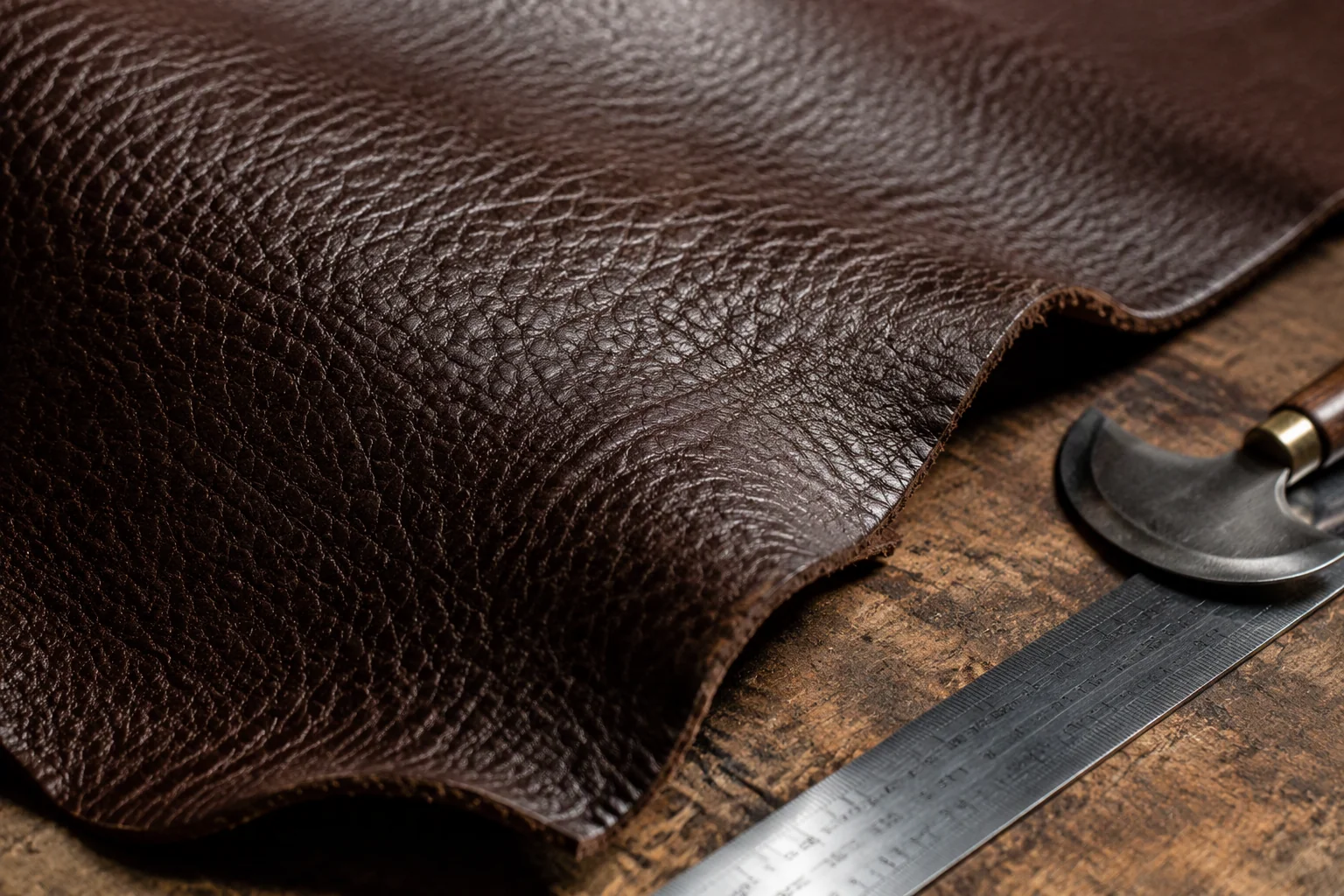
The grain is deep, the pores are visible, and the surface takes light in a way that reads as substantial. The same depth means the grain is a place where dirt collects and where a scuff leaves a mark that a coated surface would have shrugged off.
Weight in the Finished Bag
A bag made in buffalo leather weighs more than the same bag in cowhide, and considerably more than one in a split or a synthetic. On a tote carried by hand that is acceptable; on a shoulder bag used daily it is a specification decision that the customer will notice.
Durability: What It Does Well
Abrasion
Dense fibre resists surface wear, and bags made from it show abrasion as a polish rather than as a hole. Corners, bases and strap edges — the places that fail first on lighter leathers — are where this material is strongest.
Shape Retention
A structured body in buffalo leather keeps its form over years, which reduces the need for boards, stiffeners and heavy interlining. That saving partly offsets the higher material weight and the extra labour in cutting.
Water and Humidity
The material handles occasional damp better than an unfinished soft leather, but it is not waterproof, and prolonged soaking softens the fibre. Drying must be slow and away from heat, or the surface will harden unevenly.
How It Compares
| Property | Water buffalo | Cowhide | Goatskin |
|---|---|---|---|
| Fibre density | Highest | High | Medium-high |
| Weight for the same thickness | Heaviest | Moderate | Light |
| Shape retention | Excellent | Good | Moderate |
| Softness and drape | Low | Moderate | High |
| Grain depth | Deep and coarse | Fine to medium | Fine, pebbled |
| Cutting difficulty | High | Moderate | Low |
What the Comparison Means
Buffalo is not a better cowhide; it is a different trade. It buys durability and structure with weight and stiffness, and the right choice depends on which of those the bag needs.
Where It Belongs on a Bag
Straps, Handles and Bases
These parts carry load and meet the ground, and dense fibre is exactly what they need. A buffalo strap resists stretching, and a buffalo base resists the abrasion that destroys lighter panels.
Structured Bodies and Totes
Where a bag must keep a silhouette without internal scaffolding, this material does the work. It is particularly effective on totes, briefcases, document bags and structured shoulder bags.
Trim, Binding and Small Reinforcements
Narrow strips, handle tabs and reinforcement patches can be cut from offcuts, which improves yield and keeps a consistent surface across the bag. Thin strips are the one place where splitting is worth considering.
The Pattern of Good Use
The material goes where load and abrasion are, and stays away from where drape and lightness are. A bag designed around that rule uses it well.
Where It Does Not Belong
Lightweight Summer Bags
A bag sold on lightness cannot be built in a heavy hide. The weight penalty shows up immediately in the hand, and no design compensation will hide it.
Linings and Interior Panels
Buffalo is too thick and too stiff for linings or interior structure. Interior parts belong in a split, a fabric or a thin leather, and using buffalo there adds weight for no benefit.
Anywhere Softness Sells
Slouchy hobos, soft clutches, gathered shapes and anything that depends on drape will fight this material. A factory can force the shape, but the bag will feel wrong every time it is picked up.
Where the Grain Is Too Much
On a small bag or a minimal design, deep coarse grain overwhelms the proportions. The same surface that reads as substance on a large tote reads as heaviness on a clutch.
Cutting a Buffalo Hide
Weight and Knife Choice
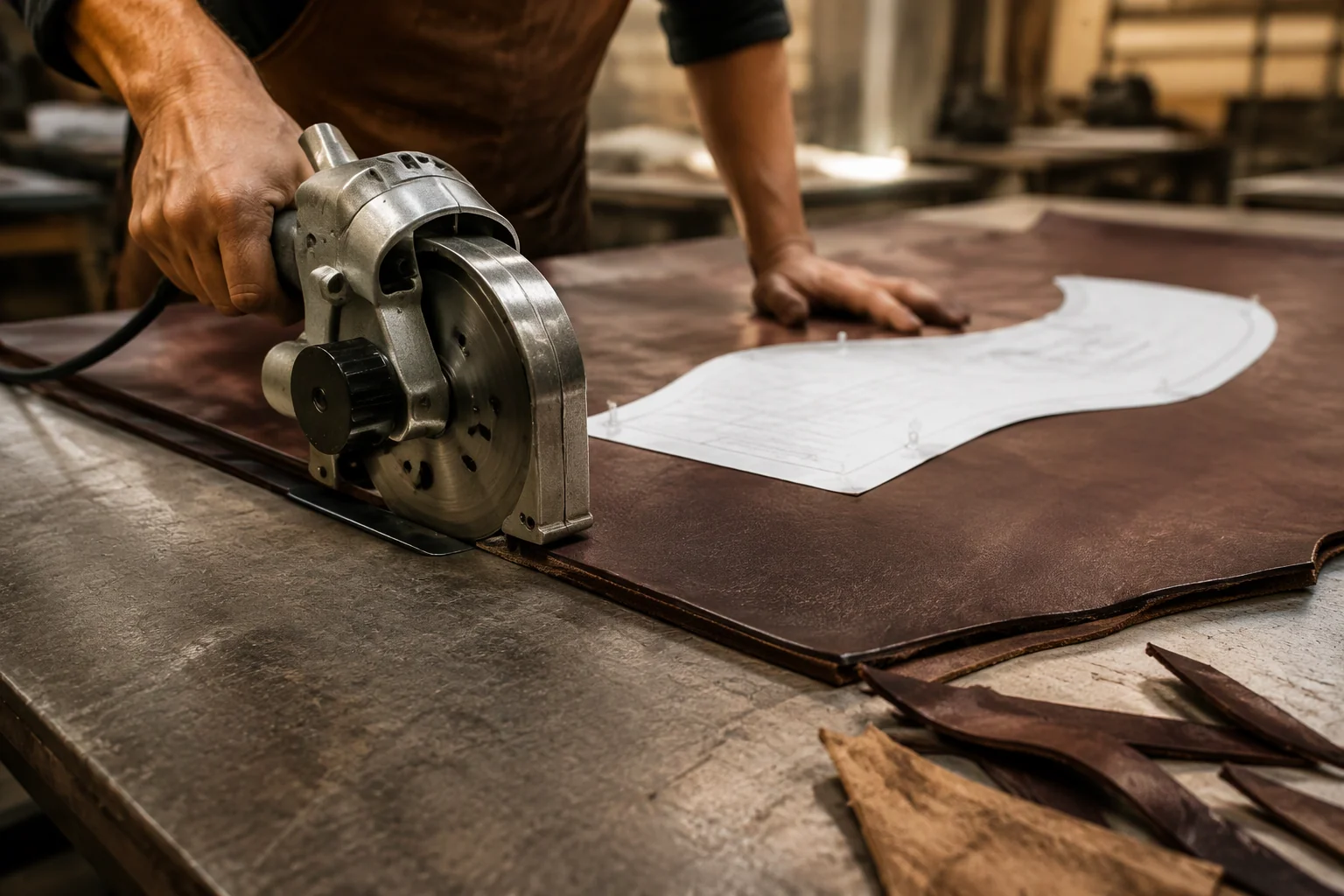
Thick hides resist a light blade. Cutting is done with a heavier knife, a clicker die rated for the thickness, or a splitting step that reduces the panel to a workable weight before the pattern is applied. Choosing the method late is how a cutting room loses a day.
Scars and Grain Variation
Buffalo hides carry more surface marks than carefully selected cowhide, because of how the animals live. The marks are not defects, but they must be nested around, and that planning has to happen before the pattern is laid rather than after the panels are cut.
Yield Expectations
Between thickness, scarring and grain variation, usable area per hide is lower than a comparable cowhide. A factory quoting a buffalo bag on cowhide yield will lose money quietly on every order.
The Order of Operations
Split first if the design needs a lighter panel, then cut, then check the weight of each piece by hand. A panel that is too heavy at the strap becomes a bag that hangs badly, and no sewing adjustment will fix it.
Sewing and Needle Choice
Machine Capability
Not every flat-bed machine will handle the thickness at seam crossings, especially where a strap, a gusset and a lining meet. The machine must be specified for the material before the style is quoted, not after the first sample jams.
Needle, Thread and Stitch Length
A cutting-point needle and a heavier thread suit the material, and stitch length should be set long enough that the leather is not perforated into a tear line. Dense fibre does not forgive short, tight stitching the way a soft hide does.
Seam Bulk at Crossings
Buffalo panels do not compress. A crossing that carries four layers in cowhide may carry seven effective layers here once the skived edges are folded. These crossings should be identified at sampling and either skived down or moved.
Tension and Feed
Feed marks show clearly on a coarse grain, and high presser-foot pressure leaves a track along the seam. Reduce pressure and adjust feed timing rather than increasing tension to pull the material through.
Edge Work on Dense Fibre
Burnishing
Dense fibre burnishes well once it is sanded flat, and the sealed edge holds better than on softer leathers. It takes more passes and more friction, and the result is a hard, glassy edge that lasts.
Folding and Skiving Limits
A buffalo edge does not fold as tightly as a thin cowhide edge. Where a design calls for a folded edge on a thick panel, it must be skived substantially, and at some point skiving defeats the reason for using the material.
Painted Edges
Edge paint adheres adequately to a well-prepared buffalo edge, provided the surface is sanded and primed. On an oiled or waxed finish the same paint will struggle, so the finishing decision and the edge decision must be made together.
The Test Before Production
Burnish and paint a sample edge from the actual hide, then flex it twenty times by hand. What survives that test in the sample room will survive the first month of use.
Hardware Load and Reinforcement
Anchors and Backing
Buffalo carries load well, which tempts designers to skip backing patches. That is a mistake at rings and D-rings, because the load concentrates on a few stitch holes in a material that does not stretch to distribute it. Backing patches still belong.
Rivets and Setting
Rivets set cleanly in dense fibre if the hole is punched rather than drilled and the die matches the rivet. A rivet set with the wrong die will crush the grain around it, and the mark cannot be repaired.
Magnetic Closures and Feet
Magnets need a pocket between layers, and buffalo gives the layers to hide one properly. Feet sit well on a dense base and are less likely to dimple than on soft leather.
Weight of the Hardware
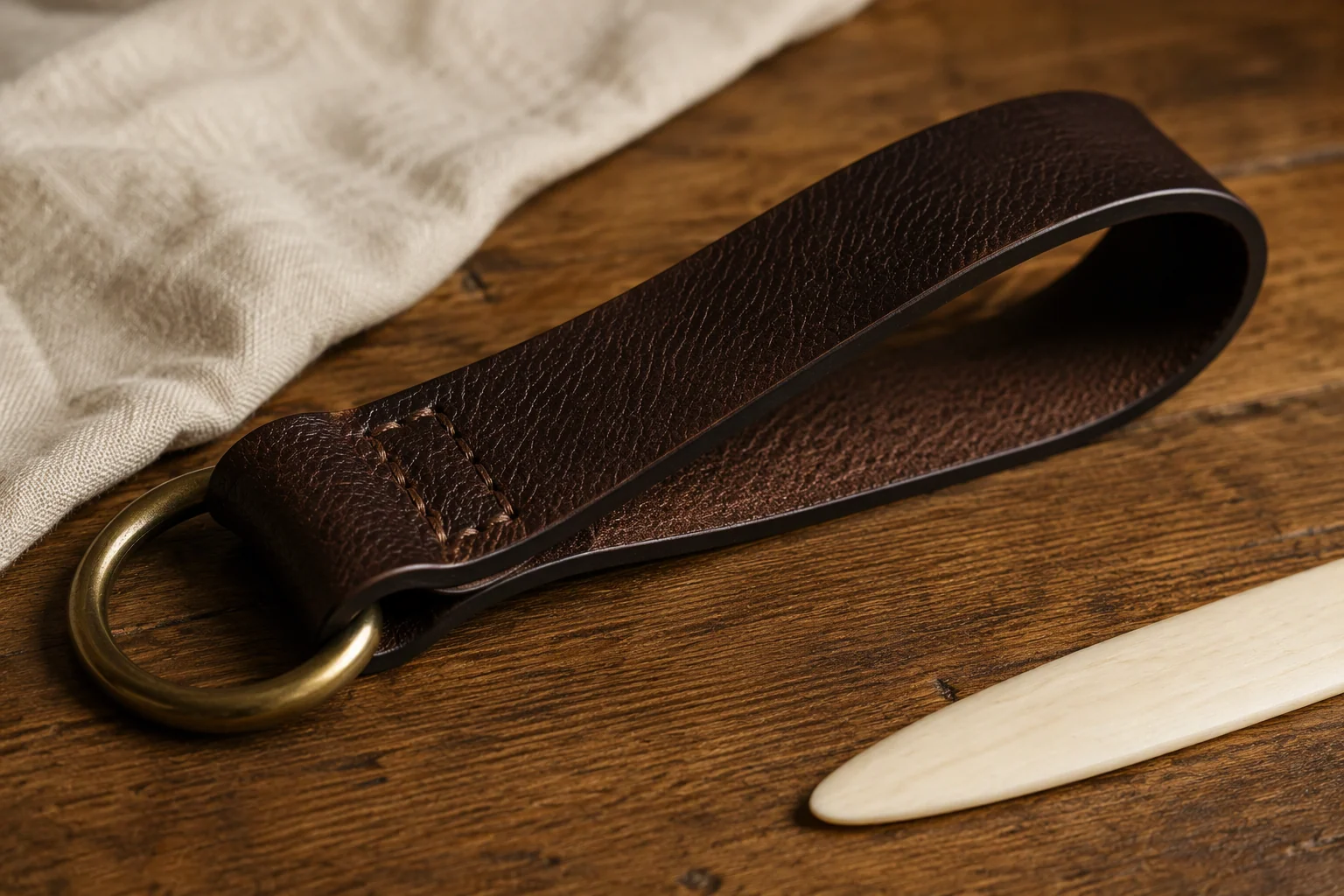
Heavy leather carries heavy hardware without looking unbalanced, which is one reason briefcases and document bags suit this material. Lightweight hardware on a thick panel looks undersized, so the hardware should be chosen after the leather.
Finishing Options
Aniline and Semi-Aniline
These finishes let the grain show, which is the point with buffalo. They also expose the hide’s natural variation and require more careful panel matching, and they show oil and water marks more readily.
Embossing and Pebbling
A dense hide takes embossing well and holds the pattern. Where a brand wants a uniform surface, embossing over a buffalo base gives consistency without losing the substance underneath.
Waxed and Oiled
Waxed buffalo is heavy, water-resistant and develops a strong patina, and it suits workwear-inspired designs. It also brings the handling and edge constraints that waxed finishes always bring, which are covered separately on this site.
Colour Depth
Dense fibre takes dye deeply and reads darker than the same shade on a lighter hide. A colour approved on a cowhide swatch will arrive looking a shade deeper on buffalo, so the swatch must be made in the actual material.
Buffalo Leather vs Cowhide in Practice
Where the Difference Shows First
The difference appears at the cutting table, not in the showroom. A pattern that yields comfortably in cowhide produces fewer panels in buffalo, and the factory discovers the shortfall on the day the order is cut rather than in the quotation.
Where They Converge
Finished, both can be full-grain, both take colour, and both make a credible bag. At a metre’s distance, a well-finished buffalo tote and a cowhide tote of the same design look related; the difference is in the hand and in the weight.
What to Compare When Choosing
Compare weight per panel, not weight per hide. Compare the ability to hold a shape, not the thickness in millimetres. Compare yield after nesting around scars, not the price per square foot on the invoice.
Reading a Buffalo Hide at Goods-In
Thickness Spread
Measure the same panel area at several points across the hide. Buffalo varies more than cowhide between back, neck and belly, and a lot that averages correctly can still be unusable on one side.
Grain and Scar Pattern
Look for healed scars, insect damage and brand marks, and judge whether they sit in areas your pattern can avoid. A hide that is 20 percent unusable is not a cheaper hide; it is the same hide at a higher effective price.
Moisture and Smell
A hide that smells sharp or feels cold and damp has taken on moisture somewhere in transit. It will either dry into a harder, stiffer state than specified or grow a problem in storage, and either outcome is a rejection.
The Flex Test
Fold a corner of the thickest part in both directions. A hide that creaks or shows a pale line at the fold will crack along that line once it is a bag, and no finishing step will prevent it.
Specifying Buffalo Leather
Name the Animal and the Tannage
“Buffalo” alone is not a specification. State the tannage, the finish, the thickness with a tolerance, the temper in the supplier’s vocabulary, and the grain expectation, including how much scarring is acceptable.
Set the Weight, Not Just the Thickness
Weight per unit area is what the finished bag will show. A supplier measuring thickness at one point can meet the number while delivering panels that hang badly, so the specification should include both.
Trial Before Commitment
Order enough for one style and run it through the full sequence: split if required, cut, skive, sew a crossing, burnish an edge, set a rivet. A hide that passes on the bench can still fail at the machine.
Cost and Yield Reality
Where the Price Sits
Buffalo usually prices below premium cowhide and above standard splits, which is part of its appeal. The comparison is misleading on its own, because the usable area per hide and the labour per panel both differ.
The Real Cost Drivers
Cutting time, machine capacity, edge work and hardware weight all rise with this material. A quotation built on cowhide labour will be short, and the shortfall appears as overtime rather than as a visible line item.
Pricing the Bag, Not the Hide
The honest comparison is finished cost per bag, including yield loss, rework at seams and the extra minutes at the burnishing wheel. On that basis the material is competitive on structured bags and expensive on light ones.
Care Regime That Suits It
Cleaning
Wipe with a barely damp cloth and dry away from heat. Dirt collects in the deep grain, so a soft brush used gently lifts what a cloth pushes deeper, and harsh scrubbing will flatten the grain permanently.
Conditioning
A little conditioner, worked in and buffed, keeps dense fibre from drying at the flex points. Over-application sits in the grain, attracts dust and darkens the surface unevenly, which is harder to correct than dryness.
Storage
Stuffed to hold shape, in a breathable bag, away from radiators and sunlight. A heavy bag stored flat will take a crease across the body that no amount of conditioning will lift.
What Not to Do
Avoid silicone dressings, solvent cleaners and plastic wrapping. Each of them either strips the finish or traps moisture against a material that has no protective coat to lose.
Repair, Resale and Longevity
What Fails First
On a buffalo bag, the first failures are stitching at the strap anchors, edge sealing at the base corners, and hardware plating. The leather itself is usually the last thing to fail, which changes what a repair service should be prepared for.
Repairing Dense Leather
Panels can be patched, straps replaced and edges re-burnished. What cannot be done invisibly is a repair in the middle of a grained panel, because the grain will not match and the repair will read as a mark.
Longevity as an Argument
A bag that stays structurally sound for a decade supports a resale value and a repair offer. For brands selling on durability rather than on trend, that is the commercial case for the material, and it should be stated plainly rather than implied.
Sourcing and Traceability Questions
Where the Hide Originated
Ask which region the hides come from and whether the supplier can trace a lot back to a collection area. Traceability is increasingly a buyer requirement, and buffalo supply chains are less documented than cattle supply chains in major exporting countries.
Tannery Documentation
Ask for the tannery’s process documentation and any environmental or chemical-management information it can share. Where a market requires specific declarations, those requirements should be confirmed with the authorities or a compliance adviser rather than assumed.
Consistency Across Lots
Ask how colour and thickness are controlled between lots and request a retention sample per delivery. Dense hides vary visibly, and a second order approved against a photograph will not match the first.
What Buyers Ask About Buffalo Bags
Is It Heavier?
Yes, and the honest answer is that the bag will weigh more than a cowhide equivalent. Buyers who carry a bag all day notice, and pretending otherwise creates a return rather than a sale.
Will It Soften?
Slowly and only at the flex points. A buyer expecting a slouchy bag after a month will be disappointed, so the product description should promise structure rather than softness.
Does It Scratch?
It marks, and the marks are part of the surface rather than damage to a coating. On a grained aniline finish a scuff can often be worked back with a thumb, which is worth explaining on the care card.
Common Mistakes
- Quoting from cowhide data. Yield, cutting time and edge work all differ, and the gap lands on the factory.
- Splitting everything to a familiar weight. The grain that justified the hide goes with the split, and the bag loses its character.
- Ignoring scar placement at nesting. Marks that could have been avoided end up on the front panel.
- Assuming softness will come with use. It will not arrive on the schedule a design team expects.
- Skipping backing patches at anchors. Dense leather concentrates load instead of spreading it.
- Using heavy hardware without checking balance. A thick panel with undersized hardware looks unfinished.
- Approving colour on a cowhide swatch. The same shade reads deeper on dense fibre.
The Pattern
Every item on this list is a decision imported from cowhide practice. Buffalo rewards a specification written for buffalo.
Specification Checklist
- Animal and origin stated, with traceability where required
- Tannage and finish named in the supplier’s terms
- Thickness range with tolerance, measured at several points
- Weight per unit area stated alongside thickness
- Temper described plus a physical reference sample
- Acceptable scar and grain variation defined
- Yield assumption confirmed against a trial hide
- Splitting step defined, with the target weight per panel
- Machine and needle specification for the thickness
- Stitch length and seam type for every join
- Edge treatment per edge, with a burnished sample approved
- Hardware chosen after the leather, with backing patches sized
- Retention sample per delivery, labelled and stored
- Care instructions written before the first production run
Buffalo Leather by Bag Type
Where It Sits Comfortably
Structured bags are its home: totes, document bags, briefcases and structured shoulder bags. The material supplies the shape, the abrasion resistance and the ageing story, and the weight penalty is acceptable on a bag carried by hand.
Where It Works With Help
A diaper bag can use buffalo on the base, the straps and the lower body, with lighter panels above and a wipeable interior. A backpack can use it on the base, back panel and strap anchors, with lighter side panels.
Where It Fights the Design
Soft hobos, gathered shapes, clutches and small wallets. In each case the design depends on drape or fine proportions, and the material supplies neither.
A Practical Allocation
| Bag type | Suitability | Where to use it | Where to avoid it |
|---|---|---|---|
| Structured tote | Excellent | Body, base, straps | Interior structure |
| Briefcase or document bag | Excellent | Whole body | Lightweight linings |
| Structured backpack | Good | Base, back panel, anchors | Side panels, interior |
| Diaper bag | Workable | Base, straps, lower body | Upper panels, lining |
| Soft hobo | Poor | Straps only, if at all | Body |
| Wallet or clutch | Poor | Edge trim only | Body and folds |
Reading the Table
The pattern is consistent: the material goes where load and abrasion are, and stays off panels that must move or stay light. Everything else is a negotiation with the design.
What Good Looks Like on the Line
A workshop that handles buffalo well has stopped trying to soften it. It cuts heavier, sews longer, burnishes harder and lets the material be what it is.
The Signs
- A cutting plan that nests around scars before the pattern is laid
- Splitting used deliberately, only where the design needs a lighter panel
- Machines specified for thickness, with crossings identified at sampling
- Edge work sampled and flexed before the run starts
- Hardware chosen after the leather, with backing patches on every anchor
- Care cards that promise structure rather than softness
The Wrong Signs
If the sample room is fighting the material to make it drape, the design is wrong for the hide. Forcing a soft shape from dense leather produces a bag that feels heavy and looks reluctant, and customers notice both.
Working With a Brand New to the Material
Set the Expectation Early
Send the brand a photograph of the hide, a weight comparison with their previous style and a short note on how it will age. Most disappointment with this material comes from a promise of softness that was never going to be met.
Adjust the Design, Not the Leather
When a brand asks for the look but the soft hand of their last bag, the answer is a design change: smaller panels, more structure, a different closure. Trying to achieve it by splitting the hide thinner removes the reason to use it.
Prove It in One Sample
Build one sample in the real material, at the real weight, with the real edge treatment and hardware. That single bag settles more questions than any specification document, and it becomes the reference for every later dispute.
Frequently Asked Questions
Is buffalo leather the same as cowhide?
No. It comes from the water buffalo, a different animal, with denser fibre and a coarser grain. It is heavier and firmer than cowhide at the same thickness, and it holds a shape better.
Is it good for bags?
For structured bags, straps, bases and any part that carries load or meets the ground, yes. For soft shapes, lightweight bags and interiors, it is the wrong material.
Why is it heavier?
Dense fibre and thicker hides both add weight. A bag built in buffalo will weigh more than the same bag in cowhide, and that is a design decision rather than a defect.
Will a buffalo bag soften with use?
Only slowly and only at the flex points. If a soft, slouchy hand is required, choose another leather rather than expecting this one to change.
How should it be cared for?
Wipe with a barely damp cloth, brush the grain gently, condition sparingly and store stuffed in a breathable bag away from heat and sun. Avoid silicone dressings and plastic wrapping.
Does it scratch easily?
It marks, and the marks sit in the grain. On an aniline finish a light scuff can often be worked back with a thumb, and the mark becomes part of the surface rather than damage.
Can it be used for a diaper bag?
On the base, straps and lower body, with lighter panels above and a wipeable interior. A whole diaper bag in buffalo would be too heavy for daily carrying.
How is it specified?
By tannage, finish, thickness with tolerance, weight per unit area, temper and acceptable grain variation, supported by a physical sample and a retention sample per delivery.
What thickness should a bag maker order?
Thick enough to hold the shape, then split deliberately for lighter panels. Set a target weight per panel rather than a single number for the whole hide.
Does it take edge paint?
Yes, on a properly sanded and primed edge. On a waxed or oiled finish paint struggles, so the finishing decision and the edge decision must be made together.
Is it more sustainable than cowhide?
Not automatically. Environmental impact depends on the tannery, the supply chain and the process used, and claims should be supported by documentation rather than by the animal alone.
Conclusion
Water buffalo leather is practical, but only on the bags that need what it provides. It is a structural material: dense, heavy, abrasion-resistant and slow to change, and those are the qualities a factory should design around rather than fight.
The working rules are short. Split deliberately, not habitually. Nest around scars before cutting. Specify the machine for the thickness and the crossings. Burnish the edges and flex the sample before the run. Choose hardware after the leather, and back every anchor. Promise structure in the copy, not softness.
A brand that wants a bag which keeps its shape for years and looks better for the wear will find this material does exactly that. A brand that wants a soft, light bag should be told plainly, at the sampling stage, that this is a different animal altogether.
