
Suede Bag Care: Cleaning, Protection and What to Avoid
Suede Bag Care: Cleaning, Protection and What to Avoid
There is no leather that divides opinion like suede. Half the people who see a suede bag fall in love with its soft, velvety surface. The other half say the same thing: “Beautiful, but how do you keep it clean?” The question follows the material everywhere, and it is usually asked with a tone of resignation — as if suede were a beautiful thing that inevitably gets ruined.
The truth from the factory floor is more interesting. Suede is not fragile; it is different. It is one of the most durable leathers you can own, in the sense that it survives daily use remarkably well. What it does not survive is the wrong care — water from the wrong source, cleaning with the wrong product, and the instinct to treat it like smooth leather. Every ruined suede bag we see was not destroyed by use. It was destroyed by a care mistake that a suede owner with the right knowledge would never make.
This guide covers what suede is, what genuinely damages it, and the complete care routine: daily habits, proper cleaning, stain removal, waterproofing, and the factory view of how suede bags are made and finished. By the end, suede will not seem fragile. It will just seem like leather that asks for slightly different respect.
- The Misunderstood Leather
- What Suede Actually Is (and What It Is Not)
- What Ruins Suede: The Real Enemies
- The Three Tools Every Suede Owner Needs
- Daily Care: The Two-Minute Routine
- Seasonal Care: Suede Through the Year
- Cleaning Suede Properly
- Stain Removal by Type
- Travel and Storage: Suede on the Move
- Protecting Suede Before the Rain
- Suede vs Nubuck vs Other Leathers
- From the Factory: How We Finish Suede Bags
- When to Call a Professional
- Frequently Asked Questions
- The Bottom Line
The Misunderstood Leather
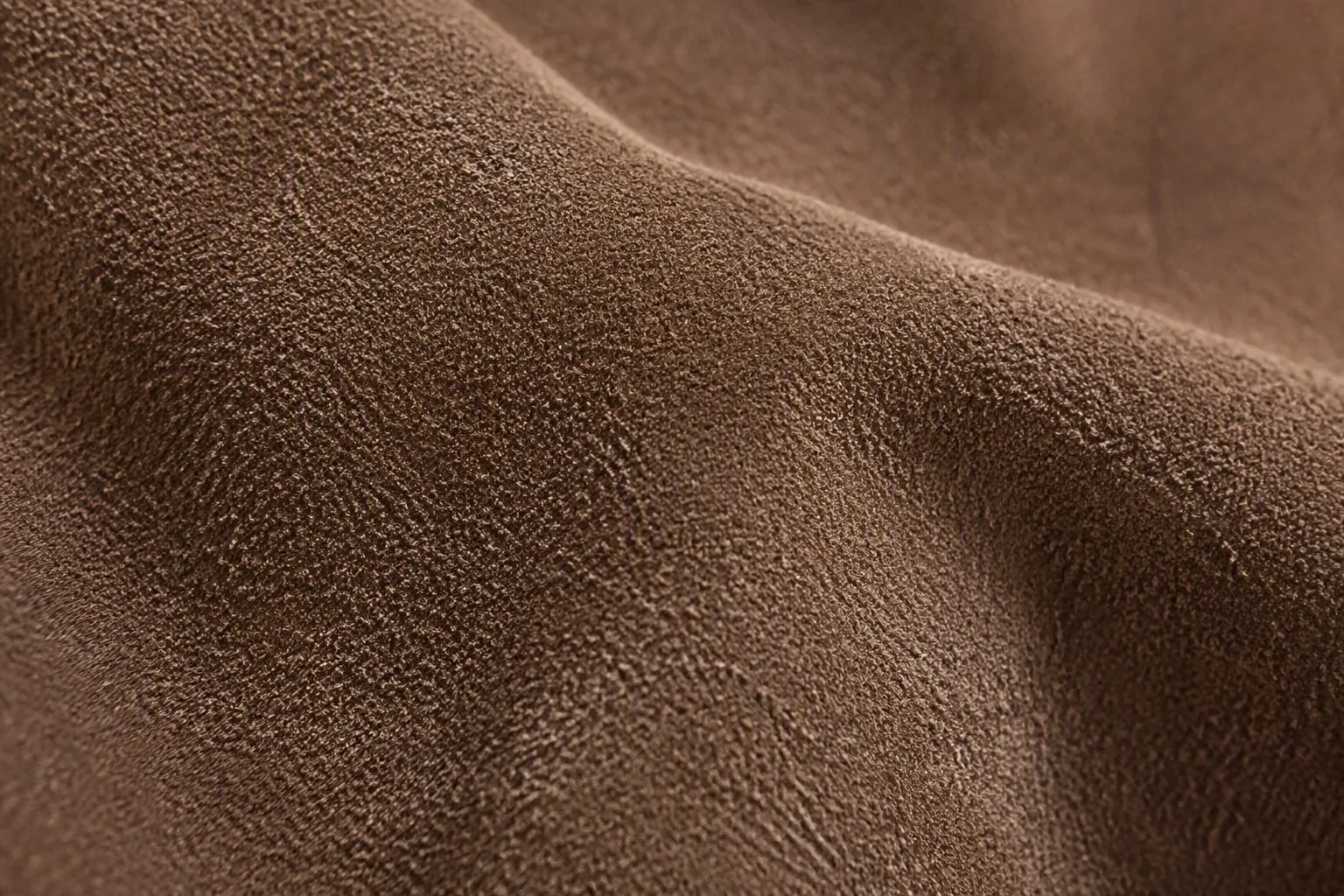
Suede’s reputation as a delicate material is one of the great myths of the leather world, and the myth causes more damage than the material ever could.
Where the myth comes from. Suede is a suede — the flesh side of the hide, sanded to create a soft nap. Because it has no glossy, sealed surface, owners assume it has no protection at all. In reality, the nap is the material’s natural surface, and it handles normal use extremely well. The bags we see back in our factory after years of service tell a different story from the myth: suede bags that were brushed, protected, and kept away from the wrong liquids look outstanding after half a decade.
The fear leads to neglect. Ironically, the belief that suede is fragile leads owners to do nothing — no brushing, no protection, no maintenance — until a stain happens, and then to panic-clean with the wrong products, which finishes the job the stain started. The correct approach is the opposite: regular, simple care, and a calm, specific response to accidents.
What suede actually is. Suede is leather. It is usually cowhide, split to the flesh side and sanded to raise a soft nap. Its properties come from that construction:
- It is soft and pliable, ideal for panels, linings, and trim.
- It is naturally breathable — comfortable against skin, never clammy.
- It is surprisingly abrasion-resistant: the nap hides light scuffs that would show on smooth leather.
- It is, however, a sponge for liquids and oils, which is where the real care requirement begins.
Manufacturer’s point: Suede is not delicate — it is absorbent. The difference matters: durability is about how it wears; absorbency is about how you treat accidents. Care for suede the way you would care for a fine wool coat — protection, brushing, and patience — and it will serve you for years.
What Suede Actually Is (and What It Is Not)
Before the care routine, it is worth being precise about the material, because “suede” and “nubuck” are constantly confused, and the two require different care.
Suede vs nubuck. Suede is the flesh side of the hide, sanded to a soft, slightly longer nap. Nubuck is the grain side (the outer surface) sanded to a finer, shorter nap. Nubuck is more expensive, more water-resistant (the grain side is denser), and more durable; suede is softer, more affordable, and more absorbent. In practice, the care routines are the same — brush, protect, treat stains gently — but nubuck tolerates more.
Suede vs smooth leather. Smooth leather has a sealed or finished surface; suede has a raw fiber nap. Water beads on finished leather; it soaks into suede. Stains wipe off smooth leather; they must be absorbed and lifted from suede. The two are different systems, and the biggest care mistake suede owners make is using smooth-leather products on suede — saddle soap, conditioners, and polishes that clog and stain the nap.
Real suede vs synthetic suede. Much of what is sold as suede is actually microfiber suede — a synthetic fabric with a suede-like nap. Synthetic suede is cheaper, more water-resistant, and easier to clean (machine washable in many cases). The care instructions in this guide apply to genuine leather suede; if your bag’s label says “microsuede” or “synthetic suede,” it follows fabric rules, not leather rules.
How suede is finished in the factory. Suede arrives from the tannery with its nap raised. In the bag factory, suede panels are cut with the nap direction consistent across the bag — you can see the nap runs one way, and the color changes subtly when you brush against it. The finish is deliberately minimal: no coating, no sealant, because the nap is the surface. That is why factory care advice for suede is almost always the same: protection first, brushing always, cleaning rarely.
What Ruins Suede: The Real Enemies
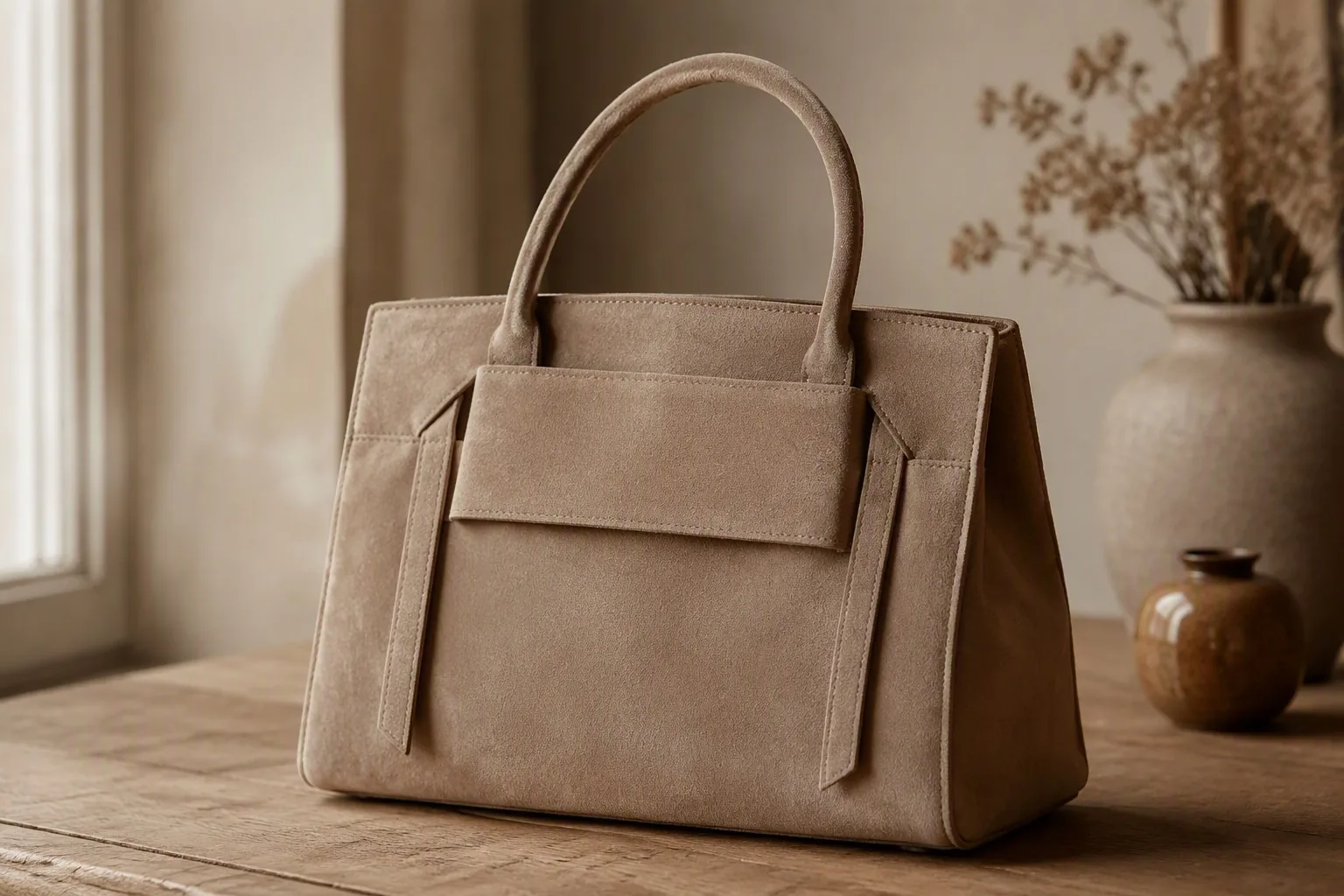
Knowing what truly damages suede is more useful than knowing how to clean it, because prevention is 90 percent of suede care. The enemies are specific and few.
Water, in quantity. A light drizzle that dries naturally will not destroy suede. A heavy rain, a spilled bottle, or a bag dropped in a puddle soaks the fibers, and as the water dries it can draw oils and dirt to the surface, leaving water marks and stiffness. The answer is protection (see below) and immediate, gentle blotting when wet.
Oil and grease. Oil is suede’s worst enemy. It soaks in, spreads, and attracts dirt — and it cannot be brushed away; it must be absorbed with powder. A salad dressing spill on a suede bag is a real incident. The good news: it is treatable if handled quickly.
Ink. Ink from pens is nearly permanent once it sets into the nap. The rule is never to carry an un-capped pen in a suede bag — and if ink happens, professional treatment is usually the only cure.
Rubbing and abrasion. The nap is fragile against friction. Rubbing a stain with a cloth pushes it deeper and flattens the nap; carrying a bag with the flap rubbing against a rough surface wears the nap unevenly. The golden rule of suede cleaning is: never rub — blot, brush, and absorb.
Heat and direct sun. Heat dries the natural oils in the leather and stiffens the nap. Drying a wet suede bag with a hairdryer or radiator is a classic mistake — it causes exactly the water marks the owner was trying to avoid.
The wrong products. Saddle soap, leather conditioners, polishes, and general “leather cleaner” all clog and stain suede. The suede-specific toolkit is short, and using anything outside it is how suede gets permanently damaged.
The Three Tools Every Suede Owner Needs
Suede care is not complicated because the toolkit is small. Three tools cover nearly everything.
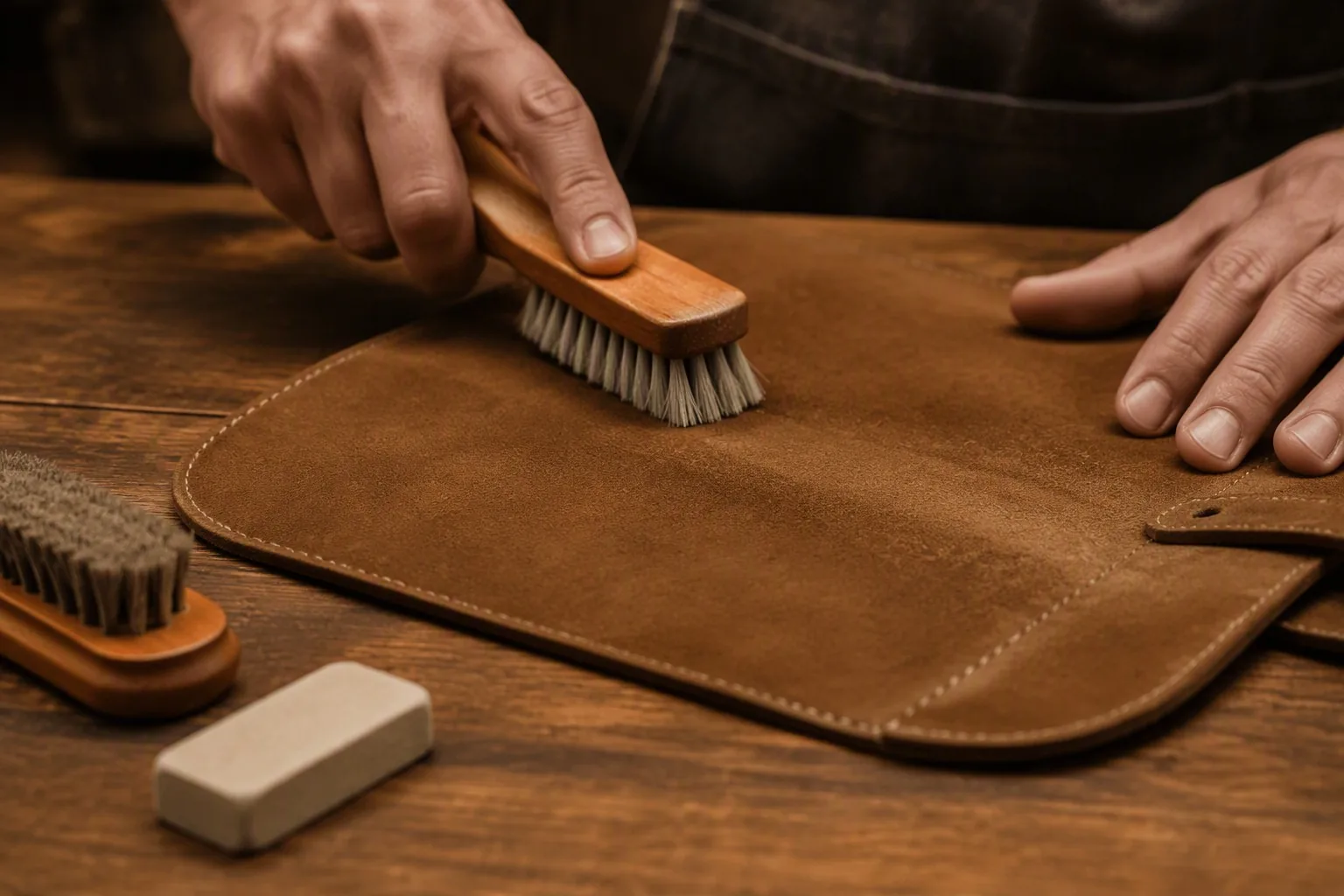
1. A suede brush. A soft brush with fine brass or nylon bristles is the most important tool. It lifts the nap, removes surface dirt, and revives flattened areas. Brush your suede bag weekly, always in one direction, and it will stay looking fresh for years.
2. A suede eraser (or crepe block). For marks and light stains, a suede eraser lifts the mark out of the nap without water. Rub gently, then brush the area to restore the nap. The eraser handles the small accidents — scuffs, dry marks, and spots that brush alone cannot remove.
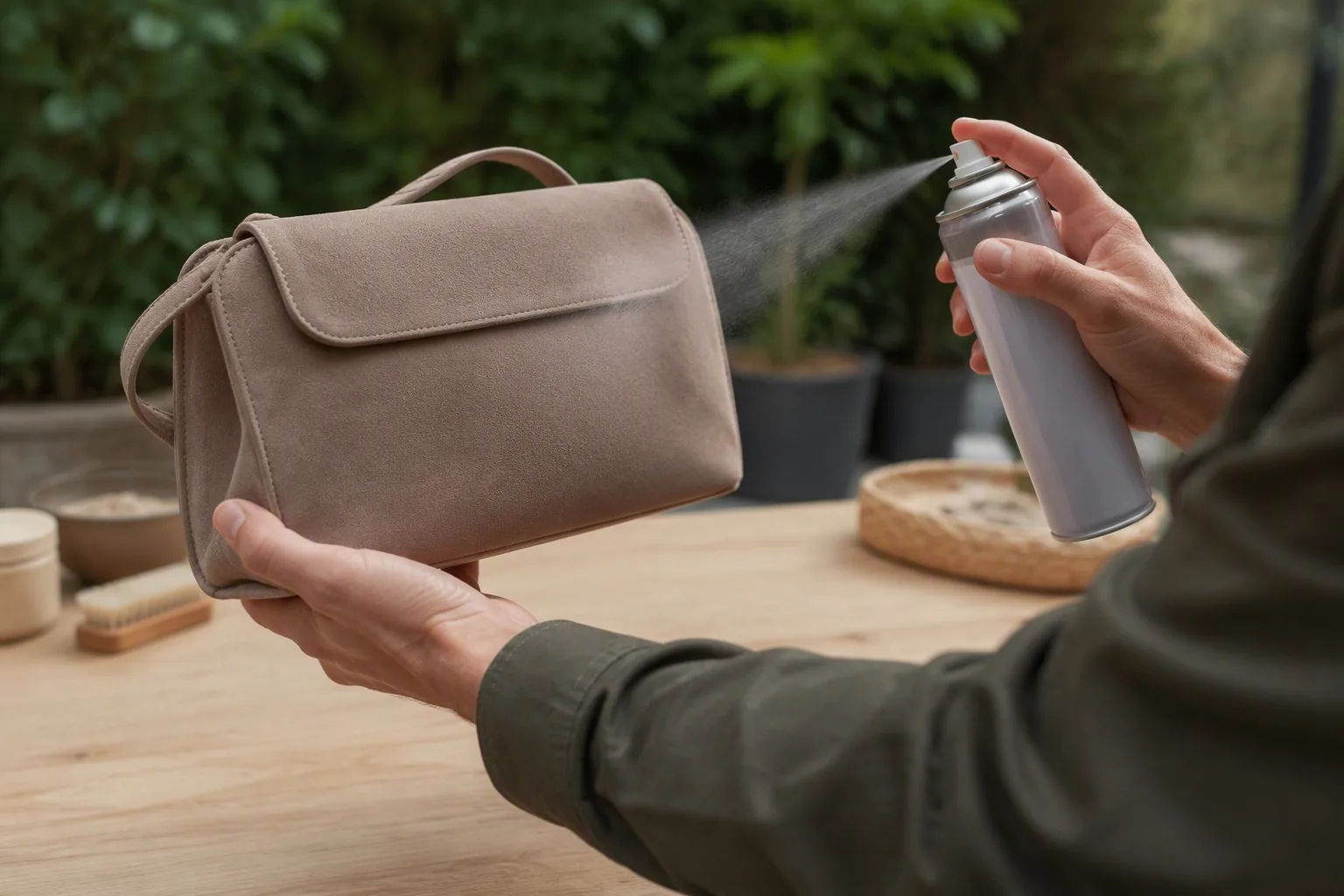
3. Suede protector spray. A fluoropolymer or silicone-based spray coats the nap with an invisible barrier that makes water bead instead of soak. Applied correctly and renewed regularly, it is the single most effective protection a suede bag can have. It does not make suede waterproof — it gives you the minutes you need to blot a spill before it becomes a stain.
Manufacturer’s point: If you own a suede bag, buy the brush and the protector first. Together they prevent 90 percent of the problems that send suede bags to repair shops. The eraser is the third tool, for the remaining 10 percent.
Daily Care: The Two-Minute Routine
The daily routine for suede is shorter than for smooth leather, because suede does not need conditioning — it needs brushing and protection.
Every week (two minutes):
- Brush the entire bag with a suede brush, in one direction, with light strokes. This lifts the nap, removes surface dust, and keeps the color even.
- Check the high-contact areas — the flap edge, the handles, the bottom corners — and brush them a little more.
- If you see a light mark, use the suede eraser on it before it settles.
Every few months (five minutes):
- Reapply suede protector spray in a well-ventilated area, holding the can about 20 cm from the bag and using even strokes.
- Let the bag dry fully away from heat before use.
- If the bag was exposed to heavy rain, reapply sooner — the barrier weakens with wear and washing.
What you should never do daily:
- Never condition suede with leather conditioner — it will darken and stiffen the nap.
- Never use water to “clean” suede as a routine — water is the last resort, not the first.
- Never store a suede bag in a plastic bag or in damp conditions — the nap needs to breathe.
Seasonal Care: Suede Through the Year
Suede’s needs change with the weather, and the seasonal rhythm is simple to follow. It turns suede from a material you worry about into a material you simply maintain.
Spring and summer: the easy season. Low rain and dry air mean suede is at its safest. The routine is brushing and nothing more. If the bag was heavily used, give it a full dry-clean — brush, eraser, foam if needed — and reapply protector before the autumn rains arrive. Summer is also the season to air the bag: suede left in a closet for months develops a musty smell, so let it breathe on a hanger for a day or two.
Autumn and winter: the rain season. This is when protection matters. Reapply suede protector spray before the first heavy rain of the season, and again mid-season. Carry habits change too: in heavy rain, tuck a suede bag under a coat or use a bag cover rather than risking a downpour. If the bag does get soaked, blot it, dry it slowly away from heat, and brush it back to life before storing it.
The storage season. Suede bags that will not be used for months need the right storage: a cotton dust bag, light paper stuffing to hold the shape, and a cool, dry, dark place — never a plastic bag, never a damp basement, never direct sun. Before long-term storage, clean the bag, protect it, and brush it, so it comes out of the closet ready to wear.
Cleaning Suede Properly
When a suede bag genuinely needs cleaning — not just brushing — the correct process is patient and dry first, wet only as a last resort.
The dry cleaning method (first choice):
- Brush the entire bag to remove surface dirt and lift the nap.
- Treat any visible marks with the suede eraser, rubbing gently.
- Brush again to restore the nap over the treated areas.
- If the bag is generally dull rather than stained, a suede-cleaning foam (specifically for suede, never general cleaner) can be applied sparingly and brushed out.
The wet method (only when truly necessary): If the bag has a set-in stain that dry methods cannot lift, use a suede-specific cleaner with a damp cloth:
- Test on an unseen spot first — the color change risk is real.
- Dampen a clean cloth with the suede cleaner — never soak the leather.
- Blot the stain gently, working from the edge inward, never rubbing.
- Let the area dry completely, away from heat.
- Brush the nap back up once dry, and apply protector spray to the cleaned area.
The rule that protects everything: When in doubt, do less. A visible but harmless mark is better than a clean, damaged bag. Suede cleaned too aggressively loses its nap, its color, and its softness — and those cannot be restored.
Stain Removal by Type
Different stains demand different responses, and the response time matters more than the product. Here is the manufacturer’s guide to the common accidents.
| Stain type | First response | Treatment | The rule |
|---|---|---|---|
| Water marks | Blot immediately with a dry cloth | Brush firmly after drying; if a ring remains, dampen the whole area lightly and dry evenly | Blot, never rub |
| Oil / grease | Blot gently, apply cornstarch or talc immediately | Leave powder on for several hours to absorb, brush out, repeat if needed | Powder absorbs; water pushes it deeper |
| Ink | Do not touch it | Professional treatment only — ink sets into the nap fast | Prevention is the only real cure |
| Mud / dirt | Let it dry completely | Brush off when dry; eraser for residue | Never brush wet mud |
| Food / drink | Blot, then dry-brush | Eraser, then suede foam if a mark remains | Time is the enemy — act fast |
The oil-stain drill, step by step. Oil is the most common serious accident, and the drill is simple:
- Blot the oil with a dry paper towel — do not rub, do not press hard.
- Cover the spot thickly with cornstarch or talcum powder.
- Leave it for several hours — overnight is better — so the powder draws the oil out.
- Brush the powder away and check the spot; repeat if it is still visible.
- If the stain persists after two rounds, take the bag to a professional suede cleaner.
Travel and Storage: Suede on the Move
Suede travels differently from smooth leather, and a few habits prevent most travel damage.
Packing suede in a suitcase. The enemy in luggage is pressure and friction: a suede bag pressed against other items develops flattened nap and transfer marks. Pack a suede bag in its cotton dust bag, stuff it lightly with paper or soft cloth to hold its shape, and place it where it will not be crushed — on top, not at the bottom. Never wrap suede in plastic; it needs to breathe.
Carrying suede in the city. The daily risks are rain, restaurant tables, and the car. Wipe a wet table before setting the bag down; keep the bag off the floor of the car; and if rain threatens, carry the bag under a jacket or in a cover. The two-minute rule applies everywhere: blot any spill within minutes, and the stain usually never happens.
Hotel-room care. When a suede bag has been out all day, take two minutes before bed: brush it, check for marks, and treat anything found while it is fresh. Morning suede that was brushed the night before looks better than noon suede that was never touched.
Protecting Suede Before the Rain
The best cleaning is the cleaning that never needs to happen, and for suede that means protection. Suede protector spray is the closest thing to a shield this material can have.
How protector spray works. The spray deposits an invisible fluoropolymer film on the nap that changes how liquids interact with the surface. Water beads and rolls off instead of soaking in; dirt sits on the surface where brushing removes it. The protection is not absolute — a heavy rain will still overwhelm it — but it buys the critical minutes that turn a potential stain into a non-event.
Applying it correctly:
- Use a protector made specifically for suede and nubuck — never a general fabric protector.
- Apply outdoors or in a ventilated area; the propellant is strong.
- Hold the can about 20 cm from the surface and spray in even, sweeping strokes.
- One light coat is usually enough; two coats for high-use bags.
- Let the bag dry for several hours, away from heat, before use.
- Reapply every few months, or after heavy rain or heavy use.
What protection cannot do. Protection does not make suede waterproof, and it does not forgive neglect. A protected bag still needs brushing, still needs prompt blotting, and still needs the right response to oil and ink. Think of the spray as a shield that reduces damage, not an invincibility cloak.
Suede vs Nubuck vs Other Leathers
Suede earns its place in the leather family, and knowing how it compares helps you choose the right material for the right bag — and care for it correctly.
| Property | Suede | Nubuck | Smooth finished leather | Pull-up leather |
|---|---|---|---|---|
| Surface | Flesh side, soft nap | Grain side, fine nap | Sealed, glossy finish | Oiled, reacts to touch |
| Softness | Very soft | Soft, firmer | Firm | Firm |
| Water behavior | Absorbs quickly | Absorbs slowly | Beads | Beads naturally |
| Scuff resistance | Good (nap hides marks) | Good | Weak (shows marks) | Good (self-heals) |
| Care level | Brush + protect | Brush + protect | Condition occasionally | Condition rarely |
| Best for | Fashion bags, trim | Premium everyday bags | Workhorse bags | Lifestyle bags |
| Price | Budget to mid | Premium | Budget to premium | Mid to premium |
The practical summary. If you want the softest, most tactile surface and are willing to protect and brush it, suede is a wonderful choice for fashion-forward bags and accent panels. If you want a similar look with more toughness, nubuck is the upgrade. If you want zero surface maintenance, choose smooth or pull-up leather. Suede’s care requirement is not high — it is specific.
From the Factory: How We Finish Suede Bags
As a factory, we see suede from the other side of the process, and a few factory realities are worth sharing because they explain both the material’s strengths and its care needs.
Suede is a premium material, not a cheap one. Quality suede comes from the flesh side of good hides, sanded with precision to an even nap. Cheap suede is made from poor hides with uneven nap and weak color. The price difference shows in how the bag looks and how it survives. A well-made suede bag is not a budget product — it is a material choice.
The nap direction is a design decision. Every suede panel is cut with the nap running one way; brushing against the nap darkens the color, brushing with it lightens it. Factories match nap direction across a bag so the color reads even — and owners can keep it even by always brushing in one direction.
Suede is finished with restraint. No coating, no sealant — the nap is the finish. This is why factory care advice is consistent across makers: protect it, brush it, clean it rarely, and treat accidents immediately. The material needs no more than that, and needs less than most owners think.
How to spot quality suede when you buy. The differences between good and poor suede are visible, and a quick check protects you from disappointment:
- Feel the nap. Quality suede is uniformly soft with an even nap; poor suede feels patchy, stiff, or bristly in places.
- Look at the color. Good suede is evenly dyed; cheap suede shows lighter edges and inconsistent tones.
- Run your hand against the nap. Quality suede changes shade evenly as you brush it; poor suede changes unevenly, revealing its cheap construction.
- Check the back. The reverse side of quality suede is clean and uniform; splits and flaws visible on the back mean the hide was poor.
- Ask about the source. A reputable seller knows whether the suede is cowhide, lamb, or goat, and can tell you its origin. Vague answers usually mean the material quality is a secret.
What we tell brands who sell suede bags: include a care card. The single most effective way to protect a suede bag’s reputation is to tell the owner, in the box, that suede is not fragile, that brushing is weekly, that protection is seasonal, and that oil is the enemy. Owners who know this keep their bags beautiful — and they come back for the next one.
When to Call a Professional
Suede has its limits, and knowing them saves both the bag and the money. Most care is DIY — but some situations belong to a professional suede cleaner, and the earlier you go, the better the outcome.
Take it to a professional when: ink has touched the bag; an oil stain survived two rounds of powder treatment; the bag was soaked and dried stiff; or the nap is worn, shiny, or uneven from years of friction. A professional suede cleaner has industrial brushes, specialized solvents, and re-dyeing capability that no home kit can match.
What a professional cannot fix. A deep cut or tear, a burn mark, and long-ignored ink stains may be beyond repair even for experts. The honest rule is the same one our factory uses: prevention is cheap, early treatment is affordable, and late repair is expensive — so the moment a serious stain happens is the moment to act, not the moment to wait.
Frequently Asked Questions
Can you get a suede bag wet?
Light rain that dries naturally will not ruin suede, especially if the bag is protected with suede spray. Heavy soaking is the real danger — it causes water marks and stiffness. Blot wet suede gently with a dry cloth and let it dry away from heat.
How do you clean a suede bag?
Brush it weekly in one direction with a suede brush, use a suede eraser on light marks, and clean it with suede-specific foam only when truly needed. Water and general leather cleaners should be avoided — they damage the nap.
Does suede waterproofing spray work?
Yes. Suede protector spray makes water bead and roll off instead of soaking in, giving you time to blot spills before they stain. It must be reapplied every few months and after heavy rain. It protects — it does not make suede fully waterproof.
How do you get oil out of suede?
Blot the oil gently, cover the spot thickly with cornstarch or talcum powder, leave it for several hours or overnight, then brush it out. Repeat if needed. If the stain remains after two rounds, take the bag to a professional.
Can I use regular leather conditioner on suede?
No. Leather conditioners are made for smooth, finished leather; on suede they darken, stiffen, and clog the nap. Suede needs no conditioning — it needs brushing and protection.
What is the difference between suede and nubuck?
Suede is the flesh side of the hide, sanded to a soft nap. Nubuck is the grain side, sanded to a finer, shorter nap. Nubuck is denser, more water-resistant, and more durable; suede is softer and more affordable. Care is similar for both.
How do I revive flattened suede?
Brush the area firmly in one direction with a suede brush to lift the nap back up. For stubborn flat spots, hold the area over steam briefly — the moisture raises the fibers — then brush when dry. Steam, not water, is the revival tool.
Can ink be removed from suede?
Ink is the hardest stain to remove from suede because it sets into the nap quickly. Do not rub it. Professional suede cleaning is usually the only reliable cure, and even then it is not guaranteed. Prevention — never carrying un-capped pens — is the real answer.
The Bottom Line
Suede is not the fragile material its reputation suggests. It is an absorbent one — and absorbency is managed with three simple habits: protect it before the rain, brush it weekly, and treat accidents with the right, gentle response. Owned this way, a suede bag develops a soft, lived-in beauty that no smooth leather can imitate, and it will still look elegant years after purchase.
The factory’s advice in one line: love the nap, respect the oil, and never let anyone clean your suede with saddle soap.
