
Pull-Up Leather Color Changes: What to Expect and How to Care
Pull-Up Leather Color Changes: What to Expect and How to Care
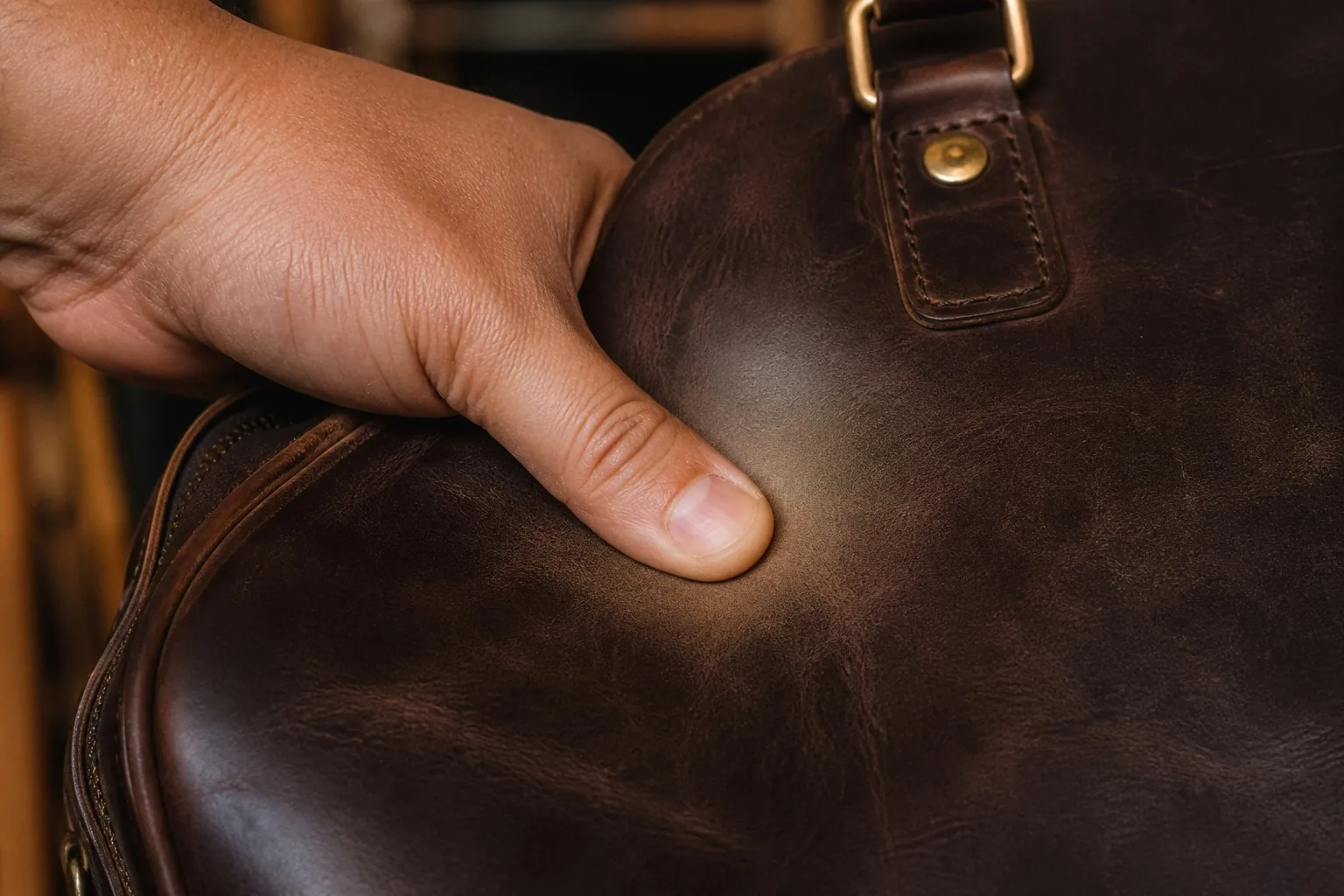
There is a moment every pull-up leather owner remembers: the first time they touch the bag and the color actually changes under their fingers. The dark brown leather turns lighter where it was pressed, like the surface is alive. Some owners find it fascinating. Others assume the bag is defective, or that they have damaged it. Neither reaction is wrong — but both miss the point. The color change is not a flaw, and it is not damage. It is the signature of the material itself, and it is exactly what makes pull-up leather one of the most beautiful and misunderstood leathers in bag making.
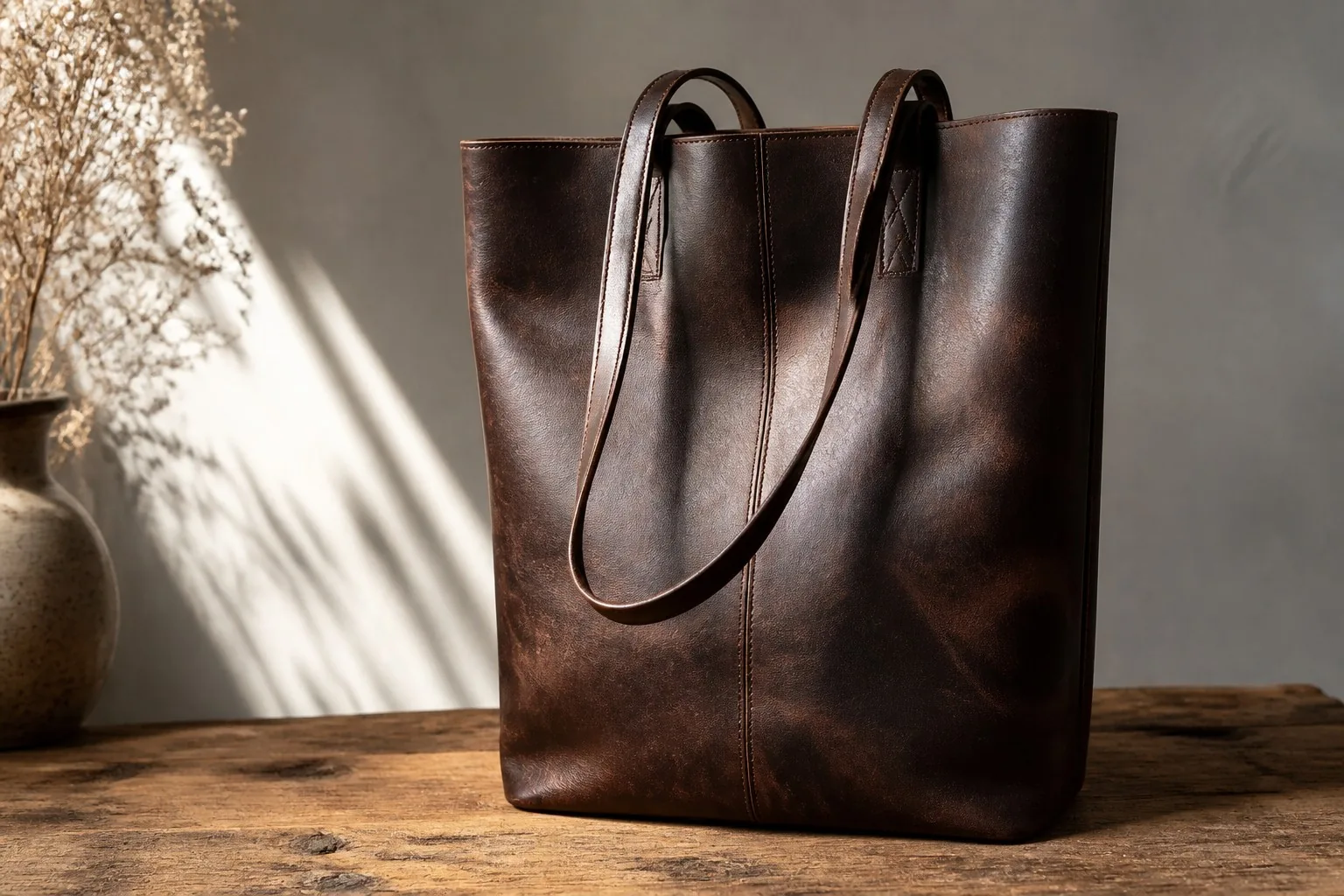
From where we sit, as a bag factory that works with pull-up leather every week, the confusion is predictable. Almost every other leather is built to resist change: it is finished, sealed, and protected so the color stays put. Pull-up leather is the opposite. It is oiled and waxed so that the finish lives inside the leather, not on top of it — and that is why the color moves, why scratches lighten and then fade back, and why no two pull-up bags ever look the same. This guide explains what pull-up leather is, why it changes color, what to expect as it ages, and how to care for it properly.
- The Moment That Confuses Every New Owner
- The Pull-Up Family: Names, Terms and Confusion
- What Pull-Up Leather Actually Is
- Why the Color Moves: The Science of Pull-Up
- The Truth About Water and Moisture
- What Is a Scratch, and What Is Damage?
- Daily Habits That Protect the Color
- Pull-Up vs Other Leathers: How It Compares
- How to Care for Pull-Up Leather
- How It Ages: The Pull-Up Patina
- From the Factory: Choosing Pull-Up for Your Bag
- How We Test Pull-Up Before Production
- Frequently Asked Questions
- The Bottom Line
The Moment That Confuses Every New Owner
A pull-up bag arrives looking perfect: a deep, even color with a soft, waxy sheen. The owner runs a hand across it, and the surface lightens where the hand passed. An hour later it has darkened back. The first reaction is usually alarm. The second is a test — pressing harder, scratching gently, watching the marks appear and disappear. This is not the behavior of a damaged bag. It is the behavior of a material that was designed to react.
Why the reaction feels alarming. Every other leather you have owned was probably finished with a sealed coating. The color is locked on the surface, and any mark stays visible. Pull-up leather flips that expectation: the color is not a coating but a condition of the leather itself, and touching it changes how the light reflects. What feels like damage is actually the leather’s most honest quality — it records every touch, then slowly forgets it.
What new owners usually ask us. The questions we hear most from customers of pull-up bags are remarkably consistent:
- “My bag changed color where I touched it — is it ruined?”
- “I scratched it and it turned light — can it be fixed?”
- “The color is uneven across the bag — was it dyed wrong?”
- “Should I condition it more so the color stops changing?”
The answer to all four is the same: the behavior is normal, the scratch will fade, the unevenness is character, and conditioning will not stop the pull-up effect — it is supposed to be there.
Manufacturer’s point: Pull-up leather is not defective when it changes color — that is the material working as designed. The mark will relax back as the oils redistribute. The only real enemies of pull-up leather are heat, harsh chemicals, and soaking water.
The Pull-Up Family: Names, Terms and Confusion
Pull-up leather travels under many names, and the terminology confuses buyers more than the material itself. Different brands and regions use different labels for essentially the same family of leathers — and a few of the names mean something slightly different.
The common names you will meet:
- Pull-up leather / oil-pull leather: the general family name; oils worked into the hide, color lightens under pressure.
- Waxed leather: pull-up with a visible surface wax; matte feel, develops a burnished sheen where handled.
- Antique leather: a technique where a darker tone is applied over a lighter base and then partially wiped, creating an aged, two-tone look; often combined with pull-up oils.
- Tea-core leather: dyed on the surface with the natural base color underneath; as the surface wears, the lighter core shows through — a related but different aging concept.
- Crazy horse leather: a popular commercial name for a heavy pull-up / waxed leather with a rustic, two-tone character; the term comes from a classic boot leather.
- Nubuck-pull-up hybrids: oiled nubuck with a soft nap that also pulls; a niche but growing choice.
Why the names matter less than the test. A brand can call its leather almost anything, and the labels above overlap heavily in practice. What actually matters is the behavior, and there is one reliable way to check: press the leather firmly with a thumb. If the color lightens around the pressure point and slowly returns, it is a genuine pull-up. If nothing happens, it is a coated leather wearing a pull-up name.
Manufacturer’s point: The name on the label is marketing; the thumb test is physics. Always test the pull-up effect before you pay a premium for it.
What Pull-Up Leather Actually Is
Pull-up leather — also called oil-pull leather or waxed leather — is a finished leather in which oils and waxes are worked deep into the hide during finishing, rather than sealed on top. The name comes from the effect: when the leather is stretched or pressed, the oils move away from the pressure point, and the color visibly “pulls” lighter.
How it is made. The process starts with a tanned hide — usually cowhide, almost always chrome-tanned for flexibility, then dyed through. The finisher then works a blend of natural oils and waxes into the leather, often by hand or with heavy rollers, forcing the fats deep into the fiber structure. The result is a leather that is saturated with its own finish: flexible, water-resistant by nature, and colored from the inside out.
The types of pull-up leather. Not all pull-up is the same, and the differences matter when you buy:
- Classic pull-up: oils worked into a dyed leather; the pull-up effect is moderate and the leather stays fairly firm.
- Heavy pull-up: more wax, more pronounced color shift; scratches and bends show dramatic lightening that fades slowly.
- Waxed pull-up (waxed leather): a visible wax coating on the surface on top of the oiled leather; it has a matte, waxy feel and develops a burnished sheen where it is handled.
- Two-tone pull-up: dyed in two shades so the pull-up effect reveals a different base color underneath — the most dramatic version of the effect.
What pull-up is not. Pull-up leather is frequently confused with other finishes, and the distinction is worth making. It is not patent leather (glossy, sealed, no reaction). It is not aniline leather in the strict sense, though the two are often combined. And it is certainly not “color that rubs off” — the color is inside the leather, not on top of it.
Why the Color Moves: The Science of Pull-Up
The pull-up effect is simple physics and chemistry, and understanding it removes the mystery — and the worry — from owning this leather.
Oils move, light changes. The leather is saturated with oil and wax. When you press, bend, or scratch the surface, you mechanically push those oils away from the point of contact. The displaced oils leave a thinner film in that spot, the surface texture changes slightly, and the way light scatters changes with it. The result: the spot appears lighter, often with a different tone — sometimes dramatically so.
The color returns because the oils return. Oils do not stay displaced forever. Over minutes, hours, or days, the oil and wax gradually flow back and redistribute across the area. The lightening fades, and the color returns to its original depth. The speed of the recovery depends on temperature (warmth speeds it up), the weight of the oil (heavier oils recover faster), and how deep the pressure went.
The permanent part of the change. Not all color change is temporary. Repeated handling in one place — a handle, a flap corner — permanently redistributes the oils in that area over time. The leather darkens and takes on a soft sheen, like the surface has been polished by use. This is the pull-up patina, and it is exactly what owners of this leather eventually learn to love: the bag records where it has been held, and the map of its use becomes its beauty.
Manufacturer’s point: If the color on a pull-up bag did not change when touched, you would have reason to worry — it would mean the leather was coated, and the pull-up character was fake.
The Truth About Water and Moisture
Water is the one element that genuinely threatens pull-up leather, and the truth is more nuanced than a simple “keep it dry” warning.
A splash is not a disaster. The oils in pull-up leather give it a natural water resistance that most leathers lack. A rain splash, a spilled drink quickly wiped, or a damp tabletop will not ruin the bag — the water beads and dries, and the oils protect the fibers underneath. Let the bag air-dry naturally, away from heat, and it will be fine.
A soak is a different story. Prolonged soaking forces water into the fiber structure and washes oils out of the leather. The leather then dries stiff, loses its color depth, and may develop blotchy pale patches where the oils left. A fully soaked pull-up bag needs professional re-oiling — it is the most serious injury this leather can suffer.
The care response to water:
- Wipe off spills immediately with a soft dry cloth — never rub hard.
- Air-dry naturally at room temperature; never use a hairdryer, radiator, or direct sun.
- If the leather feels stiff or pale after drying, apply a light coat of pull-up conditioner to help the oils rebalance.
- For daily carry in heavy rain, a waterproofer made for oil-pull leather adds a useful layer of protection.
What Is a Scratch, and What Is Damage?
The most common worry with pull-up leather is scratching, and it deserves a straight answer: light scratches are a feature, deep cuts are damage, and the difference is easy to understand.
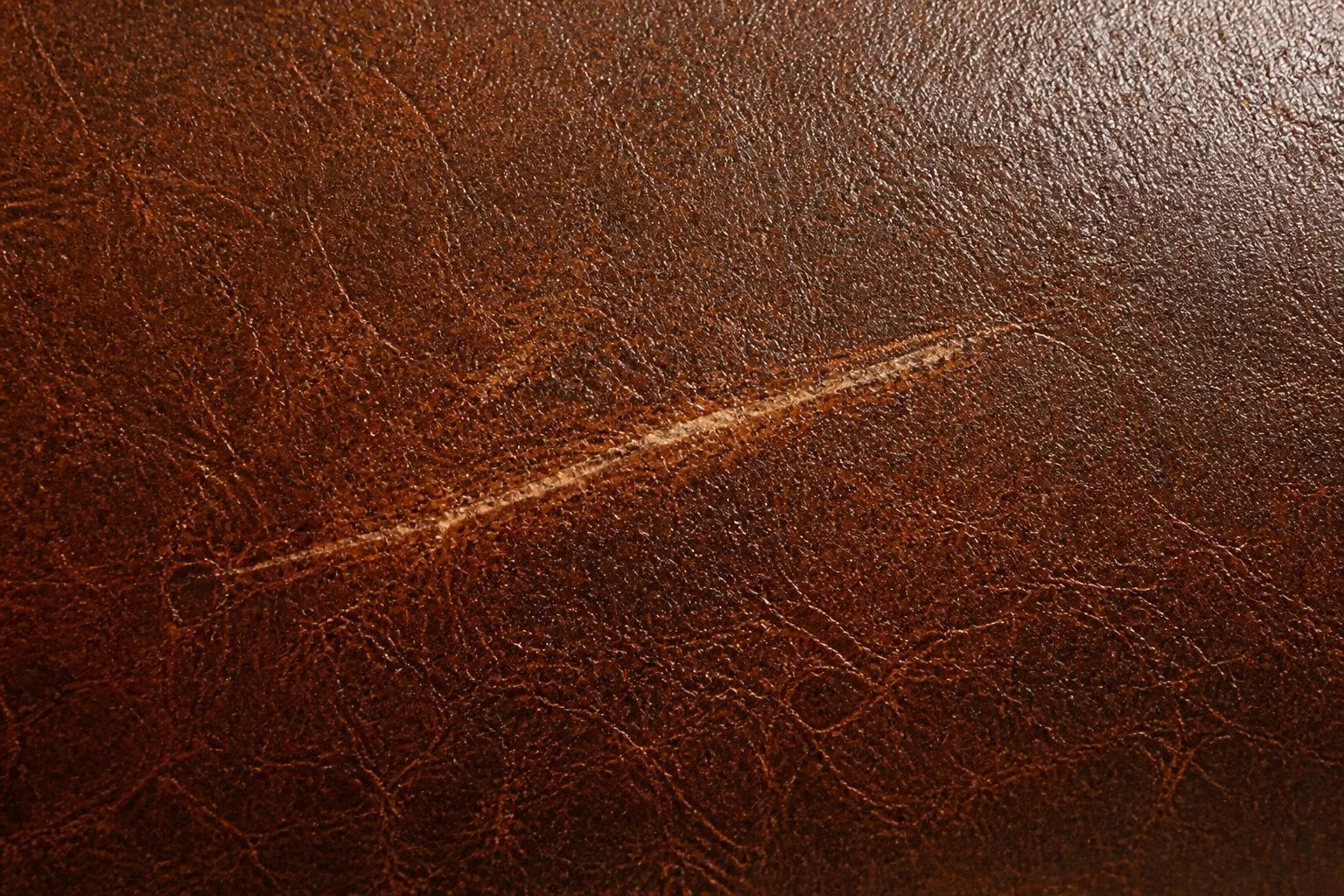
Light scratches heal. Run a fingernail across pull-up leather and it leaves a light line — sometimes almost white. Wait a few minutes and the line fades as the oils flow back. The scratch is not a tear in the leather; it is a temporary redistribution of the finish. This “self-healing” behavior is the most beloved property of pull-up leather, and it is the reason the material is so popular for bags that get used hard.
Heavy pressure marks linger. A deep press or a sharp object can push the oils far enough that recovery takes days, and a mark may remain faintly visible for a long time. Even then, the mark is usually not damage — it is a memory of the event, and it will continue to soften with time and conditioning.
Real damage is different. The things that genuinely damage pull-up leather are:
- A sharp cut through the surface — a knife, a snag on a nail; this is a real tear that conditioning cannot fix.
- Soaking in water — water displaces and washes out the oils, leaving the leather stiff and blotchy.
- Heat — a car dashboard, a hot iron; heat thins the oils and dries the leather.
- Solvents and harsh cleaners — alcohol, acetone, and household cleaners strip the oils and leave permanent pale patches.
Daily Habits That Protect the Color
The pull-up effect will happen — that is the design. But a few daily habits keep the aging even and beautiful instead of blotchy, and they cost nothing.
Carry habits. Rotate the bag if you have several, so no single point gets all the handling. Keep heavy, sharp objects in inner pockets rather than pressed against the leather walls. Zip the bag when storing it, and never hang it from the handles — the constant stretch of one spot changes the color there permanently.
Pocket habits. Pens that leak, keys that scratch, and phones that heat up are the everyday risks. A pen slip can leave a line that fades only slowly; a hot phone pressed against the leather for hours can thin the oils in one spot. A simple inner pocket or a small pouch prevents most of it.
Sun habits. Brief sunlight is harmless and even helps the color develop warmth. Long, direct sun is different: it thins the oils and dries the leather, and the areas facing the window will age faster than the rest. Store the bag out of direct sun when it is not being carried.
The check-in habit. Once a month, look the bag over: wipe it with a dry cloth, check for any spot that feels dry or pale, and address it early. A small dry patch treated in time is invisible; the same patch ignored for a year is permanent.
Pull-Up vs Other Leathers: How It Compares
To understand pull-up leather’s place, it helps to set it beside the other finishes a buyer will meet. The table below is the comparison we use when brands ask us whether pull-up is right for their bags.
| Property | Pull-up leather | Aniline leather | Semi-aniline | Finished (pigmented) leather |
|---|---|---|---|---|
| Surface finish | Oils & wax in the leather | Dye only, no coating | Light coating | Heavy sealed coating |
| Color reaction | Changes on touch, heals | Rich, natural variation | Minimal change | Color locked |
| Scratch behavior | Fades back over time | Visible, permanent | Minor marks | Very resistant |
| Water resistance | Good natural resistance | Low | Moderate | High |
| Patina character | Strong, burnished sheen | Deep, natural | Moderate | Little change |
| Price range | Mid to premium | Premium | Mid to premium | Budget to mid |
| Best suited for | Bags, boots, lifestyle goods | High-end luxury goods | Everyday luxury | Budget-friendly bags |
What the comparison shows. Pull-up leather sits in an unusual position: it is tough, water-resistant, and self-healing, yet it develops a rich, personal patina that finished leathers never show. Aniline leather is more delicate; finished leather is more uniform. Pull-up is the middle path — the leather that can take daily abuse and still look more beautiful every year.
How to Care for Pull-Up Leather
Pull-up leather is one of the easiest leathers to live with — it needs less, not more, than most finished leathers. The care rules are simple and few.
The golden rule: condition less, not more. Pull-up leather is already saturated with oil. Over-conditioning is the most common mistake owners make — it makes the leather greasy, darkens it unevenly, and slows the pull-up effect. A quality pull-up bag needs conditioning only once or twice a year, and always with a light hand and a product designed for oil-pull leather.
The daily routine. There is almost nothing to do day to day: wipe the bag with a soft dry cloth to remove dust, keep it away from heat and direct sun for long periods, and let wet spots air-dry naturally away from heat. The leather itself does most of the work.
The occasional deep care. Once or twice a year, or after heavy use:
- Wipe the bag clean with a soft, slightly damp cloth and let it dry completely.
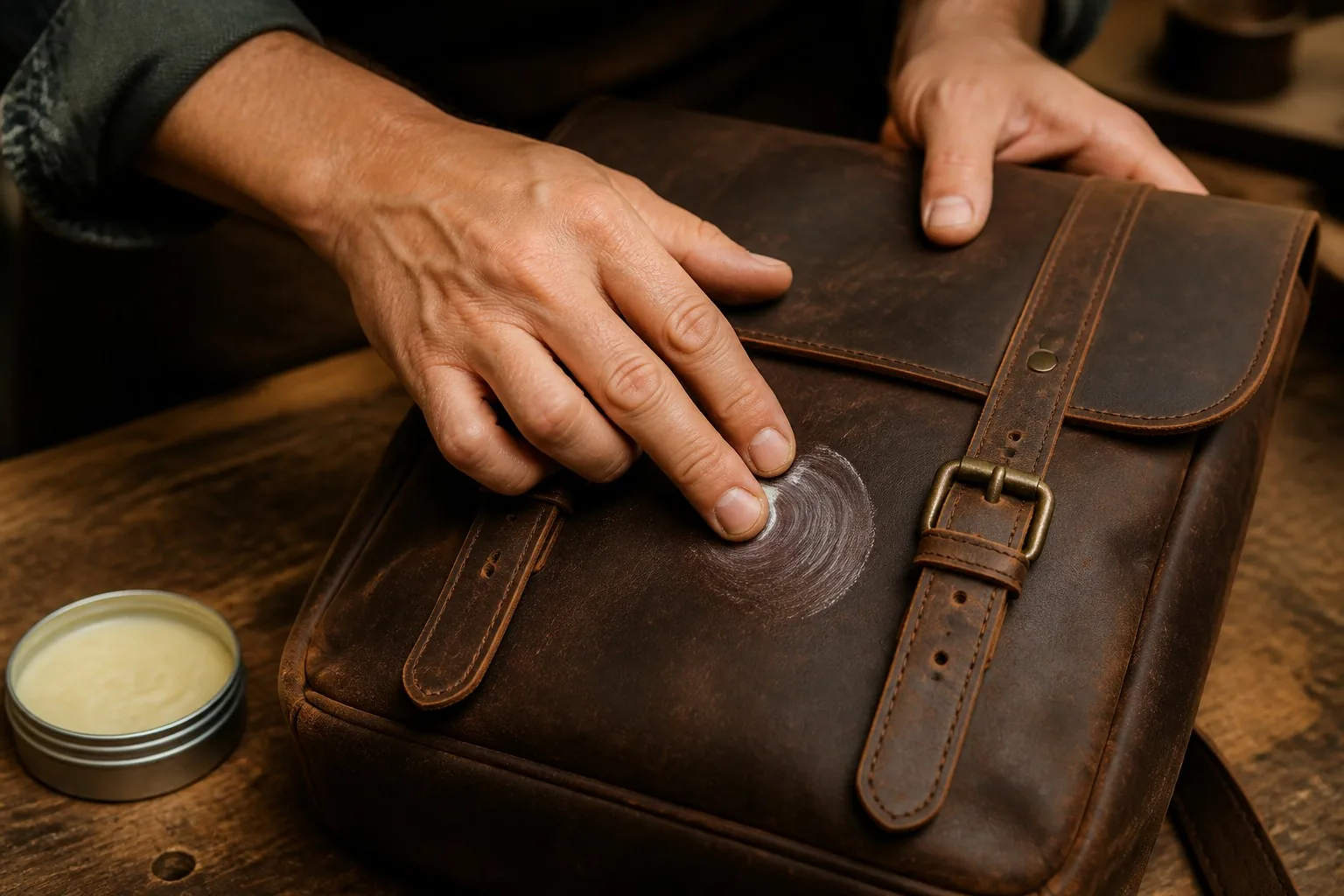
- Apply a small amount of pull-up-specific conditioner or a neutral leather balm with a soft cloth, working in small circles.
- Let the conditioner absorb for several hours, then buff gently with a dry cloth.
- If the leather feels dry or the pull-up effect has slowed, apply a second light coat.
What to avoid, always:
- Never use saddle soap, alcohol, acetone, or household cleaners — they strip the oils.
- Never soak the leather or dry it with heat.
- Never store a pull-up bag in plastic or in a hot car — heat and trapped moisture are the real enemies.
- Avoid over-conditioning: if the leather feels greasy or looks patchy, stop conditioning for a year.
Manufacturer’s point: Pull-up leather is forgiving by design. A light scratch will fade, a fingerprint will disappear, and a damp spot will dry out even. The one thing that truly hurts it is aggressive cleaning — the “more care” instinct that damages the leather’s own finish.
How It Ages: The Pull-Up Patina
Pull-up leather ages in a way that is distinct from both vegetable-tanned and finished leather, and the aging is the reason so many owners never want any other material.
The look of a well-aged pull-up bag. Handled areas darken and develop a soft, burnished sheen — like polished wood. The color deepens overall, moving toward a rich, warm tone. Light scratches appear and fade as the bag is used, layering tiny memories into the surface. The bag develops what craftspeople call “life”: an iridescent depth that no new bag, however expensive, can imitate.
What does not happen. Unlike vegetable-tanned leather, pull-up does not dramatically change color from sunlight — the oils and dyes are more stable. Unlike finished leather, it does not peel, crack, or look tired with age. Its aging is gradual, warm, and always attractive.
The timeline owners can expect:
| Stage | Time | What you see |
|---|---|---|
| New | Day one | Even color, waxy sheen, strong pull-up reaction |
| Breaking in | Months 1–6 | Handled areas begin to darken; scratches heal faster |
| Developing | Years 1–3 | Burnished sheen appears; color deepens unevenly and beautifully |
| Mature | Years 3+ | Rich, warm patina; a map of use; unmistakably one of a kind |
From the Factory: Choosing Pull-Up for Your Bag
As a factory, we see both sides of the pull-up decision: brands who love it for its character, and brands who discover too late that it is not for every product. The choice should be deliberate.
When pull-up is the right choice. Pull-up leather suits bags that will be used, handled, and aged on purpose: totes, messenger bags, backpacks, camera bags, and lifestyle bags where the owner values a personal patina. It is also an excellent choice for brands that want a premium feel without the fragility of aniline leather.
When it is the wrong choice. Pull-up is a poor fit for formal or uniform products where color consistency matters — dress bags, corporate gifts, or designs where every piece must look identical. The natural variation between hides, and the color reaction itself, will always break uniformity.
The price question. Pull-up leather costs more than standard finished leather for a simple reason: the oil and wax loading is an additional process, and the hides are selected more carefully because the effect reveals every defect. The premium is usually modest — but it buys the self-healing surface, the water resistance, and the patina that no coated leather can match. For brands, the price conversation is easy: pull-up is one of the few materials where the aging itself is the selling point.
What we tell brands before they commit:
- Show customers the pull-up effect in advance — put a care card in the box explaining that color change is normal.
- Accept the variation: no two pull-up hides are the same, and even one bag will develop unevenly. That is the design.
- Test the leather before production: some pull-up hides pull more than others, and the effect must match the brand’s story.
- Match the leather weight to the bag: pull-up is typically 1.2–1.6 mm for soft bags and 1.6–2.2 mm for structured ones, and the pull-up effect varies with thickness.
How We Test Pull-Up Before Production
Before any pull-up leather reaches a production line, it passes through a small battery of tests in our factory — the same tests a buyer can roughly perform in a store, and the ones that separate genuine pull-up from leather that merely claims the name.
The thumb-press test. The most direct test: press firmly with a thumb for a few seconds. Genuine pull-up lightens immediately and returns to full color within a minute or two. We time it — slow recovery means heavy wax (fine, but different), no recovery means no pull-up.
The scratch-recovery test. A light fingernail scratch should fade noticeably within five minutes and largely disappear within a day. We test at several points across the hide, because the pull-up effect varies across the leather, just like the grain does.
The water-bead test. A drop of water should bead on the surface and sit there without soaking in for a minute or more. If the water soaks in immediately, the oil load is low and the leather will not perform as pull-up.
The bend test. Fold the leather firmly and release. The crease should lighten strongly — that is the pull-up signature — and then relax back. A crease that stays pale indicates the oils have dried out or the leather is coated.
The balance test. Finally, we check that the finish is balanced: not so oily that it feels greasy, not so dry that it barely pulls. The right pull-up leather sits in the middle — oiled enough to react, firm enough to build structure, and consistent enough that the first production batch matches the approved sample.
Frequently Asked Questions
Why does my pull-up leather bag change color when I touch it?
Pull-up leather is saturated with oils and waxes. Pressing or bending the leather pushes those oils away from the point of contact, and the surface temporarily lightens where the finish thins. As the oils flow back, the color returns — usually within minutes to hours.
Does a scratch on pull-up leather heal?
Light scratches do heal: they are a redistribution of the oil and wax, not a tear in the leather, and they fade as the oils flow back. Deep cuts through the surface are real damage and need professional repair.
How often should I condition pull-up leather?
Only once or twice a year, with a light hand. Pull-up leather is already saturated with oil, and over-conditioning makes it greasy, darkens it unevenly, and slows the color reaction. Less care is usually more.
Can I use regular leather conditioner on pull-up leather?
A neutral leather balm or a conditioner made for oil-pull leather works best. Avoid heavy creams, saddle soap, and anything with solvents or alcohol — they strip the oils that give pull-up its character.
What is the difference between pull-up and waxed leather?
Pull-up refers to leather with oils worked deep into the hide, which lightens under pressure. Waxed leather is pull-up with an additional surface wax coating — it feels waxier, shows handling marks more clearly, and develops a burnished sheen where it is touched.
Is pull-up leather durable for everyday bags?
Yes. Pull-up leather is one of the most durable finished leathers: it resists water, self-heals light scratches, and ages gracefully. It is a popular choice for totes, backpacks, and lifestyle bags that get used hard.
Will the color of my pull-up bag even out again?
The light marks from handling will fade as oils redistribute, but long-term darkening of handled areas is permanent — and it is the patina that gives the bag character. If you want a uniform look forever, pull-up is not the right leather.
Can I waterproof pull-up leather?
Pull-up leather already has good natural water resistance from its oils. A light application of a waterproofer designed for oil-pull leather can help, but heavy waterproofing products can block the pull-up effect and change the look. Test on a hidden spot first.
The Bottom Line
Pull-up leather asks its owner to change one belief: that leather should stay exactly as it was when it was bought. It will not. It will lighten where you touch it and darken where you hold it, it will show scratches that fade like memories, and it will record the life you live with it. For owners who want that — who want a bag that becomes theirs — pull-up is one of the most rewarding leathers in existence. It is tough enough for daily use, honest enough to show every touch, and beautiful enough that the aging is the best part.
The care, as always, is simple: less is more, gentle is better, and time is the real craftsman.
