
Leather Thickness Explained in Ounces: A Bag Manufacturer’s Guide to Choosing the Right Weight for Totes, Backpacks, Diaper Bags and Wallets
Leather Thickness Explained in Ounces: A Bag Manufacturer’s Guide to Choosing the Right Weight for Totes, Backpacks, Diaper Bags and Wallets
Most bag buyers never think about leather thickness. They see a beautiful tote, feel the material, check the price — and never ask the question that determines everything about how that bag will feel, hold its shape, and survive real life: how thick is this leather?
On our factory floor, thickness is the first specification we lock down after the material choice itself. It is measured in ounces, where one ounce equals one sixty-fourth of an inch, and it is the difference between a wallet that drapes elegantly in your hand and a backpack that stands up on its own. Get it wrong and even the finest full-grain hide produces a disappointing product. Get it right, and a modest leather can feel like a premium one.
This guide explains the ounce system from a manufacturer’s perspective: what each weight range actually feels like, which bag types each one suits, how thickness interacts with tannage and grade, and how to specify it correctly so your next order comes out exactly as designed.
- What “Ounce” Means in Leather (and Why the Number Matters)
- The Ounce Weight Spectrum: A Quick Reference Table
- Light Leathers (1–3 oz): Linings, Wallets and Small Goods
- Medium Leathers (3–5 oz): The Everyday Bag Sweet Spot
- Heavy Leathers (5–7+ oz): Structured and Heavy-Duty Bags
- Thickness vs. Tannage vs. Grade: How the Three Decisions Interact
- From the Factory Floor: How We Specify Thickness
- Matching Thickness to Bag Type: A Decision Matrix
- What Customers Feel: Weight, Structure and Comfort
- Common Thickness Mistakes (and How to Avoid Them)
- A Practical Briefing: How to Ask Your Manufacturer for the Right Thickness
- Frequently Asked Questions
- Final Word from the Factory
What “Ounce” Means in Leather (and Why the Number Matters)
The ounce is the leather industry’s unit of thickness, inherited from the days when a square foot of leather weighing one ounce was approximately one sixty-fourth of an inch thick. The conversion still holds today: 1 oz = 1/64 inch. A 2 oz leather is 2/64 (1/32) of an inch thick; a 6 oz leather is 6/64 (3/32) of an inch. In millimeters, roughly 0.4 mm per ounce.
Why does this matter so much? Because thickness controls three things customers feel every single day:
- Structure. Thicker leather is firmer and holds its shape; thinner leather drapes and folds. A bag that should stand on its own will collapse if the leather is too thin, and a bag that should slouch will feel board-like if it is too thick.
- Durability. Within reason, thicker leather resists tearing, abrasion, and stretching better. Stress points — handles, straps, corners — live or die by the thickness of the material around them.
- Weight and comfort. Thicker leather is heavier. A “heavy” 6 oz backpack panel weighs noticeably more than a 4 oz one, and for bags carried all day, every ounce of leather translates into ounces of fatigue.
The right thickness is not a single number — it is a range matched to the bag’s job, and the skill of specifying it correctly is one of the quiet arts of bag manufacturing.
The Ounce Weight Spectrum: A Quick Reference Table
| Ounce weight | Thickness | Feel | Typical uses |
|---|---|---|---|
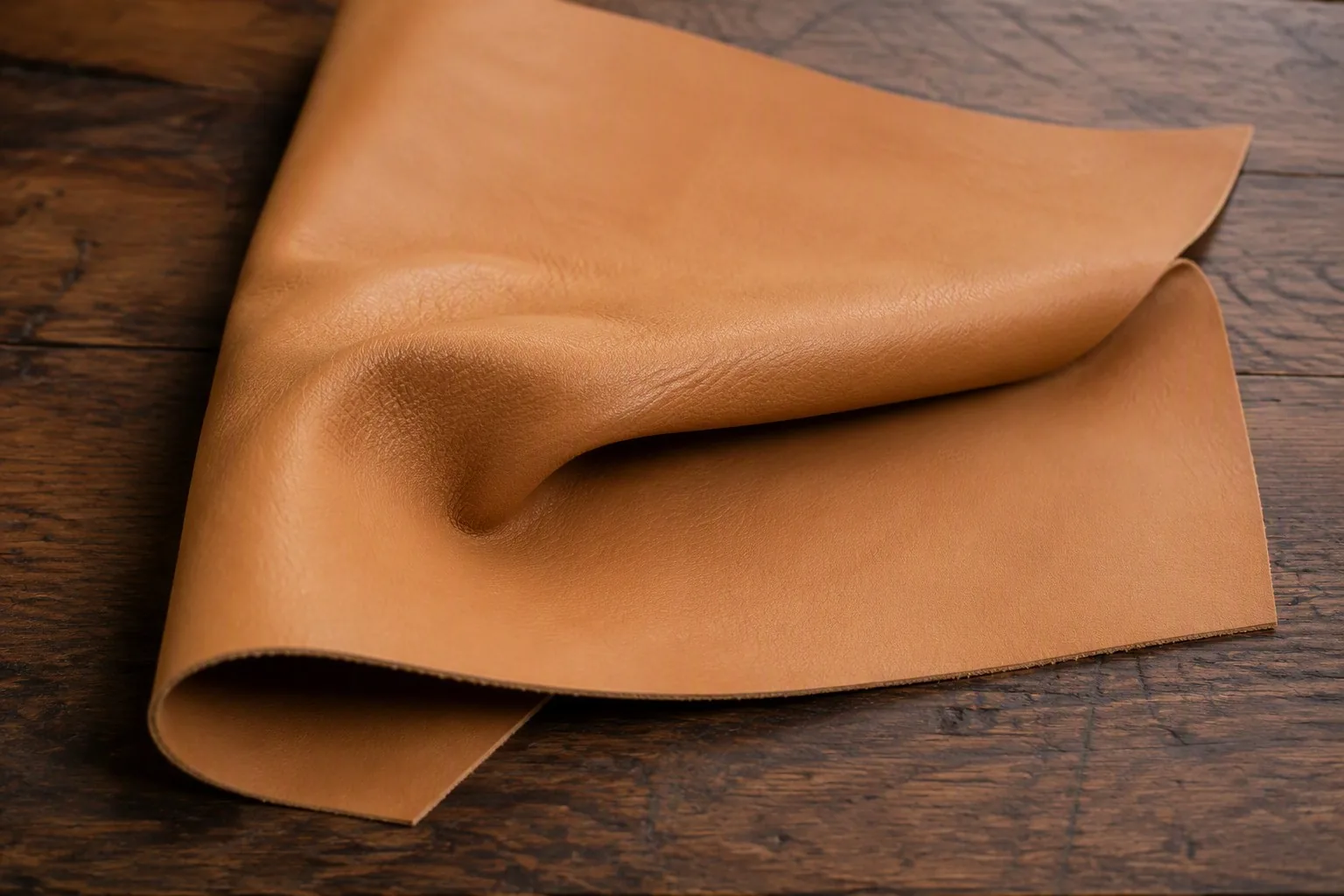
| 1–2 oz | 1/64–1/32 in | Very thin, fabric-like | Linings, delicate details |
| 2–3 oz | 1/32–3/64 in | Thin, flexible, drapes | Wallets, cardholders, small pouches |
| 3–4 oz | 3/64–1/16 in | Medium-light, supple | Small handbags, crossbody bags, gussets |
| 4–5 oz | 1/16–5/64 in | Medium, balanced | Most handbags, totes, backpack bodies |
| 5–6 oz | 5/64–3/32 in | Firm, structured | Structured totes, briefcases, heavy backpacks |
| 6–7+ oz | 3/32–7/64+ in | Stiff, heavy-duty | Holsters, belts, heavy-duty work bags |
This table is the vocabulary we use on every order. The rest of this guide explains how to choose within it — and how the choice changes with the bag type, the tannage, and the grade.
Light Leathers (1–3 oz): Linings, Wallets and Small Goods
Light leathers are the specialists of the industry: flexible, elegant, and suited to products that live in the hand rather than on the shoulder.
Wallets and cardholders. The classic 2–3 oz range is the sweet spot for small goods. At this weight, leather skives — the process of thinning edges for folding — beautifully, holds tight stitching, and develops the most satisfying patina of any product in a leather lineup. A wallet needs to flex thousands of times a year, and light leather flexes without cracking.
Linings and gussets. 1–2 oz leather is used for linings and for gussets — the folded side panels that give bags depth. Linings need to be thin to fold cleanly; gussets need to flex constantly as the bag opens and closes. Using the wrong weight here is a common source of cracked corners and bulky, stiff openings.
The honest limits. Light leather cannot hold structure, cannot carry heavy loads, and wears faster under abrasion. It belongs in products designed for light, frequent use — never in a bag meant to carry a laptop or survive daily commutes.
Medium Leathers (3–5 oz): The Everyday Bag Sweet Spot
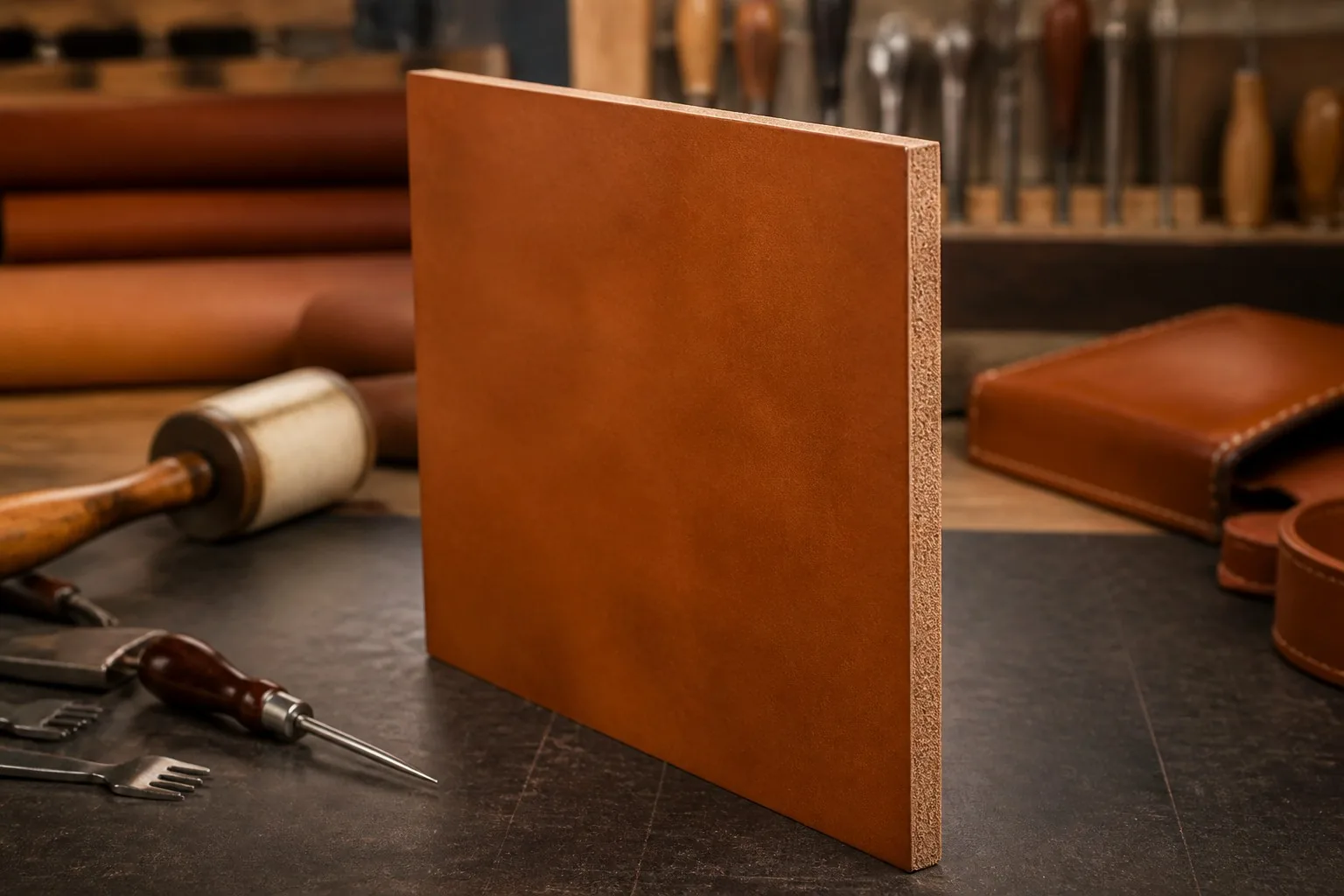
The 3–5 oz range is where most of the bag industry lives, and for excellent reason: it balances structure, weight, and durability for products carried every day.
3–4 oz — supple everyday bags. At this weight, leather is flexible enough to drape and soft enough to feel comfortable against the body, while still offering meaningful durability. It is the default for crossbody bags, slouchy totes, and fashion handbags where softness is part of the design.
4–5 oz — the balanced workhorse. This is the most versatile range in the industry: firm enough to hold a recognizable shape, soft enough to work with, and durable enough for daily use. Most structured handbags, casual totes, and backpack bodies are built at 4–5 oz. When a client says “make me a normal leather bag,” this is the weight we start from.
Why medium wins. Medium leathers are also the easiest for factories to work with — they cut cleanly, stitch well, and hold edge finishes reliably. That ease translates into better quality control and more consistent products, which is why the range dominates mid-market production.
Heavy Leathers (5–7+ oz): Structured and Heavy-Duty Bags
Heavy leathers are the structural engineers of the industry: stiff, dense, and built to hold shape and carry weight.
5–6 oz — structured totes and briefcases. At this weight, leather stands on its own. A structured tote keeps its silhouette even when empty, a briefcase holds its boxy form, and a backpack’s back panel supports heavy loads without sagging. The trade-off is weight and stiffness: a 5–6 oz bag is heavier and needs a break-in period before it feels comfortable.
6–7+ oz — heavy-duty and specialty. This range belongs to work bags, holsters, and products where maximum durability outweighs every other consideration. It is also the classic range for belts and straps — the hardware-carrying, weight-bearing components of a bag line.
The manufacturer’s warning. Heavy leather is unforgiving to work with and to carry. It requires specialized stitching, thicker threads, and careful design of folds and gussets, because heavy leather does not bend gracefully. Specify heavy leather only when the product genuinely needs the structure — a slouchy design in 6 oz leather is a design error, not a material choice.
Thickness vs. Tannage vs. Grade: How the Three Decisions Interact
Thickness does not exist in isolation. It interacts with the two material decisions covered in our earlier guides — tannage and grade — and the combination determines the final behavior.
| Combination | Result |
|---|---|
| 2–3 oz vegetable-tanned | Soft small goods, beautiful patina, stamps well |
| 4–5 oz vegetable-tanned | Firm structured bags, holds shape, edge burnishes beautifully |
| 4–5 oz chrome-tanned | Supple everyday bags, water-resistant, comfortable |
| 5–6 oz chrome-tanned | Firm but flexible heavy bags, good for travel and work |
| Thin full-grain | Elegant but shows every flaw; needs high-quality hides |
| Thin top-grain | Consistent, budget-friendly small goods |
| Heavy bonded leather | Stiff but weak — the worst combination; avoid entirely |
The golden rule: choose the tannage for behavior, the grade for character, and the thickness for structure — then check that all three work together. A premium full-grain hide cut too thin wastes its durability; a perfect thickness specification on a poor hide produces a bag that fails at the seams; and the finest leather in the world cannot rescue a structure that the weight was never designed to support.
From the Factory Floor: How We Specify Thickness
Specifying leather thickness correctly is a practical discipline. Here is exactly how we do it on every order.
1. Start from the bag’s structure. Decide first whether the bag must stand, slouch, or drape, and how much weight it will carry. The structure dictates the target weight, not the other way around.
2. Specify a range, not a single number. Real leather varies naturally, so we always specify a range — “4–5 oz,” never “4.5 oz.” Tolerances of plus or minus half an ounce are normal, and specifying a range keeps expectations realistic.
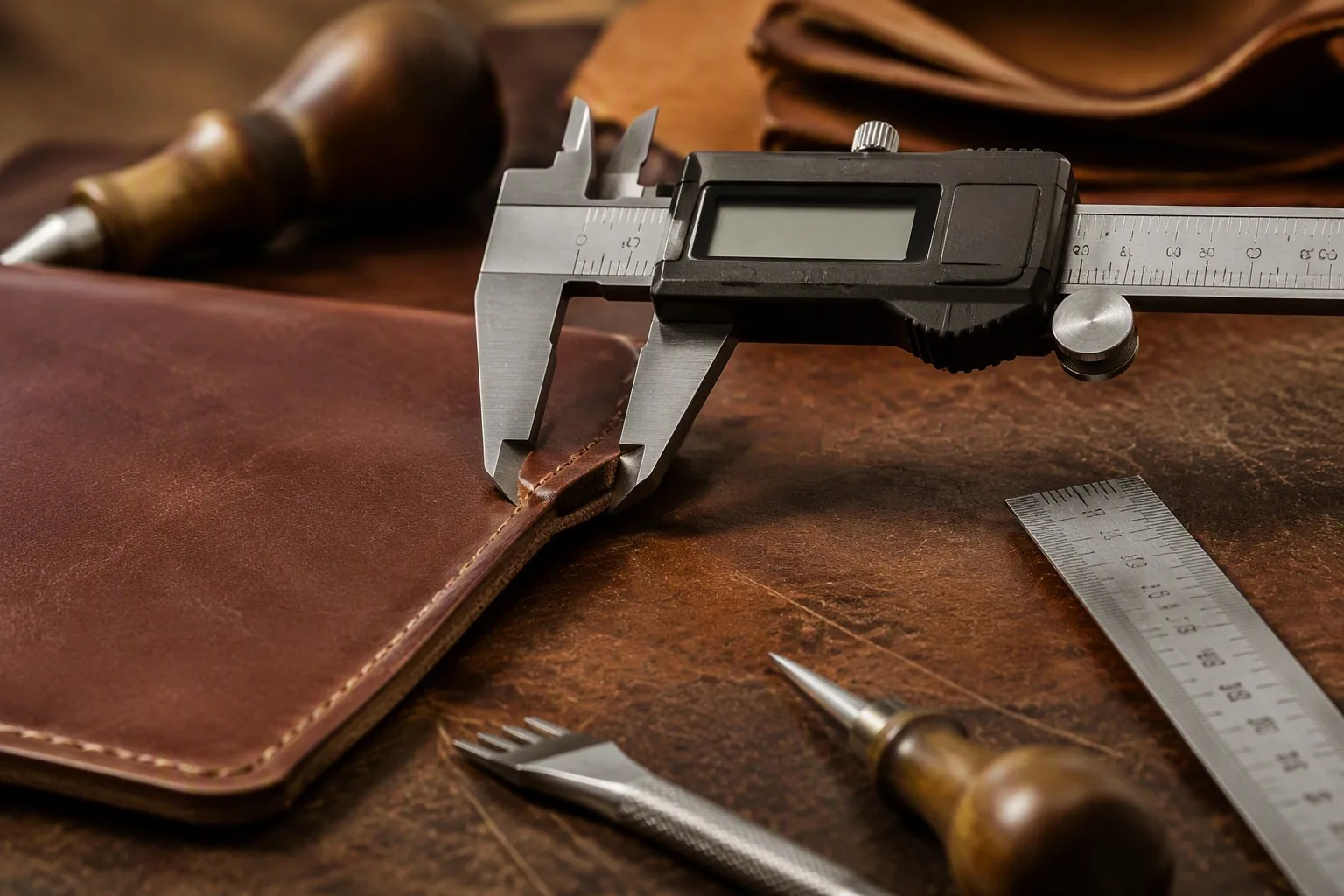
3. Measure with a proper gauge. Thickness is measured with a leather gauge (a specialized caliper) at multiple points across the hide, because hides vary from neck to belly. We measure every lot on delivery and reject anything outside the agreed tolerance.
4. Account for skiving. Many designs thin the leather at edges and folds — a process called skiving. A wallet that starts at 3 oz might be skived to 1.5 oz at the folded edges. Specify the skived areas in the design, because skiving changes how the product assembles and feels.
5. Match thread and hardware to the weight. Heavy leather needs heavier thread, larger needles, and stronger hardware. A beautiful 6 oz panel assembled with 4 oz hardware is a failure waiting to happen at the first stress point.
6. Verify with a physical sample. Never approve thickness from photos. Cut a sample panel, weigh it, flex it, and check the edge cross-section. The hand tells you what a specification sheet cannot.
Matching Thickness to Bag Type: A Decision Matrix
| Bag type | Recommended weight | Why |
|---|---|---|
| Wallet / cardholder | 2–3 oz | Flexes thousands of times, skives cleanly, best patina |
| Small pouch / clutch | 3–4 oz | Supple drape, light in the hand |
| Crossbody bag | 3–4 oz | Soft against the body, light for all-day wear |
| Fashion handbag | 3.5–5 oz | Balance of structure and softness |
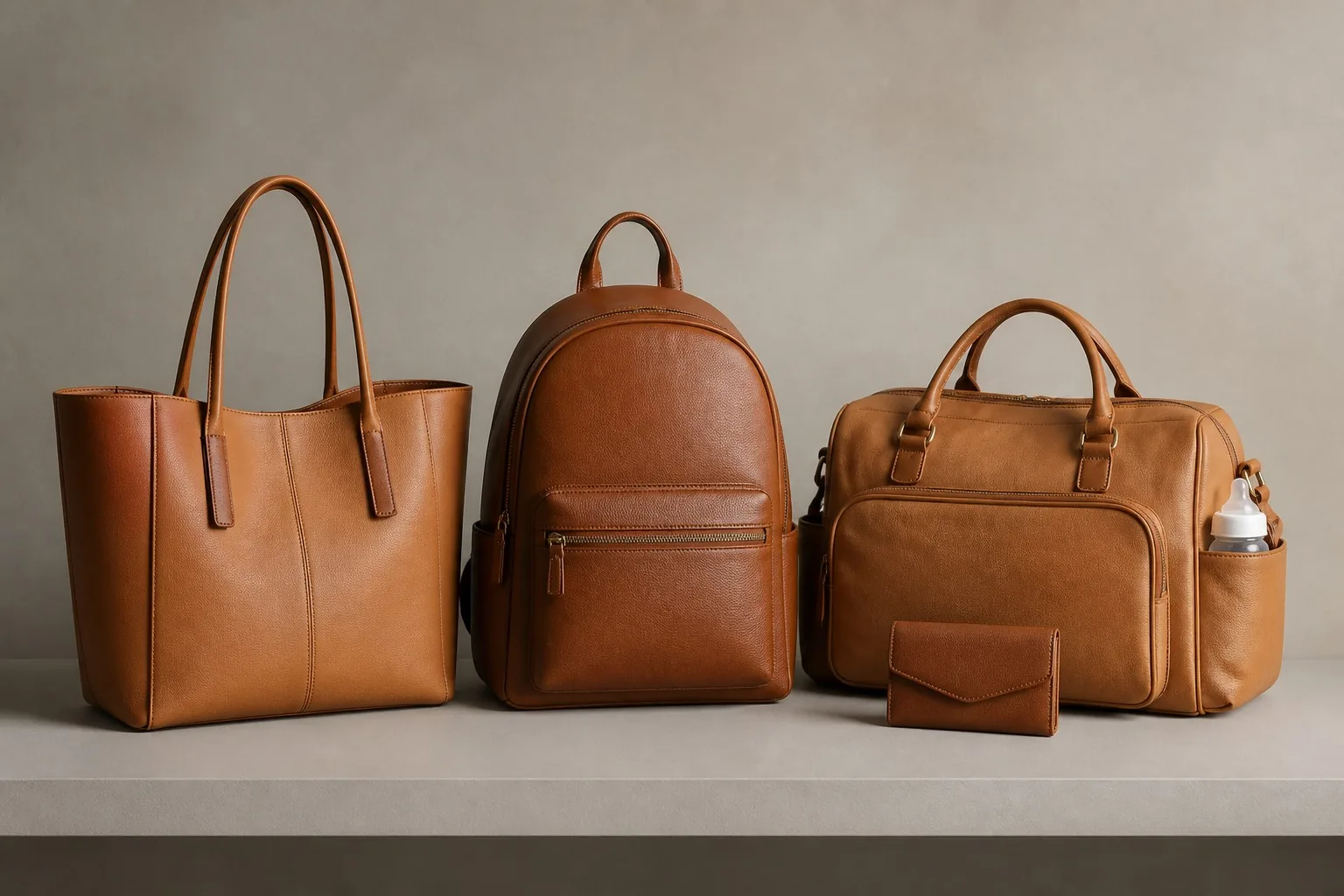
| Casual tote | 4–5 oz | Holds shape, carries daily loads |
| Structured tote / briefcase | 5–6 oz | Stands on its own, holds a silhouette |
| Backpack (body) | 4–5 oz chrome-tanned | Durable, comfortable, water-resistant |
| Backpack (back panel & straps) | 5–6 oz + reinforcement | Carries weight without sagging |
| Diaper bag | 4–5 oz + reinforced stress points | Daily abuse, spills, heavy loads |
| Work bag / heavy-duty | 5–7 oz | Maximum durability over comfort |
What Customers Feel: Weight, Structure and Comfort
The thickness choice becomes a customer experience within the first minute of holding the bag.
The first impression. A customer who picks up a structured tote wants it to feel substantial; a 4 oz panel will feel flimsy to them, while a 5.5 oz panel feels reassuringly solid. A customer buying a slouchy crossbody wants the opposite — lightness and drape. Match the weight to the expectation your design and photos create, or the first physical impression will contradict the marketing.
The all-day reality. Bags are carried, and carried bags are felt. A “just right” weight keeps a backpack comfortable through a commute; an overweight panel turns a two-hour errand into a shoulder ache. For everyday products, err toward the lighter end of the sensible range; for weekend and statement pieces, structure can win.
The aging story. Heavier leather resists stretching at stress points and keeps its shape as it ages. Lighter leather softens more dramatically and may stretch at the handles over years. Tell customers what to expect: a structured bag will stay structured, a slouchy bag will get slouchier — and both are correct when the weight was chosen deliberately.
Common Thickness Mistakes (and How to Avoid Them)
Mistake 1: One weight for the whole bag. Bags are compound structures. A tote with a 5 oz body and 2 oz handles will fail at the handles; a backpack with a 4 oz body and 4 oz straps may sag. Specify different weights for body, gussets, and straps, and reinforce the stress points.
Mistake 2: Thick leather as a quality signal. “Thicker must be better” is a myth in many designs. A 6 oz panel on a product meant to slouch is not premium — it is wrong. Quality is matching the material to the design, not maximizing any single number.
Mistake 3: Ignoring tannage when choosing weight. Chrome-tanned leather at 4 oz is softer than vegetable-tanned leather at 4 oz. Always compare thickness within the same tannage, and adjust the target weight when you change the tannage.
Mistake 4: No skiving plan. Folds and edges that are not thinned become bulky and can crack. Every multi-layer design needs a skiving plan, and it should be part of the specification, not an afterthought at the sample stage.
Mistake 5: Forgetting the linings and hardware. A thick leather bag with a thin lining and light hardware feels unbalanced and fails early. The entire construction — leather, lining, hardware, thread — should be designed as one system around the thickness decision.
A Practical Briefing: How to Ask Your Manufacturer for the Right Thickness
The difference between a smooth production run and a frustrating one often comes down to how the thickness requirement is communicated. Here is the briefing format we recommend every brand use when placing an order — the more precise you are, the better the result.
1. State the bag type and its real job first. “A 4–5 oz tote for daily commuter use” tells a manufacturer more than “a medium leather tote.” Include the intended load (laptop? diapers? groceries?), the carrying style (shoulder, hand, back), and the target customer’s expectations. Every detail narrows the right weight range.
2. Specify the weight range per component. Do not specify one number for the whole bag. Write it out: “Body: 4–5 oz chrome-tanned. Gussets: 3–4 oz. Straps: 5–6 oz with reinforcement. Lining: 1.5–2 oz.” This single paragraph prevents the most common failure modes in bag manufacturing.
3. Ask about the tannage before locking the weight. Because chrome-tanned leather is softer than vegetable-tanned at the same ounce weight, tell the manufacturer the tannage you have in mind, or ask them to recommend one for your target behavior. Then confirm the weight range applies to that tannage.
4. Request a measurement report with samples. A professional factory measures every lot with a leather gauge and can provide thickness readings per panel. Ask for this data with your samples, and verify it against the specification before approving production.
5. Discuss skiving explicitly. If the design has folded edges, reinforced handles, or layered panels, ask how the edges will be thinned and where. Skiving changes the feel, the assembly, and the durability — it should never be an unspoken detail.
6. Confirm the break-in and care expectations. Thicker leathers need a break-in period and heavier-weight products weigh more. Make sure your product page and care instructions match the weight you have chosen, so customers are not surprised by either the firmness or the heft.
7. Build in a sample gate. Before bulk production, approve a physical sample that includes the actual weight, skiving, hardware, and construction. A sample that matches the specification is the cheapest insurance in the industry; a sample that does not is an expensive early warning.
Following this briefing format takes ten minutes and saves weeks of back-and-forth. Manufacturers work from specifications, not impressions — and a precise specification is the fastest route to the bag you designed in your head.
Frequently Asked Questions
What does “oz” mean when describing leather?
It is a unit of thickness: one ounce equals 1/64 of an inch. A 4 oz leather is 4/64 (1/16) of an inch thick. Higher numbers mean thicker, firmer leather — roughly 0.4 mm per ounce.
What leather thickness is best for a handbag?
For most handbags, 3.5–5 oz is the sweet spot — firm enough to hold a shape, soft enough to work with and carry comfortably. Structured totes and briefcases move up to 5–6 oz; slouchy designs move down to 3–4 oz.
Is thicker leather always better?
No. Thickness must match the design. A bag meant to slouch will feel board-like and heavy in thick leather, and thin leather is correct for wallets and linings. Choose thickness for the structure you need, not as a quality signal.
What thickness should a wallet be?
2–3 oz is the classic wallet range. It flexes easily, skives cleanly for folded edges, and develops a beautiful patina. Thicker leather makes wallets stiff and bulky.
What leather thickness is best for a diaper bag?
4–5 oz with reinforced stress points is the reliable choice. It holds structure under heavy loads, resists daily abuse, and stays comfortable to carry. Use chrome-tanned leather for water resistance and reinforce the straps and bottom.
Does leather thickness affect durability?
Within reason, yes — thicker leather resists tearing, stretching, and abrasion better. But construction matters as much: a thin panel with properly reinforced stress points can outlast a thick panel with weak stitching and hardware.
Can you make a bag with different leather thicknesses?
Yes, and most good bags use several weights — a heavier body, lighter gussets, reinforced straps. Multi-weight design is standard practice in professional manufacturing, but it must be specified in the pattern and cutting plan.
Final Word from the Factory
Thickness is the most underrated specification in the entire bag industry. Buyers obsess over grain and color, while manufacturers know that the ounce weight determines whether a design works at all. A beautiful 5 oz tote with 2 oz handles is a broken product waiting to happen; a modest leather chosen at exactly the right weight can feel like a masterpiece.
At our factory, we treat the thickness specification with the same seriousness as the material itself. We measure every lot, we skive with precision, and we build each bag as a system of weights — body, gussets, straps, and linings working together. The results speak in the products that come back for repairs years later, and in the customers who never needed them.
When you brief your next bag project, add three numbers to the conversation: the material, the tannage, and the ounce weight. Ask your manufacturer what weight range they recommend for your design, and why. The answer — specific, measured, and justified — is the mark of a factory that knows its craft. Because in the end, a bag is not just leather. It is leather, at the right thickness, doing the right job — and that combination is what turns a product into something people carry for years.
