
Leather Temper: Specifying Feel and Structure for Bags
Leather Temper: Specifying Feel and Structure for Bags
Temper is the property that decides whether a bag stands up on a table or collapses into a puddle, whether it feels substantial in the hand or thin and floppy, and whether it still looks the same after a year of use. It is also the specification most often left out of a tech pack.
As a bag manufacturer, we see temper drift more often than thickness drift, and it causes more expensive problems. This guide explains what temper is, what determines it, how to describe and measure it, how to write it into a specification, and how to troubleshoot it when a production run does not behave like the sample.
Thickness is a number a supplier can hold. Temper is a behaviour that must be described, referenced physically, and verified by hand — and it is the property that decides whether the design survives contact with real use.
- Why Temper Matters More Than Most Specifications
- What Determines Leather Temper
- Describing Temper in Words That Work
- Measuring Temper Objectively
- Writing Temper Into a Specification
- Designing With Temper
- Temper by Bag Type
- Troubleshooting Temper Problems
- Incoming Checks for Temper
- Temper, Comfort and Wear
- Working With Suppliers on Temper
- Temper in Development and Sampling
- Common Misunderstandings About Temper
- Frequently Asked Questions
- The Bottom Line
Why Temper Matters More Than Most Specifications
Temper is a structural decision, not a cosmetic one.
What Temper Actually Is
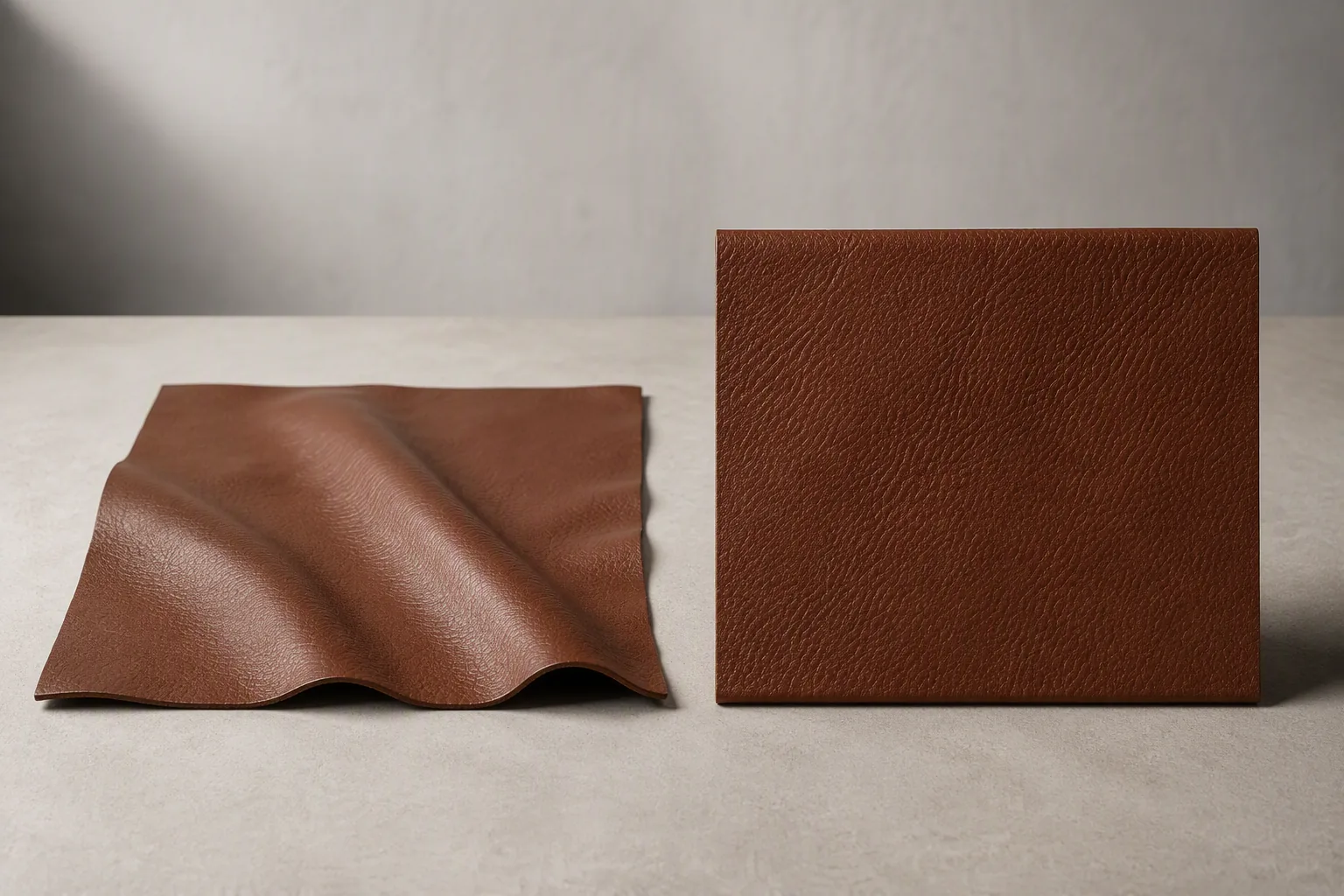
Temper is the resistance of leather to bending, and how it behaves as it bends.
It combines stiffness, springiness and recovery. A leather with high temper resists folding, holds a crease poorly and springs back toward flat. A leather with low temper folds easily, drapes, and holds the shape it is pressed into. Two hides can share the same thickness and the same colour and still behave completely differently in the same pattern.
Why It Is Hard to Specify
Temper is described in words, and words are interpreted differently by every reader.
“Soft”, “medium”, “firm” and “structured” mean different things to a designer, a tannery technician and a cutting room operator. Because there is no single accepted vocabulary, a temper requirement without a physical reference is effectively unenforceable, and each new lot becomes a matter of opinion.
What Goes Wrong When It Drifts
Temper drift produces failures that no other inspection catches.
A firmer leather than approved produces bags that feel boardy, kink at the gusset and resist the folds the pattern expects. A softer leather produces totes that slouch, handles that droop and panels that ripple along the seams. Both pass every dimensional and colour check, and both are discovered by the customer rather than by the factory.
What Determines Leather Temper
Temper is the result of several process decisions stacked on top of each other.
Raw Material and Hide Position
The animal and the area of the hide set the starting point.
Bull hides generally produce firmer leather than cow hides, and within a single hide the back and butt areas are firmer and denser than the belly and shoulder. This is one reason a single hide can hold a structured front panel and a soft interior pocket at the same time, and why panel placement affects structure as much as colour.
Tannage and Retannage
The tanning route sets the general character of the material.
Vegetable-tanned leathers are typically firmer and hold shape well, chrome-tanned leathers tend to be softer and more elastic, and combinations give intermediate behaviour. Retanning — the second stage where the leather is treated again — is where a tannery adjusts much of the final temper, so it is a frequent reason two shipments of the “same” article behave differently.
Fatliquor and Oil Content
Fatliquor is what makes leather flexible, and it is dosed deliberately.
Oils and fats worked into the leather separate the fibres and allow them to slide, lowering stiffness. More fatliquor produces a softer, more draping leather; less produces a firmer one. Waxy and pull-up leathers carry high oil content and behave accordingly, softening further with handling and folding.
Thickness and Substance
Thickness influences temper but does not determine it.
A thicker leather is generally stiffer, which is why substance is often used as a proxy for structure. But a thick leather with heavy fatliquor can be softer than a thin leather that is tightly packed, so thickness alone cannot specify behaviour. This is exactly why temper needs its own line in the specification.
Finishing and Coating
Finishing affects how the surface behaves during bending.
Heavier finishes build stiffness and can make leather feel synthetic, while light finishes leave the natural behaviour visible. Finish type also decides whether the leather creases with a fine grain break or forms a hard fold line, which is a temper effect visible on every bag.
Factors That Shape Temper
| Factor | Higher value produces | Lower value produces |
|---|---|---|
| Hide position | Back and butt: firmer, denser | Belly and shoulder: softer, looser |
| Tannage route | Vegetable tan: firm and shape-holding | Chrome tan: soft and elastic |
| Retannage | Tighter fibre packing: firmer | More fibre separation: softer |
| Fatliquor and oils | Plenty: soft, draping, waxy | Little: firm, dry, boardy |
| Thickness | Thicker: stiffer | Thinner: more pliable |
| Finish weight | Heavy finish: stiffer surface | Light finish: natural behaviour |
Describing Temper in Words That Work
Words work when they are anchored to a physical sample.
The Vocabulary Problem
Broad labels cover far too much ground to be useful.
“Soft” can describe a supple nappa, a waxy pull-up or a floppy bonded material, and “firm” can mean crisp vegetable-tanned leather or a leather stiffened by a heavy finish that will crack. The vocabulary is only useful when the label is tied to a physical sample that everyone can hold.
Building a Temper Scale
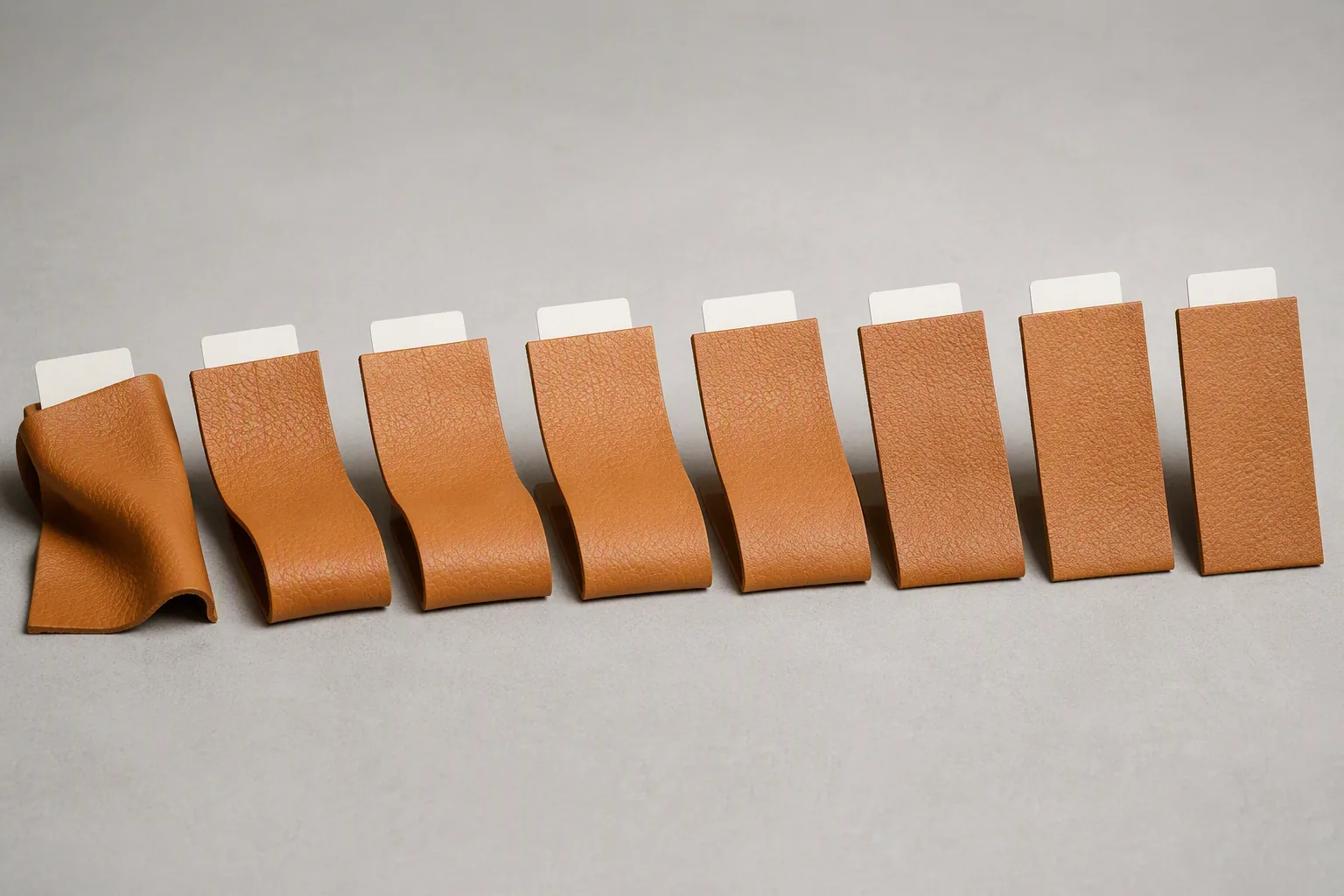
A working scale turns a conversation into a comparison.
Most factories define a small number of grades and retain a reference sample for each. A practical scale runs from very soft through soft, medium, medium-firm, firm to rigid, with each grade describing how the material behaves when folded in the hand and how it recovers.
Physical Reference Samples
Reference samples are the only reliable definition.
Each grade needs an actual piece of leather, large enough to handle, identified by article and lot, and stored away from light and heat. Production then compares arriving material against the reference by hand, under the same conditions and, where possible, by the same person.
Temper Grades and Typical Applications
| Grade | Behaviour in the hand | Typical bag application |
|---|---|---|
| Very soft | Folds under its own weight | Slouchy hobo bags, unlined pockets |
| Soft | Folds easily, recovers slowly | Soft totes, lightweight shoulder bags |
| Medium | Folds with light pressure, recovers well | General bags, backpacks, family bags |
| Medium-firm | Needs deliberate pressure to fold | Structured totes, backpack panels |
| Firm | Holds its own shape, springs back | Briefcases, structured fronts, trims |
| Rigid | Barely flexes, needs skiving to fold | Handles, edging, base reinforcement |
Measuring Temper Objectively
Measurement helps, but it does not replace a trained hand.
What Instruments Can Measure
Instruments capture the mechanical side of temper.
Bending stiffness tests measure how much force is needed to bend a strip of leather through a defined angle, and softness or stiffness gauges give a comparable figure across lots. These results are repeatable and independent of mood, which makes them useful for spotting drift between shipments from the same supplier.
Hand Assessment as the Production Standard
The hand remains the reference because it evaluates recovery and behaviour.
An instrument measures resistance to bending, but the customer experiences whether a bag stands up, how it creases, whether the flap stays flat when closed, and how the handle feels when loaded. These are recovery and behaviour questions, and they are judged by handling a panel the way a bag is handled in use.
Choosing the Right Test Method
The method should match how the material will be bent in the product.
A panel that will bend around a gusset should be tested in a comparable direction and scale, since leather behaves differently along and across the backbone direction. Testing a small strip along one direction and applying the result to a large panel bent the other way produces numbers that do not predict anything.
Correlating Measurement With the Hand
The useful output is a translation, not a number.
Factories get the most from measurement by testing the retained reference samples for each temper grade and recording the resulting figures alongside them. Arriving lots can then be screened by measurement, with hand assessment reserved for lots that sit near a grade boundary or come from a new source.
Writing Temper Into a Specification
A temper requirement has to be specific enough to be enforceable.
Specification Fields
Each field closes off a way the requirement can be misread.
| Field | What it fixes |
|---|---|
| Temper grade | Which retained reference sample defines acceptable |
| Behaviour description | How the material should fold and recover in the hand |
| Acceptance band | Which neighbouring grades are still usable |
| Measurement method | How stiffness is tested, if instruments are used |
| Panel application | Which panels the grade applies to |
| Combined thickness | Substance that must accompany the temper |
| Grain break expectation | How the surface should crease when folded |
| Change notification | What the supplier must report before shipping |
Combining Temper With Thickness
Temper and substance work together and must be specified together.
A buyer who specifies thickness alone leaves temper to chance, and a buyer who specifies temper alone leaves the structural contribution of substance to chance. Combined, they define how firm a panel will be: a thin firm leather and a thick medium leather can land in the same place, and the specification should say which combination is acceptable.
Sample Approval for Temper
Temper approval needs more than a flat swatch.
A flat piece of leather in a sample card tells you almost nothing about stiffness. Approval should involve folding the material the way the pattern will fold it, holding it as a handle would be held, and pressing it as a loaded bag would be pressed. Where possible, the approval should be confirmed on an assembled sample, because reinforcement and lining change how a panel behaves.
Change Control
Suppliers change processes quietly, and temper is often the casualty.
A new raw material source, a retanning adjustment or a finishing change can shift temper without changing colour or thickness. Requiring written notification of material and process changes, and re-approving temper after any change, keeps the specification meaningful.
Designing With Temper
Temper can be designed around, but only deliberately.
Structured Bags Need Firm Panels
Structure comes from material, reinforcement, or both.
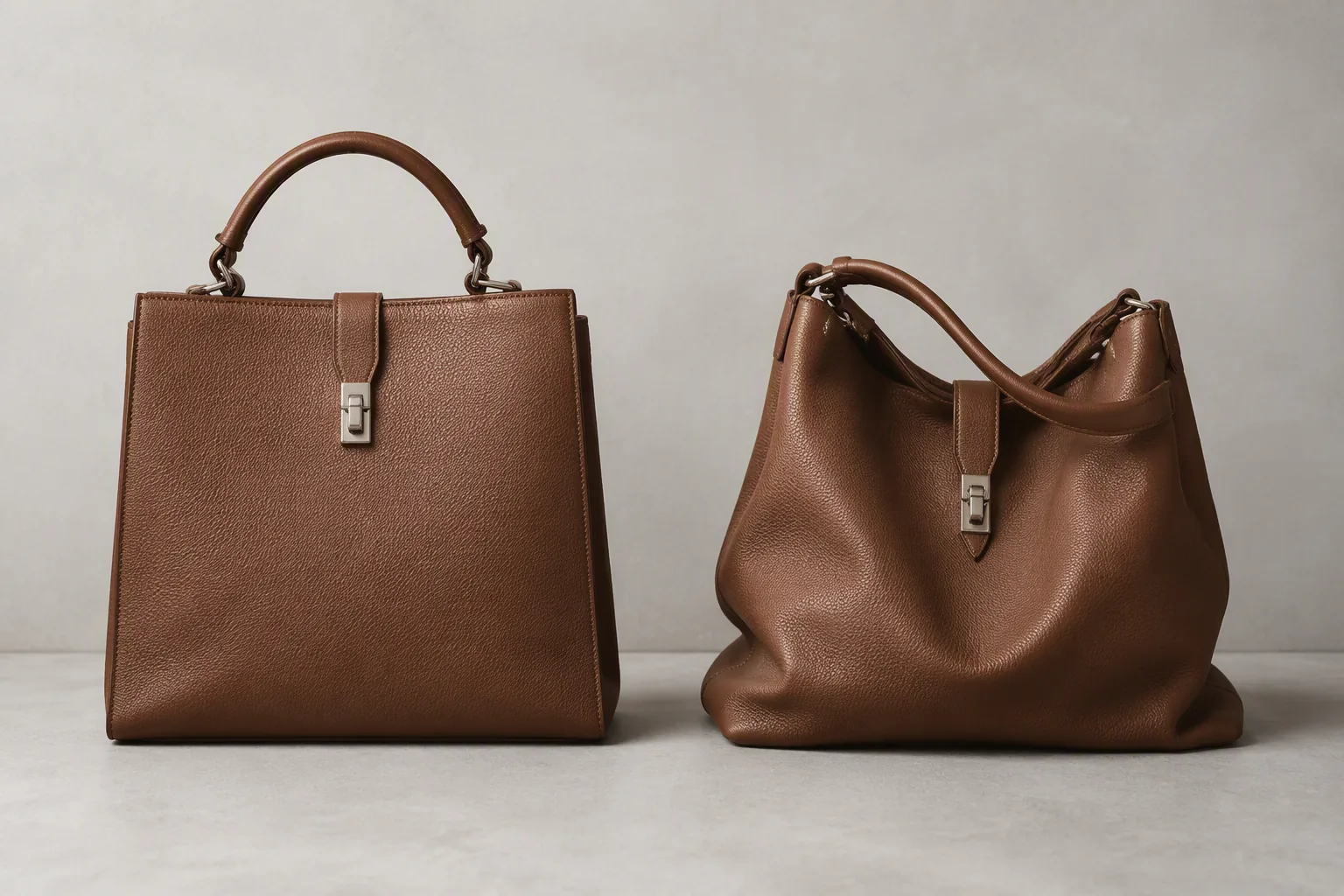
A bag with flat, self-supporting panels needs either firm leather or a laminated construction with stiffeners. Choosing which is a cost and weight decision: firm leather removes a process step, while reinforcement allows a softer, lighter material to be used with an internal stiffener.
Soft Bags Need Drape
Soft designs fail in the opposite direction.
A slouchy bag built from firm leather looks rigid and awkward, and it will not collapse into the intended silhouette. Soft designs need temper that folds easily and recovers slowly, plus pattern details such as darts, pleats and gathering that convert a limp material into controlled shape.
Mixed Construction
Most good bags use more than one temper.
Handles and base panels are usually firmer than the body, trims are firmer again, and interior pockets are softer. Specifying temper at the article level rather than the bag level misses this, and it is a common reason a bag feels inconsistent in the hand.
Reinforcement as an Alternative
Reinforcement is the tool that separates appearance from behaviour.
A soft leather laminated to a stiffener can deliver a crisp panel with a soft surface, or a soft handle with a firm core. The trade-off is that lamination is a process step that can fail, and a laminated panel may delaminate or telegraph the stiffener edge, so the construction must be tested on a trial assembly.
Temper by Bag Type
Different products need different behaviour, and the requirement should be stated per panel.
Diaper Bags and Family Bags
Family bags need medium temper with firm structure where it is loaded.
Panels that carry weight and keep the bag upright when open need medium-firm temper, while pockets and flaps that are opened constantly should be softer so they fold comfortably. The failure to avoid is a bag that collapses when set down while full, which is a temper failure rather than a pattern failure.
Backpacks
Backpacks need temper that holds shape under load without feeling rigid.
Body panels typically sit at medium to medium-firm so the bag keeps its back shape when empty, while straps benefit from softer temper that follows the shoulder. A temper that is too firm produces a pack that feels like a box and creases badly at the strap junctions.
Totes and Handbags
Totes are the most temper-sensitive category because the silhouette is the product.
Structured totes need firm panels that stand, soft totes need drape, and both expose any drift immediately. Handles, in particular, should be specified separately: a handle that is too soft stretches and loses shape, while one that is too firm is uncomfortable when loaded.
Wallets and Small Leather Goods
Small leather goods need temper controlled at small scale.
A wallet needs enough temper to stay flat when opened and enough flexibility not to crack along the fold. Because the surfaces are small, any inconsistency shows quickly, and thin-gauge leathers are especially sensitive to fatliquor variation.
Temper Requirements by Product
| Product | Body temper | Handle or strap | Notes |
|---|---|---|---|
| Diaper and family bags | Medium to medium-firm | Firmer, low stretch | Must stand when loaded and open |
| Backpacks | Medium to medium-firm | Soft to medium | Shape retention with comfort |
| Structured totes | Firm | Firm, low stretch | Self-supporting silhouette |
| Soft and slouchy bags | Soft to very soft | Medium | Controlled drape and gathering |
| Wallets and small goods | Medium, thin gauge | Not applicable | Flat when open, no fold cracking |
Troubleshooting Temper Problems
Temper faults appear as structural complaints, not as material complaints.
The Bag Collapses or Slouches
A bag that will not stand is usually softer material than specified.
The common causes are a lot that arrived softer than the approved reference, a thickness reduction that reduced stiffness, a change in retanning at the tannery, or reinforcement that was removed to reduce cost. Checking arriving lots against the retained reference by hand finds the cause before the bags are built, which is far cheaper than finding it after.
The Bag Feels Boardy or Plastic
Firmness that comes from the wrong source is the usual cause.
A heavy finish, an over-fatted but tightly packed retannage, or excessive stiffener all produce a bag that fights the hand. The tell is behaviour at the fold: leather that is naturally firm creases with a fine grain break, while stiffness bolted on by finish or reinforcement tends to kink, whiten or crack at the same fold.
Panels Wrinkle or Kink
Kinking is a pattern and temper mismatch.
Folds, darts and gussets assume a certain amount of give. When the leather is firmer than the pattern assumes, the material has to go somewhere, and it goes into wrinkles, kinks or a visible crease line across a panel. Softening the temper, skiving the fold area, or revising the pattern all resolve it — but the choice should be made deliberately.
Temper Changes After Assembly
Some temper problems appear only in finished goods.
Adhesives, fusing, pressing and edge treatments can stiffen or soften a panel, and a laminated construction can change behaviour significantly. These effects are only visible on an assembled trial, which is why temper approval should include a fully built sample rather than flat swatches alone.
Temper Troubleshooting Reference
| Symptom | Likely cause | Practical fix |
|---|---|---|
| Bag will not stand upright | Softer lot than approved | Verify lots against reference, restore specification |
| Panels feel boardy | Heavy finish or excess stiffener | Lighten finish or reduce stiffener weight |
| Kinks at gusset or fold | Temper too firm for the pattern | Skive fold areas or soften the grade |
| Ripples along seams | Excessive stretch or too soft | Adjust temper or add reinforcement |
| Handle droops when loaded | Handle temper too soft | Specify firmer, low-stretch material |
| Creases whiten at folds | Finish too thick on a soft base | Adjust finish weight or change finish type |
Incoming Checks for Temper
A temper check is quick and needs almost no equipment.
Sampling and Conditions
Temper checks should be made on representative material.
Sampling should cover the areas the panels will actually come from, because a hide’s back behaves differently from its belly. Checks should be done indoors at a consistent temperature, since leather feels firmer when cold and softer when warm, and a warehouse in winter will give a different verdict from a workshop in summer.
A Workable Hand Panel Procedure
Consistency comes from repeating the same actions.
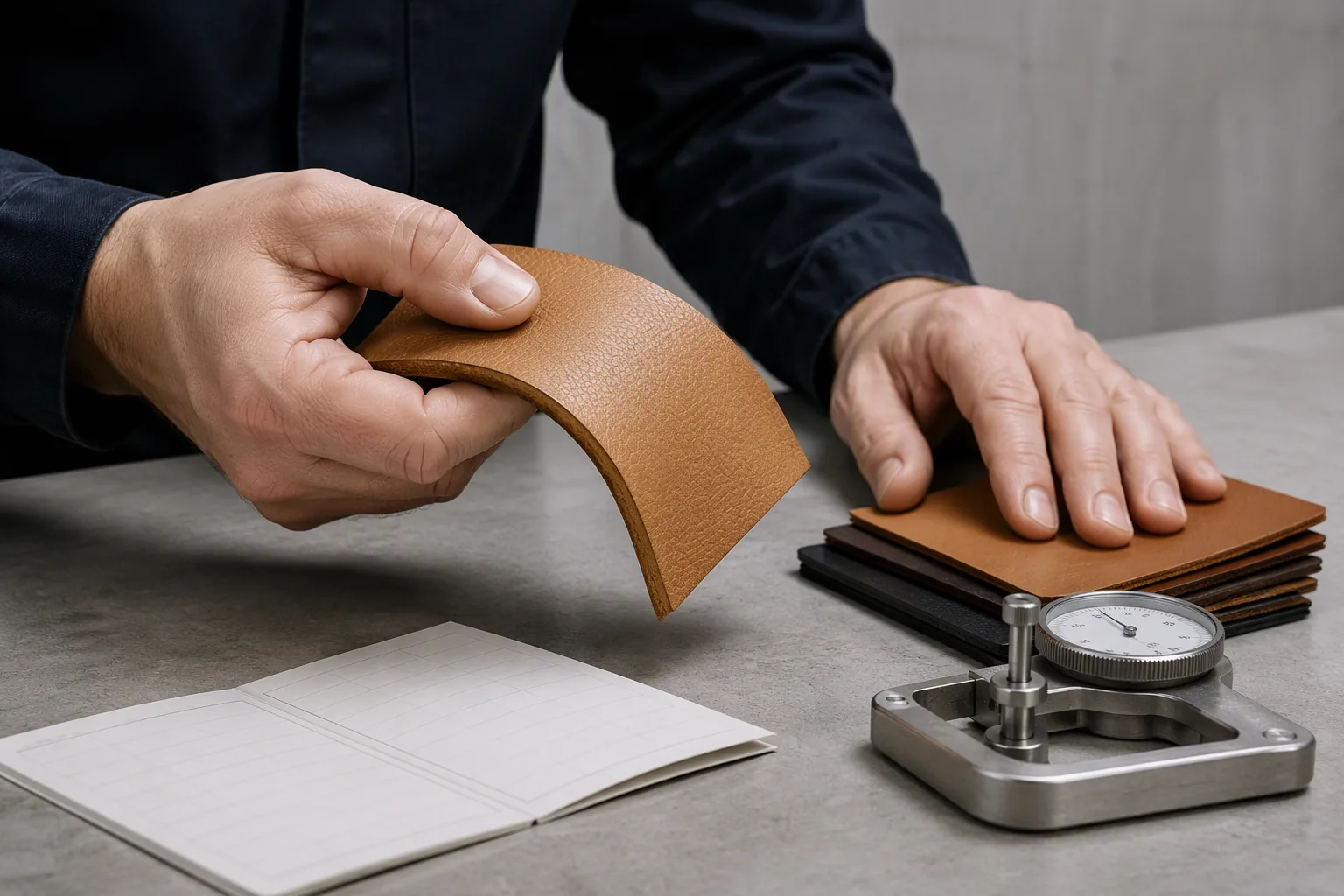
- Take a panel sized to the actual product part, not a small swatch.
- Fold it in the direction the pattern will fold, to the same angle each time.
- Note the effort needed and how much the material springs back.
- Press the folded edge and assess whether it creases with a fine break or kinks.
- Compare directly with the retained reference sample, side by side.
- Record the result against the lot number and the temper grade.
Recording Results
Temper records should be simple enough to be kept.
Recording the grade, the comparison result and any deviation per lot is enough to build a history. That history is what shows whether a supplier is drifting, and it converts a repeated complaint into a measurable trend that can be raised with the tannery.
Temper, Comfort and Wear
Temper affects the experience long after the sale.
Carry Comfort
Comfort is a temper consequence.
Straps that are too firm dig into the shoulder, handles that are too firm are uncomfortable when the bag is loaded, and bodies that are too firm do not sit well against the body. This is why strap and handle temper is usually specified separately from body temper.
Break-In Behaviour
Leather changes with use, and the rate depends on temper.
Soft and waxy leathers soften further quickly, developing marks and character, while firmly retanned leathers hold their behaviour for longer. Neither is inherently better, but the expected break-in should match what the product promises: a bag sold as structured should not become a slouch after a month.
Ageing and Change Over Time
Temper drifts with age, and the direction is predictable.
Handled areas soften, folds become established and dry environments stiffen leather over time. Storage, climate and care products all influence the pace. Explaining this in care guidance prevents a customer from treating normal ageing as a defect.
Working With Suppliers on Temper
Temper requirements need to travel with the order, not with the conversation.
Communicating the Requirement
The order should carry the grade and the reference identity.
Stating the temper grade, the reference sample identifier and the patch panel requirements on the purchase order removes the ambiguity that creeps in when requirements are agreed verbally. It also gives the tannery something concrete to check before shipping.
Testing and Verification Options
Verification can be as light or as heavy as the risk justifies.
Hand comparison against the reference is sufficient for established suppliers with a stable history. Instrument testing adds value when a supplier is new, when an article is critical to structure, or when a previous lot caused a problem. Whichever route is used, the results should be recorded against the lot so the next decision is informed.
Cost Implications
Tight temper control costs money, and it should be spent where it shows.
Holding a narrow temper band may reduce a tannery’s usable selection or require sorting, which is reflected in price. Concentrating the effort on panels that carry structure — body, base, handles — and allowing wider tolerance on interior parts keeps the cost proportional to the visible and functional benefit.
Temper in Development and Sampling
Temper decisions made early are the cheapest ones to change.
Specifying Temper Before the First Sample
The requirement should exist before the sample is built.
If temper is described only after a prototype feels wrong, the sample has already been built from whatever material was available, and the fix becomes a material search rather than a specification. Writing the temper grade into the tech pack from the start lets the sample maker select material that can actually be approved.
Locking Temper at Sample Approval
Sample approval is the moment to freeze behaviour.
The approved sample should carry the temper grade, the reference sample identity, the panel-by-panel application and a note on any reinforcement used. Without that record, subsequent production can hold every measurable specification and still deliver a bag that behaves differently from the sample.
Pilot Runs as the Real Temper Test
Pilot production exposes what a single sample cannot.
A pilot run shows whether the temper holds across different hides and lots, whether assembly processes such as fusing or pressing change the panels, and how the bag behaves when loaded with real contents. It is the point at which a temper problem can still be corrected without writing off finished goods.
Common Misunderstandings About Temper
Several persistent assumptions cause temper problems.
Thickness Is Not Temper
Thickness is the most common stand-in for temper, and the least reliable.
Buyers specify substance because it is easy to measure and easy to write into an order, then assume the resulting stiffness will follow. It often does not, because fatliquor, retannage and finish weight move independently of thickness. The practical consequence is a bag whose specification was fully met and whose behaviour is still wrong.
Softer Is Not Better
Softness is valued as a sign of quality, and it is not one.
A very soft leather is appropriate for a slouchy bag and wrong for a structured tote, where it produces collapse, ripple and a silhouette that cannot be maintained. Quality is the match between temper and design intent, not the level of softness, and a supplier who sells on softness alone is not answering the question that matters.
One Temper Does Not Fit a Whole Bag
Specifying temper at the bag level leaves most of the construction undecided.
A single bag typically uses firmer material for base and handles, medium material for the body, and softer material for interior pockets and flaps that are opened constantly. Recognising this turns one vaguer requirement into several precise ones, and it is usually what makes a bag feel deliberate in the hand rather than inconsistent.
Frequently Asked Questions
What is leather temper?
Temper is the resistance of leather to bending, together with how it springs back and how it creases. It combines stiffness, springiness and recovery, and it decides whether a bag stands up or slouches. Two leathers of identical thickness and colour can have completely different temper.
How do I describe leather temper to a supplier?
Use a retained physical reference sample for each grade and state the grade name plus the reference identifier on the order. Written descriptions such as soft or firm are interpreted differently by every reader, so they only work when anchored to a sample that everyone has handled.
Can temper be measured with an instrument?
Bending stiffness tests and softness or stiffness gauges give repeatable figures that are useful for spotting drift between lots. They do not capture recovery and behaviour in use, so most factories measure reference samples for screening and use hand assessment for the final production decision.
Why does leather temper change between shipments?
The usual causes are a different raw material source, a change in retanning or fatliquor dosing, a thickness change, or a finishing adjustment. These changes often leave colour and thickness unchanged, which is why suppliers should be required to notify material and process changes in writing.
Does thicker leather always mean firmer leather?
No. A thick leather with heavy fatliquor can be softer than a thin, tightly packed leather. Thickness contributes to stiffness but does not determine it, which is why temper needs its own specification line rather than being inferred from substance.
How should temper be approved on a sample?
By folding the material the way the pattern will fold it, holding it as a handle would be held, and where possible confirming on an assembled sample. A flat swatch shows colour and grain but reveals almost nothing about behaviour, and reinforcement or lining can change the panel after assembly.
What is a good temper for a diaper bag?
Medium to medium-firm for the body and base so the bag stands when loaded, with softer material for flaps and pockets that are opened constantly. The failure to avoid is a bag that collapses when set down while full, which is usually a temper problem rather than a pattern problem.
Why is my tote collapsing when the sample stood up?
The production lot is probably softer than the approved reference, the substance was reduced, or reinforcement was dropped from the construction. Checking arriving lots against the retained reference by hand identifies the cause before the bags are assembled.
Can reinforcement replace firm leather?
Yes, and it is a common trade-off. Laminating a soft leather to a stiffener gives a crisp panel with a soft surface, at the cost of an extra process step and the risk of delamination or telegraphing. The construction should always be validated on a trial assembly.
Does temper change with age?
Handled areas soften, folds become established and dry conditions stiffen leather over time. The direction of change depends on the tannage and finish, which is why a product sold as structured should be specified with a temper that will not collapse into a slouch within a season.
How often should incoming leather be checked for temper?
Every lot should be compared by hand against the retained reference, with instrument testing added for new suppliers, critical structural articles, or after any previous temper problem. Recording the result against the lot number turns repeated complaints into a measurable trend.
The Bottom Line
Temper is the specification that decides whether a design survives real use.
Define a small number of temper grades, retain a physical reference for each, and state the grade and reference on every order. Approve temper by folding the material the way the product folds it, confirm it on an assembled sample, and check each arriving lot by hand against the reference before cutting.
Then design with temper rather than against it. Specify body, handle and trim separately, use reinforcement where a soft surface and a crisp panel are both needed, and direct the tightest control at the panels that carry structure. Temper drift is quiet, but it is visible in every bag the customer picks up.
