
How Does Gusset Depth Change the Usable Capacity of a Leather Bag?
How Does Gusset Depth Change the Usable Capacity of a Leather Bag?
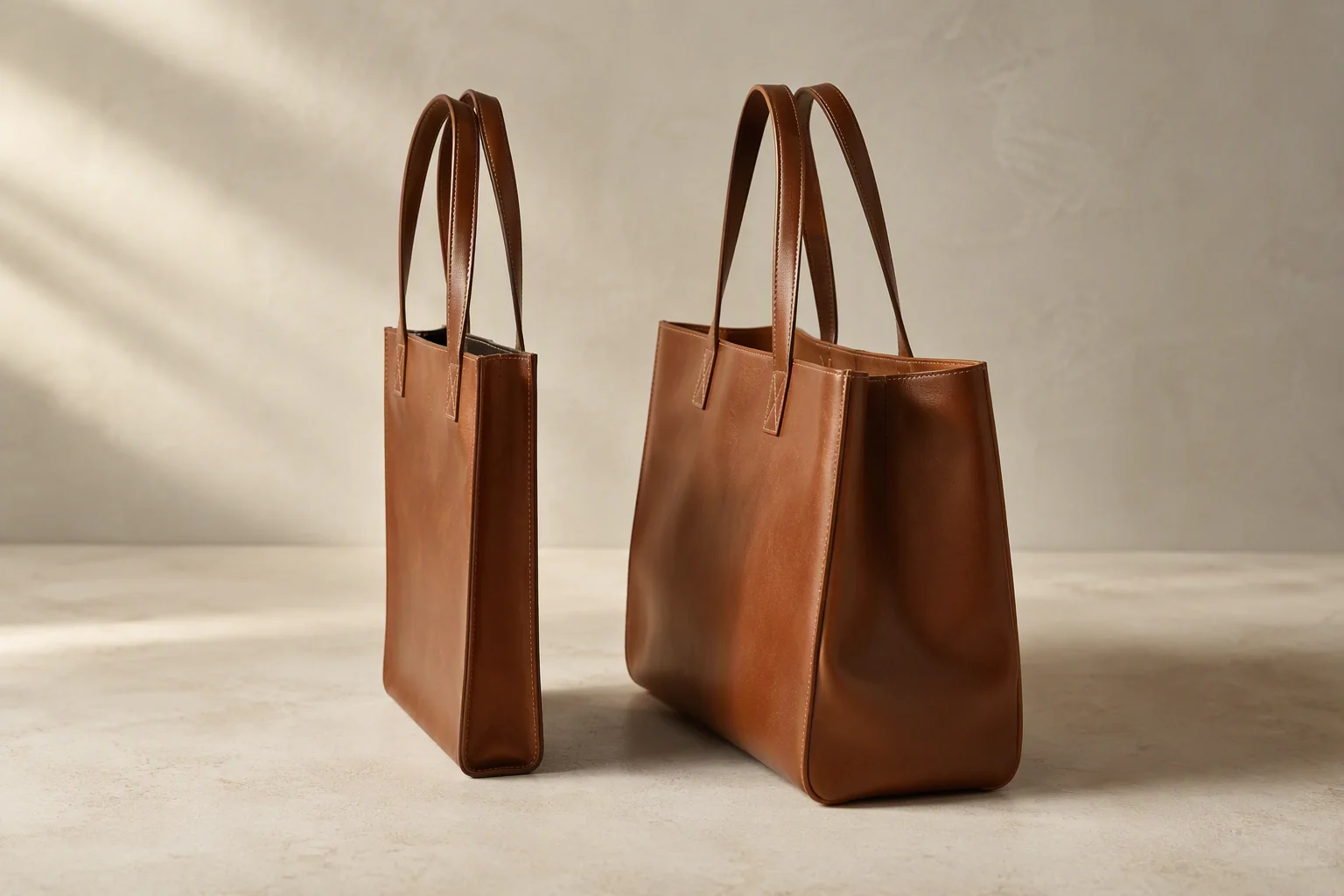
Two leather bags can share the same height and the same width and still differ by several litres in what they will actually take. The variable that decides it is the gusset: the panel that separates the front and back of the bag and gives it its third dimension.
Gusset depth is the least visible specification on a bag drawing and one of the most consequential. It determines whether a bag swallows a laptop and a bottle, whether it stays flat against the body when empty, whether the leather creases along a predictable line, and how much the same pattern costs to cut and sew.
For a manufacturer, depth is also a place where small decisions compound. A change of ten millimetres can move a bag from one product category to another, alter the cutting yield, change the reinforcement needed at the base, and shift the balance of the whole article. This article is about choosing that number deliberately.
A bag’s capacity is not its outline. It is the volume that survives the leather’s stiffness, the lining, the seam allowance and the closure.
- What Gusset Depth Actually Controls
- Reading Depth Against Contents
- Depth, Structure and the Shape of the Bag
- Gusset Types and Build Consequences
- Depth and the Bag’s Opening
- Depth, Weight and Carrying Comfort
- Depth in Production: Tolerance and Consistency
- Depth and Material Choice
- Depth and After-Sales
- Depth in Different Markets
- Depth and the Cutting Room
- Depth and Hardware
- Depth by Bag Type
- Testing Depth Before Production
- Depth and Lining
- Depth and the Customer’s Perception
- Working With the Factory on Depth
- Depth, Volume and the Cost Sheet
- Depth for Sample Development
- Depth and Storage at Home
- Questions Before Changing Depth
- Common Mistakes
- Frequently Asked Questions
- The Bottom Line
What Gusset Depth Actually Controls
Depth is a volume decision disguised as a dimension.
The Third Dimension
Width times height times depth.
A bag’s nominal outline describes two dimensions. The third, depth, is what turns a flat sleeve into a container, and it is the dimension most often set by appearance rather than by contents.
Usable Volume Versus Nominal Volume
The gap that matters.
Nominal volume assumes a perfect rectangular box. Usable volume accounts for the curve of a loaded gusset, the space consumed by lining and seams, and the part of the mouth that cannot be reached. On a typical leather tote, usable volume is noticeably smaller than the arithmetic suggests.
Where Depth Is Lost
Four reductions.
- Seam allowance at both gusset seams
- Lining and interlining thickness on front, back and gusset
- The radius at the base, which is never a true corner
- The closure, which pinches the mouth shut above a certain fill
The Proportion Rule
Depth against height and width.
A bag reads as balanced when depth sits in a reasonable relationship to its height and width. Too shallow and it looks like a folder; too deep and it looks inflated even when empty. The relationship is what the eye judges, long before anyone measures capacity.
Depth and Silhouette
Two bags, one pattern.
Depth is what distinguishes a slim briefcase silhouette from a rounded satchel using essentially the same front panel. Changing it changes the product’s identity as much as its capacity.
Reading Depth Against Contents
Choose the contents first, then the number.
Flat Items and Their Allowance
Documents, laptops, tablets.
Flat items need depth equal to their thickness plus lining and seam allowance, with a small margin so the bag closes without strain. A laptop of moderate thickness fits a shallow gusset; the same gusset will not accept it inside a padded sleeve.
Rigid Items
Bottles, boxes, camera bodies.
Rigid items cannot be compressed, so depth must be specified from the largest rigid item plus clearance on both faces. This is where shallow gussets fail visibly: the bag closes, the item distorts the panel, and the leather creases permanently along the load line.
Soft and Compressible Items
Clothing, nappies, soft pouches.
Soft contents forgive an imprecise depth, which is why diaper bags and travel bags tolerate a wider range. The constraint moves from the items to the closure and to the weight the base has to carry.
Mixed Loads
The realistic case.
Most bags carry a mixed load, and the depth has to suit the largest rigid item while leaving enough margin for soft items to fill the gaps. Specifying from the rigid item and testing with the mixed load is the practical method.
Depth, Structure and the Shape of the Bag
The panel is doing structural work.
Base Radius and Corner Behaviour
Where a bag sags first.
A deep gusset needs a base radius large enough to distribute load, or the corners take the whole weight of the contents. Shallow gussets can use tighter corners because the load is smaller.
Stiffness and Standing
Will it stand up?
Depth interacts with leather stiffness: a deep gusset in soft leather collapses unless the base is reinforced or the gusset is stiffened. A shallow gusset in firm leather stands without help.
Creasing Along the Gusset
Predictable, or random.
Leather creases where it folds most often. A gusset that folds along an unreinforced line will crease there permanently, which is acceptable if the crease is designed in and unacceptable if it appears diagonally across a visible panel.
Balance on the Body
How the bag hangs.
Adding depth moves the centre of gravity away from the wearer’s body. A deep, wide bag carried on one shoulder pulls differently from a slim one, and the strap attachment has to account for it.
Gusset Types and Build Consequences
The panel’s construction follows its depth.
Single Gusset
One piece, one seam line.
A single gusset runs from one side of the mouth around the base to the other. It is the simplest construction and the most efficient to cut, and it suits moderate depths.
Two-Piece Gusset With Base Seam
Depth without length limits.
Splitting the gusset into two pieces joined at the base allows greater depth and better material use, at the cost of an extra seam and a base that must be reinforced.
Boxed Base
Depth with a flat floor.
A boxed construction gives a flat base, which makes the bag stand and improves usable volume at the bottom. It costs more material and more operations.
Expanding Gusset
Depth that changes.
Side straps or a folded bellows allow the bag to widen under load. The mechanism is simple but the leather at the fold works hardest, so the material choice matters more than the pattern.
| Gusset type | Best for | Material cost | Main risk |
|---|---|---|---|
| Single gusset | Slim to moderate totes | Lowest | Base distortion when loaded |
| Two-piece with base seam | Deep satchels, travel | Medium | Base seam takes all the load |
| Boxed base | Structured work bags | Highest | Bulk at the corners |
| Expanding bellows | Day bags, shoppers | Medium | Fold line cracks in dry leather |
| Gusset with piping | Formal bags | Medium to high | Piping wears at the base corner |
Depth and the Bag’s Opening
The mouth decides whether the volume can be used.
Opening Length
How wide the throat is.
A deep bag with a short opening is a jar: the volume exists but the hand cannot reach the base. Opening length should be proportional to depth, and the ratio is the single most useful check on a layout.
Frame and Structured Openings
Fixed geometry.
A framed opening fixes the mouth shape and limits how far the gusset can open. Where a frame is used, the gusset depth is effectively capped by the frame’s dimension, and the pattern has to follow the frame rather than the reverse.
Closure Interference
Where depth fights the zip.
A zip set into a deep gusset has to curve around the mouth, and the curve tightens as the bag is filled. Specifying the zip along the path it will actually take, at working fill, avoids a closure that binds.
Depth, Weight and Carrying Comfort
Bulk is a load.
Centre of Gravity
Further from the body.
Depth moves mass away from the wearer, which increases the lever on the shoulder or back. A deep bag carried for a full day feels heavier than a slim one with the same contents.
Strap Width and Depth
Proportional response.
Wider straps distribute the same load over more area. When depth is increased, strap width and attachment reinforcement usually need to increase with it, or the bag becomes uncomfortable before it becomes heavy.
Body Clearance
Walking with a deep bag.
A deep bag swings further and catches more often on doorways, seats and other people. For bags carried in crowded environments, depth is a handling decision as much as a capacity one.
Depth in Production: Tolerance and Consistency
A number that drifts.
Why Depth Drifts
Three causes.
Gusset panels that stretch during stitching, differing seam allowances between operators, and lining that is cut from a slightly different pattern all move the finished depth. None is visible on a single bag and all are visible across a shipment.
Setting a Tolerance
Measured at defined points.
Depth should be measured at the mouth and at the base, from a stated reference, with a tolerance that reflects the construction. A tolerance that is too tight produces rejections; one that is too wide produces a bag that does not match its own samples.
Checking Across a Run
Sampling the spread.
Measuring a handful of bags from the first hour, the middle and the end of a run shows whether the process is stable. The average is less informative than the spread.
| Check | Where measured | What it reveals |
|---|---|---|
| Gusset depth at mouth | Side seam to side seam | Pattern and stitching consistency |
| Depth at base | Across the base radius | Base construction drift |
| Mouth opening length | Frame or zip end to end | Closure fitting |
| Base radius | Corner curvature | Reinforcement placement |
| Bag standing height | Bench to top edge | Cumulative assembly error |
Depth and Material Choice
The same number behaves differently in different leathers.
Firm Leather
Holds depth without help.
A firm, structured leather keeps a deep gusset open and standing with minimal stiffening. It also creases more sharply, so fold lines are more visible.
Soft Leather
Depth needs support.
A soft leather at the same depth collapses unless the base is reinforced and the gusset is stiffened or lined with a firmer material. Choosing soft leather and a deep gusset together is a decision to add structure elsewhere.
Thickness Interaction
Depth and substance.
Thicker leather consumes more of the seam allowance and reduces usable internal volume slightly. In a shallow bag, that difference is proportionally larger and worth measuring rather than assuming.
Depth and After-Sales
What happens after a year of use.
Reshaping
Can it be restored?
A bag that has collapsed at the base can sometimes be reshaped with moisture and support, but only if the base has enough structure to hold. Bags without reinforcement tend to return to their collapsed shape within weeks.
Repair at the Base
The first failure point.
Base corners and base seams fail first on deep bags. A repair that reinforces the corner is durable; one that simply re-stitches the same seam will fail again under the same load.
Depth and Longevity
A structural relationship.
A well-proportioned deep bag lasts better than an over-deep one, because the leather is not permanently strained along a fold. Depth beyond what the construction supports shortens service life regardless of material quality.
Depth in Different Markets
One pattern, several expectations.
Urban Commuting
Slim and predictable.
Commuter bags are judged on how they sit against the body and how they pass through a crowd. Depth is kept modest, and capacity is traded for handling.
Family and Baby Use
Volume first.
Where the bag replaces a collection of smaller bags, depth is generous and the constraint becomes weight and access rather than silhouette.
Travel and Carry-On
Rules and limits.
Travel bags must fit defined allowances, and depth is one of the dimensions counted. A bag designed to the limit needs its depth controlled tightly, because a soft gusset that bulges can push it out of compliance.
Depth and the Cutting Room
A design decision with a yield consequence.
Gusset Length and Hide Geometry
Long strips are expensive.
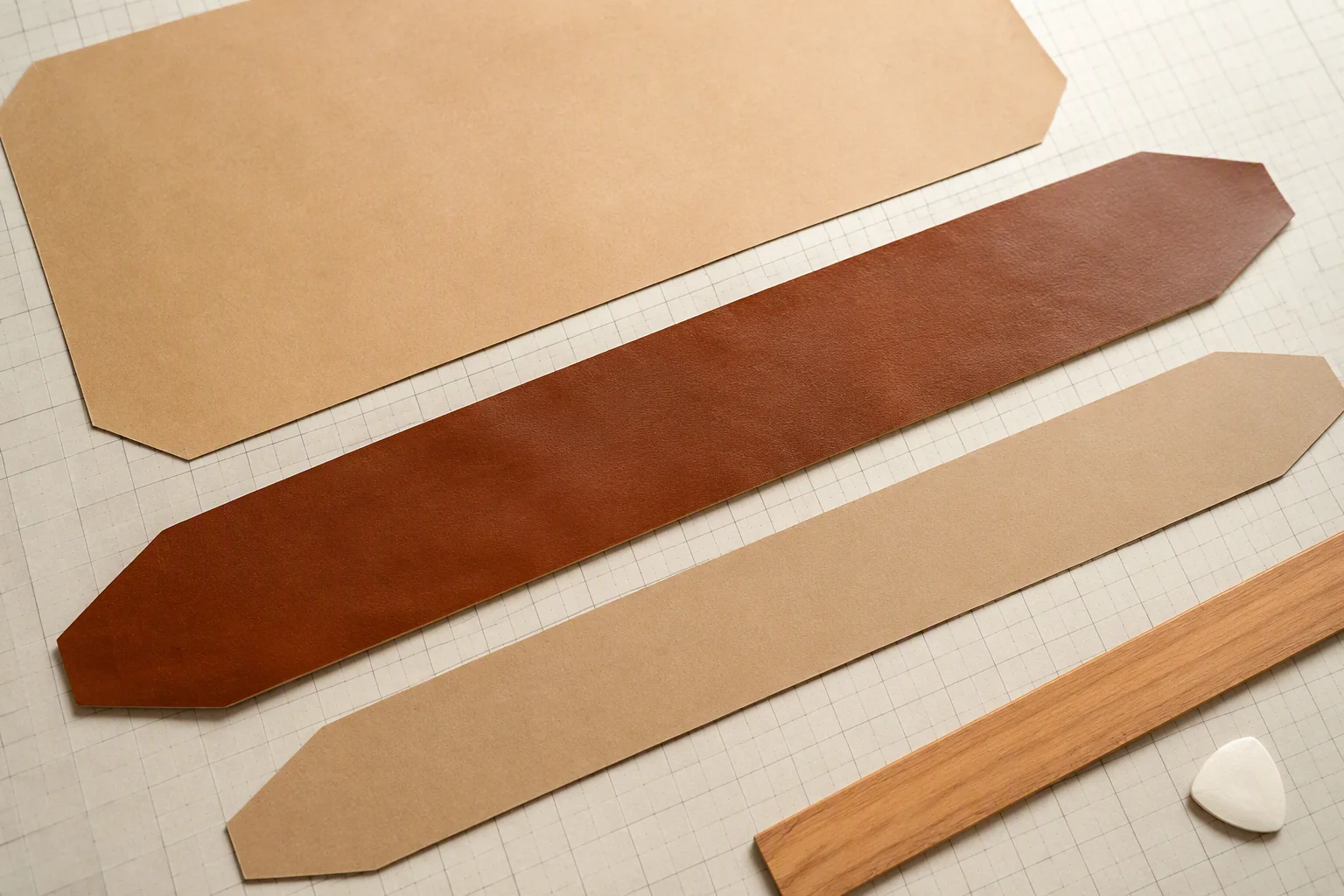
A deep gusset is also a long strip, and long strips are the hardest pieces to place on a hide without crossing areas of different quality. Depth increases both the width and the length of the piece, so the yield effect is not linear.
Grain Direction on the Gusset
Along the length, almost always.
The gusset should normally be cut along the length of the hide so that the bag’s vertical direction follows the leather’s natural direction. Cutting across produces a gusset that behaves differently from the body panels.
Splicing and Its Visible Cost
When depth exceeds the hide.
Beyond a certain depth, the gusset has to be spliced, usually at the base. The splice is a design decision: it can be concealed in a base seam, or it can become a visible feature with a bound edge.
Depth Changes and Pattern Changes
Not a single-number edit.
Changing gusset depth alters the body panel’s perimeter, the lining set, the base reinforcement and the strap positions. Treating it as one number on a drawing is how a pattern ends up inconsistent.
Depth and Hardware
Small parts loaded differently.
Zip Length
The mouth has to open.
A deeper gusset usually needs a longer zip opening, and the zip’s curve around the mouth changes with depth. Specifying the zip length from the finished mouth, not from the pattern, avoids a common error.
Strap Attachment Points
Moved by depth.
Attachment points sit relative to the bag’s centre of gravity. Increasing depth moves that centre outward, and a strap that was correctly placed on a slim bag can hang badly on a deep one.
Base Feet and Protection
More depth, more contact.
A deep bag set down repeatedly needs base protection: feet, a reinforced base panel or a leather patch. The deeper the bag, the more load passes through the base corners.
Clasps and Their Reach
Flap bags specifically.
On a flap bag, depth decides whether the flap reaches the clasp comfortably. A deep gusset with a short flap produces a bag that closes under tension and shows a gap along the edge.
Depth by Bag Type
Practical ranges, and the reasoning behind them.
Diaper Bags
Volume and one-handed access.
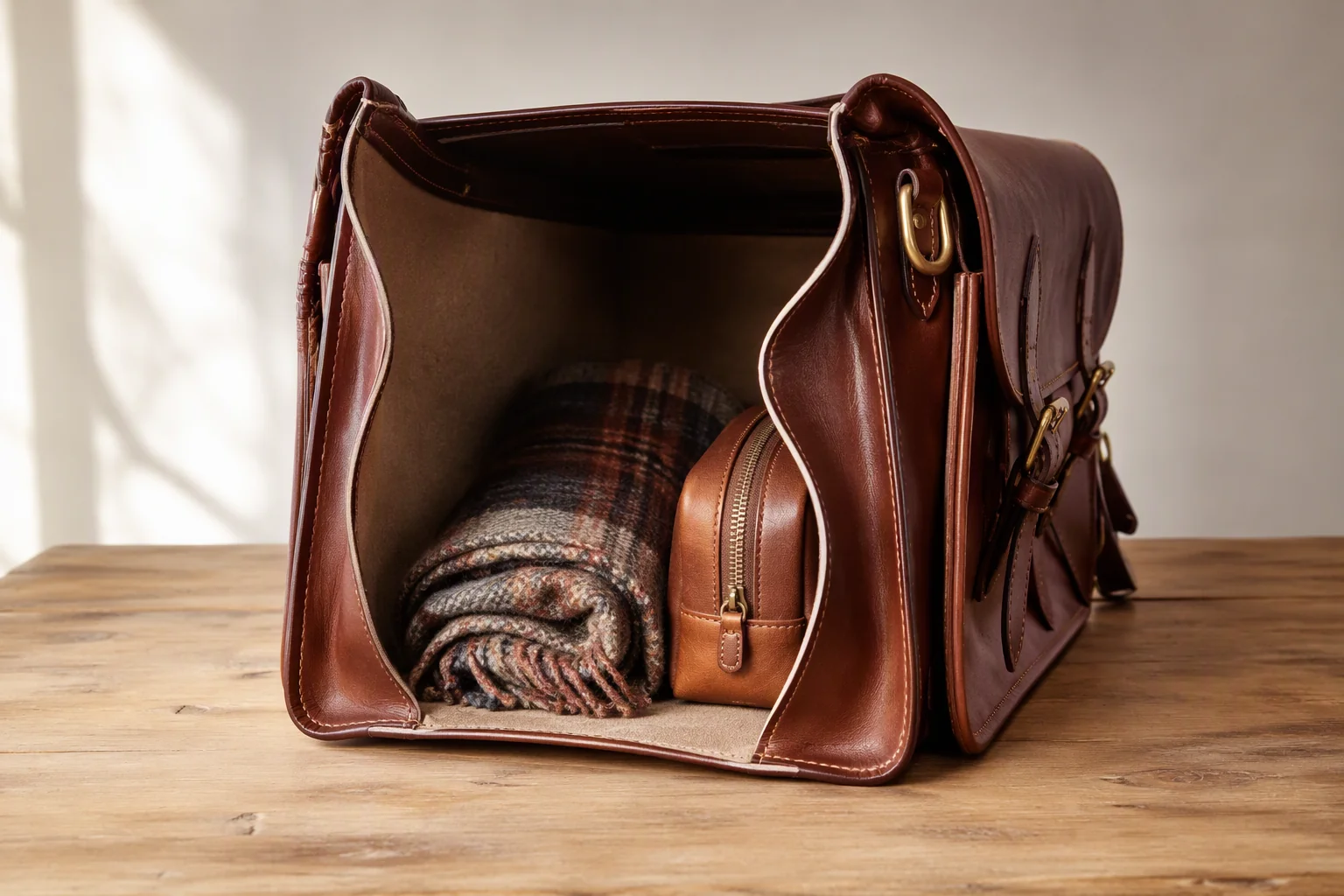
Diaper bags need enough depth for bottles and a changing mat, and enough structure to stay open while one hand is busy. Depth is usually generous, with the constraint coming from bulk and weight rather than from volume.
Work Totes
The laptop sets the floor.
A work tote’s depth is effectively set by the laptop inside a padded sleeve, plus a margin for a charger and a folder. Anything deeper adds bulk without adding usefulness.
Slim Crossbody Bags
Depth is the whole design.
In a small bag, depth is what makes it either elegant or lumpy. A minimal gusset keeps the silhouette flat, and the trade is that only flat contents fit.
Backpacks
Depth and the spine.
A backpack’s depth affects how far the load sits from the wearer’s back. Deep packs carry more but lever more; the depth range is usually narrower than the outline suggests.
When Depth Should Be Reduced
A deliberate direction, not a cost cut.
Reducing depth is often the right move when a bag is used in crowded or formal settings, or when a style has drifted into looking bulky. Done deliberately, with the mock-up retested, it produces a better-handling bag; done as a quiet cost reduction, it produces one that no longer closes over its contents.
Travel and Weekender Bags
Depth as capacity.
Travel bags use depth to reach volume, and the constraint is the base structure and the weight carried by the handles. Reinforcement scales with depth here more than anywhere else.
Testing Depth Before Production
Cheap tests, expensive mistakes avoided.
The Mock-Up
Canvas before leather.
A canvas or card mock-up in the intended dimensions, filled with the real contents, answers most questions in an hour. It shows whether the bag closes, whether it stands, and whether the items can be reached.
Load Testing the Base
Where failure appears.
Filling the bag to its intended working load and lifting it repeatedly by the handles tests the base seam, the corner reinforcement and the stretch of the leather. Most depth-related failures show up here rather than in appearance.
The Wearing Test
Depth is felt, not measured.
A bag that measures correctly can still feel wrong when carried: too deep to reach into, too bulky under an arm, or unbalanced on one shoulder. A short wearing trial with the intended load is the only way to catch this.
Documenting the Decision
Why this depth.
Recording the reasoning, the contents tested and the margin chosen turns a single number into a specification that survives a change of designer or factory.
Depth and Lining
The interior has to match the shape.
Lining Pattern for a Gusset
Cut to the same geometry.
The lining gusset must follow the leather gusset’s shape and allowance, with its own seam positions. Reusing a lining pattern from a shallower style is a reliable way to produce a bag that will not sit flat.
Slip and Bagging
Where lining shows through.
A lining that is slightly too large bags inside the bag; one that is too small pulls at the gusset seam. On deep gussets the difference becomes visible along the full length of the side.
Reinforcement Between Layers
Position matters more than thickness.
Base reinforcement and gusset stiffening sit between leather and lining. Their position determines whether the bag stands and where it creases, so both belong on the pattern, not in a note.
Depth and the Customer’s Perception
What the number communicates.
Perceived Capacity
Optical, not arithmetic.
A bag’s apparent capacity is read from its outline and its gusset, before anything is put inside. Buyers judge from photographs, which is why a photograph taken from the end of the bag sells differently from one taken from the front.
Depth and Price Expectation
More material, more money.
Depth consumes leather, lining and reinforcement, and adds operations. Customers read a deep bag as more substantial, which supports a higher price only if the construction justifies it.
Depth and Daily Annoyance
The complaint pattern.
The most common depth-related complaint is not capacity but access: a bag deep enough to swallow everything but too narrow to reach into. That is a proportion problem, not a volume problem.
Working With the Factory on Depth
Practical collaboration.
What to Specify
Dimensions with reference points.
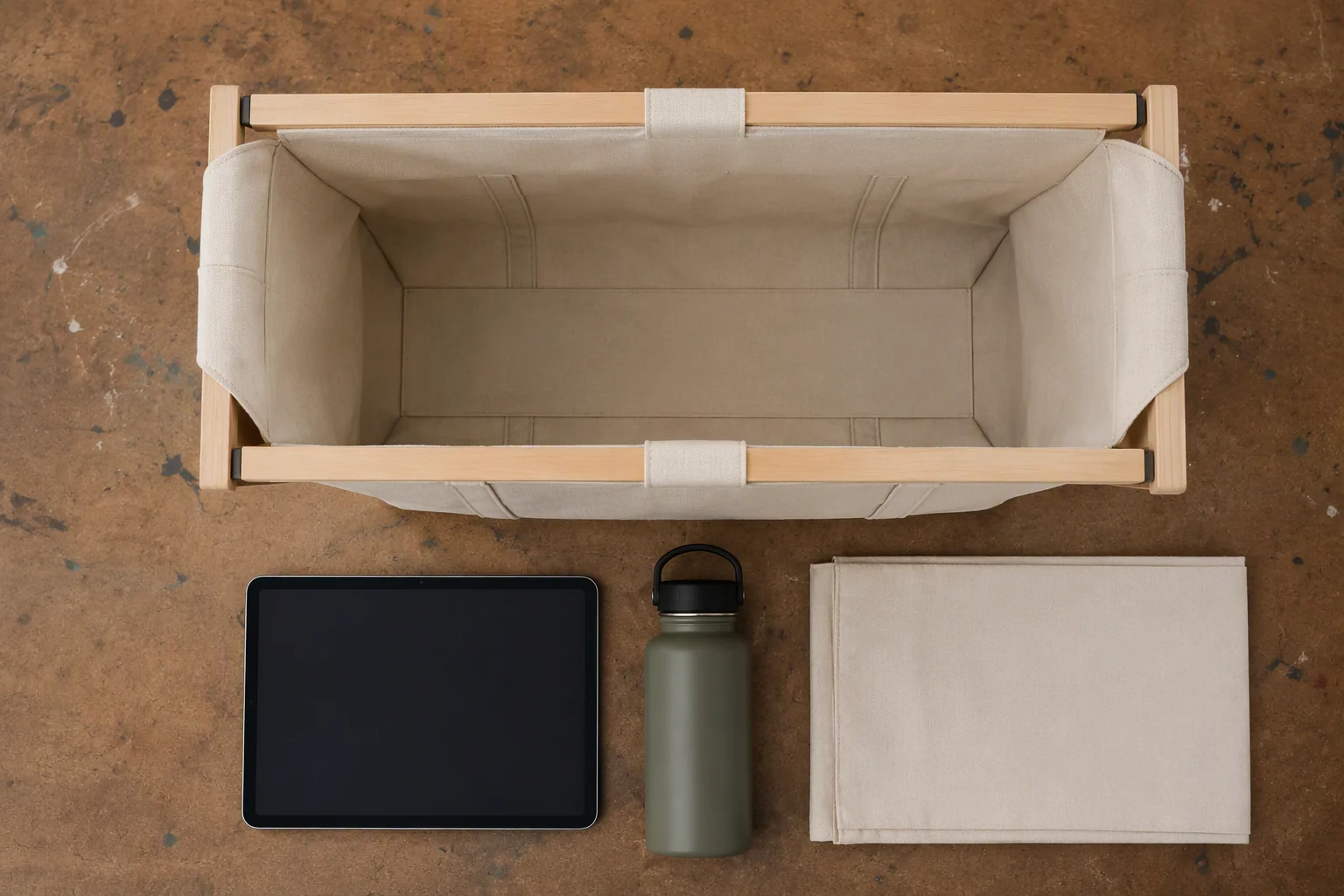
Gusset depth at the mouth, depth at the base, base radius, mouth opening length and the tolerance on each. Dimensions without reference points are re-interpreted on the floor.
What to Ask
Constructability and yield.
Ask how the gusset will be cut, whether it needs splicing, what reinforcement the base requires and how the change affects yield. The answers usually reveal a cost that was not in the original estimate.
Managing a Depth Change
Treat it as a re-development.
A depth change should trigger a new pattern review, a new mock-up and a fresh cost calculation. Treating it as an edit to one number is how bags reach production with inconsistent proportions.
Depth, Volume and the Cost Sheet
Every extra millimetre has a price.
Material Consumption
More than the gusset.
Increasing depth enlarges the body panel’s perimeter, the lining set and the base reinforcement. The gusset piece itself is only part of the additional consumption, which is why a depth increase often costs more than the estimate suggests.
Operations Added
Seams, reinforcing, fitting.
A deeper bag usually adds a base seam, extra reinforcement, longer zips and more handling. Labour scales with operations rather than with volume, so a modest capacity gain can carry a disproportionate cost.
Cost per Litre
A comparison that clarifies.
Dividing the total cost difference by the usable volume gained shows whether the extra depth is worth it. In many developments the answer is no, and the same capacity is achieved more cheaply by widening the bag.
Depth for Sample Development
Iterations are cheaper than corrections.
Prototype in Cardboard First
Ten minutes, real answers.
A cardboard or card mock-up in the intended dimensions, filled with the real contents, settles the basic question before any leather is cut. It is the cheapest step in the entire development.
The First Leather Sample
Where depth meets behaviour.
The first leather sample reveals what cardboard cannot: how the material folds, whether the bag stands, where it creases. Depth adjustments made here are normal and inexpensive.
Freezing the Depth
The point of no return.
Once the pattern set, lining pattern and reinforcement positions are finalised, depth is effectively frozen for that style. Later changes are re-development, not adjustment.
Depth and Storage at Home
How the bag lives when it is not carried.
Storing a Deep Bag
Shape retention.
A deep bag stored empty tends to collapse along the gusset fold. Storing it lightly filled, standing, preserves the shape and avoids a permanent crease.
Flattening for Travel
When depth is a disadvantage.
Some bags are designed to flatten for packing. That requires a gusset that folds predictably and a leather that tolerates repeated folding, which is a material decision made at design stage.
Signs the Depth Is Wrong
What owners notice first.
- The bag closes only if it is not full
- The base bulges when carried by the handles
- Reaching the bottom requires emptying the top
- The bag tips forward when set down
- A permanent diagonal crease appears on the gusset
- The silhouette looks inflated when empty
Questions Before Changing Depth
A short discipline for any revision.
- Which specific item prompted the change
- What internal dimension that item needs, with allowance
- Whether the body panel perimeter changes
- Whether the lining and reinforcement patterns change
- Whether the strap positions and base radius need review
- What the change costs in material and operations
- Whether a shallower bag with more width would do the same job
Common Mistakes
What shows up in returns.
- Depth chosen from the drawing without filling a mock-up
- Rigid contents measured without lining allowance
- Base left unreinforced because the bag “looked fine empty”
- Strap positions carried over unchanged from a shallower style
- Zip length specified from the pattern rather than the finished mouth
- Lining pattern reused from a different depth
- Depth increased to add capacity without reviewing the silhouette
Each of these is inexpensive to correct at design stage and expensive to correct after the first shipment.
Frequently Asked Questions
What is a normal gusset depth for a leather tote?
It depends on the contents rather than on a standard. A work tote is usually set by the laptop in a padded sleeve plus a small margin, while a shopper or travel bag uses a deeper gusset because it is expected to carry soft, bulky items.
Does a deeper gusset always mean more usable space?
No. Beyond a point, extra depth adds bulk that cannot be reached, and it increases the bag’s tendency to collapse in soft leather unless the base and gusset are reinforced. Usable space depends on access as much as on volume.
Why does a deep gusset need a larger base radius?
Because the load is greater and the corners carry it. A tight radius concentrates stress at the base corner, which distorts the panel and strains the seam, so the radius is increased to spread the load.
Should the gusset be cut in one piece?
Where depth allows, yes: a single gusset is simpler and cheaper. Beyond a certain depth the piece becomes too long to place efficiently on a hide, and a two-piece gusset joined at the base is a better compromise.
How does gusset depth affect cutting yield?
It affects both width and length, so the effect is more than proportional. Long, deep strips are difficult to place without crossing areas of different leather quality, and they often force a splice.
Can the lining pattern be reused when depth changes?
No. The lining gusset follows the leather gusset’s geometry and allowance, and reusing a pattern from a different depth produces bagging or tension along the seam.
Why does a laptop fit a bag on paper but not in practice?
Because the internal dimension shrinks once lining, interlining and seam allowance are added, and a padded sleeve consumes more space again. Specify the internal clearance rather than the device’s nominal size.
Does depth change the strap position?
It should be reviewed. Depth moves the bag’s centre of gravity away from the body, which changes how it hangs, so attachment points are reconsidered rather than carried over from a shallower style.
What is the most common depth-related complaint?
Access rather than capacity: a bag deep enough to hold everything but too narrow to reach into. That is a proportion problem, and it is solved by reviewing the mouth opening alongside the depth.
How is gusset depth measured on a specification?
At defined reference points, typically at the mouth and at the base, with the base radius and the mouth opening length also stated, each with a tolerance.
When should depth be tested physically?
Before sampling is approved. A canvas mock-up filled with the real contents, a load test on the base and a short wearing trial answer the questions that drawings cannot.
The Bottom Line
Gusset depth is where a bag’s purpose becomes a number. It is chosen from the contents, tested in a mock-up, adjusted for lining and closure, and then carried through to the pattern, the lining set, the base reinforcement and the strap positions.
A bag built this way holds what it was meant to hold and behaves predictably in wear. A bag built the other way, with depth set by the drawing and never tested with real contents, tends to close under strain, crease along the wrong line and annoy its owner in a way that no amount of leather quality will fix.
The manufacturer’s discipline is to treat depth as a structural decision with a cost, a yield consequence and a service life, and to change it only as part of a deliberate re-development rather than as an edit to a single figure.
