
Cowhide vs Sheepskin vs Goatskin: Leather for Bags Compared
Cowhide vs Sheepskin vs Goatskin: Leather for Bags Compared
Most leather shoppers compare brands, colors, and prices. Almost none compare the animal, even though the species under the finish decides how a bag feels, ages, and survives.
As a bag manufacturer, we choose the species before we choose anything else. This guide compares cowhide, sheepskin, and goatskin from the factory bench — what each one does well, where each one fails, and which bags each hide belongs on.
- Why the Animal Matters More Than the Finish
- Cowhide: The Workhorse of Bag Making
- Sheepskin: The Soft One
- Goatskin: The Underrated Choice
- Other Hides You Will Meet
- The Head-to-Head Comparison
- Care by Hide Type
- How Species Choice Affects Manufacturing
- Choosing by Bag Type
- How Finishes Change What You See
- Tanning and Species: How They Interact
- The Supply Reality Behind Species
- How We Specify a Hide for Production
- Common Buying Mistakes
- Frequently Asked Questions
- The Bottom Line
Why the Animal Matters More Than the Finish
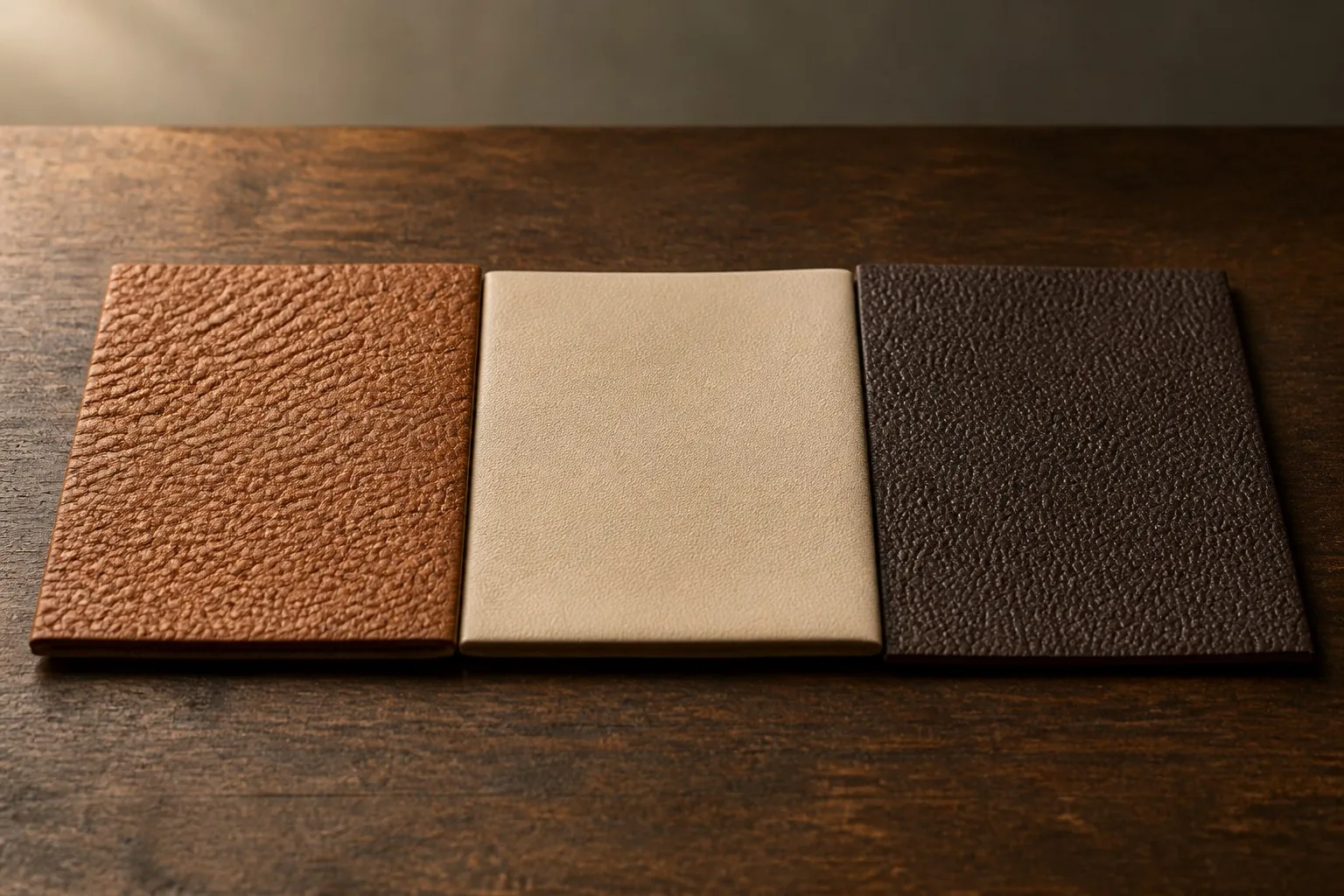
Finishes, dyes, and embossing can disguise a hide, but they cannot change its inner structure. The species sets the ceiling on what a leather can become.
What Determines a Hide’s Character
Three things define a hide: fiber density, grain pattern, and the thickness of the skin itself.
Fiber density decides strength and how the leather ages. Grain pattern decides the look. Skin thickness decides which bag parts the hide can serve. Two hides from different species can wear identical dye and finish and still behave nothing alike.
Fiber Density: The Hidden Quality Factor
Dense fiber means more leather in the same space, and that is what resists stretching, tearing, and sagging.
Cowhide has the densest fiber structure of the common hides, which is why it dominates heavy-use bags. Goatskin is nearly as strong despite being lighter. Sheepskin is looser, softer, and the least resistant to stress. Density is the reason the same design performs differently across species.
Why Tanners Talk Species First
At the tannery, species is the first question asked, because it determines what processes are even possible.
Sheepskin cannot be tanned into firm structure; it wants softness. Cowhide tolerates heavy finishes and firm temper. Goatskin accepts fine grain finishes beautifully. A request for “a soft brown leather” means nothing until the species is named.
Cowhide: The Workhorse of Bag Making
Cowhide is the default hide of the leather goods industry, and for good reason. It is strong, widely available, and predictable.
Character and Feel
Cowhide feels substantial in the hand: firm, slightly waxy, with a dense body that resists compression.
Its natural grain is visible but subtle, usually a fine pebble across the back and shoulder that loosens toward the belly. Cowhide has weight and presence. When buyers say a bag “feels like real leather,” they are usually describing cowhide.
Durability and Aging
Cowhide is the durability benchmark for bags, with dense fibers that resist stretching and tearing for years.
It ages by developing depth: the surface darkens slightly, softens at the stress points, and takes on the creases of use. Quality cowhide improves for a decade before showing its first real wear. That slow, dignified aging is why full-grain cowhide holds value so well.
Best Uses in Bags
Cowhide belongs anywhere the bag must carry load and hold shape.
- Totes and work bags that stand upright
- Backpacks with structured back panels
- Diaper bags that face daily abuse
- Straps, handles, and base panels
- Briefcases that need to look formal for years
Manufacturer’s point: When a customer asks for a bag that must survive daily use for five years without complaint, we specify cowhide. It is not the softest or the most elegant hide, but it is the hide that rarely comes back.
Sheepskin: The Soft One
Sheepskin is the most misunderstood hide in bag making, admired for its touch and punished for it.
Character and Feel
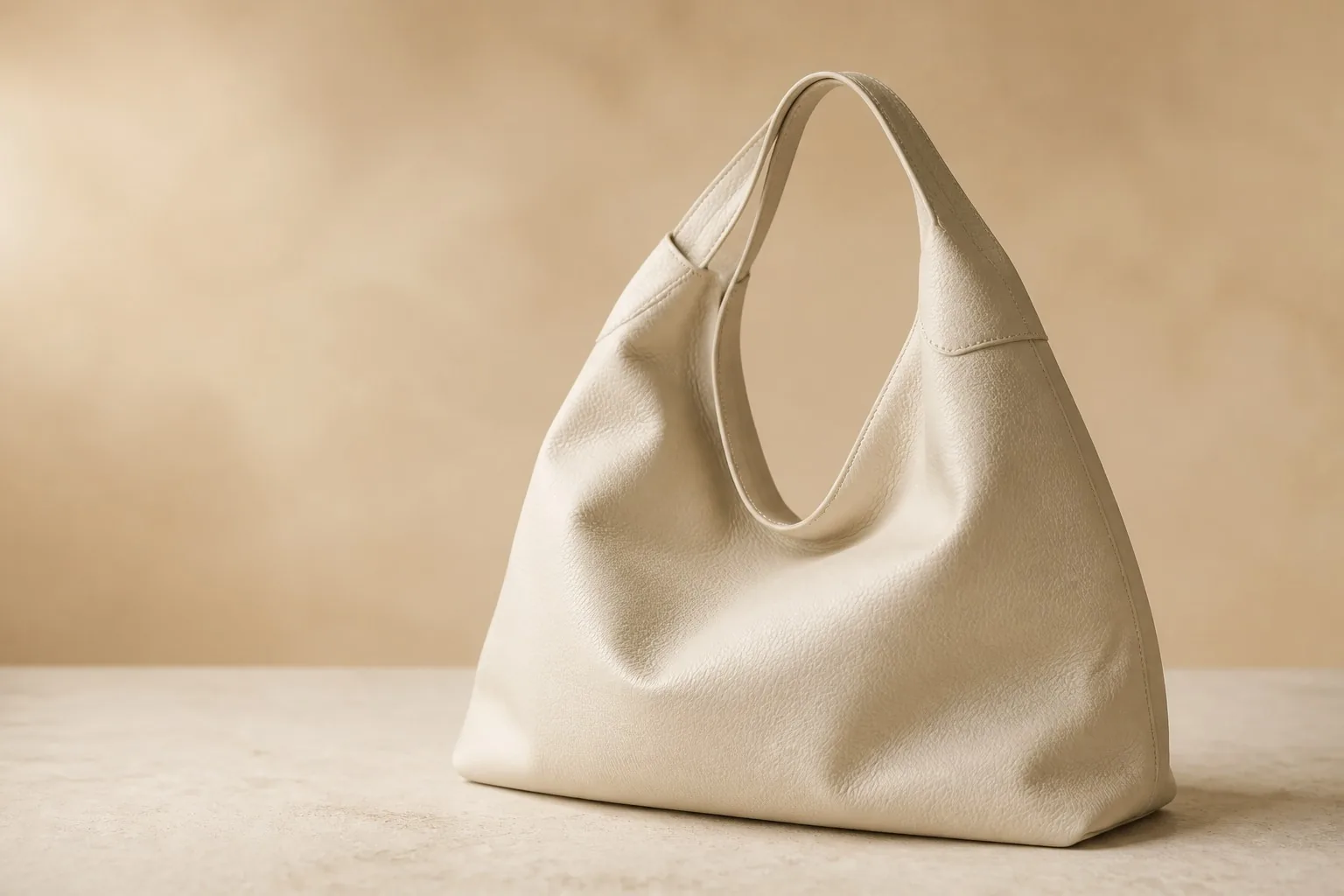
Sheepskin, and its younger sister lambskin, feels unmistakably soft: buttery, pliable, and warm to the touch.
The grain is extremely fine, almost invisible, which gives sheepskin a smooth, luxurious surface that takes dye beautifully. It drapes like fabric and folds like silk. No other common hide feels this gentle in the hand.
The Durability Trade-off
Sheepskin’s softness comes from a looser fiber structure, and that looseness is its weakness.
It stretches at stress points, scuffs more easily, and can tear at seams under heavy load. Sheepskin bags are usually reinforced with cowhide at the handles, base, and corners because the hide alone cannot carry the load. Soft does not mean fake — it means a different structural budget.
Best Uses in Bags
Sheepskin is at its best where softness and touch matter more than load.
- Slouchy shoulder bags and hobos
- Elegant clutches and evening bags
- Lightweight crossbody bags
- Garment-style bags worn close to the body
- Small goods where softness is the point
Goatskin: The Underrated Choice
Goatskin sits between cowhide and sheepskin, and in many ways it takes the best of both.
Character and Feel
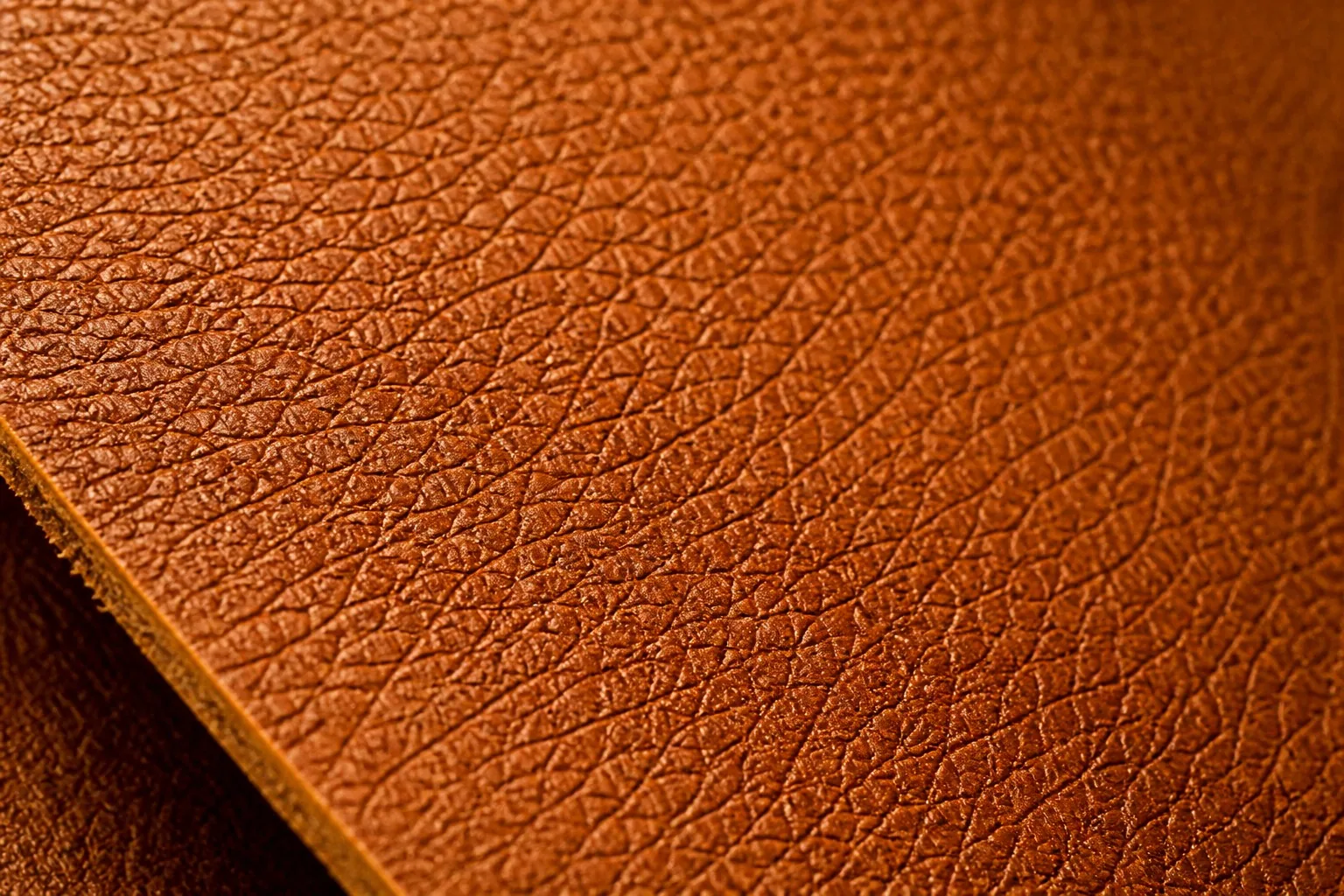
Goatskin has a distinctive pebbled grain and a naturally firm, springy hand that is lighter than cowhide.
Its surface shows a clear cross-hatch pattern that many buyers mistake for an embossed finish — it is the natural structure of goat skin. The leather is light, flexible, and holds its shape without stiffness, which makes it a joy to wear.
Why Goatskin Wears So Well
Goatskin’s fiber structure is dense and tightly interwoven, giving it strength far beyond its light weight.
The tight grain resists scuffing, and its natural oils make the surface forgiving of daily contact. Goatskin keeps its shape better than sheepskin while weighing less than cowhide. For bags that must be both light and durable, it is the quiet champion.
Best Uses in Bags
Goatskin suits the bags that carry moderate loads and demand a refined feel.
- Crossbody and shoulder bags
- Lightweight totes and shoppers
- Soft-structure handbags
- Wallets and small leather goods
- Ladies’ bags where weight matters
Other Hides You Will Meet
Beyond the big three, several other hides appear in bags, and each has a place.
Buffalo and Water Buffalo
Buffalo leather is a cousin of cowhide with an even more pronounced grain and often a firmer temper.
Water buffalo hides are large and dense, and the leather is durable and affordable. The grain can look rugged, so it suits casual, outdoors, and work-oriented bags. Buffalo is a strong value hide that buyers often mistake for premium leather.
Calfskin
Calfskin comes from young cattle, and it combines cowhide strength with a finer, smoother surface.
The most desirable calfskins are sold as box calf, prized for a clean grain that takes an elegant shine and holds a sharp shape. Calfskin is a luxury workhorse: structured, refined, and increasingly expensive as supply tightens.
Exotic Hides in Brief
Exotic hides — ostrich, crocodile, python — are specialty materials with specialty rules.
They are used sparingly for accent panels and luxury pieces, require specialist knowledge to work, and cost dramatically more. For most bag production, the choice realistically sits among cowhide, goatskin, sheepskin, calfskin, and buffalo.
The Head-to-Head Comparison
The table below is the one we use when a brand asks which hide to specify.
| Property | Cowhide | Sheepskin | Goatskin |
|---|---|---|---|
| Fiber density | Highest | Lowest | High |
| Feel | Firm, substantial | Buttery, soft | Springy, light |
| Grain | Fine to open pebble | Nearly invisible | Pronounced pebble |
| Shape retention | Excellent | Poor | Very good |
| Scuff resistance | High | Low | High |
| Weight | Heavy | Light | Light |
| Aging | Deepens and patinas | Softens, wears | Holds shape |
| Price | Moderate | Moderate to high | Moderate |
| Best role | Structure and load | Softness and touch | Light durability |
Reading the Comparison Table
A single row rarely decides the choice; the bag’s priorities decide which rows matter.
If load-bearing matters most, the fiber density row wins and cowhide leads. If touch and drape matter most, sheepskin wins despite its weaker numbers. Goatskin’s cluster — light, strong, shape-holding — explains why it keeps winning new converts in modern bag design.
The Strength Rankings
Ranked purely by structural strength, the order is cowhide first, goatskin a close second, sheepskin last.
Calfskin sits near cowhide for strength with a finer surface. Buffalo matches cowhide roughly, while exotic hides vary too widely to rank simply. This ranking is about stress resistance, not quality — sheepskin is a fine leather that happens to carry less load.
The Softness Rankings
Ranked by softness, the order reverses: sheepskin and lambskin first, then goatskin, then cowhide.
Softness is not a downgrade; it is a design decision. An evening clutch should feel like sheepskin, not like a work bag. The mistake is using a soft hide where structure is required, not choosing softness itself.
Care by Hide Type
The species also decides the care routine, and the three hides want different handling.
Caring for Cowhide
Cowhide is the most forgiving hide: wipe it, condition it twice a year, and keep it out of long soaking.
Its dense surface resists staining, and most marks sit on the top layer rather than soaking in. Conditioner feeds the fibers and keeps the surface supple. A well-cared-for cowhide bag can outlast its owner’s interest in it.
Caring for Sheepskin and Lambskin
Sheepskin needs gentler treatment: soft brushing, light conditioning, and protection from water and friction.
Because the fiber is looser, sheepskin absorbs liquids faster and abrades more readily. Waterproofing spray helps, and conditioners should be used sparingly so the leather does not darken unevenly. Stored sheepskin should be padded, not folded tight.
Caring for Goatskin
Goatskin is low-maintenance, needing occasional conditioning and a wipe with a dry cloth.
Its natural oils make it reasonably resilient, and the pebbled grain hides small scuffs well. As with all leather, avoid long water exposure. Goatskin’s easy care matches its easy carry, which is much of its appeal.
The Care Comparison
| Care task | Cowhide | Sheepskin | Goatskin |
|---|---|---|---|
| Routine wipe | Dry cloth | Soft brush | Dry cloth |
| Conditioning | 2× per year | Sparingly | 2× per year |
| Water exposure | Wipe promptly | Avoid | Wipe promptly |
| Scratch repair | Buffs out | Difficult | Grain hides it |
| Storage | Stuffed, dry | Padded, flat | Stuffed, dry |
How Species Choice Affects Manufacturing
The hide’s species changes the production line itself, not just the finished bag.
Cutting and Yield
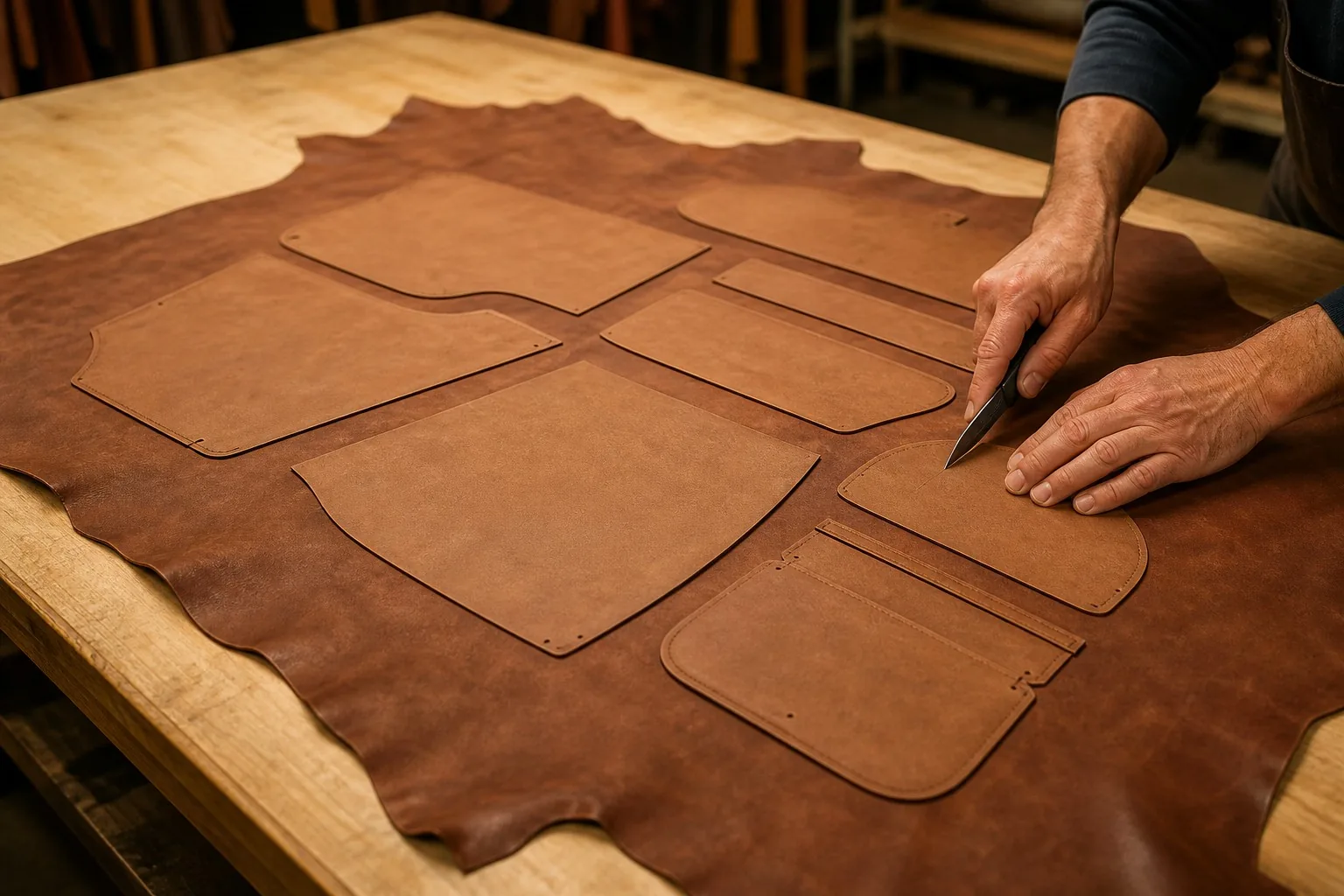
Every species cuts differently, and yield differences translate directly into cost.
Cowhides are large and even, giving generous panel yield per hide. Goatskins are smaller, so the same bag needs more hides and more careful nesting of patterns. Sheepskins are soft and stretchy, which makes accurate cutting harder and waste higher.
Stitching and Skiving
Soft hides and firm hides fight the sewing machine in opposite ways.
Firm cowhide holds a stitch line cleanly and tolerates heavier thread. Soft sheepskin can pucker and slip, so the machinist must slow down and use finer settings. Goatskin sits in the middle, sewing cleanly at normal speeds. Each species raises or lowers the labor cost per hour.
Finishing and Linings
The hide also dictates how the bag’s interior is built and finished.
Firm hides accept edge paint cleanly, while soft hides need folded or bonded edges to look tidy. Linings must match: a heavy cowhide bag usually wears a durable canvas or suede lining, while soft sheepskin bags need light linings that will not drag the structure down.
The Cost Equation
The final cost of a leather bag is a product of species, grade, and labor, in that order of impact.
Cowhide offers the best value for structural bags because yields are high and the hide is forgiving. Sheepskin costs more to work because of waste and slower stitching. Goatskin’s premium reflects limited supply and the skill required to use its small, fine hides well.
Manufacturer’s point: When a brand asks us to hit a price point, we rarely start by downgrading the hide grade. We start by rethinking which species and which panel the bag really needs. The right species at the right grade beats a cheap hide every time.
Choosing by Bag Type
The species decision becomes concrete once the bag type is known. This is the mapping we use in production planning.
Diaper Bags and Family Bags
Diaper bags live with spills, wipes, and constant handling, which points strongly to cowhide.
A cowhide or buffalo body at the practical thickness range handles moisture, holds its shape when set down, and survives the daily grind. Sheepskin looks lovely but rarely survives toddler life. For the family bag market, cowhide is not a compromise — it is the correct engineering choice.
Backpacks
Backpacks need a hide that will not stretch under load, so cowhide leads the field.
Cowhide back panels keep the pack’s structure, while goatskin can serve lighter front panels and pocket areas where density is less critical. Sheepskin backpack panels sag under books and wear at the shoulder stress points, so we rarely specify them.
Handbags and Totes
Handbags and totes offer the widest latitude, and this is where all three species earn their keep.
Cowhide totes deliver structure and endurance. Goatskin totes deliver lightness and refined grain, ideal for city carry. Sheepskin handbags deliver softness and drape, best for lighter use and evening wear. The bag’s daily reality, not the runway look, should decide.
Wallets and Small Goods
Small goods reward fine grain and thin hides, which shifts the balance to goatskin and sheepskin.
Goatskin wallets resist wear in the pocket better than most hides and keep their shape. Sheepskin and lambskin wallets feel luxurious but wear faster at the fold. Cowhide and calfskin wallets prioritize endurance over touch, which suits heavy daily use.
The Bag Type Table
| Bag type | First choice | Alternative | Why |
|---|---|---|---|
| Diaper bag | Cowhide | Buffalo | Survives spills and weight |
| Backpack | Cowhide | Goatskin panels | Resists stretching under load |
| City tote | Goatskin | Cowhide | Light, keeps shape |
| Work briefcase | Cowhide / calfskin | Buffalo | Structure and formality |
| Evening bag | Sheepskin | Goatskin | Softness and drape |
| Wallet | Goatskin | Calfskin | Fine grain, shape retention |
| Travel duffel | Cowhide | Buffalo | Toughness under handling |
How Finishes Change What You See
Species sets the foundation, but the finish decides what the buyer actually sees and feels. The same cowhide can appear rough, smooth, matte, or glossy depending on how it is finished.
Full-Grain and Top-Grain Across Species
Full-grain keeps the hide’s natural surface, while top-grain is lightly sanded for uniformity.
Full-grain cowhide shows its natural pebble and every mark, which enthusiasts prize. Full-grain goatskin shows the classic cross-hatch grain. Sheepskin full-grain is so fine it can look almost featureless. Top-grain versions look cleaner and more consistent, at the cost of character.
Suede, Nubuck, and Napped Finishes
Suede and nubuck are created by sanding the hide to raise a nap, and species changes the result dramatically.
Cowhide suede is durable and thick, suitable for linings and heavy bags. Goatskin suede is finer and softer, often used in small goods. Sheepskin suede is the softest of all, which is why it appears in gloves and delicate accessories. The nap also makes all three more vulnerable to water.
Patent and Coated Finishes
Patent and coated finishes add a surface layer that changes the leather’s behavior at any species.
A coated finish makes cowhide stiffer and more glossy, and it can make soft sheepskin hold a shape it could never hold naturally. Coating also removes patina from the equation: the surface ages by cracking rather than deepening. When buyers want shine, the coating matters more than the species underneath.
Why a Species Can Look Wrong
A hide can look like the wrong species when the finish hides its natural grain.
Embossed finishes can print a goatskin pattern onto cowhide, and heavy coatings can erase cowhide’s natural texture entirely. Buyers who care about species should look at the grain structure, the weight, and the drape — not just the name on the tag.
Tanning and Species: How They Interact
Tanning chemistry and hide species work together, and the pairing explains much of a leather’s behavior in a finished bag.
Vegetable Tanning by Species
Vegetable tanning uses plant tannins and suits hides that benefit from firm temper and natural aging.
Cowhide vegetable-tanned produces the classic firm, patina-rich leather of belts and structured bags. Goatskin takes vegetable tanning beautifully and yields a firm, fine-grained leather. Sheepskin vegetable-tanned is rarely produced, because the hide’s loose structure already limits firmness.
Chrome Tanning by Species
Chrome tanning is faster and produces softer, more uniform leather, which suits different goals.
It makes sheepskin supple and color-fast, which is why most sheepskin bags are chrome-tanned. Goatskin and cowhide chrome-tanned are softer and more pliable than their vegetable-tanned equivalents. The trade-off is environmental rather than structural: chrome chemistry carries handling and disposal costs the industry is working to reduce.
Why the Pairing Matters
A brand choosing a leather is really choosing a species-tanning combination, and the combination has a personality.
Firm cowhide with vegetable tanning ages with visible character. Soft sheepskin with chrome tanning stays soft but wears faster. Matching the pair to the bag’s purpose is the quiet skill of leather specification, and it happens long before any design sketch.
The Supply Reality Behind Species
Species availability shifts with agriculture, season, and fashion, and those shifts reach the factory floor as price and lead time.
Why Hide Sizes Differ
Hide size varies enormously by species, and size determines how many panels a single hide can yield.
Cowhides are large, so a tote’s panels often come from one hide with leftovers for trims. Goatskins are much smaller, so a single bag may consume several hides, which multiplies both cost and quality control work. Size is one of the least visible and most consequential supply factors.
Seasonal and Regional Supply
Hide supply follows the meat industry, which means availability depends on seasons and regions far from the tannery.
Dairy and beef regions produce the bulk of cowhide, and supply can tighten when meat markets shift. Goat hide supply concentrates in regions where goat meat is common. Sheepskin supply depends on the wool and lamb markets. None of this is visible on a price tag, but all of it moves prices.
What This Means for Buyers
For buyers, supply reality means two practical things: confirm lead times early, and avoid building a collection around a single hide.
A bag line that depends on one specific goatskin may face months of delay when supply tightens. Experienced brands approve two or three acceptable leathers at the qualification stage, so production continues when one hide becomes scarce. Flexibility is a purchasing strategy, not a compromise.
How We Specify a Hide for Production
A leather specification is a small document with large consequences. This is what ours contains, and what buyers should expect to hear from any serious manufacturer.
The Specification Fields
A complete hide specification names seven things: species, tannery, grade, thickness range, finish, color standard, and batch tolerance.
Species names the animal. Grade describes the part of the hide and the quality tier. Thickness sets the working range in ounces or millimeters. Finish describes the surface treatment. The color standard allows batch matching, and the tolerance states how much variation is acceptable.
Why Grade Sits Beside Species
Species gets attention, but grade determines how much of the hide is usable for the bag’s visible panels.
A low-grade cowhide is still cowhide, and it still stretches and tears at its weak areas if those areas land on a bag panel. Specification work is largely the work of routing grades to the right panels: best areas on the face of the bag, mid-grade areas on gussets and interiors, weakest areas nowhere at all.
The Sample Round
Before production, we build sample bags from the specified hides and test them under real conditions.
Samples get loaded, carried, folded, and left in the sun. The round reveals what the specification missed: a hide that marks too easily, a finish that scuffs in transit, or a color that shifts under retail lighting. Species and grade set the plan; the sample round proves it.
Common Buying Mistakes
Buyers rarely get species information wrong on purpose; the mistakes come from missing information.
Assuming Soft Means Weak
Soft leather is often assumed to be lower quality, but softness is a species trait, not a defect signal.
Sheepskin is not inferior — it is structurally different, and it is priced and used accordingly. The error is buying a soft hide for a load-bearing purpose. Judge the hide against the job, not against the reputation of firm leather.
Paying Cowhide Prices for Sheepskin
Some sellers present sheepskin or bonded material under generic “genuine leather” language, which hides the species.
The word “genuine” describes a legal minimum, not a species. Buyers who want cowhide strength should ask directly which animal the hide came from. A seller who cannot answer is selling more than leather — they are selling uncertainty.
Ignoring the Lining Species
The lining is leather too, and its species affects how the bag ages from the inside.
A cowhide bag with a thin pigskin or synthetic lining wears differently from one with a sturdy canvas lining. Ask what the interior is made from. The answer often explains why two visually similar bags age so differently after a year.
How to Identify the Hide
A few practical checks help at the point of sale.
- Grain: cowhide shows a subtle natural pebble; goatskin’s pebble is pronounced; sheepskin looks almost smooth
- Weight: cowhide feels noticeably heavier than goatskin for the same bag
- Drape: sheepskin folds willingly; cowhide resists; goatskin springs back
- Edge: firm hides hold a crisp painted edge; soft hides need folded construction
- Smell: natural hides carry a distinct animal-leather scent; coated synthetics do not
Frequently Asked Questions
Which leather is best for bags, cowhide or goatskin?
They serve different purposes. Cowhide is the strongest and best for load-bearing bags like backpacks and work totes. Goatskin is lighter with a distinctive pebbled grain and keeps its shape well, making it ideal for crossbody bags and city totes. Neither is universally better.
Is sheepskin leather good for bags?
Yes, for soft-drape bags such as shoulder bags, clutches and light crossbody styles. Sheepskin is the softest common leather, but its fibers are looser, so it stretches and scuffs more easily and is usually reinforced with stronger hides at handles and corners.
What is the difference between cowhide, sheepskin and goatskin?
Cowhide has the densest fiber structure and the most strength. Goatskin has dense fibers in a lighter hide with a pronounced natural pebble grain. Sheepskin has the loosest fibers, making it the softest but least stress-resistant. The species determines strength, feel and grain.
Why is goatskin so popular for bags?
Goatskin combines light weight with surprising strength, holds its shape better than sheepskin, and shows a natural pebbled grain that hides small scuffs well. For bags that must be light yet durable, it is often the best balance available.
Is goatskin more expensive than cowhide?
Usually yes, because goat hides are smaller, so more hides are needed for the same bag, and working with them requires more skill. The premium reflects supply and labor rather than a large difference in raw hide cost.
Is calfskin better than cowhide?
Calfskin comes from young cattle and offers a finer, smoother grain with similar strength, which is why it is prized for formal and luxury bags. It is generally more expensive and less available. For heavy daily use, cowhide is often the more practical choice.
Can sheepskin be used for a backpack?
Rarely. Sheepskin stretches under load and wears quickly at stress points, so backpack panels in sheepskin sag and deform. Cowhide or goatskin are better choices for backpacks. Sheepskin works well for light, soft bags instead.
How do I know which animal my leather bag is made from?
Check the grain, weight and drape. Cowhide feels heavier with a subtle natural pebble; goatskin shows a pronounced pebble and springs back; sheepskin is nearly smooth and folds easily. Ask the seller directly which species was used, and look for a clear specification.
Does the animal species affect how leather ages?
Yes, significantly. Cowhide develops depth and patina over years. Goatskin keeps its shape and grain for a long time with minimal change. Sheepskin softens quickly and shows wear sooner. Aging behavior is a direct result of fiber density.
What leather is used for most luxury handbags?
Luxury bags commonly use calfskin, lambskin and goatskin, sometimes with exotic accents. Calfskin and goatskin offer refined grain with structure, while lambskin provides a soft, supple feel for lighter styles. Cowhide remains the choice where durability leads.
The Bottom Line
Cowhide, sheepskin, and goatskin are not competitors fighting for one crown. They are three different tools, and each makes a different bag excellent.
Choose cowhide when the bag must carry weight and last years. Choose goatskin when it must be light, refined, and hold its shape. Choose sheepskin when softness and touch are the whole point. Match the animal to the bag’s real life, and the leather will do its job without complaint.
