
Leather Bag Linings: A Manufacturer’s Guide to Lining Materials, Construction and Choosing the Right Interior
Leather Bag Linings: A Manufacturer’s Guide to Lining Materials, Construction and Choosing the Right Interior
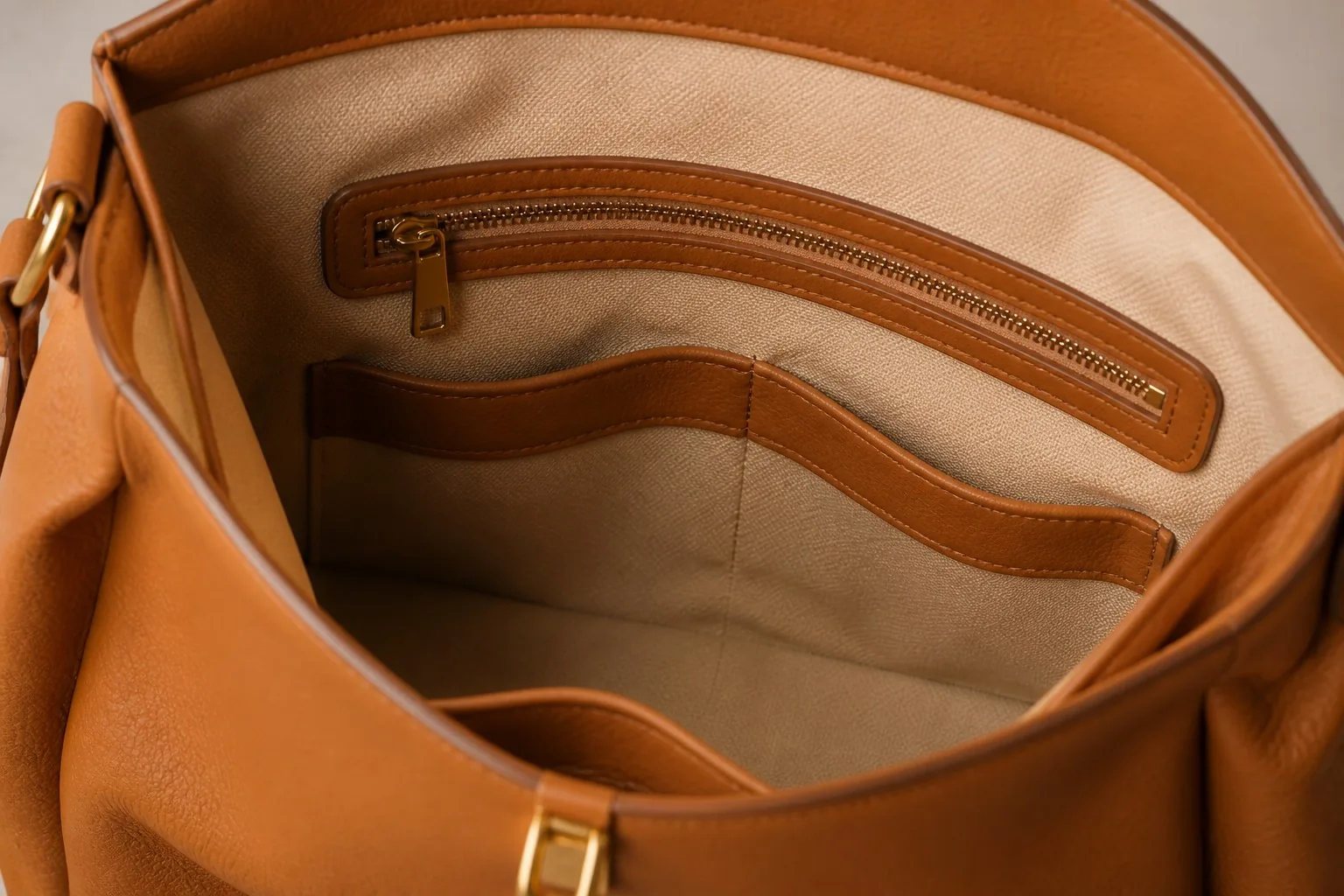
Open a leather bag and you will see its second face. The outside is what gets photographed, what gets admired, what gets bought — but the inside is what gets used, every single day. Keys go in the pockets, a phone slides into its slot, a wallet drops to the bottom, and the lining takes all of it: the friction, the spills, the daily wear that the beautiful exterior never touches. A bag can look perfect on the outside and be falling apart inside, and the owner will discover it exactly when they need the bag most.
The lining is the most undervalued part of a leather bag. It is hidden by design, so it is the first place manufacturers save money and the last place buyers look. But the lining decides how the bag functions: whether the interior survives daily use, whether the bag keeps its shape, whether the contents stay organized, and whether the bag feels as premium as it looks. A great exterior with a poor lining is a great-looking disappointment; a great lining is what makes a great bag complete.
This guide is written from the factory, where we have made bags with every lining known to leather — and learned what each one does well and badly. It covers why the lining matters, the jobs it performs, the materials and their trade-offs, the lined-versus-unlined question, how interiors are constructed and attached, how to judge lining quality, and how to choose the right interior for the right bag.
- Why the Lining Is the Second Skin of a Bag
- The Lining’s Jobs: Protection, Structure, Organization
- Lining Materials: The Options Compared
- Lined vs. Unlined: When Leather Stands Alone
- Lining Construction: How Interiors Are Built
- How Linings Are Attached
- Lining Care: Cleaning and Maintaining the Interior
- Lining Quality: What to Check
- Choosing the Right Lining for Your Bag
- Frequently Asked Questions
- Final Word from the Factory
Why the Lining Is the Second Skin of a Bag
The exterior of a leather bag is a statement; the interior is a workspace. Understanding the lining’s role begins with understanding how differently the two faces of the bag are used.
The exterior gets admired; the interior gets used. The outside of a bag is carried, displayed, and protected — it meets the world carefully. The inside is treated like a workhorse: keys scrape it, bottles sweat against it, pens leak into it, crumbs collect in its corners. The lining is the surface that actually absorbs the daily abuse, and its quality decides whether the bag’s function survives its first year of honest use.
The lining protects the leather. A leather bag without a lining puts its own interior surface at risk: the leather is exposed to everything placed inside, and moisture, spills, and sharp objects can damage the leather from within. The lining is a protective layer that shields the leather’s inner face — and it protects the contents too, keeping pens from staining leather and bottles from dampening it.
The lining carries the structure. In many bags, the lining is not just a fabric bag inside the leather bag — it is part of the structure. The lining’s seams can reinforce the bag’s shape, its stiffness can help the bag stand, and its attachment to the leather stabilizes both layers. A well-constructed lining makes the bag hold its form; a flimsy one lets the bag sag and slump.
The lining is where savings hide. Because buyers rarely inspect interiors closely, the lining is the classic place to cut costs — thinner fabric, fewer pockets, skipped finishing, cheaper attachment. The savings are invisible at the counter and obvious within months of use. When a bag’s price seems too good for its exterior, the interior is usually where the difference was made.
The Lining’s Jobs: Protection, Structure, Organization
A good lining performs three jobs at once, and a great lining performs all three without calling attention to itself.
Protection. The lining’s first job is to protect: the leather from the contents, and the contents from the leather. It absorbs the friction of keys and bottles, contains spills before they reach the leather, and keeps the bag’s interior clean. A protective lining is durable enough for daily abuse and, ideally, easy to wipe clean when accidents happen. The protection job is the lining’s most basic duty, and it is the one most often skimped on.
Structure. The lining’s second job is structural: it helps the bag hold its shape. A stiff or well-attached lining keeps the bag standing, prevents sagging at the bottom, and supports the bag’s silhouette. The structural job is invisible until it fails — a bag whose lining has detached or collapsed slumps and wrinkles, and the exterior looks old before its time.
Organization. The lining’s third job is the one owners feel every day: pockets, slots, and dividers that keep the contents organized. The interior layout — zip pockets, slip pockets, phone slots, key straps — is the bag’s usability made concrete. A bag with a thoughtful interior is a pleasure to use; a bag with a lazy interior (or none at all) becomes a black hole where everything sinks to the bottom.
The balance. The three jobs pull in different directions — durability for protection, stiffness for structure, and flexibility for organization — and the lining choice is the balance. A lining that does all three well is the mark of a maker who understands how bags are actually used.
Lining Materials: The Options Compared
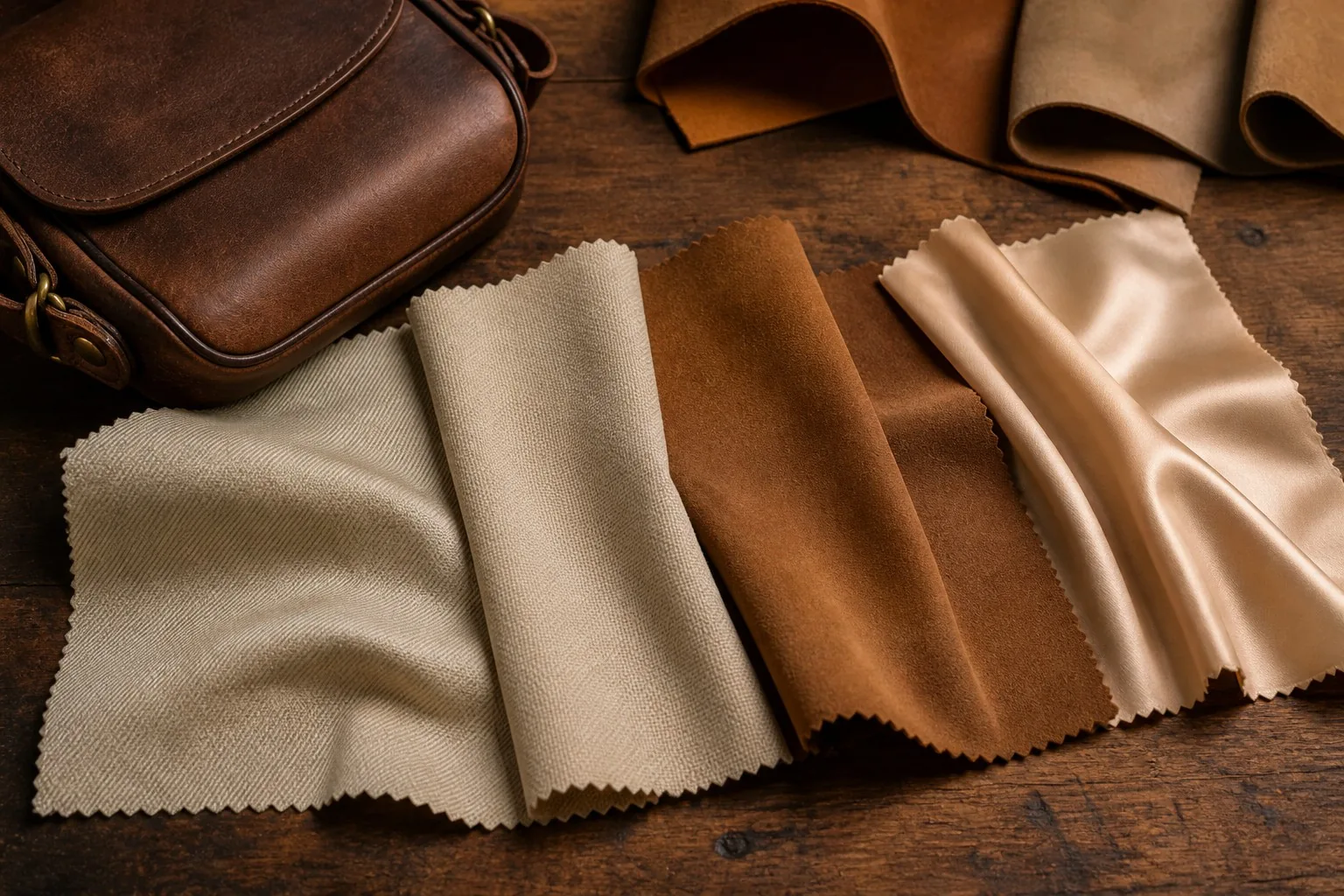
The lining material is the first decision, and the options span a wide range of cost, feel, and function. These are the linings we use, and what each one genuinely delivers.
Cotton twill. The classic quality lining: a woven cotton with a subtle diagonal texture, soft against contents, breathable, and available in every color. Cotton twill is the default premium lining — durable enough for daily use, gentle on what it holds, and comfortable to reach into. It is the lining most customers picture when they imagine a quality bag.
Canvas. The heavy-duty option: dense, rugged cotton with a plain weave. Canvas linings are strong, protective, and wipe-clean-friendly — the choice for work bags, diaper bags, and anything that faces serious daily abuse. It is coarser and less luxurious than twill, but its toughness is exactly what heavy-use bags need.
Nylon and polyester. The technical options: smooth, strong, water-resistant synthetics that wipe clean and survive spills. Nylon linings are the choice for active and outdoor bags, where moisture resistance matters more than luxury feel. The trade-off is feel — synthetics are less comfortable and less premium than cotton.
Suede cloth and microfiber. The luxury options: soft, plush linings that feel like suede and protect delicate contents. These linings give bags a premium, jewelry-box interior feel, but they are less durable, harder to clean, and more expensive. They are the choice for evening bags, jewelry bags, and products where the interior experience is part of the luxury.
Leather lining. The ultimate option: a full leather interior, sometimes unfinished for a patina that develops with use. Leather linings are the most expensive, the heaviest, and the most characterful — used on the finest bags and wallets, where the interior is as much a statement as the exterior.
| Lining material | Durability | Feel | Cleanability | Cost | Typical use |
|---|---|---|---|---|---|
| Cotton twill | Good | Soft, comfortable | Moderate | Medium | Standard premium bags |
| Canvas | Excellent | Rugged | Easy | Low–medium | Work bags, diaper bags |
| Nylon / polyester | Excellent | Smooth, technical | Very easy | Low | Active, outdoor bags |
| Suede cloth / microfiber | Fair–good | Plush, luxurious | Hard | Medium–high | Evening, jewelry bags |
| Leather | Excellent | Characterful | Moderate | High | Finest bags, wallets |
The material decision. The honest rule is to match the lining to the bag’s life: canvas and nylon for bags that will be abused, cotton twill for the quality mainstream, suede cloth for the delicate, and leather for the heirloom. The lining should be invisible when it is right — and its wrongness is always discovered in use.
Lined vs. Unlined: When Leather Stands Alone
Not every leather bag has a lining. The unlined bag is a legitimate tradition — and a growing trend — and understanding the choice requires knowing what each approach gives up and gains.
The case for lining. Lined bags protect the leather’s interior, add structure, and offer organization. The lining also hides the leather’s inner face, which is often rougher and less finished. For most bags, the lining is the safer, more practical choice — especially for bags that carry messy contents, need interior pockets, or must hold their shape.
The case for unlined. Unlined bags are lighter, softer, and more flexible — the bag conforms to its contents and to the body. Unlined construction also shows the leather’s inner face, which on vegetable-tanned and full-grain leathers is beautiful and develops its own patina. Many artisanal and minimalist bags are unlined by design: the interior is part of the aesthetic, and the leather’s natural character is the point.
The compromise. Many quality bags split the difference: unlined bodies with lined pockets, or lined bodies with an open, leather-faced main compartment. The compromise gives the structure and organization where they are needed and the leather character where it is valued.
The honest guidance. The lined-versus-unlined choice should follow the bag’s job and the leather’s nature: lined for bags that carry, organize, and must hold shape; unlined for bags where softness, lightness, and leather character are the point. There is no universal right answer — only the right answer for the bag in question.
Lining Construction: How Interiors Are Built
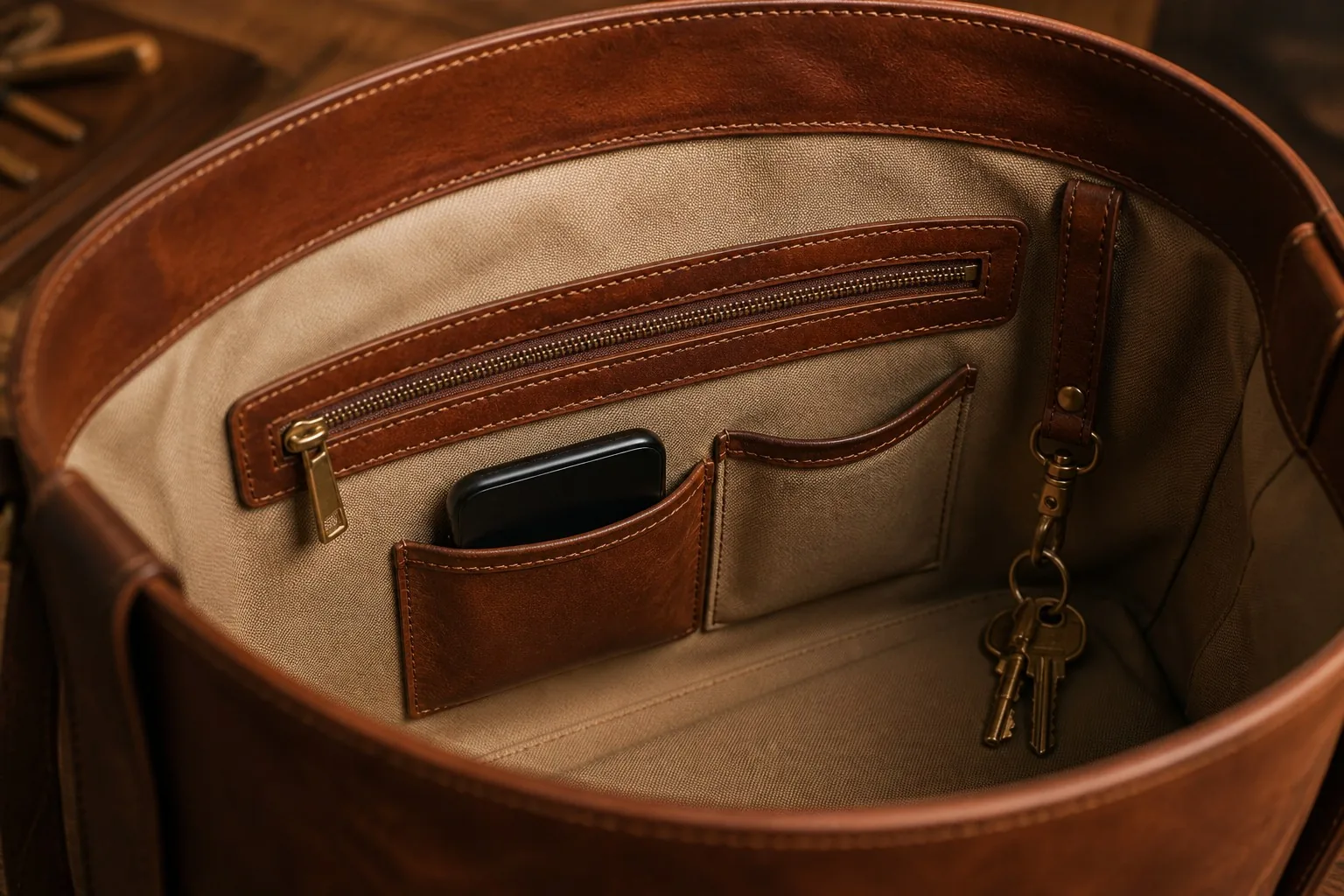
The material is only the start — the interior’s usefulness comes from how it is constructed. The pocket layout is the bag’s usability, and its construction is a craft with real standards.
The pocket plan. The interior layout is designed, not improvised: the zip pocket for valuables, the slip pockets for phone and keys, the card slots where the design allows, the key strap for keys. A good pocket plan matches the bag’s purpose — a diaper bag needs bottle-sized slip pockets, a work tote needs a laptop sleeve, an evening bag needs a phone slot and little else. The plan is the bag’s interior architecture.
Pocket construction. Each pocket is cut, folded, and sewn with the same care as the exterior panels: clean edges, reinforced mouths (the opening of a pocket takes the most stress), and secure attachments to the lining. A pocket that is lazily attached tears away within months; a pocket that is properly constructed lasts as long as the bag.
The zip pocket. The zip pocket is the interior’s highest-stress element: it opens and closes constantly, and its zipper must be quality, its tape must be sewn securely, and its corners must be reinforced. The zip pocket is where interior quality is most visible — a sticky or loose zip pocket is the fastest way to make a bag feel cheap.
Interior details. The details complete the interior: key straps (elastic or leather, securely anchored), pen slots, the brand label, the care label. Each detail is small and each is a quality signal. A bag with thoughtful, well-made interior details feels premium every time it is opened — which is every day.
The interior as brand signature. For brands, the interior is also an identity: the lining color, the label placement, the pocket layout, and the interior finish are all signature elements that distinguish one brand from another. Premium brands design interiors as deliberately as exteriors — the distinctive lining color that loyal customers recognize, the label stitched where it is seen every time the bag opens. The interior is the part of the bag the owner sees most, which makes it the most effective place for a brand to leave its mark. A maker who treats the interior as a signature treats the customer’s daily experience as part of the design.
How Linings Are Attached
The attachment between lining and leather is the interior’s structural foundation, and there are three main methods — each with its own character and cost.
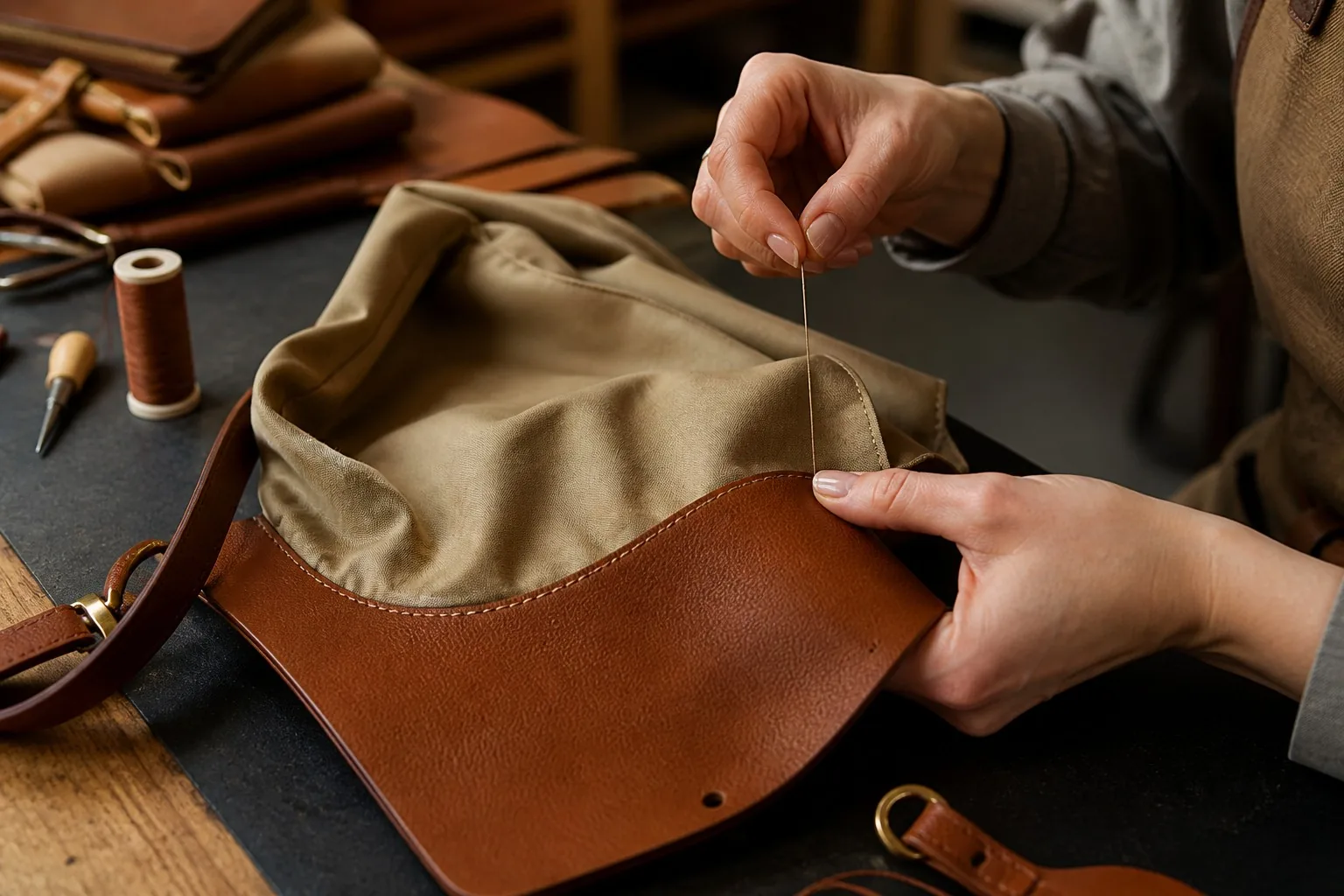
Full sewing. The lining is sewn to the leather at the seams — the classic method, where the lining and exterior are joined during construction and the attachment is as strong as the bag’s own seams. Full sewing is durable, allows the lining to be replaced, and is the mark of quality construction. It costs more in labor and is the standard we use for structural bags.
Glued attachment. The lining is glued to the leather’s interior — faster and cheaper than sewing, and common in volume production. Glued linings can work well when the adhesive is quality and the application is careful, but they fail over time: heat and use weaken the glue, and the lining peels away from the leather. A peeling lining is one of the most common interior failures on inexpensive bags.
Drop-in / bag-in-bag. The lining is made as a separate bag and dropped into the leather body, sometimes tacked at the top. This method is quick and makes the lining replaceable, but it can shift, wrinkle, and detach from the leather over time. It is common on softer, unstructured bags.
The durability order. Sewn linings last the longest and are the most repairable; glued linings are the most likely to fail; drop-in linings sit between. When you evaluate a bag’s interior, check the attachment: can you see the lining sewn into the seams, or is it floating inside the leather? The answer predicts the interior’s lifespan.
The weight and feel factor. The lining also changes how the bag feels in the hand and on the shoulder. A heavy lining adds weight and body; a light lining keeps the bag feathery. Suede cloth and leather interiors add a plushness that changes the entire carrying experience; nylon keeps it functional and light. The weight and feel are part of the design — a lining is chosen not only for durability but for how the bag will feel every time it is picked up.
Lining Care: Cleaning and Maintaining the Interior
The interior takes the daily abuse, so it also needs the daily care — and the care differs from the exterior’s routine.
The daily habit. Empty the bag regularly and shake out crumbs and debris — the same daily habit that protects the leather also protects the lining. Crumbs grind into fabric and attract pests; a quick shake-out each evening keeps the interior clean and prevents the slow accumulation that makes linings look old before their time.
The spot-cleaning routine. Lining stains should be treated quickly and gently: blot spills with a dry cloth, then spot-clean with a mild soap and water solution on a soft cloth — never soaking the lining, and never using harsh cleaners that damage fabric or leave residue. Blot, don’t rub, and let the area air-dry before using the bag.
The deep-clean option. For truly soiled interiors, a professional cleaning is the safe choice — a leather repairer or bag specialist can clean the interior without risking the exterior or the attachment. The deep-clean question is the same one we cover for leather: when in doubt, trust the professional rather than risk permanent damage with home remedies.
The care difference by material. Cotton and canvas linings clean relatively easily with mild soap; nylon and polyester wipe clean with barely damp cloths; suede cloth and leather interiors need professional care and protection from moisture. The lining’s material determines its care routine — another reason the material choice matters from the first day.
The prevention rule. Most interior damage is preventable: keep pens capped and in the pen slots, keep bottles sealed, and keep sharp objects away from the lining. Prevention is the cheapest interior care there is — and it is the same principle that governs the whole bag.
Lining Quality: What to Check
The interior is the fastest honest test of a bag’s overall quality — because it is the part most manufacturers skimped on. Here is the checklist we teach customers, the same one our QC team applies.
Look at the fabric first. The lining should be a quality material appropriate to the bag — not the thinnest possible cloth. Check the weave or texture, the weight, and the feel. A flimsy, shiny, or papery lining is a cost-cutting signal, whatever the exterior promises.
Check the seams and edges. The lining’s seams should be clean and even, and its raw edges should be finished — serged, hemmed, or bound — not left to fray. Unfinished lining edges are the classic cheap-bag tell: they fray, unravel, and shed into the bag’s contents.
Inspect the pockets. Open every pocket and check its construction: the mouth should be reinforced, the corners should be secure, and the zipper should run smoothly. A pocket that is lazily sewn or a zipper that catches is an interior failure you will meet every day.
Check the attachment. Look for the lining sewn into the bag’s seams — the mark of quality construction. If the lining is glued, press it gently and see whether it moves or wrinkles. If the lining is dropped in, see whether it fits the bag or floats loose inside it.
Pull the interior gently. Gently tug the lining away from the leather at the top edge and the corners. A quality attachment holds firm; a weak one gives immediately. The pull test takes two seconds and tells you how the interior will survive its first year.
The interior as a quality fingerprint. Here is the honest secret of the trade: the interior is where manufacturers show what they really are. The exterior can be sourced, finished, and dressed up — but the interior is built from the maker’s own standards. A bag with a careful interior — quality fabric, finished edges, reinforced pockets, sewn attachment — was made by a factory that cares; a bag with a careless interior was made by one that does not, whatever the exterior suggests. Open the bag, and the factory’s true face is looking back at you.
Choosing the Right Lining for Your Bag
The final question is the practical one: which lining for which bag? The answer follows the bag’s purpose, and a decision table makes it concrete.
Match the lining to the bag’s life. A diaper bag lives at the mercy of spills and wipes — canvas or nylon, wipe-clean, with bottle-sized pockets. A work tote carries laptops and documents — cotton twill or canvas, with a padded sleeve and organized pockets. An evening bag carries little but must feel luxurious — suede cloth or silk, soft and jewel-box. A heirloom bag deserves a leather interior that will age with it. The lining should be chosen for the bag’s daily reality, not for the counter display.
Match the lining to the price and promise. The lining should be consistent with the bag’s position: a premium-priced bag with a cheap lining is a broken promise, and a budget bag with an over-built lining is wasted cost. The honest maker matches the interior to the product’s promise — and the honest buyer checks that the match was made.
Match the lining to the leather. Heavier, stiffer leathers can carry heavier linings; soft, unstructured leathers want light, flexible linings that do not fight the material. Vegetable-tanned leathers often go unlined or leather-lined to show their character; finished leathers pair naturally with fabric linings.
| Bag type | Recommended lining | Why |
|---|---|---|
| Diaper bag | Canvas or nylon, wipe-clean | Spills, wipes, daily abuse |
| Work tote | Cotton twill or canvas + padded sleeve | Laptops, documents, daily carry |
| Everyday handbag | Cotton twill | Balance of feel, durability, cost |
| Evening / clutch | Suede cloth or silk | Luxury feel, light contents |
| Heirloom / premium | Leather or suede | Character, aging, statement interior |
The manufacturer’s advice. When customers ask us to recommend a lining, we ask them one question first: how will this bag actually be used? The answer — spills or silk, laptops or lipstick — selects the lining. The lining is the bag’s interior life, and it should be chosen the way you would choose a workspace: for the work that will happen there, every day.
Frequently Asked Questions
What is the best lining material for a leather bag?
There is no single best — it depends on the bag’s life. Cotton twill is the quality default; canvas and nylon are best for heavy use and spills; suede cloth and silk suit evening bags; leather linings fit heirloom pieces. Match the lining to how the bag will actually be used.
Is it better to buy a lined or unlined leather bag?
It depends on the bag’s purpose. Lined bags offer protection, structure, and organization — better for daily carry and messy contents. Unlined bags are lighter and softer and show the leather’s natural character — right for minimalist and artisanal designs. Choose by the bag’s job and the leather’s nature.
Why is the lining of my leather bag peeling?
Peeling linings are almost always glued attachments failing. Heat, use, and time weaken the adhesive, and the lining separates from the leather. Sewn linings do not peel — which is why the attachment method is one of the first quality checks we teach buyers.
How can I tell if a leather bag has a quality lining?
Check four things: the fabric should be quality and appropriate to the bag; the seams and raw edges should be clean and finished; the pockets should be reinforced with smooth zippers; and the lining should be sewn into the bag’s seams rather than loosely glued or dropped in.
Can a leather bag lining be replaced?
Yes — a professional leather repairer can replace a worn or damaged lining, especially in a sewn-construction bag. Lining replacement is a common repair for quality bags, and it is one more reason the interior attachment method matters: sewn linings are replaceable, and glued ones are not.
Do leather bags need lining to keep their shape?
Lining helps many bags hold their shape, but it is not the only way — the leather’s own weight, stiffness, and construction also determine structure. Heavier, stiffer leathers hold shape unlined; softer leathers usually need a lining’s support. The structure should be engineered, not assumed.
What lining is best for a diaper bag?
Canvas or nylon — durable, wipe-clean materials that survive spills and daily abuse, with bottle-sized slip pockets and a secure zip pocket for valuables. Diaper bag interiors should be chosen for cleanability first and comfort second, because they will be tested daily.
Why do some luxury bags have leather interiors?
Leather interiors are the premium option: they match the exterior’s material, age with character, and feel like a complete leather object. They are heavier and more expensive, which is why they are reserved for the finest bags and wallets — where the interior is part of the statement.
Final Word from the Factory
The interior of a leather bag is where the product’s true character lives. The exterior is designed to be seen; the interior is designed to be used — and the bag is only as good as the part that gets used every day. A quality lining protects the leather, carries the structure, organizes the contents, and survives years of honest abuse. It is the part of the bag that is never photographed, never admired, and never skipped by a maker who cares.
At our factory, we build interiors to the same standard as exteriors. We choose lining materials for the bag’s real life — canvas for the diaper bags, twill for the totes, suede for the evenings, leather for the heirlooms. We construct pockets with reinforced mouths and smooth zippers, finish every raw edge, and sew linings into the bag’s seams so they hold for the bag’s lifetime. And we inspect interiors as carefully as exteriors, because a bag that fails inside fails completely, no matter how beautiful it looks outside.
When you choose a leather bag, open it before you buy it. Look at the lining, feel the fabric, check the pockets, test the attachment. The interior will tell you how the bag was made and how long it will serve you. A great exterior with a great interior is a great bag; a great exterior with a poor interior is a beautiful disappointment. Choose the bag whose second face is as good as its first — and you will carry it for years, opening it with pleasure every single day.
