
How Can Bag Buyers Verify Leather Traceability and Welfare Claims?
How Can Bag Buyers Verify Leather Traceability and Welfare Claims?
A buyer asks a factory whether its leather comes from responsibly run farms. The factory sends a certificate with a logo, a paragraph about ethical sourcing, and an assurance that the tannery is audited.
None of that tells the buyer which animal the hide came from, which farm it was raised on, or whether the audit covered the farm at all. Traceability and welfare claims are the part of leather sourcing where confident language and verifiable evidence most often diverge.
This article is written from the factory side of that gap: what a claim actually asserts, what evidence can support it, where the chain usually breaks, and what a buyer can reasonably ask for without turning a purchase order into an investigation.
A traceability claim is only as strong as its weakest link, and the weakest link is almost always the step between the farm and the tannery.
- Why Claims and Evidence Drift Apart
- What Each Kind of Claim Actually Asserts
- The Documents That Carry Real Weight
- Where Evidence Actually Comes From
- Questions That Reveal the Level of Control
- Red Flags in Claim Language
- Building a Traceability File as a Factory
- Reading an Audit Report Properly
- When the Hide Comes From Another Country
- Timing: When to Ask, and How Often
- Working With Small Tanneries
- Mass Balance and Segregation
- What Laboratory Testing Can and Cannot Prove
- The Buyer’s Practical Playbook
- What Regulation Requires, and What It Does Not
- Matching the Claim to the Bag
- A Diligence Checklist
- Communicating Claims Without Overreach
- Frequently Asked Questions
- The Bottom Line
Why Claims and Evidence Drift Apart
The gap is structural, not usually dishonest.
The Shape of the Leather Supply Chain
Hides are a by-product, not a purpose.
A hide begins as a by-product of an animal raised for meat or dairy, passes through a collector or dealer, is preserved and consolidated, then enters a tannery that may buy from several countries. By the time leather reaches a bag factory, the raw material has typically changed hands more than once, and each transfer is a point where identity can be lost.
What “Traceable” Can Mean
Three different promises.
The word is used for at least three standards of evidence: that the material is not from a prohibited source, that the tannery knows which country and supplier group the hides came from, and that a specific hide can be linked to a specific farm. These are not degrees of the same thing; they are different claims requiring different records.
Where the Chain Usually Breaks
The farm-to-tannery step.
Tanneries buy in lots assembled from many small suppliers, and lots are mixed for consistent quality. A single lot can contain hides from dozens of farms, which is why farm-level traceability is expensive and why group-level statements are far more common than individual-animal records.
Why Buyers Accept Weak Evidence
Cost and asymmetry.
Verifying further down the chain costs money and time, and the buyer is rarely in a position to inspect a farm in another country. Suppliers know this, which is why documents that look official but assert very little circulate so freely.
What Each Kind of Claim Actually Asserts
Read the sentence, not the logo.
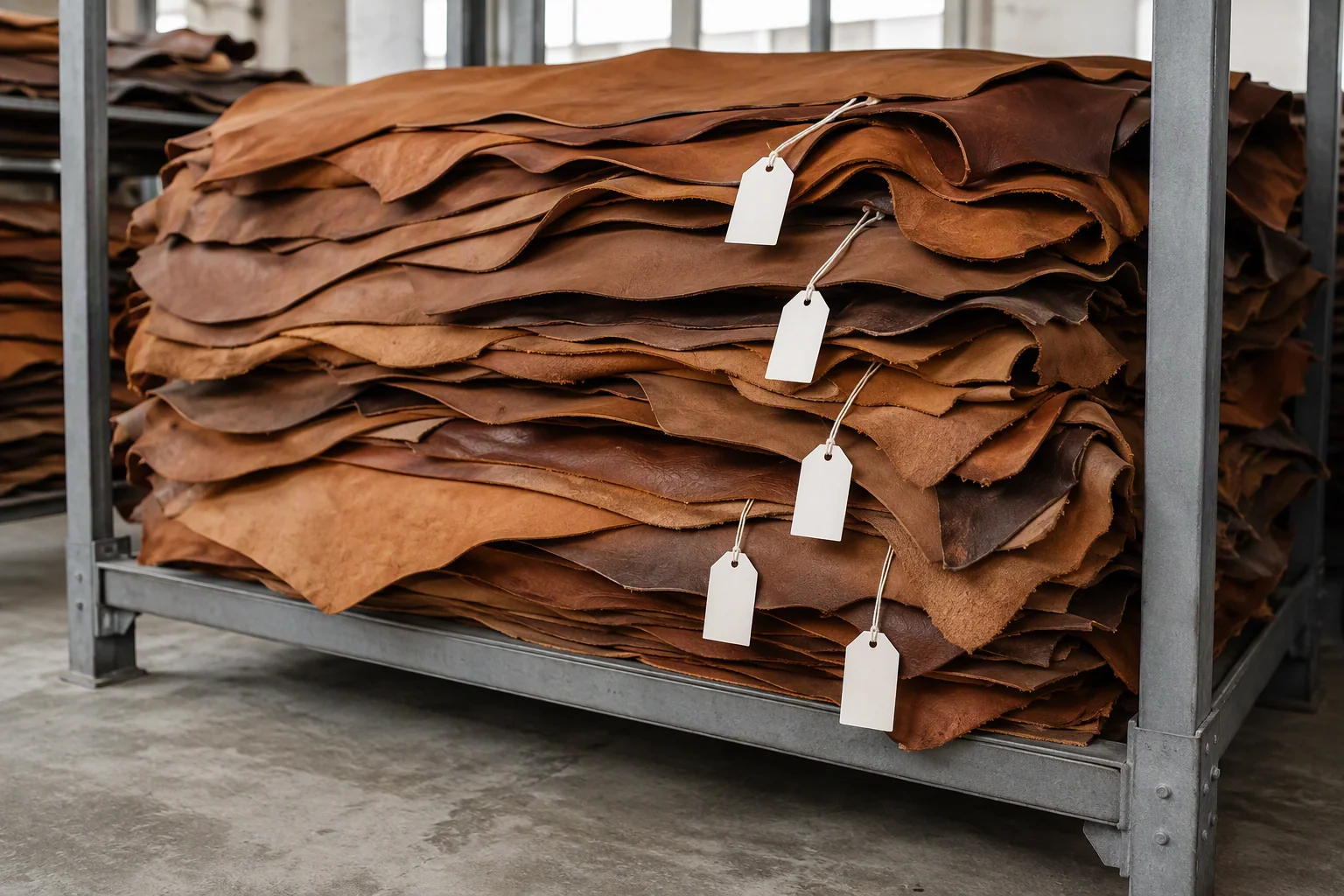
Origin Claims
Where the hide was produced.
An origin claim states a country or region of production. It says nothing about how the animal was raised, and it is usually supported by commercial documents rather than by welfare evidence.
Welfare Claims
How the animal was treated.
A welfare claim concerns rearing, handling and slaughter conditions. It requires evidence from the farm or from a scheme that inspects farms, and it cannot be substantiated by a tannery certificate alone.
Environmental Claims
How the material was processed.
Environmental claims concern the tannery’s operations: effluent treatment, chemical management, water use, waste handling. They are the best-documented part of the chain because tanneries are fixed, inspectable sites.
Chain-of-Custody Claims
How material is segregated.
A chain-of-custody claim asserts that certified material was kept separate from uncertified material through processing. This is a claim about bookkeeping and physical segregation, and it is the hardest to verify from documents alone.
| Claim type | What it asserts | Typical evidence | Cannot be proven by |
|---|---|---|---|
| Origin | Country or region of production | Commercial invoices, transport documents, supplier declarations | A tannery audit certificate |
| Animal welfare | Rearing, handling, slaughter conditions | Farm inspection records, scheme certification covering farms | A finished-leather test report |
| Environmental processing | Tannery effluent, chemicals, water, waste | Tannery audit reports, permits, monitoring data | A farm-level statement |
| Chain of custody | Certified material kept separate | Segregation records, mass-balance or physical separation documentation | A product label alone |
| Material content | What the article is made of | Laboratory analysis of the finished article | A supplier brochure |
The Documents That Carry Real Weight
Some paperwork is evidence; some is atmosphere.
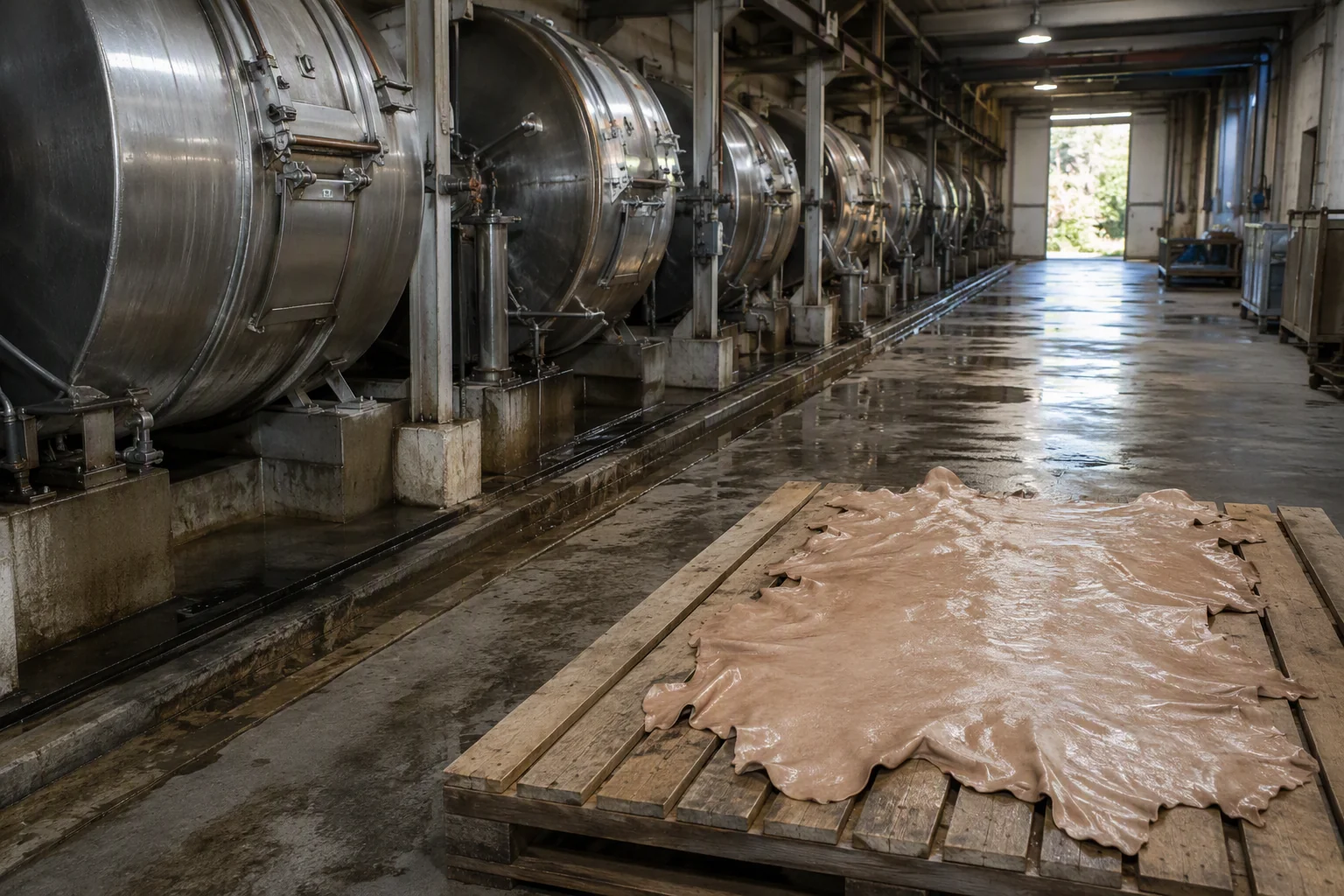
Farm and Rearing Records
The only true welfare evidence.
Records that show animals raised under defined conditions, with identification, health treatment and handling notes, are the only material that can support a welfare claim. They originate at the farm, not at the tannery, and any claim without them is a claim about a scheme rather than about animals.
Tannery Audit and Permit Documents
Strong on processing, silent on rearing.
Audit reports, operating permits and effluent monitoring data tell a buyer a great deal about the tannery as a site. They say nothing about how the hide was produced, and buyers routinely mistake a tannery audit for a welfare assurance.
Transaction and Transport Records
The spine of traceability.
Invoices, packing lists, transport documents and lot numbers are unglamorous and essential. They establish that a quantity of material moved from one named party to another on a date, which is the factual backbone every other claim depends on.
Certificates and What They Cover
Read the scope paragraph.
A certificate is only meaningful within its stated scope: which sites, which materials, which activities, which period. Most disputes about certificates are really disputes about scope, and the scope paragraph is the part buyers skip.
Where Evidence Actually Comes From
Follow the material backwards.
The Tannery’s Supplier Register
The first real record.
A tannery that takes traceability seriously keeps a register of hide suppliers with country, volume, frequency and the supporting documents for each. Asking to see the structure of that register, rather than a summary certificate, tells a buyer more than any marketing document.
Collectors and Dealers
The least visible link.
Between farms and tanneries sit collectors and dealers who aggregate small volumes. Their records are often the weakest in the chain, and any farm-level claim has to pass through them. A supplier who can explain how this step is controlled is more credible than one who skips over it.
Slaughterhouses and Rendering
Where identity is first at risk.
Hides are removed at slaughter, and identification is easily lost at that point unless the facility operates a system that keeps consignments distinct. This is a practical, unglamorous control, and it is where a claim either has a foundation or does not.
The Bag Factory’s Own Records
Lot numbers that survive cutting.
The factory receives leather in lots and cuts it into panels. If lot numbers are recorded on cutting sheets and carried into production records, a finished bag can be linked back to a delivered lot. If they are not, traceability stops at the factory door regardless of what the tannery claims.
Questions That Reveal the Level of Control
Ask these before asking for certificates.
“Which Farm, and How Many?”
The number is the answer.
Asking how many farms contributed to a lot exposes the difference between group-level and farm-level traceability immediately. A supplier who can answer with a number and a region has a system; one who answers with a principle does not.
“What Happens at the Collector?”
The step most suppliers cannot describe.
This question tests whether the supplier actually understands its own chain or has only received an assurance from above. A confident, specific answer about segregation and documentation at this step is a strong signal.
“Which Records Would I See?”
Concrete, not abstract.
Asking what documents exist, rather than whether the claim is true, produces answers that can be checked. A supplier who can name the records and describe where they are kept is describing a working system.
“What Would Break the Claim?”
Honesty about limits.
A supplier willing to say where traceability stops, and why, is more trustworthy than one claiming completeness everywhere. Every chain has a boundary; the useful conversation is about where it sits.
Red Flags in Claim Language
The wording gives it away.
Words That Assert Nothing
Comfort without content.
“Eco-friendly leather”, “responsibly sourced” and “sustainable hides” assert no verifiable fact. They are not lies; they are the absence of a claim dressed as one, and they should be treated as marketing rather than evidence.
Scope Inflation
A certificate stretched beyond its reach.
A tannery-level environmental audit presented as an animal welfare assurance, or a scheme covering one site presented as covering a group, are the most common forms of inflation. The fix is simple: read what the document says it covers.
Logo Without Number
Unverifiable membership.
A scheme logo with no certificate number, no site name, no validity period and no issuing body cannot be checked by anyone. A legitimate certificate carries identifiers that allow independent verification.
Claims That Outrun the Product
Material and marketing disagreeing.
Where a bag is described as made from a traced hide but the visible panels are coated split or a different material, the claim has detached from the article. Composition and traceability have to describe the same material.
The recurring warning signs are easy to list and easy to miss:
- An adjective doing the work of a fact: responsible, ethical, conscious, clean
- A logo with no certificate number, site, period or issuing body
- A welfare statement supported only by processing documents
- A claim about a bag when the evidence covers a tannery
- A percentage with no stated basis or calculation
- Traceability language that never names a country, region or supplier group
- A certificate presented without its scope paragraph
- A supplier who cannot say where the evidence stops
Building a Traceability File as a Factory
What a manufacturer can control.

Lot Coding From Goods-In
Start the record at the door.
Every delivery should receive an internal lot code at goods-in, recorded against the supplier, the delivery note and the country of origin. That single habit makes everything downstream possible at almost no cost.
Carrying the Code Through Cutting
Where most factories lose it.
Cutting sheets should carry the lot code, and the code should follow the panels into stitching and finishing records. Without this step, the factory can prove what it bought but not what it shipped.
Keeping the Supplier File Current
Living documents.
Supplier declarations, certificates and audit reports should be tracked with validity dates, so an expired document is visible before a buyer asks. A file that is accurate on the day of the audit and stale six months later is a liability.
Being Clear About Limits
State the boundary.
A factory that publishes what it can and cannot demonstrate gains credibility. Buyers who understand where the evidence stops can plan around it; buyers who discover a limit themselves tend to assume the worst.
Reading an Audit Report Properly
The report is a document with edges.
Scope, Site and Period
Three facts before any conclusion.
An audit report describes specific sites over a specific period against a specific standard. A report covering a tannery in one country says nothing about a sister site in another, and a report from last year does not describe this year’s operations.
Findings and Their Severity
Read the non-conformities.
The useful part of an audit is rarely the summary page. Non-conformities, their severity and their closure status show how the site actually behaves, and a report with no findings at all is more likely to be shallow than exemplary.
Who Did the Audit
Competence and independence.
An audit carried out by a body with no relevant competence, or by a party with a commercial interest in the result, carries less weight. The name on the report is part of the evidence.
When the Hide Comes From Another Country
Cross-border chains lose detail fastest.
Aggregated Lots
Mixed at the border.
Hides are frequently consolidated across borders before tanning, so a lot delivered to a tannery may contain material from several countries. Where that happens, a single origin statement cannot describe the lot accurately.
Documentation Across Jurisdictions
Different systems, different records.
Record-keeping requirements differ between countries, and a link that is well documented on one side of a border may be undocumented on the other. Buyers should expect the quality of evidence to vary along the chain rather than being uniform.
Practical Consequences for a Claim
Narrow the promise.
Where cross-border aggregation is normal, the honest claim is about the supplier group and the tannery’s control system, not about individual farms. Writing the claim at that level keeps it accurate and defensible.
Timing: When to Ask, and How Often
Diligence has a calendar.
Before the First Order
The cheapest moment.
Questions asked during sampling cost nothing and shape the specification. Questions asked after a container is booked cost time, and questions asked after a customer complaint cost credibility.
At Each Reorder
Documents expire.
Certificates lapse, suppliers change, and a file that was accurate last year may not be accurate now. A short annual refresh of the supplier file catches most of the drift.
When a Claim Changes
The wording follows the evidence.
If a supplier moves to a different tannery, or a tannery changes its supply arrangements, the claim attached to the product may no longer be true. Claims should be reviewed whenever the chain changes, not only when they are first written.
Working With Small Tanneries
Where most of the world’s leather is made.
What They Can Realistically Provide
Commercial records, not schemes.
A small tannery may have excellent practical knowledge of its suppliers and no formal certification. Its invoices, delivery notes and supplier list are still evidence, and they can support a claim about a defined supplier group.
Where the Buyer Can Help
Structure, not pressure.
Buyers who ask for lot codes at goods-in and simple records often create the traceability they want, because the request gives the tannery a reason to formalise what it already knows. Pressure without structure produces documents, not systems.
The Risk of Pushing Too Hard
Documents that exist to satisfy.
When a buyer demands a certificate a supplier cannot legitimately obtain, the likely result is a document of uncertain origin. Proportionate requests produce usable evidence; impossible ones produce paperwork.
Mass Balance and Segregation
Two models, very different promises.
Physical Segregation
Certified material kept apart.
Under physical segregation, certified hides are stored, processed and shipped separately, and the volume of certified output cannot exceed the certified input. This is the stronger model and the more expensive one to run.
Mass Balance
Volume accounting, not separation.
Under mass balance, certified and uncertified material are mixed in processing, but the certified share is tracked as a volume and allocated to output. The claim is about quantity, not about the specific article, and buyers who expect otherwise are often disappointed.
What Each Model Lets You Say
Match the words to the model.
A brand that has bought mass-balance material cannot honestly describe a specific bag as made entirely from certified hides. The distinction is not technical pedantry; it is the difference between an accurate claim and one that will not survive scrutiny.
What Laboratory Testing Can and Cannot Prove
Analysis answers a different question.
Composition Confirmation
What the material is.
Testing can establish whether a panel is leather, coated leather or a synthetic, and can identify certain restricted substances. This is genuinely useful for material claims and for compliance, and it is unrelated to welfare.
What No Test Can Show
History cannot be measured.
No laboratory analysis of finished leather can reveal which farm an animal came from or how it was handled. Where a buyer’s diligence rests on a test report, the welfare question remains unanswered regardless of the result.
Using Tests in the Right Place
Composition, not provenance.
Tests belong in the material verification file, alongside the specification. Treating them as traceability evidence confuses two different questions and gives false comfort to everyone involved.
The Buyer’s Practical Playbook
A proportionate approach.

Tier the Claims to the Order
Not every order needs a full chain.
The level of evidence should match the promise being made to the end customer. A general quality claim needs material verification; a named welfare claim needs farm-level support; a certification claim needs chain-of-custody records. Matching effort to exposure prevents both over-reach and over-spend.
Ask for Records, Not Assurances
The single most useful habit.
A request for the documents behind a claim, with names and dates, separates suppliers who have a system from suppliers who have a sentence. It also creates a written record the buyer can rely on later.
Sample One Lot Deeply
Depth beats breadth.
Tracing one lot from farm group through tannery to delivered panels teaches a buyer more about a supplier than twenty summary certificates. It also reveals which step the supplier cannot answer, which is the information worth having.
Write the Limit Into the Specification
Agreed boundaries.
Where farm-level traceability is not available, the specification should say what is being claimed and what is not. An agreed, documented limit protects both parties when a customer asks a question the supply chain cannot answer.
What to Do When the Answer Is No
An honest dead end is useful.
A supplier who cannot support a claim has given the buyer information worth having. The options are to narrow the claim, change the specification, change the supplier, or accept the risk knowingly and document that decision. What does not work is keeping the claim and hoping nobody asks.
Making the Request Repeatable
Put it in the order.
A question asked once in an email produces one answer. The same requirement written into the purchase order and the specification produces a record on every shipment, which is what turns diligence from an event into a system.
| Level | What the supplier can show | Suitable claim | Typical cost |
|---|---|---|---|
| Country of origin | Commercial documents and declarations | Origin statement | Low |
| Supplier group | Tannery register, supplier list, volume records | Sourced from a defined supplier group | Low to moderate |
| Scheme certification | Certificate with scope, site and period | Certified under a named scheme, within scope | Moderate |
| Chain of custody | Segregation or mass-balance records | Certified share, with the model stated | Moderate to high |
| Farm level | Farm records, animal identification, transport notes | Traceable to named farms | High |
What Regulation Requires, and What It Does Not
Compliance is a floor, not a certificate of virtue.
Minimum Requirements
What the law asks.
Rules differ by market, and the specifics change, so the applicable requirements for the destination must be confirmed with the competent authority or a qualified adviser rather than assumed. Where a rule applies, it must be followed exactly and cannot be approximated.
The Gap Between Legal and Claimed
Two different questions.
Meeting a minimum requirement does not support a claim of exemplary practice, and failing to document beyond the minimum does not make a product non-compliant. Confusing the two produces either over-claiming in marketing or unnecessary panic in procurement.
Why This Matters for Bag Brands
The brand owns the sentence.
A brand that publishes a claim takes responsibility for it in its own market, whatever its supplier stated. That asymmetry is the reason claim wording should be written by the party that will have to defend it.
Matching the Claim to the Bag
The article is the unit that carries the promise.
Panel by Panel
Where the material actually appears.
A bag is rarely made from one material throughout. The outer body, the gusset, the trim, the lining and the base may each come from different lots or even different tanneries, and a claim that describes the bag as a whole has to reflect that reality.
The Small Parts Problem
Trim is easy to forget.
Handles, piping, zip pulls and edge bindings consume little material and rarely appear in the traceability discussion, yet they are part of the article. Where a claim covers the leather of a bag, the specification should say whether trim is included.
Deciding What to Promise
A short decision rule.
| Situation | Evidence normally available | Claim that fits |
|---|---|---|
| New programme, unknown chain | Commercial documents only | Country of origin, no welfare wording |
| Established tannery, mapped suppliers | Supplier register and lot records | Sourced from a defined supplier group |
| Certified tannery, scope confirmed | Certificate with site and period | Certified under a named scheme, within scope |
| Segregation model in place | Lot-level separation records | Certified material, specific article |
| Farm records obtainable | Farm and transport documentation | Traceable to named farms |
A Diligence Checklist
Six steps that cover most of the risk.
- Confirm what the claim will say publicly before sourcing begins
- Ask for the tannery’s supplier register structure, not a summary certificate
- Trace one lot end to end and record where the answer stops
- Check each certificate’s scope, site, period and issuing body
- Confirm which chain-of-custody model applies: segregation or mass balance
- Carry lot codes from goods-in through cutting into production records
Recording the Outcome
Written and dated.
The result of the exercise should be a short written note: what was verified, what was not, which documents were seen and when. That note is what allows the claim to be repeated consistently, and it is the first thing a buyer will want to see.
Communicating Claims Without Overreach
The brand carries the sentence.
Say What the Evidence Supports
Precision protects.
A claim written to the level of the available evidence is defensible in every later conversation, including a customer complaint. Slightly narrower wording costs almost nothing and removes an entire category of risk.
Avoid Importing Supplier Language
Their sentence becomes yours.
Supplier brochures are written for suppliers’ purposes and often use words the factory cannot substantiate. Copying them into a product page transfers the overreach to the brand, where the consequences are larger.
Keep the Wording and the File Together
The sentence needs its evidence nearby.
Where a claim is used publicly, the record that supports it should be filed in the same place as the product specification. If the file cannot be located, the claim should be softened until it can.
Frequently Asked Questions
Can a tannery certificate prove that animals were treated well?
No. Tannery certificates and audits concern the tannery as a site: its processes, chemicals, effluent and management. Animal welfare depends on conditions at the farm and at slaughter, which is a different link in the chain and needs different evidence.
What is the difference between traceability and transparency?
Traceability is the ability to follow material through recorded steps. Transparency is the willingness to disclose what those records show, including the limits. A supplier can be transparent about having only country-level traceability, and that honesty is more useful than an unsupported farm-level claim.
How many farms typically contribute to one leather lot?
It varies widely, and that is exactly why the question is worth asking. Tanneries buying through collectors may draw on many small suppliers for a single lot, while a tannery with a dedicated supply arrangement may work with far fewer. The number tells a buyer which kind of traceability is even possible.
Is mass balance the same as certified material?
They are related but not identical. Under mass balance, certified and uncertified material may be mixed during processing, with the certified share tracked as a volume and allocated to output. The claim is about quantity rather than about a specific article, so the wording of any public claim has to match the model used.
Can laboratory testing confirm that a hide was traced?
No. Testing can confirm what a material is and whether certain restricted substances are present, but it cannot reveal the history of the animal. Provenance is established by records, not by analysis.
What single document should a buyer ask for first?
The tannery’s supplier register, or at least its structure: which suppliers, which countries, which volumes and which supporting records. It shows whether a system exists far more reliably than a summary certificate, and it opens the conversation about where the chain is actually documented.
How do claims usually fail an audit?
Most often through scope. A certificate covering one site presented as covering a group, or an environmental audit presented as a welfare assurance, fails because the document does not say what the claim says. Reading the scope paragraph prevents most of these failures.
What if farm-level traceability is simply unavailable?
Then the specification should say so, and the public claim should be written to the level the evidence supports. An agreed, documented limit is defensible; an implied completeness that the chain cannot support is not.
Does geographic origin tell you anything about welfare?
Very little on its own. Origin identifies where production took place, and different countries have different regulatory frameworks and enforcement, but origin is not evidence of rearing conditions. It is a starting point for further questions rather than an answer.
Where do bag factories lose traceability most often?
At cutting. Even where a tannery documents lots properly, many factories do not carry the lot code onto cutting sheets and production records, so the link between delivered material and shipped bag is broken inside the factory.
Is it acceptable to use a scheme logo without a certificate number?
A logo alone cannot be verified by anyone, because there is nothing to check it against. A usable certificate carries an issuing body, a site or scope, a certificate number and a validity period, all of which allow independent confirmation.
The Bottom Line
Traceability and welfare claims are not one promise but several, and each is supported by different evidence. Origin rests on commercial documents, welfare on farm records, environmental performance on tannery audits, and chain of custody on segregation or volume accounting.
The practical test for a buyer is not whether a supplier has certificates, but whether the supplier can name the records behind each claim, describe where the chain is documented, and say clearly where it stops. A factory that answers those three questions honestly is worth more than any logo.
For a bag manufacturer, the same test applies in reverse. Lot codes taken at goods-in and carried through cutting cost almost nothing, and they turn a vague assurance into a defensible file. That file is what allows a brand to make a claim to its own customers without borrowing risk it cannot control.
