
Vegetable-Tanned Leather and Patina: A Manufacturer’s Guide to How This Leather Ages, Darkens and Gets Better
Vegetable-Tanned Leather and Patina: A Manufacturer’s Guide to How This Leather Ages, Darkens and Gets Better
There is a moment in every leather workshop when a customer holds a vegetable-tanned bag for the first time. They run a finger across the pale, honey-colored surface, and they ask the question every maker hears: “Doesn’t it get scratched?” The answer is the whole point of the material. Yes, it gets scratched. It also gets darker, richer, and more beautiful with every scratch, every touch, and every year. And in five years, that pale honey bag will be a deep amber work of art that no factory could ever reproduce.
That transformation is called patina, and it is the reason vegetable-tanned leather has a following that borders on devotion. It is the only leather that visibly records your life — the marks of your hands, the sun it has seen, the years it has carried. Every other leather is designed to resist aging; vegetable-tanned leather is designed to embrace it. Understanding how it ages is the difference between a bag that becomes a treasure and a bag that becomes a disappointment.
This guide is written from the manufacturer’s bench, where we have watched thousands of vegetable-tanned bags age — the good, the bad, and the beautiful. It covers what this leather is, why it behaves differently from every other leather, what patina is and how it forms, the timeline of aging, the factors that accelerate it, the mistakes that ruin it, and the care routine that lets it reach its full potential.
- What Vegetable-Tanned Leather Is
- Why This Leather Is Different from Chrome-Tanned
- What Patina Is and Why It Happens
- How Patina Develops: The Aging Timeline
- The Patina Factors: Light, Oils, Friction and Time
- What Accelerates Patina — and What Ruins It
- Caring for Vegetable-Tanned Leather
- Reading the Marks: Patina vs. Damage
- From the Factory: Choosing Vegetable-Tanned for Your Bag
- Frequently Asked Questions
- Final Word from the Factory
What Vegetable-Tanned Leather Is
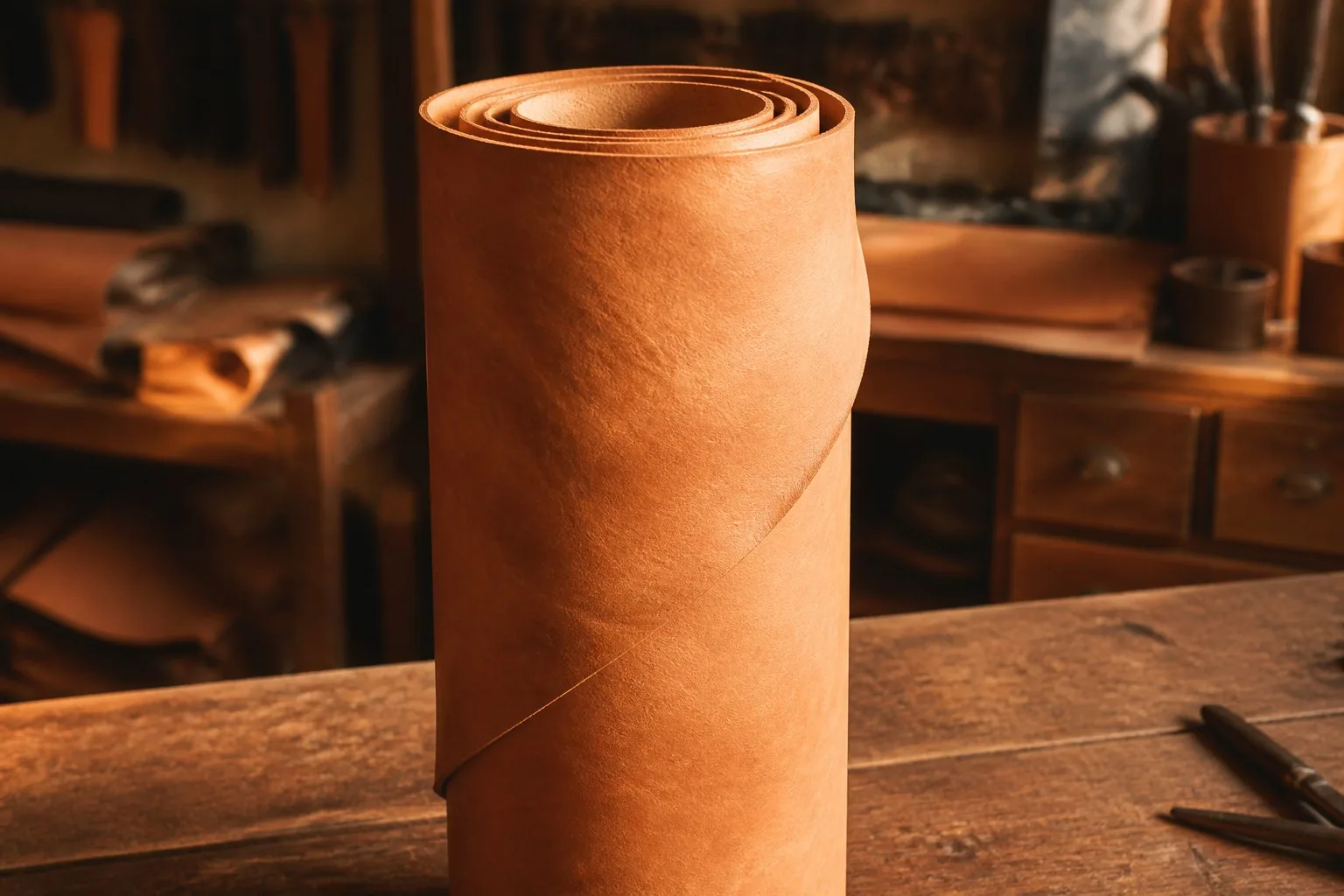
Before the aging, the material. Vegetable tanning is the oldest method of turning animal hide into leather, and it uses what the name suggests: plant-based tannins — from tree bark, leaves, fruits, and roots — to stabilize the hide’s proteins. The process takes weeks or months, a patient soaking of the hides in tannin-rich solutions, and it produces a leather that is fundamentally different from anything the modern chrome process creates.
The tannin process. Fresh hides are cleaned, limed, and then immersed in vats of vegetable tannin solutions — traditionally oak bark, chestnut, mimosa, and quebracho are among the most common sources. The tannins bind to the hide’s collagen fibers, transforming the raw skin into stable leather. This is not a quick coating; it is a deep chemical change that happens slowly, over weeks, and the slowness is part of why the finished leather behaves so distinctively.
The character it creates. Vegetable-tanned leather is firm, dense, and naturally pale — a warm honey, cream, or light tan color that comes from the hide itself and the tannins, not from heavy dyes. It has a dry, almost papery feel when new, an honest, earthy smell, and a surface that absorbs everything it meets. It cuts cleanly, edges beautifully (the burnished edges we covered in our edge guide are its natural home), and it holds tooling and stamping like no other leather.
The trade-off it carries. The same properties that make it beautiful also make it demanding. It is more porous than chrome-tanned leather, so it stains more easily and needs more care around water. It is firmer and less supple, so it needs breaking in. And because it is made slowly and from natural materials, it costs more — in time, in labor, and in price. What you pay for is a material that ages in a way no other leather can match.
Why This Leather Is Different from Chrome-Tanned
The comparison with chrome tanning is the fastest way to understand vegetable-tanned leather, because the two processes produce nearly opposite materials. Chrome tanning — the modern standard, using chromium salts — is fast (days instead of months), cheap, and produces soft, supple, water-resistant leather in any color. It is the leather of most of the bags in the world, and it is excellent at what it does. But it ages by wearing out; vegetable-tanned leather ages by becoming more beautiful.
| Criterion | Vegetable-tanned | Chrome-tanned |
|---|---|---|
| Tanning time | Weeks to months | Days |
| Natural color | Pale honey / cream | Any color, dyed |
| Feel | Firm, dense, dry | Soft, supple, smooth |
| Water sensitivity | High — stains and spots | Low — resists water |
| Patina | Develops rich patina | Minimal patina |
| Scratches | Show and darken into character | Mostly resisted |
| Edge burnishing | Excellent — natural home | Poor — needs edge paint |
| Cost | Higher | Lower |
| Aging story | Gets richer with use | Wears with use |
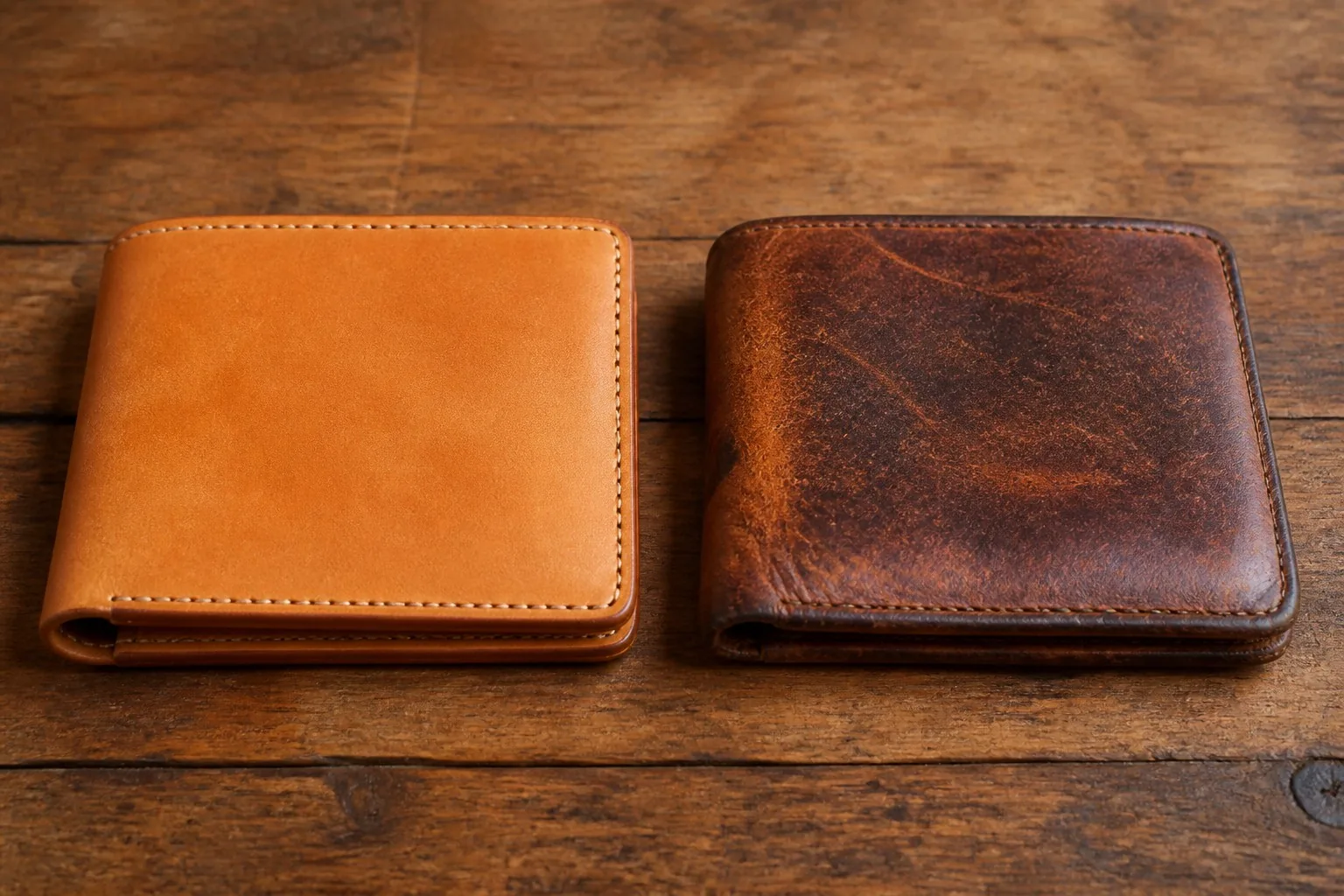
The aging difference. This is the core distinction. Chrome-tanned leather is finished to resist change — the surface is protected, the color is locked, and years of use show as wear: scuffs, fading, and eventual breakdown. Vegetable-tanned leather is unfinished by design — the surface is open, the color is alive, and years of use show as patina: deepening color, warm highlights, and a map of the owner’s life. One ages like a product; the other ages like a living thing.
Which is better? Neither — they are different tools for different jobs. Chrome-tanned is the practical choice for most bags: affordable, supple, low-maintenance, available in any color. Vegetable-tanned is the choice for those who want an heirloom: a bag that costs more, demands more care, and rewards the owner with a one-of-a-kind aging story. The honest manufacturer’s answer is the same for both: match the material to the customer’s expectations, and be clear about what each will do over time.
What Patina Is and Why It Happens
Patina is the word for everything that happens to vegetable-tanned leather as it lives: the darkening, the color shifts, the highlights, the sheen, the character that no new leather can imitate. It is the leather’s biography written in its own material.
The mechanism. Patina forms because vegetable-tanned leather is open and reactive. Its surface absorbs oils — from your hands, from conditioners, from contact with other materials. It reacts to light — sunlight darkens it, slowly and evenly. It responds to friction — rubbing and handling polish the surface to a soft sheen. And every one of these effects compounds over time: the leather’s color deepens, the highlights develop where the bag is touched most, and the whole surface takes on a warmth that no dye can reproduce.
Why it is beautiful. The beauty of patina is that it is honest and personal. No two patinas are alike, because no two owners are alike — the same bag carried by two people develops different colors, different highlights, different stories. A patinated bag is proof of use and time, and it is the opposite of the disposable: it is an object that grows more valuable, more personal, and more beautiful the longer it is kept. That is a rare quality in any product, and it is the heart of vegetable-tanned leather’s appeal.
The emotional dimension. Manufacturers see this every day: owners of patinated bags talk about them like companions, not products. The bag remembers their commute, their travels, their daily routines — it is literally marked by them. That emotional connection is why vegetable-tanned leather commands a following, why owners refuse to replace patinated bags, and why the patina is not a side effect of aging — it is the point of the material.
How Patina Develops: The Aging Timeline
Patina is not a switch that flips; it is a gradual development that follows a recognizable timeline. Knowing the stages sets the right expectations — and prevents the disappointment of an owner who expects a patina in a month.
Months 1–3: The new-leather stage. The bag is pale, firm, and dry. It may show faint marks — the first scratches, the first touch of hand oils — but the surface looks essentially new. This is the stage where owners either fall in love with the material’s potential or worry that they have damaged it. The marks are not damage; they are the first sentences of the story.
Months 3–12: The darkening begins. The bag noticeably darkens — the honey deepens toward tan, the areas touched most (handles, flaps, edges) darken faster. The first sheen appears where friction polishes the surface. The bag begins to feel softer and more supple as it breaks in and absorbs oils. This is the stage where the patina becomes visible, and owners start to understand what they have.
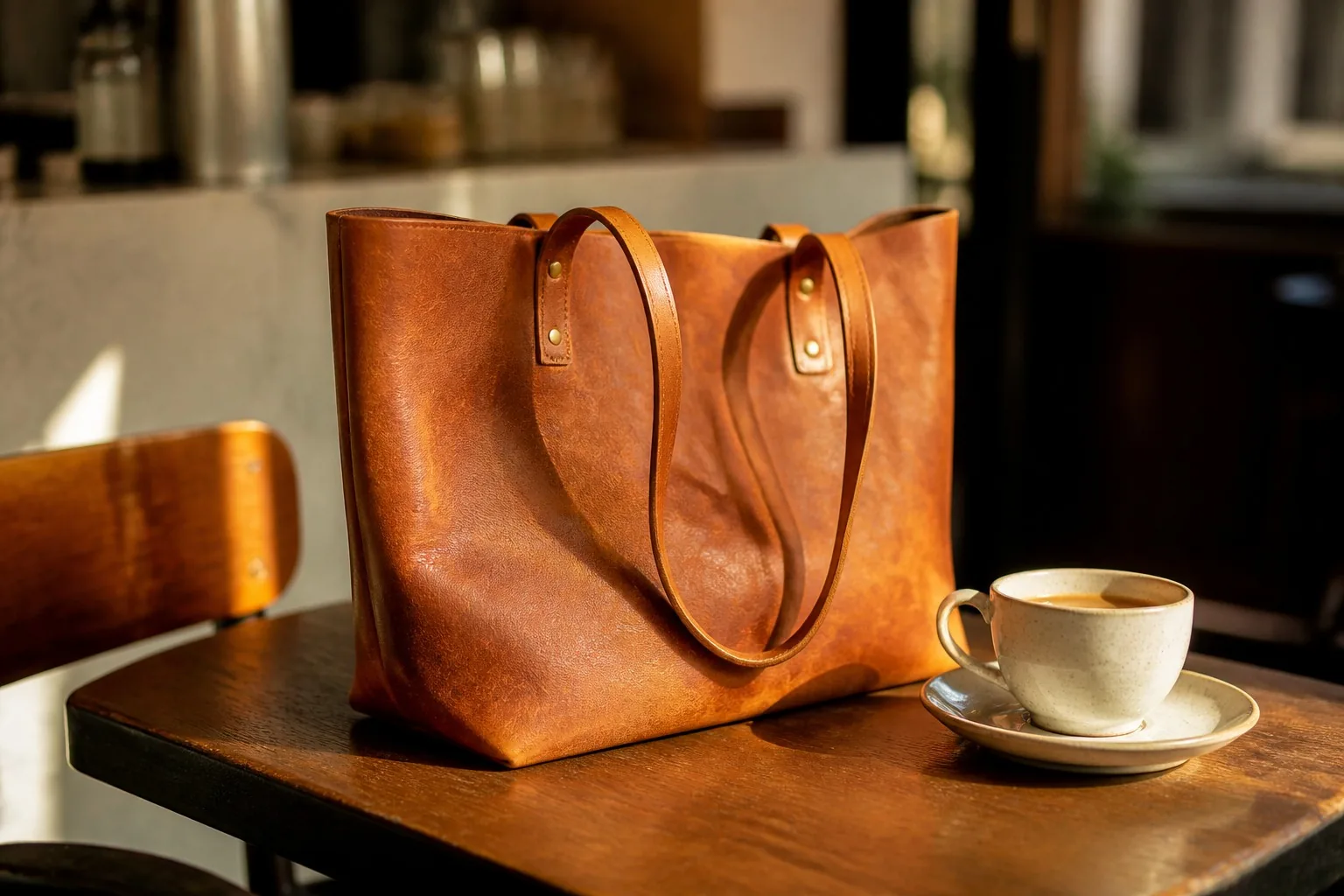
Years 1–3: The character develops. The color continues to deepen and becomes richer and more even. Highlights develop on the high points — the corners, the edges, the areas that catch light and touch. The surface develops a soft, warm glow that new leather cannot imitate. Scratches that appeared in year one have darkened and blended into the overall character. The bag now looks aged, and it looks wonderful.
Years 3–10+: The masterpiece. The bag reaches its full patina: a deep, warm amber or rich brown, glossy highlights, and a surface covered with the subtle history of its use. The leather has softened, molded to its owner, and become unmistakably one of a kind. At this stage, the bag is worth more — in beauty, in character, in emotional value — than the day it was made. This is the destination that vegetable-tanned leather promises, and the timeline is the price of admission.
The aging stages at a glance. The timeline is easier to hold in a single view, so here is the stage table we give owners who want to know what to expect:
| Stage | Time | What you see | What you feel |
|---|---|---|---|
| New leather | Months 0–3 | Pale honey, dry, pristine | Firm, stiff, papery |
| Darkening begins | Months 3–12 | Honey deepens to tan; touched areas darker | Softening, breaking in |
| Character develops | Years 1–3 | Rich tan, highlights, soft sheen | Supple, molded to owner |
| Full patina | Years 3–10+ | Deep amber, glossy highlights, history on the surface | Soft, personal, unmistakable |
The table is a guide, not a contract — every bag ages at its own pace, shaped by its owner’s habits, climate, and care. But the direction is always the same: from pale and pristine toward deep and personal, from a product toward a companion.
The Patina Factors: Light, Oils, Friction and Time
Patina is not random — it is the product of four factors, and understanding them lets you shape how your bag ages.
Light. Sunlight darkens vegetable-tanned leather, slowly and permanently. A bag that lives in sunlight ages faster and darker; a bag kept in shadow ages more slowly. The effect is even and gradual — the whole surface darkens together — unless the bag is partially covered, in which case the covered areas stay lighter. Owners who want a fast, even patina use their bags in the sun; owners who want a slow, subtle aging keep them shaded.
Oils. The oils from your hands are the most personal patina factor. Every touch deposits a trace of oil that the leather absorbs and darkens around. The handles of a vegetable-tanned bag darken faster than the body, simply because hands touch them more. Conditioners add their own oils, darkening the leather further. The oil factor is why patina is personal — the bag literally records your touch.
Friction. Rubbing and handling polish the surface to a sheen. The areas that rub against clothing, tables, and hands develop a soft gloss; the untouched areas stay matte. The friction factor creates the highlights and contrasts that make patina visually rich — a bag that is used and handled develops a livelier patina than one that sits in a closet.
Time. The fourth factor is the only one that cannot be accelerated: time. Patina compounds — the effects of light, oils, and friction build on each other, and the depth that comes from years cannot be rushed in months. This is why the patina of a ten-year-old bag is unmistakable, and why no amount of conditioning can substitute for the slow work of years.
What Accelerates Patina — and What Ruins It
Not all aging is good aging. Some influences accelerate patina beautifully; others damage the leather permanently. The distinction is the most valuable knowledge a vegetable-tanned owner can have.
What accelerates patina well. Regular use is the best accelerator — the oils, friction, and light exposure of daily carrying build patina naturally and evenly. Periodic conditioning feeds the leather and deepens its color. Sun exposure (in moderation) darkens the surface evenly. These are the healthy influences: they age the leather faster without damaging it.
What ruins patina. Water is the great danger. A vegetable-tanned bag caught in rain, or with a wet bottle inside, develops dark water spots that do not fade — the water has stained the open surface permanently. Spills of any kind mark the leather: coffee, food, ink, even some cosmetics. And harsh chemicals — alcohol, solvents, household cleaners — strip the surface and create permanent damage. These are not aging; they are injuries, and they cannot be converted into character the way scratches can.
The scratch question. Scratches are the subject of the most confusion. On vegetable-tanned leather, light scratches are not damage — they darken and blend into the patina, becoming part of the character. This is the famous property of the material: it forgives scratches. But deep scratches, cuts, and gouges are different — they damage the structure, not just the surface, and they heal poorly. The rule of thumb: surface marks age into beauty; structural damage does not.
The balance. The art of vegetable-tanned ownership is accepting the marks that will become patina while preventing the damage that never will. Use the bag, let it darken, welcome the scratches that blend — and protect it from water, spills, and chemicals. The bag’s aging is a collaboration: the owner provides the care, and the leather provides the beauty.
Caring for Vegetable-Tanned Leather
Vegetable-tanned leather needs a care routine that is different from most leather — simpler in some ways, more careful in others. Here is the routine we recommend to every owner of a vegetable-tanned bag.
Daily care: just use it. The daily routine is almost nothing: carry the bag, let it darken, and wipe off any spills immediately with a dry cloth. A drop of water wiped away at once often leaves no mark; a drop left to dry becomes a permanent spot. The immediate wipe is the single most important habit for this leather — and it is the same principle we cover in our care guide, applied with extra urgency because the surface is so open.
Monthly care: dust and inspect. Wipe the surface with a soft dry cloth to remove dust, and check the bag for any developing issues — spills that set, hardware that loosened, seams that need attention. The monthly pass keeps the bag clean and catches problems early. At this stage, no conditioning is needed for most bags in normal use.
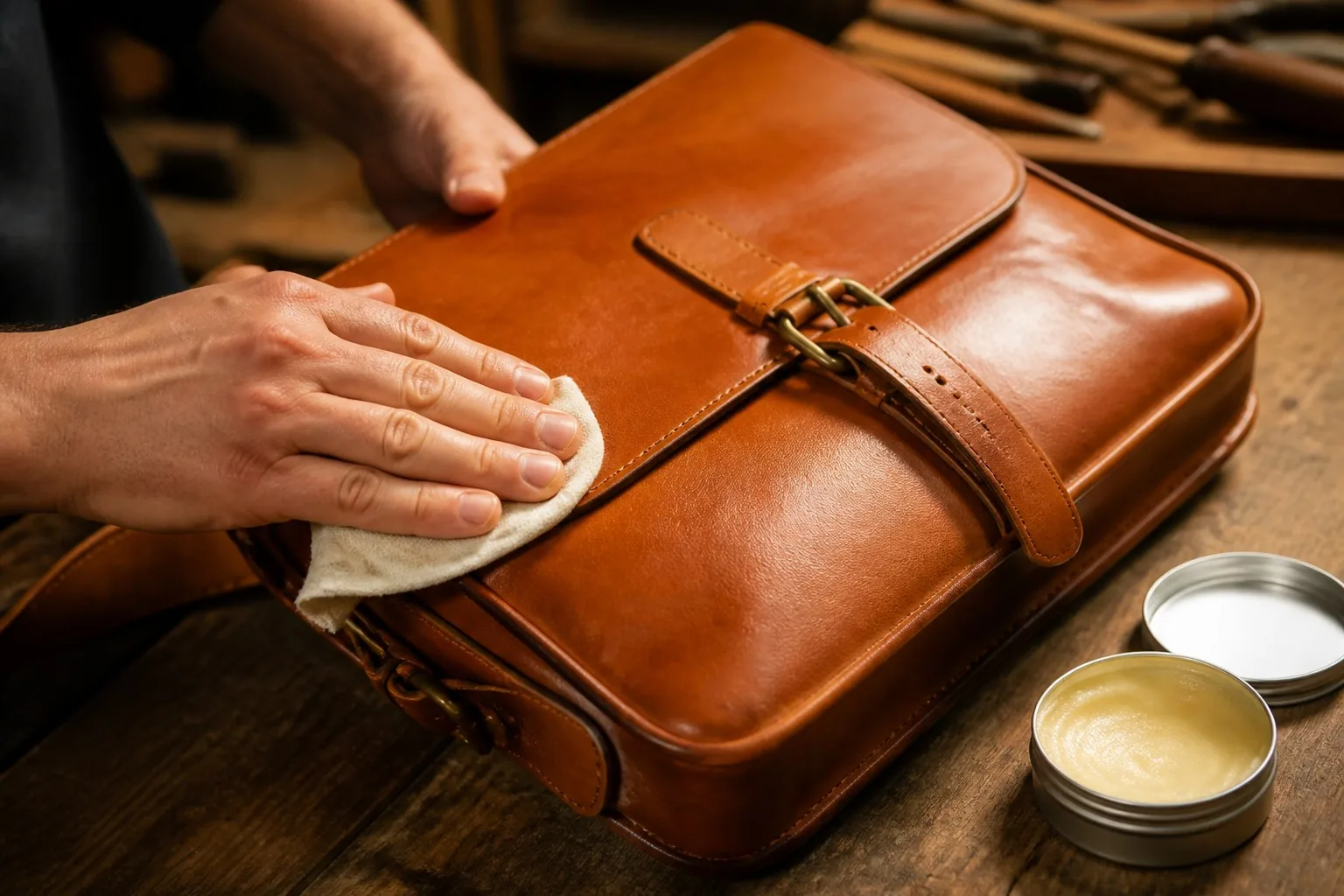
Seasonal care: condition sparingly. Condition vegetable-tanned leather two to four times a year, with a natural conditioner — beeswax-based balms and pure oils are the traditional choices. Apply sparingly, let it absorb, and buff off the excess. Conditioning feeds the leather, deepens the color, and keeps it supple — but over-conditioning makes it soft, greasy, and prone to stretching, so restraint is part of the skill. When in doubt, condition less.
The water rule. Keep vegetable-tanned leather away from rain and wet surfaces whenever possible. If it does get wet, blot gently with a dry cloth and let it air-dry naturally — never with heat. The water spots that form on a soaked vegetable-tanned bag are permanent; prevention is the only real defense.
The storage rule. Store vegetable-tanned bags in a cotton dust bag, lightly stuffed, away from direct sunlight and heat. Sunlight darkens the leather, which can be fine when it is even — but storage should keep the aging even, not patchy. Consistent conditions produce the most beautiful patina.
The care comparison. The care routine for vegetable-tanned leather is different from the routine for finished leathers — and the difference is worth making explicit, because most care advice in the market is written for chrome-tanned leather.
| Care aspect | Vegetable-tanned | Chrome-tanned (finished) |
|---|---|---|
| Water | Major danger — stains permanently | Resistant — wipes off |
| Conditioning | 2–4×/year, natural balms only | 1–2×/year, any leather conditioner |
| Scratches | Darken into character — leave them | Usually resisted; buff if visible |
| Spills | Blot instantly — permanent if set | Wipe freely |
| Patina | The whole point — welcome it | Minimal — not expected |
| Care mindset | Protective, accepting of marks | Low-maintenance, keep-new |
The table is the honest summary of ownership: vegetable-tanned rewards care and patience with a personal masterpiece; chrome-tanned rewards minimal care with a bag that stays looking new. There is no wrong choice — only the choice that matches how you live with your bag.
Reading the Marks: Patina vs. Damage
As the patina develops, owners face the practical question of reading their bag: which marks are aging into beauty, and which are damage that needs attention? The distinction is the last skill of vegetable-tanned ownership.
The good marks. Light scratches that darken and blend; the darkening of handles and edges from hand oils; the soft sheen on high-touch areas; the even deepening of the whole surface. All of these are patina forming correctly — they should be welcomed, not worried about. The bag is becoming what it is meant to become.
The neutral marks. Water spots that have dried and darkened; slight color variation between sun-exposed and covered areas. These are not beautiful, but they are not fatal — they become part of the bag’s history, and many owners come to accept them as character. The key is that they are stable: once the spot has dried, it does not spread or worsen.
The bad marks. Deep gouges that cut the surface; chemical damage from alcohol or solvents; mold from damp storage; structural failures at seams or hardware. These are damage, not patina — they weaken the bag and cannot be converted into character. They should be treated: professional repair for structural damage, careful cleaning for mold, and prevention for everything else.
The judgment. The question to ask for any mark is simple: will this darken and blend into the bag’s character, or will it stay a flaw forever? Surface marks on vegetable-tanned leather darken and blend — that is the material’s gift. Structural and chemical damage stays — that is its limit. Read the mark honestly, treat the damage, and let the rest become beauty.
From the Factory: Choosing Vegetable-Tanned for Your Bag
The manufacturer’s perspective adds the final layer: what vegetable-tanned leather means when you are choosing or commissioning a bag — and what it does not mean.
What it gives a bag. Vegetable-tanned leather gives a bag a personality no other material can: the aging story, the personal marks, the heirloom potential. For customers who value those qualities, it is the only real choice. It also gives structural advantages — it holds its shape, cuts cleanly, and pairs perfectly with burnished edges, creating the classic artisanal look that other leathers cannot reproduce.
What it demands. It demands care: water discipline, regular conditioning, and acceptance of marks that most leathers are designed to resist. It demands patience — the patina takes years, and owners who expect an instant transformation will be disappointed. And it demands a premium price, because the tanning is slow, the material costs more, and the craftsmanship required is higher. The bag’s price reflects all of these.
The honest guidance. When a customer asks us whether vegetable-tanned is right for their bag, we ask them three questions: Will you accept marks and see them as character? Will you protect the bag from water and spills? And will you keep the bag long enough for the patina to develop — years, not months? Three yeses, and vegetable-tanned is the perfect choice. Any no, and a more finished leather will serve them better. The material is not for everyone — and the honesty about that is part of the craft.
The maker’s note. The best vegetable-tanned bags are made with the aging in mind: handles designed to be touched, edges burnished to grow glossier, hardware chosen to age alongside the leather. When the maker and the owner understand patina, the result is a collaboration across years — and it is the most rewarding work we do.
Frequently Asked Questions
What is patina on vegetable-tanned leather?
Patina is the aging of the leather: the darkening, the warm color shifts, the highlights and sheen that develop over years of use as the leather absorbs oils, reacts to light, and polishes through friction. It is the leather’s biography — a one-of-a-kind aging story that no new leather can imitate.
Does vegetable-tanned leather darken over time?
Yes — darkening is the defining characteristic. The pale honey color deepens through light exposure, hand oils, and conditioning, gradually becoming tan, then amber, then a rich brown over the years. The darkening is even and beautiful when the bag is used normally and protected from water.
How long does it take for patina to develop?
Visible darkening begins within months, character develops over one to three years, and a full, rich patina takes three to ten years of use. Patina cannot be rushed — it compounds with time, and the depth of a well-aged patina is exactly what no new leather can imitate.
Can scratches be removed from vegetable-tanned leather?
Light scratches should not be removed — they darken and blend into the patina, becoming part of the bag’s character. This is the material’s famous property. Deep cuts and gouges are different: they damage the structure and should be evaluated by a professional.
Is vegetable-tanned leather waterproof?
No — it is the least water-resistant common leather. Its open surface absorbs water and develops permanent dark spots. It should be kept away from rain and spills, wiped immediately if wet, and never stored damp. Water protection is the main care responsibility of a vegetable-tanned owner.
How often should I condition vegetable-tanned leather?
Two to four times a year with a natural conditioner — beeswax balm or pure oil — applied sparingly. Conditioning feeds the leather and deepens its color, but over-conditioning makes it soft, greasy, and prone to stretching. When in doubt, condition less.
Why is vegetable-tanned leather more expensive?
The tanning takes weeks or months instead of days, uses natural plant tannins instead of industrial salts, and demands more skill to work. The material costs more, the craftsmanship is higher, and the result is a leather that ages into a one-of-a-kind patina — you are paying for the aging story as much as the material.
Is vegetable-tanned leather better than chrome-tanned?
Not universally — they are different tools. Vegetable-tanned offers the patina, the structure, and the heirloom aging; chrome-tanned offers softness, water resistance, and affordability. The right choice depends on whether you want a bag that ages into a personal work of art or a bag that stays looking new with minimal care.
Final Word from the Factory
Vegetable-tanned leather is the only material we work with that gets better with neglect of the right kind — the neglect of being used, handled, and carried. Its pale honey surface is a promise, and the promise is that time will transform it: that the marks of your hands will become its character, the years of sunlight will become its color, and the friction of daily life will polish it to a glow no factory can produce. Every scratch is a sentence, every darkening is a chapter, and a well-aged vegetable-tanned bag is a biography written in leather.
At our factory, we make vegetable-tanned bags the way the material demands: burnished edges that grow glossier with use, hardware that ages alongside the leather, and construction designed for decades rather than seasons. We also tell our customers the truth — that this leather needs care, patience, and a willingness to accept marks as character. The customers who embrace that truth get the reward: a bag that becomes more beautiful every year, more personal every year, and finally, after a decade of use, a one-of-a-kind object that no money can replace.
Not every owner wants that. For those who do, there is nothing else like it in the world of materials. Vegetable-tanned leather is not for everyone — but for the ones it is for, it is the only choice that matters. Carry the bag, protect it from water, condition it sparingly, and let time do the rest. In five years you will own something that did not exist when you bought it: a bag that is yours alone, marked by your life, and more beautiful than the day it was made.
