
Is Vegan Leather a Practical Material for Bag Manufacturing?
Is Vegan Leather a Practical Material for Bag Manufacturing?
Vegan leather is not a material. It is a promise attached to a family of materials, most of which are coated fabrics, and the promise usually says more about the brand than about the bag. This matters on a production floor, because a specification written around the label rather than the material produces bags that fail in predictable ways.
The workshop view is unromantic but not hostile. Coated materials are genuinely better than leather in several specific jobs: they take colour uniformly, they wipe clean, they cost less per square metre and they behave the same on the first order and the tenth. They also crack, delaminate and look tired in ways that a hide does not.
This guide looks at vegan leather as a bag-making material: what the label actually covers, which substrates and coatings are behind it, where they outperform leather, where they fail, how to cut, sew and edge them, and how to specify and claim them without creating a compliance problem later. PU and PVC are compared with genuine leather elsewhere; the focus here is on the labelled category and what it demands in production.
- What the Label Actually Names
- The Materials Behind the Label
- Where Coated Materials Beat Leather
- Where They Lose
- Designing a Bag Around a Coated Material
- Cutting Coated Materials
- Sewing Coated Materials
- Edge Finishing on Coated Material
- Linings and Backing
- Hardware on Coated Material
- Durability Expectations
- Care and Cleaning
- Claims, Labeling and Compliance
- Specifying a Vegan Material
- Goods-In Checks
- Cost and Yield
- Bag Types That Suit It
- Common Failures and Their Causes
- Specification Checklist
- Talking to Customers Honestly
- Coated Materials in Diaper Bags
- When a Brand Should Switch Back to Leather
- Sustainability Questions Buyers Ask
- Working With a Coated-Material Supplier
- Leather and Vegan Material in the Same Range
- What Buyers Get Wrong About the Label
- Testing a Coated Bag Before Committing
- Pattern Adjustments When Switching Materials
- Frequently Asked Questions
- Conclusion
What the Label Actually Names
A Marketing Category
“Vegan leather” describes the absence of animal material, not the presence of any particular substance. Two bags carrying the same claim may be constructed from completely different polymers, backings and finishes.
Two Common Substrates
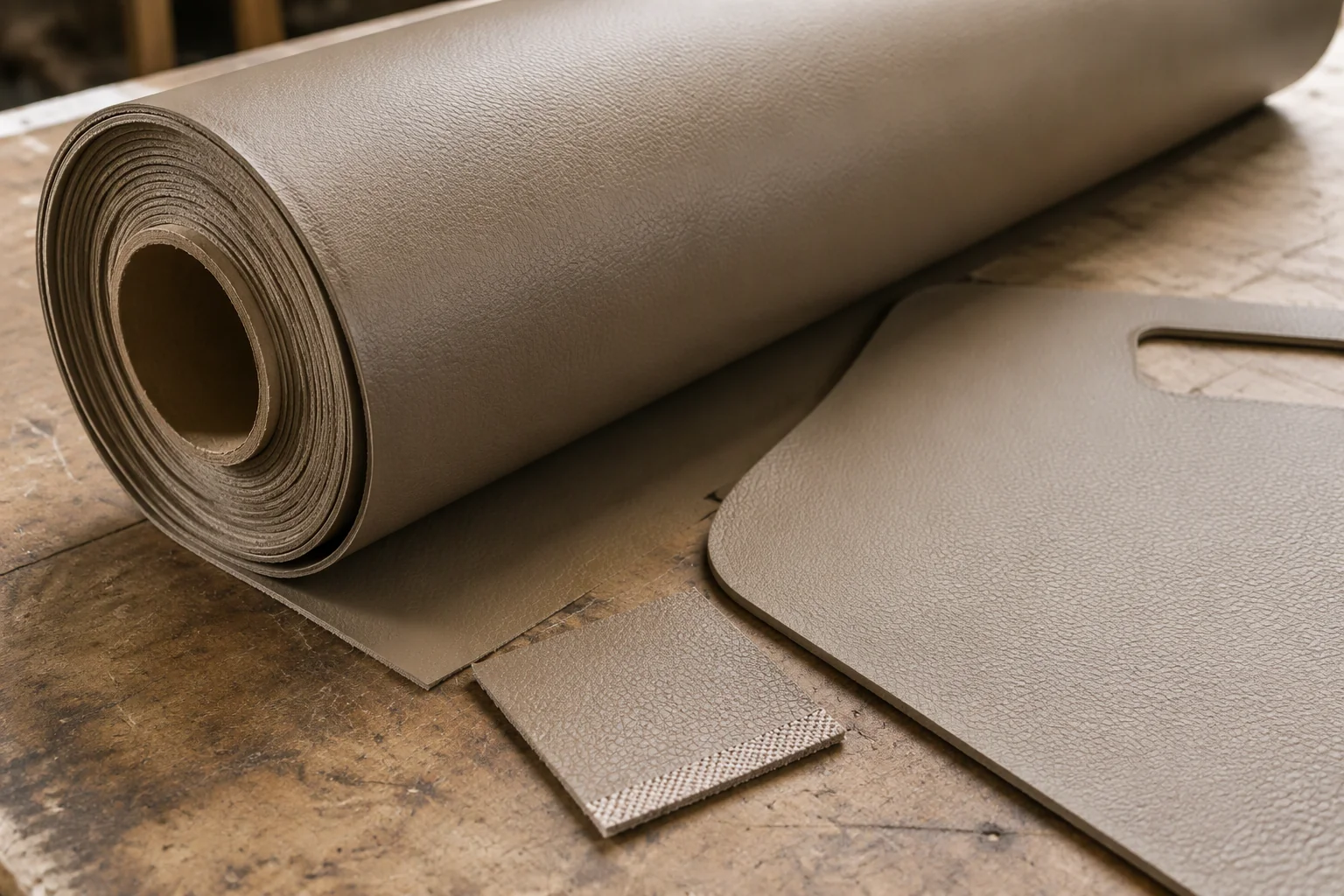
Most of the category is polyurethane or PVC coated onto a woven or knitted backing. The coating gives the surface, the backing gives the strength, and the combination behaves quite differently depending on both.
What the Word Does Not Say
The label says nothing about durability, biodegradability, recycled content or recyclability. Each of those is a separate claim requiring its own evidence, and none of them follows from the word vegan.
The Materials Behind the Label
PU on Woven or Knit Backing
Polyurethane coatings are softer, lighter and more leather-like in hand than PVC, and they dominate the mid-market. Their weakness is hydrolysis: in warm humid conditions the coating can degrade and peel over time.
PVC and Its Properties
PVC is heavier, stiffer and more water-resistant, and it tolerates abrasion better than a thin PU. It is also harder to make feel like leather, and its environmental profile is the reason many brands avoid it.
Coated and Bio-Based Variants
Newer variants use partly plant-derived polymers or recycled backings. They are legitimate materials, but their performance should be judged on samples rather than on the origin story attached to them.
Where Coated Materials Beat Leather
Consistency
A roll of coated material is uniform in colour, thickness and grain across its whole length. For a brand producing several colours in one style, that consistency removes an entire category of complaint.
Water and Cleaning
The surface does not absorb water, and most marks wipe off with a damp cloth. For diaper bags, lunch bags and children’s products, this is a functional advantage rather than a compromise.
Cost and Colour Range
Coated materials cost less per square metre and accept a wider colour range with smaller minimums. A small brand can offer six colours in coated material for what one colour would cost in custom-tanned leather.
Where They Lose
Flex Cracking
A coating is a film on a substrate, and films crack where they flex repeatedly. The first cracks appear along folds, at the top edge of a gusset and around zip openings, usually within a year of daily use.
Heat and Cold
Cold stiffens the coating and makes it brittle; heat softens it and can make it tacky. A bag left in a car in summer or used in a hard winter shows those effects long before a leather bag does.
Edges and Ageing
Cut edges expose the backing, and the coating cannot repair itself. Scuffs stay scuffed, and a worn edge reads immediately as cheap in a way that a patinated leather edge does not.
| Property | Leather | PU coated | PVC coated |
|---|---|---|---|
| Uniformity | Variable | High | High |
| Water resistance | Finish dependent | High | Very high |
| Flex life | Long | Medium | Medium |
| Repair | Possible | Very limited | Very limited |
| Cost per m² | High | Low to medium | Low |
Designing a Bag Around a Coated Material
Panel Shapes and Curves
Coated material has almost no stretch and resists compound curves. Patterns need gentler curves, more darts or a seam where a leather panel could have been moulded in one piece.
Seams and Topstitch
Seams sit flatter and show more sharply than on leather. A topstitch line becomes a design element, because the material will not soften around it, so the spacing has to be deliberate.
Edges and Binding
Every edge is a decision: folded, bound, turned or painted. Painting works better on coated material than on many leathers, provided the edge is prepared, and binding hides the backing entirely.
Cutting Coated Materials
Blades and Dies
Coated material cuts cleanly with a sharp blade or a die, and it dulls blades faster than leather because the backing is abrasive. A dull blade drags and leaves a ragged edge that no finishing will hide.
Nesting and Direction
There is no grain direction to respect, which simplifies nesting, but the backing has a warp and weft. Panels should still be nested on a consistent axis so that stretch behaves predictably in the finished bag.
Offcuts and Reuse
Offcuts are usable, which improves yield, and they should be sorted by direction rather than piled together. A mixed-direction offcut produces a panel that behaves differently from its neighbour.
Sewing Coated Materials
Machine Setup
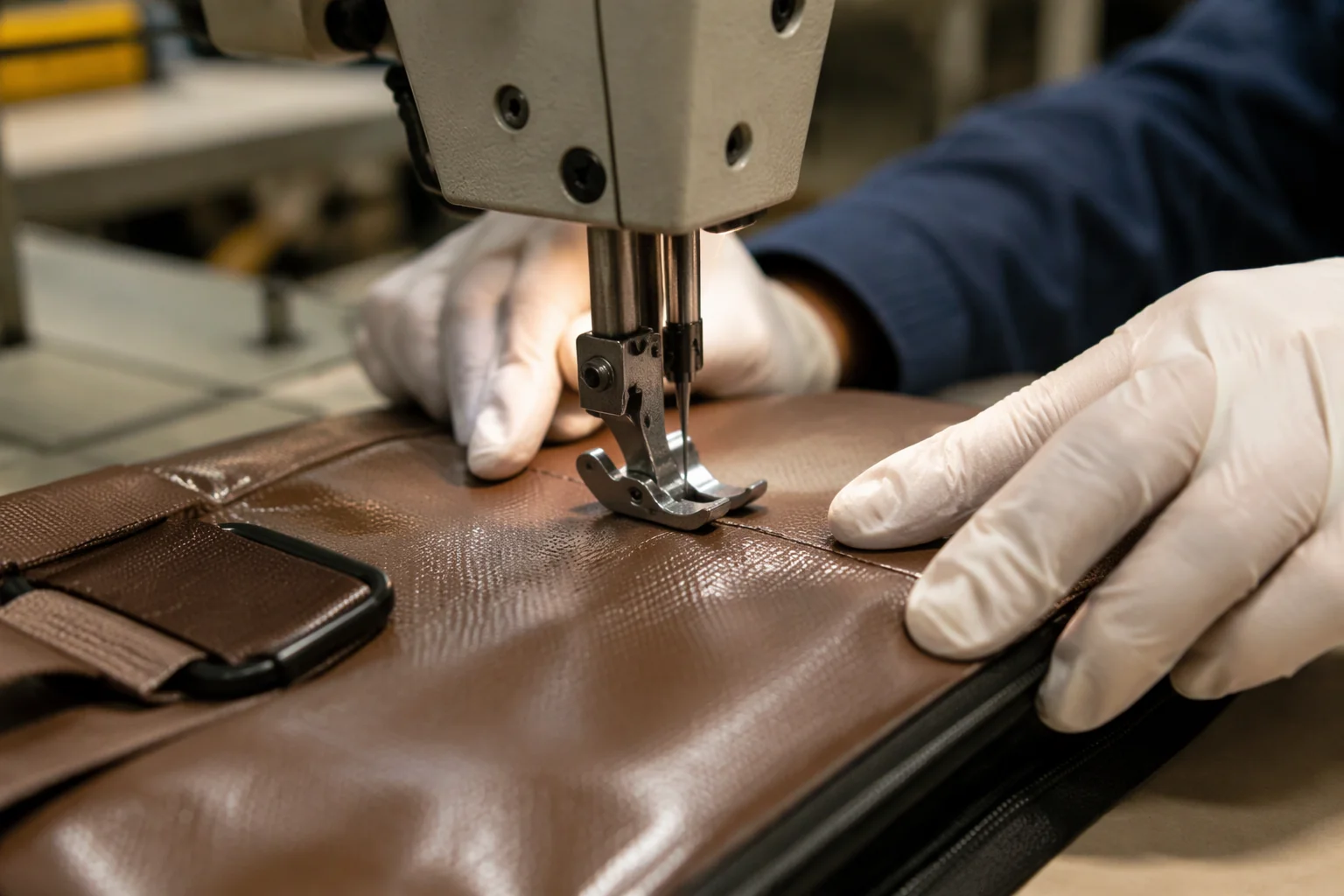
The material grips the presser foot, so a roller foot, a walking foot or a strip of tape under the foot keeps the seam moving. Needle holes are permanent, so a mis-stitch cannot be removed without leaving marks.
Heat at the Needle
High speed generates heat, and heat welds the coating to the needle and the foot. Slower speed, a smaller needle and occasional lubrication of the needle prevent the marks that appear as shiny lines along a seam.
Seam Strength and Backing
The seam’s strength comes from the backing, not from the coating. A backing that tears at the stitch line will fail even when the coating looks intact, so seam strength should be tested on the actual material.
Edge Finishing on Coated Material
Painting and Preparation
Edge paint adheres well to a prepared coated edge, and the process is faster than burnishing leather. Sanding, cleaning and two thin coats give a durable finish; one thick coat cracks at the first flex.
Folding and Binding
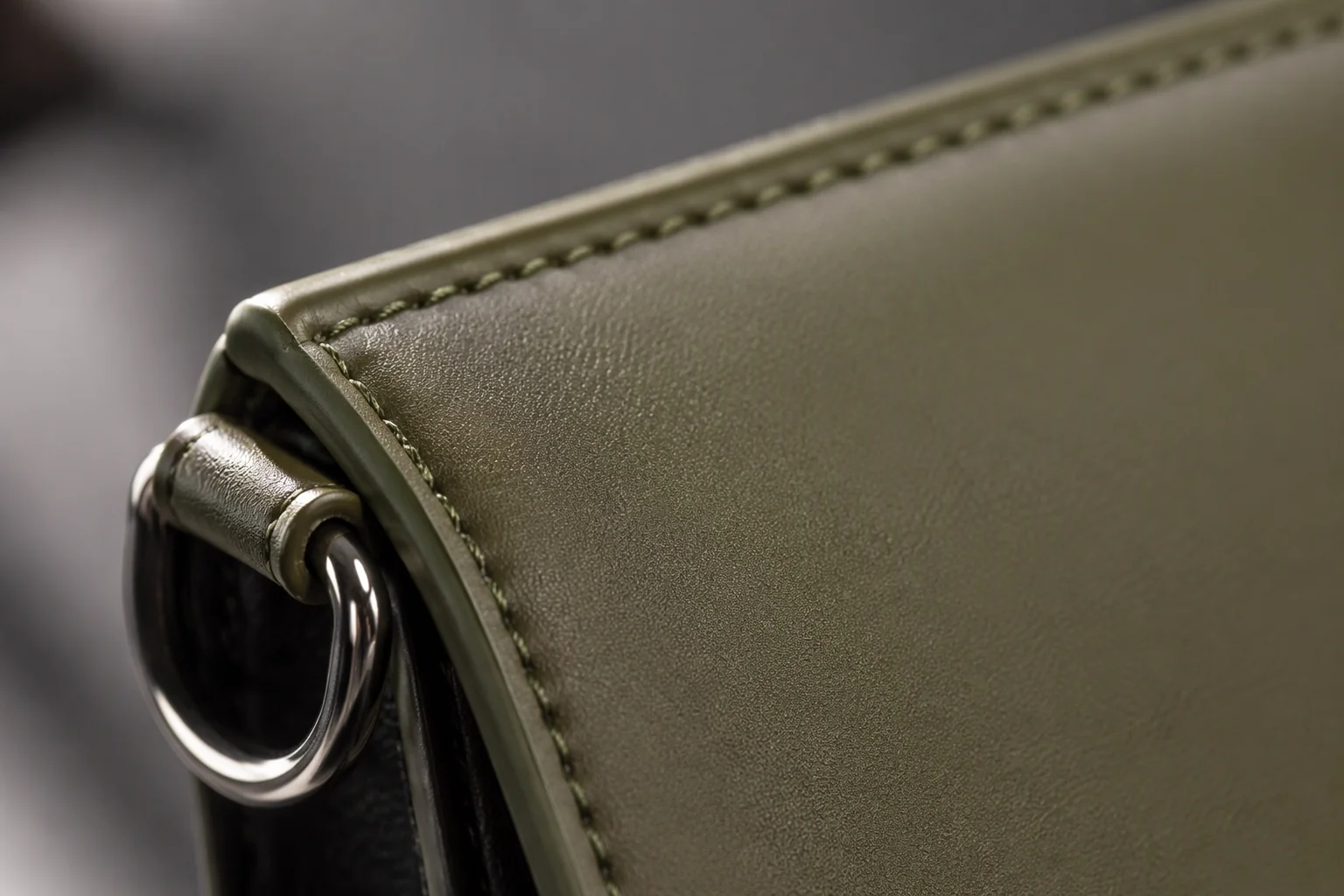
Folded edges bunch at curves because the material will not compress. Binding or a separate welt handles curves better and hides the exposed backing, which is why most coated bags use it.
The Cut Edge Problem
Where an edge is left raw, the backing shows as a lighter line. It reads as unfinished, and it also wicks water, so raw edges belong only where they are hidden inside.
Linings and Backing
Why Backing Choice Matters
The backing carries the load and takes the stitches. A loose knit backing stretches and a tight woven backing does not, and the same coating on the two behaves like two different materials.
Lining and Weight
Coated shells are light, so a heavy lining can dominate the structure. A light woven lining keeps the bag soft, and a padded lining adds a shape the shell cannot provide by itself.
Pockets and Attachments
Interior pockets sewn to the lining put load on the lining, not on the shell. On a coated bag the lining should be reinforced where a pocket carries a bottle or a laptop.
Hardware on Coated Material
Load Spreading
Coated material is strong in plane and weak at a point. Every ring, D-ring and strap anchor needs a plate, a patch or a rivet bar spreading the load across an area rather than a hole.
Rivets and Punching
A punched hole in coated material does not heal, and a rivet that moves in it enlarges it. Rivets should be set tight, and where a fixing will move, stitching through a reinforced tab is more reliable.
Zips and Tapes
Zip tapes must be compatible with the coating and the backing, and a zip on a coated bag needs a stable opening. An unsupported opening deforms, and the coating creases around it permanently.
Durability Expectations
Realistic Service Life
A coated bag used daily typically shows cracking or edge wear in the second year. Occasional use, light loads and good storage extend that substantially, and the material is at its best in exactly those conditions.
What Fails First
Cracks along folds and gussets, peeling at the top edge, worn corners, and failed edge paint. All four are predictable, and all four can be reduced by design rather than by buying a better roll.
Comparing by Use
| Use case | Suitability | Reason |
|---|---|---|
| Diaper bag | High | Wipeable, light, colour range |
| Lunch or cooler bag | High | Water resistance, easy cleaning |
| Cosmetic and pouch | High | Low load, small panels |
| Everyday tote | Medium | Edge and fold wear |
| Commuter backpack | Medium | Flex cracking at straps |
| Long-life heirloom piece | Very low | Not repairable, not refinishable |
Care and Cleaning
Routine Cleaning
A damp cloth with mild soap handles nearly everything, and the surface tolerates more cleaning than leather. Rubbing alcohol and solvents should be avoided, because they lift the coating rather than the dirt.
Storage
Store dry, away from heat and away from other materials that can transfer colour. Coated surfaces can stick to each other in warm storage, and a bag stored compressed may hold the crease.
What Cannot Be Repaired
A cracked coating cannot be restored, and a worn edge can only be painted over. This is the category’s real limit, and it should be priced into the product rather than discovered by the customer.
Claims, Labeling and Compliance
Words That Carry Risk
“Vegan”, “eco”, “biodegradable”, “recycled” and “plastic-free” are each separate claims with separate evidence requirements. A bag can be vegan and still contain PVC, and it can contain recycled content and still be non-recyclable.
What Evidence Is Needed
Each claim needs documentation held by the brand: material composition, supplier declarations and test reports where relevant. The factory can supply material data, but the claim belongs to the brand that puts it on the label.
Who Confirms
Requirements differ by market and change over time. Before printing any wording, confirm the applicable rules and permitted terminology with the relevant authorities or a qualified compliance adviser in each destination market.
Specifying a Vegan Material
Name the Construction
Specify coating chemistry, backing type and weight per square metre, not just the word vegan. Two “vegan leathers” with different backings will produce different bags, and the difference is invisible in a photograph.
Performance Requirements
State what the material must survive: flex cycles at a fold, abrasion at a corner, cold, heat, and cleaning. These are testable, and they turn a marketing choice into a specification.
Samples and Colour Approval
Approve a production-sized sample under daylight and keep it. Colour on coated material is usually consistent, so any drift is a supplier issue rather than an unavoidable variation.
Goods-In Checks
Weight per Square Metre
Weigh a sample from each roll and compare it against the specification. Coating weight drives most of the material’s performance, and a lighter roll sews easily and fails early.
Adhesion and Flex
Fold a strip back on itself and flex it several times, then look along the fold for lifting or whitening. This crude test catches poor adhesion before the material reaches the cutting table.
Colour and Surface
Check rolls under daylight against the approved sample, and note any drift between rolls rather than between deliveries. Mixed rolls in one production run produce a bag that looks patched.
Cost and Yield
Where the Saving Comes From
Material price is lower and colour minimums are smaller, which is why the category dominates entry and mid-market ranges. The saving is real, and it is the reason the category exists.
Where the Saving Disappears
Labour for edge painting, seam handling and careful cutting is not lower than for leather, and the rework rate on faulty stitching is higher because needle marks cannot be removed. A cheap roll does not guarantee a cheap bag.
Total Cost of Ownership
A cheaper bag that cracks in year two generates returns and reviews that cost more than the material saved. The honest comparison is cost per year of use, not cost per square metre.
Bag Types That Suit It
Diaper and Child Bags
The strongest fit. Wipeable surfaces, light weight, bright colours and a low price point all matter more than ageing gracefully, and the bag is replaced as the child grows.
Pouches, Cosmetic Bags and Organisers
Small panels, low loads, no flex at a hinge point. These products use the material’s strengths and rarely expose its weaknesses.
Everyday Totes and Backpacks
Acceptable at a price, with the understanding that edges and folds will age. Design choices such as binding instead of folding and reinforced anchors extend the useful life considerably.
| Bag type | Fit | Note |
|---|---|---|
| Diaper bag | Strong | Wipeable, light, colours |
| Cosmetic pouch | Strong | Low load, small panels |
| Children’s bag | Strong | Cleaning, colour, cost |
| Everyday tote | Fair | Reinforce edges and folds |
| Commuter backpack | Fair | Watch flex at straps |
| Premium daily bag | Poor | Ageing and repair expectations |
Common Failures and Their Causes
- Cracking along folds. Coating film flexed repeatedly without a supporting seam or reinforcement.
- Peeling at the top edge. Poor adhesion combined with handling and humidity.
- Worn corners. Coating abraded through to the backing on a bag set down daily.
- Shiny needle marks. Heat from high-speed sewing welding the coating at the stitch line.
- Pulled hardware. A ring or stud fixed through a single coated layer without a spreader plate.
- Wavy seams. Material gripping the presser foot and stretching ahead of the needle.
- Cracked edge paint. One thick coat instead of two thin ones on an unprepared edge.
- Delamination in storage. Warm, humid storage degrading the bond between coating and backing.
- Colour mismatch between rolls. Mixed rolls used without checking against a retained sample.
Specification Checklist
- Coating chemistry named: PU, PVC or other
- Backing type and weight stated
- Total weight per square metre with tolerance
- Colour reference and retained sample per roll
- Flex and adhesion requirements stated
- Abrasion requirement for base and corners
- Cold and heat exposure noted for the destination market
- Edge treatment per edge: painted, bound, folded or turned
- Reinforcement named at every hardware fixing point
- Stitch type, density and needle size defined
- Seam strength requirement stated and testable
- Lining weight and attachment points specified
- Packing method that prevents compression creases
- Claim wording approved before printing
- Care instructions matched to the material
- Repair and replacement policy decided
Talking to Customers Honestly
Describe Performance, Not Virtue
A customer who is told the bag wipes clean and will show wear at the folds after heavy use is not disappointed. One who is told it is “just like leather” and finds cracks in a year is a return and a review.
The Care Card
Two lines on cleaning and one on storage prevent most avoidable damage. Coated materials tolerate more cleaning than leather, so the card can be simple, which means customers actually follow it.
Where the Claim Belongs
Material claims belong with the material description, not with the durability promise. Keeping them separate protects the brand when a customer’s expectation and the product’s performance diverge.
A coated bag is a good product with a defined life. Sell it as that, and the category has no problem.
Coated Materials in Diaper Bags
Why the Fit Is Strong
A diaper bag is wiped, loaded, set on floors and replaced within a few years. Every one of those facts favours a coated material, and the weakness of the category rarely gets time to appear.
Where It Still Needs Care
The base and the strap anchors still take abuse, and the interior still needs a wipeable, seam-sealed pocket for wet items. Those are the areas where a cheap build shows first.
Design Details That Extend Life
Bound edges instead of folded ones, reinforced anchors, a structured base and a light lining together turn a low-cost material into a bag that survives its intended service life.
When a Brand Should Switch Back to Leather
When Longevity Is the Promise
If the product is sold as something to keep for a decade, a coated material will disappoint. The category’s ageing is visible and irreversible, and no construction trick changes that.
When Repair Matters
Brands offering repair services need a material that can be refinished, patched or re-edged. Coated surfaces cannot be restored, and a repair policy built on them becomes a replacement policy.
When Positioning Requires It
Above a certain price, customers expect material depth. A coated bag can be excellent and still read as the wrong product at a premium price point, and that is a positioning decision rather than a technical one.
Sustainability Questions Buyers Ask
The Common Confusions
Buyers often assume vegan means biodegradable, or that recycled content means recyclability. Neither follows, and each claim needs its own evidence before it appears anywhere near a product.
What a Factory Can Answer
A factory can supply material composition, supplier declarations and test data. It cannot certify a brand’s marketing claim, and it should not be asked to.
Keep Claims Verifiable
The safest position is a small number of claims that can be evidenced on request. Every additional adjective adds risk without adding performance.
Working With a Coated-Material Supplier
Sampling Across Rolls
Ask for samples from two different rolls so that colour and hand drift are visible before production. A single sample hides exactly the variation that causes complaints.
Technical Data
Request coating chemistry, backing specification, weight, adhesion data and any flex or abrasion results the supplier holds. A supplier who cannot describe the construction is a trader, not a manufacturer.
Availability and Continuity
Coated materials are often discontinued or re-coloured. Ask how long the article will be available and secure enough stock to cover a repeat order before committing to a range.
Leather and Vegan Material in the Same Range
Different Lifetimes
A range that mixes both materials needs different promises for each. The leather item can be sold on ageing and repair; the coated item on cleaning and colour, and the two should not share the same longevity language.
Different Construction Rules
Leather tolerates folded edges, burnishing and skiving; coated material prefers binding, painting and no skiving. A pattern shared between them without adjustment produces a weak example of one or both.
Pricing Logic
The leather item carries material cost and the coated item carries labour and rework risk, so a simple percentage markup applied to both will misprice one of them. Cost each build on its own.
What Buyers Get Wrong About the Label
The Assumption of Virtue
Many buyers read vegan as environmentally better. The label says nothing about the polymer’s origin or its end of life, and correcting that assumption early avoids disappointed customers.
The Assumption of Weakness
Others dismiss the category entirely. In diaper bags and pouches the material outperforms leather on the measures that matter, and refusing it on principle loses a legitimate product.
The Right Question
The useful question is not whether the material is vegan but what the bag must survive. Cleaning, water, load and service life determine the answer, and the label does not.
Testing a Coated Bag Before Committing
The Flex Test
Fold a finished sample repeatedly along the line where the bag will crease. Cracking appears early on poor material and gives the brand a realistic picture before the order is placed.
The Load Test
Fill the bag to its intended weight and hang it from the straps for a day. Stretch, seam distortion and anchor movement all show up quickly and are cheap to fix at sampling stage.
The Cleaning Test
Wipe a sample with the cleaners the customer will use. A material that dulls or lifts under ordinary cleaning will generate complaints that no care card can prevent.
Pattern Adjustments When Switching Materials
Seam Allowance
Coated material does not compress at a curve, so a leather pattern’s seam allowance will pucker. Allowances usually need trimming back and curves need clipping or a smaller radius to lie flat.
Corners and Turning
Turning a coated bag inside out is harder than turning a leather one, and sharp corners stress the coating. A slightly rounded corner and a trimmed allowance prevent the cracking that starts at the point.
Skiving and Folding
Leather patterns often rely on skived folds. Coated material cannot be skived, so folds become bindings or seams, and that change should be made at pattern stage rather than on the line.
Frequently Asked Questions
Is vegan leather real leather?
No. The term describes materials made without animal hide, usually a polymer coating on a woven or knitted backing. It is a separate material category, not a type of leather.
Is vegan leather more durable than leather?
Usually less durable in daily use. Coated materials resist water and cleaning better, but they crack at folds and cannot be repaired, which shortens the useful life of a heavily used bag.
Does vegan leather contain plastic?
Most of the category does, since polyurethane and PVC are polymers. A vegan bag can therefore be plastic-based, and “plastic-free” is a separate claim requiring its own evidence.
Is vegan leather biodegradable?
Not by default. Some bio-based variants are marketed with degradation claims, but those claims need documentation and vary widely between materials.
Why does vegan leather peel?
The coating is a film bonded to a backing, and the bond can fail under heat, humidity and flexing. Peeling usually starts at an edge or a fold where the film is stressed.
Can a cracked vegan leather bag be repaired?
Only cosmetically. The coating cannot be restored, so repairs are limited to repainting edges or hiding the damage, and a cracked panel is effectively permanent.
Is vegan leather good for a diaper bag?
Yes, for many builds. It wipes clean, resists water, comes in many colours and costs less, and a diaper bag’s service life suits the material’s limitations.
How should vegan leather bags be stored?
Dry, away from heat, and not compressed under other bags. Warm storage can make coated surfaces stick, and compression sets creases that will not come out.
What should be specified when ordering vegan leather?
Coating chemistry, backing type and weight per square metre, plus flex, adhesion and abrasion requirements. Naming the word vegan alone does not define a material.
Can vegan leather be sewn like leather?
It sews more easily in some ways and less in others. It does not stretch or need skiving, but it grips the machine, marks permanently at the needle and cannot be re-stitched invisibly.
Is vegan leather cheaper than leather?
Usually, per square metre and in colour minimums. The gap narrows when edge painting, careful handling and higher rework rates are included in the costing.
Conclusion
Vegan leather is a practical material with a defined job. It is the right choice where a bag must be wipeable, light, colourful and inexpensive, and where the product will be replaced before its coating has time to fail. Diaper bags, pouches and children’s products are the natural home of the category.
It is the wrong choice where the product is sold on longevity, repair or premium material depth. A coated surface cannot be refinished, and its ageing is visible and permanent, which is a mismatch with the promise rather than a manufacturing fault.
The production decisions that matter are the same ones that matter for leather: name the construction, specify testable performance, reinforce every fixing point, choose bound edges where the material will flex, and keep claims separate from durability promises. Brands that do that get a good bag at a fair price; brands that rely on the label alone get returns.
