
Is Lambskin Leather Practical for Everyday Bag Production?
Is Lambskin Leather Practical for Everyday Bag Production?
Lambskin is the material that makes a bag feel expensive in the hand and old in the wardrobe within a season. It is soft in a way that cowhide cannot imitate, and it marks in a way that cowhide never does. Every brand that falls for it eventually learns where that trade is worth making.
The honest position from a manufacturing floor is narrower than the marketing suggests. Lambskin is excellent in specific roles, acceptable in a few more, and a mistake when it is used the way a heavier leather would be. The material is not fragile; it is simply being asked, in most failed designs, to do a job it was never built for.
This article looks at lambskin and nappa as production materials: what they actually are, what their hand costs you, where they belong in a bag, how they behave at the cutting table, the machine and the edge, and how to specify and inspect them. Cowhide, sheepskin and goatskin are compared elsewhere on this site; the focus here is on building with the softest of them.
- What Lambskin and Nappa Actually Are
- The Hand: Why It Is Chosen
- The Limits You Accept
- Where Lambskin Works in a Bag
- Where It Fails
- Cutting Soft Hides
- Sewing Soft Leather
- Quilting and Padding
- Edge Work on Thin Soft Leather
- Structure: Making Soft Leather Hold a Shape
- Linings and Weight Balance
- Hardware on Soft Leather
- Durability Expectations
- Care and Repair
- Specifying Lambskin
- Goods-In Checks
- Cost and Yield
- Bag Types That Suit It
- Common Failures and Their Causes
- Specification Checklist
- Working With a Buyer New to Lambskin
- Lambskin in Lined and Unlined Builds
- Season, Transit and Storage Before Sale
- Lambskin, Suede and Goat: Where the Confusion Starts
- Working With a Tannery on Soft Hides
- What to Tell a Customer About Wear
- Frequently Asked Questions
- Conclusion
What Lambskin and Nappa Actually Are
The Animal, Not the Finish
Lambskin comes from a young sheep, which is why the grain is fine and the fibre layer is thin. The age explains the softness, the small hide size and the limited abrasion resistance, and no finishing step changes those three facts.
Nappa Is a Process Word
Nappa describes a tanning and finishing approach that produces a soft, smooth, lightly treated surface, and it can be made from lamb, cow or goat. A “nappa leather” bag is therefore not necessarily lambskin, and the two terms should never be used as synonyms in a specification.
What Arrives at the Cutting Table
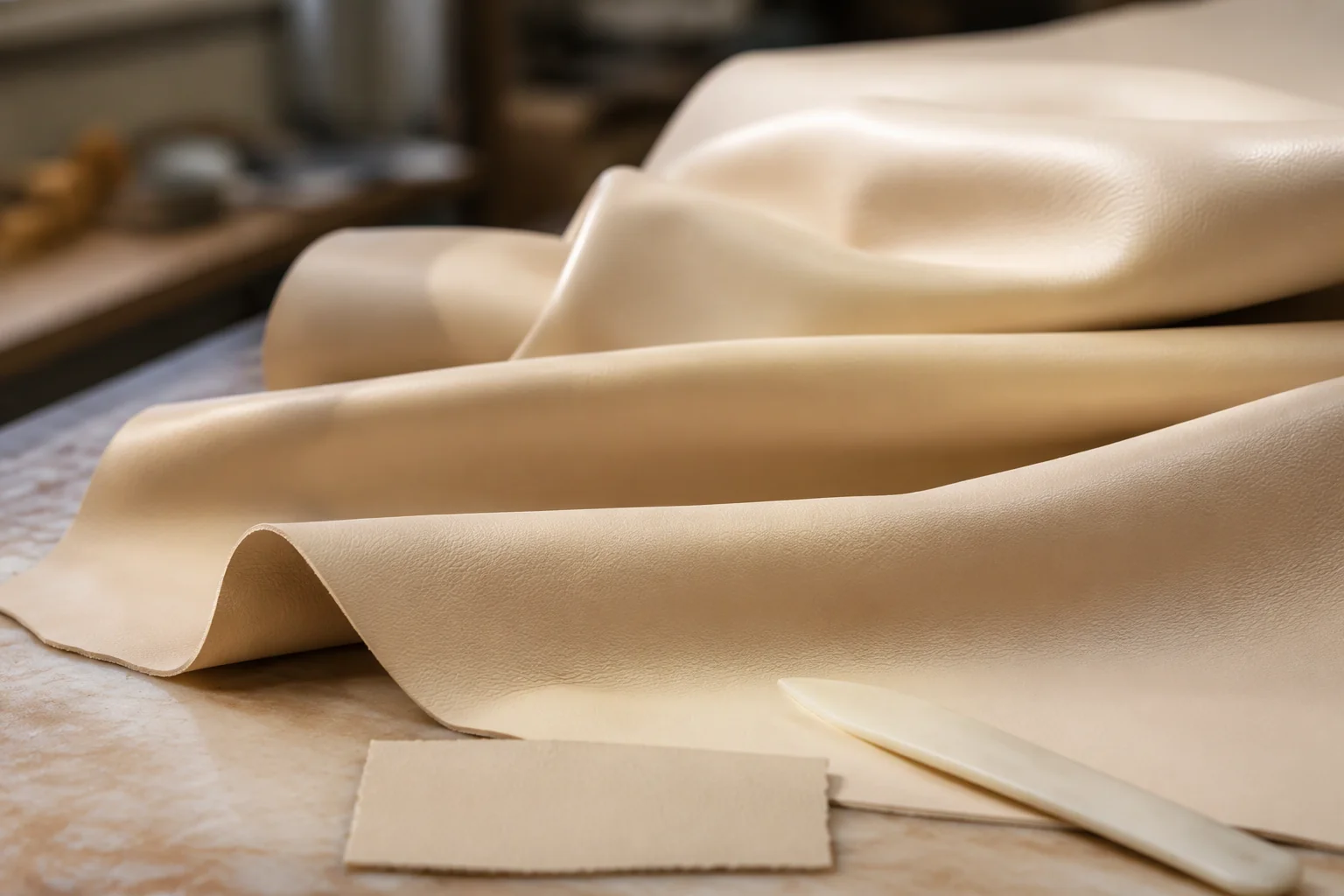
What arrives is a light, pliable hide with a tight grain, a low sheen and little structural memory. It falls into folds when lifted, it holds a crease if folded and left, and it takes a mark from a fingernail during handling.
The Hand: Why It Is Chosen
Softness and Drape
The softness is the product. A lambskin body moves with the wearer, collapses when set down and gathers where a seam pulls it, and that behaviour is what design teams are buying when they choose it.
Surface and Sheen
Lambskin takes a low, satin sheen rather than a glossy one, and the fine grain reads as smooth from a distance. That combination is difficult to reproduce on a heavier hide and is the main reason the material appears in premium soft bags.
The Luxury Signal
Customers recognise the hand before they read a label. A bag that feels soft and light in the shop communicates quality immediately, which is why the material survives commercially despite its service life.
The Limits You Accept
Abrasion
Thin fibre wears through faster than dense cowhide. Corners, edges and any surface that rubs against clothing will show wear, and on a pale lambskin the wear appears as a lightening rather than as a hole.
Stretch and Distortion
A lambskin panel loaded in one direction will stretch and stay stretched. Bags that hang from a single point, or straps that carry weight, distort visibly, and the distortion is permanent rather than settling back.
Marking and Creasing
The material records handling. Creases from folding in transit, marks from rings and scratches from keys all persist, and on aniline finishes they cannot be corrected without changing the surface.
| Strength | What it buys | Cost it carries |
|---|---|---|
| Softness and drape | Movement, comfort, luxury feel | Poor shape retention |
| Fine grain | Smooth premium surface | Shows marks and wear |
| Light weight | Comfortable large bags | Thin fibre, low abrasion resistance |
| Satin sheen | Depth of colour | Hard to repair invisibly |
Where Lambskin Works in a Bag
Soft Slouch Bodies
A hobo, a soft shoulder bag or a bucket shape that is meant to fold is the natural home of lambskin. The material supplies the drape the design depends on, and the design in turn does not ask the leather to hold a rigid form.
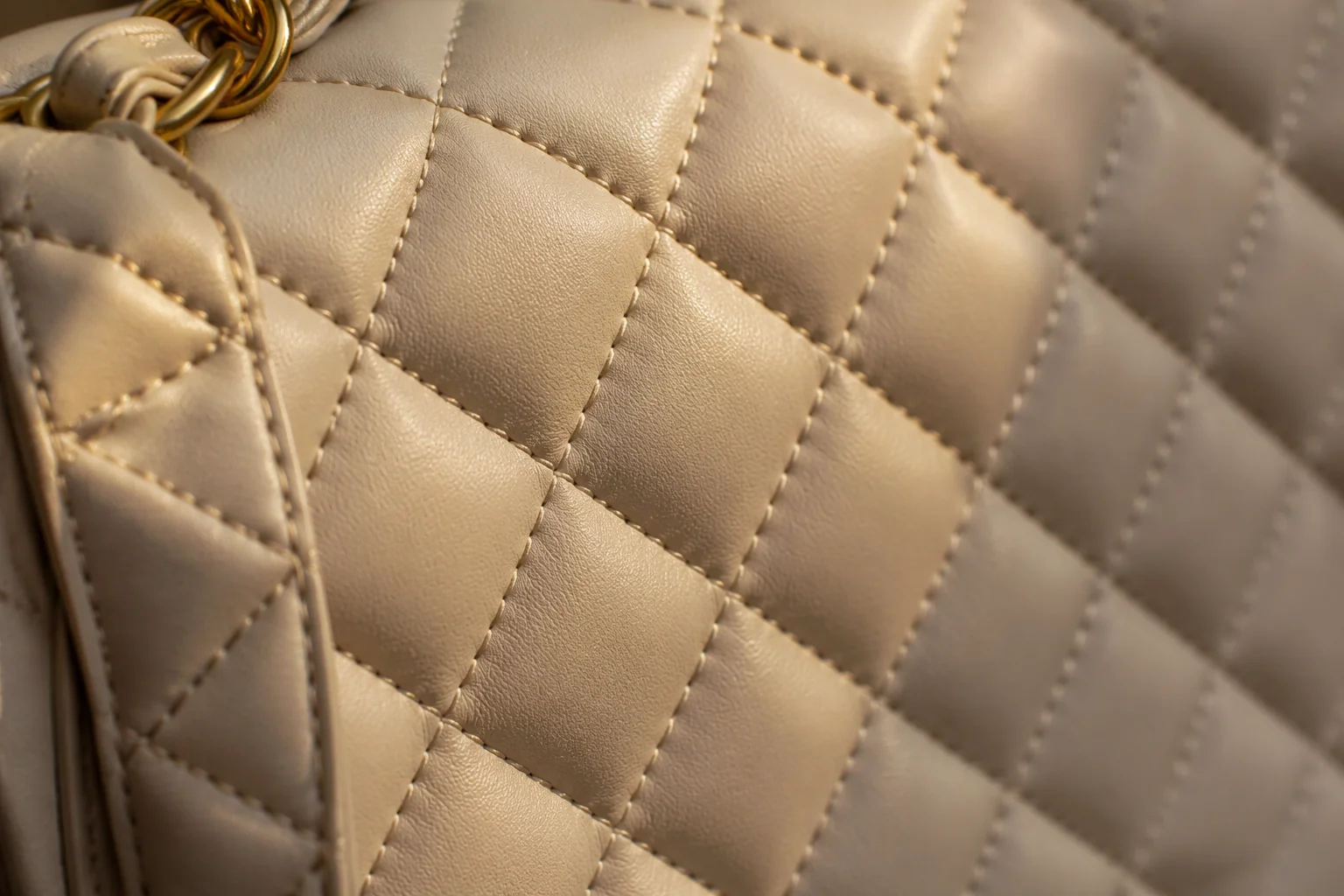
Quilted Panels
Quilting and padding give thin soft leather structure without stiffening it. Diamond and channel quilting turn a material with no memory into a panel that holds a soft shape, which is why the two are so often specified together.
Linings and Interiors
Used as a lining, lambskin gives an interior a softness that fabric cannot match. The load is low, the abrasion is limited to contents, and the material’s weaknesses are largely out of play.
Where It Fails
Load-Bearing Straps
A strap works in tension, and lambskin elongates under sustained load. A soft strap on a heavy bag stretches, curls at the edges and eventually delaminates at the anchor, and no amount of stitching prevents it.
Bases and Corners
The base meets the world. Lambskin there scuffs, stains and wears through at the corners, and a soft base also lets the bag sag so that the wear concentrates on one point.
Hard-Use Commuting
A bag that travels daily with a laptop, a bottle and a set of keys asks for abrasion resistance and shape. Lambskin offers neither, and a commuting bag made from it looks tired long before it is worn out.
Cutting Soft Hides
Handling and Support
Soft hides need support while being cut, or the pattern shifts under the blade and panels come out undersized. A paper underlay, a vacuum table or a light adhesive film keeps the hide flat through the cut.
Nesting Around Flaws
Lambskin hides are small and carry scars from the animal’s life. Nesting has to plan around them, and the yield penalty is real: fewer large panels per hide, more joins, and more offcuts too small to use.
Direction and Stretch
Soft leather stretches more in one direction than the other. Panels should be nested so that the greater stretch runs across the bag rather than along a hanging direction, or the finished bag will lengthen as it is carried.
Sewing Soft Leather
Machine Setup
Soft leather needs light presser pressure, a fine-toothed feed and a sharp needle, or the surface marks and the seam puckers. The machine that sews a firm cowhide body well is not automatically set up for lambskin.
Seam Support
Long seams on unsupported soft leather wave. A stay tape, a fused strip or a lining attached in the same operation keeps the seam straight, and the choice is made at pattern stage rather than at the machine.
Handling at the Needle
Operators need to support the panel rather than pull it. Pulling stretches the seam and leaves a wavy line that cannot be pressed out, and it is the most common quality fault on soft-leather production.
Quilting and Padding
What Quilting Adds
Quilting introduces a second layer of structure: padding between the shell and a backing, held by stitch lines. The result is a panel with soft body and controlled shape, and it is the most reliable way to use lambskin on a bag that must stand.
Stitch Density and Puff
Dense quilting lines give a firm panel, wide spacing gives a soft puff. The choice changes the bag’s silhouette more than any other detail, so it belongs in the design discussion rather than in the sample room.
Padding Behaviour Over Time
Padding compresses where the bag is handled and stays compressed. The quilt pattern should therefore be designed for the compressed state, not for the pristine one, or the bag will look deflated within months.
Edge Work on Thin Soft Leather
Why Painted Edges Struggle
A thin soft edge under load flexes constantly, and rigid edge paint cracks at the first flex. Edges on lambskin are usually folded, bound or turned rather than painted, and paint is reserved for edges that do not move.
Folding and Binding
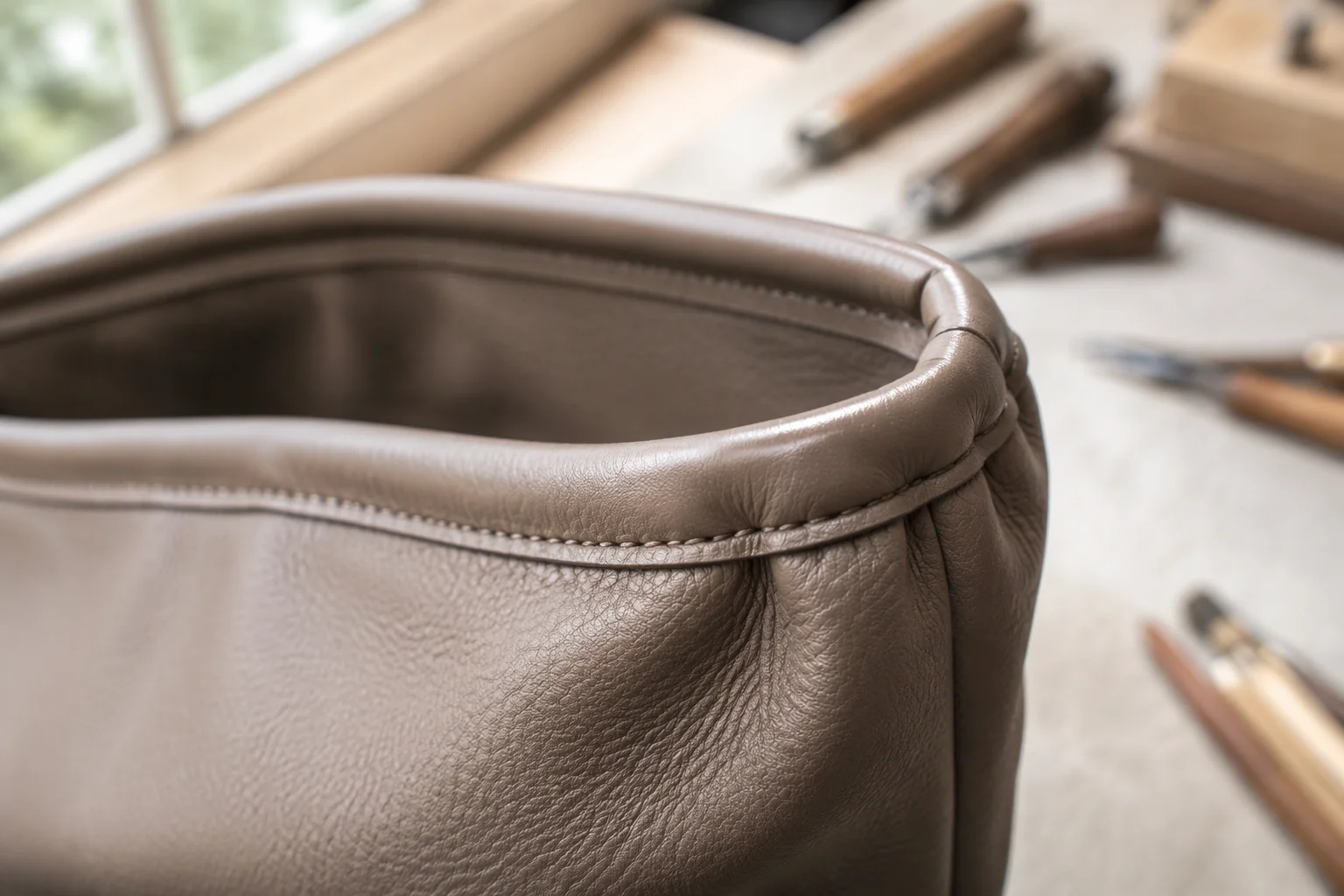
A folded edge doubles the material and gives a soft, rounded finish that suits the hand. Binding adds a contrasting line and hides the raw edge entirely, which is the more durable option on a curved seam.
The Turned Seam
Most soft bags are sewn inside out and turned. The turned seam is soft by nature, and it needs a consistent seam allowance and a clipped curve, or the panel gathers unevenly and the shape distorts.
Structure: Making Soft Leather Hold a Shape
Laminating to a Backing
Thin lambskin can be laminated to a firmer backing for panels that must hold a shape. The bond is the weak point, so the choice of adhesive and the flatness of the panel determine whether the bag keeps its form.
Frames and Bases
A base board, a frame or a shaped insert gives a soft bag a footprint. These elements are invisible in the finished product, and they are what stops a lambskin bag from collapsing into a puddle when set down.
Where Structure Should Stop
Structure should not reach the areas that make the bag feel soft. Reinforcing the base and the back, and leaving the sides and top free, keeps the hand while giving the bag enough shape to be useful.
Linings and Weight Balance
Lining Weight
A heavy lining pulls at a soft shell. The lining should be light enough not to distort the bag and strong enough to carry pockets, and its seam allowances should not print through to the outside.
Attaching the Lining
Lining attachment points decide how the bag folds. Too few and the lining bags out; too many and the soft panels pucker. The pattern should mark the attachment points explicitly.
Pockets and Dividers
Interior structure adds weight and stiffness where it is placed. Slip pockets on the lining, rather than padded dividers, keep a soft bag soft and preserve the drape that justifies the material.
Hardware on Soft Leather
Load Spreading
Any hardware on lambskin needs a plate, a patch or a doubled layer behind it. A ring or a D-ring attached through a single soft layer will pull through the leather at the first serious load.
Rivets and Their Limits
Rivets work on firm leathers. On soft thin lambskin they can cut the fibre under load, and a rivet should be treated as decoration unless the material behind it has been reinforced.
Zips and Openings
A zip on a soft bag needs a stable tape and a reinforced opening. On unsupported lambskin the zip waves, the puller drags and the opening stretches out of shape after a few weeks of use.
Durability Expectations
Realistic Service Life
A lambskin bag used daily will show wear within a year and look substantially older at three. A bag used occasionally, with care, can last much longer, and both outcomes are normal for the material.
What Fails First
Corners and edges wear first, then strap attachment points, then the surface around the zip. These are predictable, and they can be addressed by reinforcing the zones rather than by choosing a heavier hide everywhere.
Comparing with Calf and Goat
| Attribute | Lambskin | Calf | Goat |
|---|---|---|---|
| Softness | Highest | Medium | Medium to firm |
| Abrasion | Low | Medium to high | High |
| Marking | High | Medium | Low |
| Shape retention | Low | High | High |
| Weight | Lowest | Medium | Medium |
Care and Repair
Routine Care
A soft brush, a damp cloth and a light conditioner applied sparingly keep the surface supple. Over-conditioning a thin hide makes it limp and darkens the colour unevenly, so less is reliably more.
Storage
Store filled lightly and flat or hanging, never compressed under other bags. Creases set into lambskin and cannot be pressed out without marking the grain further.
Repair Limits
Linings, hardware and strap ends can be replaced. A worn corner or a deep crease in a visible panel cannot be corrected, and a repair in the middle of a soft panel will always be visible.
Specifying Lambskin
Words That Work
Specify species and age, tannage, finish type, thickness with tolerance, temper and colour reference. “Soft nappa” alone tells a tannery nothing useful and invites a substitute.
Sample Discipline
Ask for a panel sample large enough to be handled, folded and loaded, not a swatch. Softness is judged in the hand, and a swatch hides exactly the behaviour that matters.
Tolerances and Consistency
Lambskin varies between hides more than cowhide, because the animals are smaller and the finishing is lighter. State acceptable variation and approve against a retained sample rather than against a photograph.
Goods-In Checks
Thickness and Weight
Measure at several points and compare against the approved range. A thin lot will sew easily and fail early, and the difference is not always visible on the bench.
Surface Inspection
Check for scars, growth marks and colour variation under daylight rather than under factory lighting. Marks that are invisible at the bench appear on the shop floor.
Handling Test
Fold, twist and release a corner of each lot. A lot that creases sharply or feels papery will not behave like the approved sample, and the test takes seconds per hide.
Cost and Yield
Price Position
Lambskin sits in a mid to upper band on price per square foot, below the finest calf and above standard goat. The premium is driven by hide size and selection rate rather than by the tanning itself.
Yield Reality
Small hides and more scars mean fewer panels per hide and more joins. A pattern that yields cleanly in cowhide will produce more offcuts in lambskin, and that loss belongs in the costing rather than in the margin.
Labour
Soft leather is slower to cut, slower to sew and slower to inspect, and it needs more careful handling at every stage. The labour content of a lambskin bag is higher than its material price suggests, which is why cheap lambskin bags rarely hold up.
Bag Types That Suit It
Soft Shoulder Bags and Hobos
The classic application. Drape is the design intent, the load is moderate, and the material’s weakness in shape retention becomes a feature rather than a fault.
Quilted Crossbody and Evening Bags
Small panels, light loads and quilting for structure. The bag is handled rather than loaded, and the softness reads as luxury rather than as fragility.
Pouches and Soft Clutches
Minimal structure, low abrasion, short carry. These are the safest uses of the material and the ones least likely to generate after-sales complaints.
Where It Should Not Go
Backpacks, commuter totes, diaper bags and anything with a laptop sleeve or a heavy daily load. In those roles, the same money buys a calf or goat bag that will still look sound after two years.
| Bag type | Suitability | Why |
|---|---|---|
| Soft shoulder bag / hobo | High | Drape is the design intent |
| Quilted crossbody | High | Structure from quilting, light load |
| Pouch / soft clutch | High | Low abrasion, short carry |
| Structured tote | Low | No shape retention |
| Commuter backpack | Very low | Load, abrasion, stretch |
| Diaper bag | Very low | Cleaning, load, wet use |
Common Failures and Their Causes
- Strap elongation. Soft leather in tension under a loaded bag, with no core or reinforcement, lengthens permanently.
- Corner wear-through. Thin fibre at the base corners, usually on a bag that is set down daily.
- Pulled hardware. A ring or D-ring fixed through a single soft layer tears out under load.
- Wavy seams. Pulling the panel at the machine stretches the seam, and the wave cannot be pressed out.
- Crease marks in transit. Panels folded or compressed in packing take creases that are visible on the shop floor.
- Bond failure on laminated panels. Adhesive that is unsuitable for a flexible substrate lets the backing separate at folds.
- Edge paint cracking. Rigid paint on an edge that flexes cracks within weeks and cannot be repaired invisibly.
- Lining print-through. Seam allowances or pocket edges showing through a thin shell on the outside.
- Colour patchiness after cleaning. Over-conditioning or spot cleaning that lifts the finish unevenly.
Specification Checklist
- Species and age stated, lambskin distinguished from nappa
- Tannage and finish type named
- Thickness with tolerance and measurement points
- Temper described in behaviour, not adjectives
- Colour reference with an approved physical sample
- Zone allocation: which parts are lambskin and which are not
- Reinforcement named for every hardware fixing point
- Strap construction stated, with core material if any
- Lining weight and attachment points specified
- Quilt pattern, stitch density and padding weight defined
- Edge treatment per edge: folded, bound, turned or painted
- Seam allowance and clipping instructions for curves
- Packing method that prevents creasing in transit
- Retention sample per delivery, labelled by lot
- Care instructions matched to the actual finish
- Repair policy stated, with spare material retained
Working With a Buyer New to Lambskin
Setting Expectations Early
Show a used sample, not a new one. A buyer who has seen a year of honest wear on lambskin makes better decisions about price, positioning and care messaging than one who has only seen a showroom piece.
Designing Around the Material
Where the brief asks for a lambskin bag with structure, the answer is quilting, a base board or a lined and laminated panel. Those solutions keep the hand and add the shape, and they must be designed in rather than added at sampling.
Pricing the Care Story
A bag that will show wear needs instructions and, ideally, a repair route. Budgeting for a care card and a spare-material retention costs little and prevents a large share of complaints.
Lambskin is not a weaker cowhide. It is a different material with a different job, and the bags that fail are the ones that asked it to do the cowhide’s job.
Lambskin in Lined and Unlined Builds
Unlined Construction
Unlined lambskin shows the back of the hide, which is soft and pleasant but exposes seam allowances and raw edges. Turned seams and bound edges are essential, and the interior finish becomes part of the design.
Lined Construction
A lining stabilises the shell, hides the seams and carries the pockets, at the cost of some softness and weight. Most production lambskin bags are lined for exactly this reason.
Choosing Between Them
Unlined suits pouches, small soft bags and designs where the material’s lightness matters. Lined suits anything carrying a load or needing pockets, which is most of the category.
Season, Transit and Storage Before Sale
Humidity
Soft leather absorbs moisture and can develop a musty smell in a damp container. Desiccant and sealed inner packing protect the goods between the factory and the shop.
Compression in Cartons
Lambskin bags should be packed so that nothing rests on a panel with weight behind it. Individual wrapping and a carton sized to the bag prevent the creases that no pressing will remove.
Storage at the Retailer
Advice travels with the goods. Bags stored hanging and lightly filled arrive at the customer in the condition the factory intended, and that is partly the brand’s responsibility to specify.
Lambskin, Suede and Goat: Where the Confusion Starts
Suede Is a Finish
Suede is a surface treatment, not a species, and it can be made from lamb, calf or goat. A suede bag is therefore not necessarily soft or thin, and the two words describe different things about the material.
Goat Is the Durable Alternative
Goat leather has a tighter, stronger fibre and a firmer hand at similar thickness, which makes it the usual substitute when a design needs lightness but also needs wear resistance. It marks less and holds shape better.
Why the Substitution Matters
A specification written as “soft leather” invites whichever material is cheapest that week. Naming species, finish and temper removes that ambiguity and makes the goods-in check meaningful.
Working With a Tannery on Soft Hides
Selection Rate
Ask what proportion of a lot will be free of scars and suitable for large panels. A low selection rate explains both the price and the yield, and it is the first number to establish before costing the bag.
Consistency Across Lots
Soft finishes vary more between lots than firm ones. Agree a retained sample per lot, and treat shade and temper drift as a specification issue rather than an unavoidable fact of the material.
Lead Time and Minimums
Special finishes and colours carry longer lead times and higher minimums. Planning a soft-bag range around a new finish is safer when the tannery’s minimum and lead time are known before the design is signed off.
What to Tell a Customer About Wear
Describe the Material, Not a Promise
Telling a buyer that a soft thin leather will age like a work bag sets up a complaint. Describing how the surface will soften, lighten and take on marks gives them a realistic expectation they can accept.
The Care Card
Two sentences on cleaning, one on storage and one on what to avoid prevent most avoidable damage. A card costs almost nothing and is the cheapest form of after-sales protection a brand can buy.
Handling Complaints
Most lambskin complaints concern wear rather than manufacturing faults, and the distinction has to be made with evidence. Photographs of comparable used product settle the discussion faster than an argument about expectations.
Frequently Asked Questions
Is lambskin strong enough for a bag?
For soft bags with moderate loads, yes. It is not strong enough for straps, bases or commuter bags that carry weight daily, and those parts should use a denser leather or a lined, reinforced build.
Is nappa the same as lambskin?
No. Nappa describes a soft tanning and finishing approach and can be made from lamb, cow or goat. Lambskin describes the species and age, so a nappa bag may not be lambskin at all.
How long does a lambskin bag last?
A daily-use bag typically shows visible wear within a year and looks well used at three. An occasional-use bag with care can last considerably longer, and that difference should be reflected in how it is sold.
Why does lambskin scratch so easily?
The fibre layer is thin and the finish is light, so the surface records contact rather than absorbing it. Aniline finishes show marks most, and pigmented or coated finishes hide more at the cost of feel.
Can lambskin be used for bag straps?
Only as a decorative outer layer over a core. A lambskin strap carrying a loaded bag in tension will stretch permanently, so the structural element should be webbing, a firm leather or a chain.
Does quilting make lambskin stronger?
Quilting adds structure rather than strength. It gives the panel shape and stops it collapsing, and it spreads handling across many small areas, but it does not increase abrasion resistance.
How should a lambskin bag be stored?
Lightly filled, flat or hanging, away from heat and compression. Creases set into the material and cannot be pressed out without marking the grain further, so storage is part of the care regime.
Can a worn lambskin corner be repaired?
Seldom invisibly. Hardware, linings and strap ends are replaceable, but a worn corner or a deep crease in a visible panel cannot be restored to the original surface.
What thickness of lambskin suits a bag?
Usually the thinner end of the range, with structure coming from quilting, lining or a base board rather than from thickness. A heavier lambskin loses the softness that justified the choice.
Is lambskin suitable for a diaper bag?
Not for the working parts. The load, the cleaning and the wet use run against everything lambskin does well, and a diaper bag is better served by a dense leather outside and a washable interior.
How do I check lambskin quality at goods-in?
Measure thickness at several points, inspect under daylight for scars and colour variation, and fold a corner to see how it creases. A papery or sharply creasing lot will not perform like the approved sample.
Conclusion
Lambskin is practical in a defined set of bags and impractical outside it. Soft shoulder bags, quilted crossbodies and pouches use the material as it was intended: light load, drape as the point, structure supplied by quilting or a lining. Backpacks, commuter totes and diaper bags ask for the opposite and get a bag that looks old while it is still new.
The production decisions that make the difference are unglamorous. Support the hide while cutting, set the machine for the material, keep the seams from being pulled, reinforce every hardware fixing, and choose the edge treatment that survives flexing. None of those steps is expensive; skipping any of them is.
Sold honestly, with a used sample on the table and care instructions in the box, lambskin makes a desirable bag at a fair price. Sold as a durable everyday material, it produces returns, because no workshop can make a thin soft hide behave like a dense one.
