
Chrome-Free Leather Tanning: A Bag Manufacturer’s Guide
Chrome-Free Leather Tanning: A Bag Manufacturer’s Guide
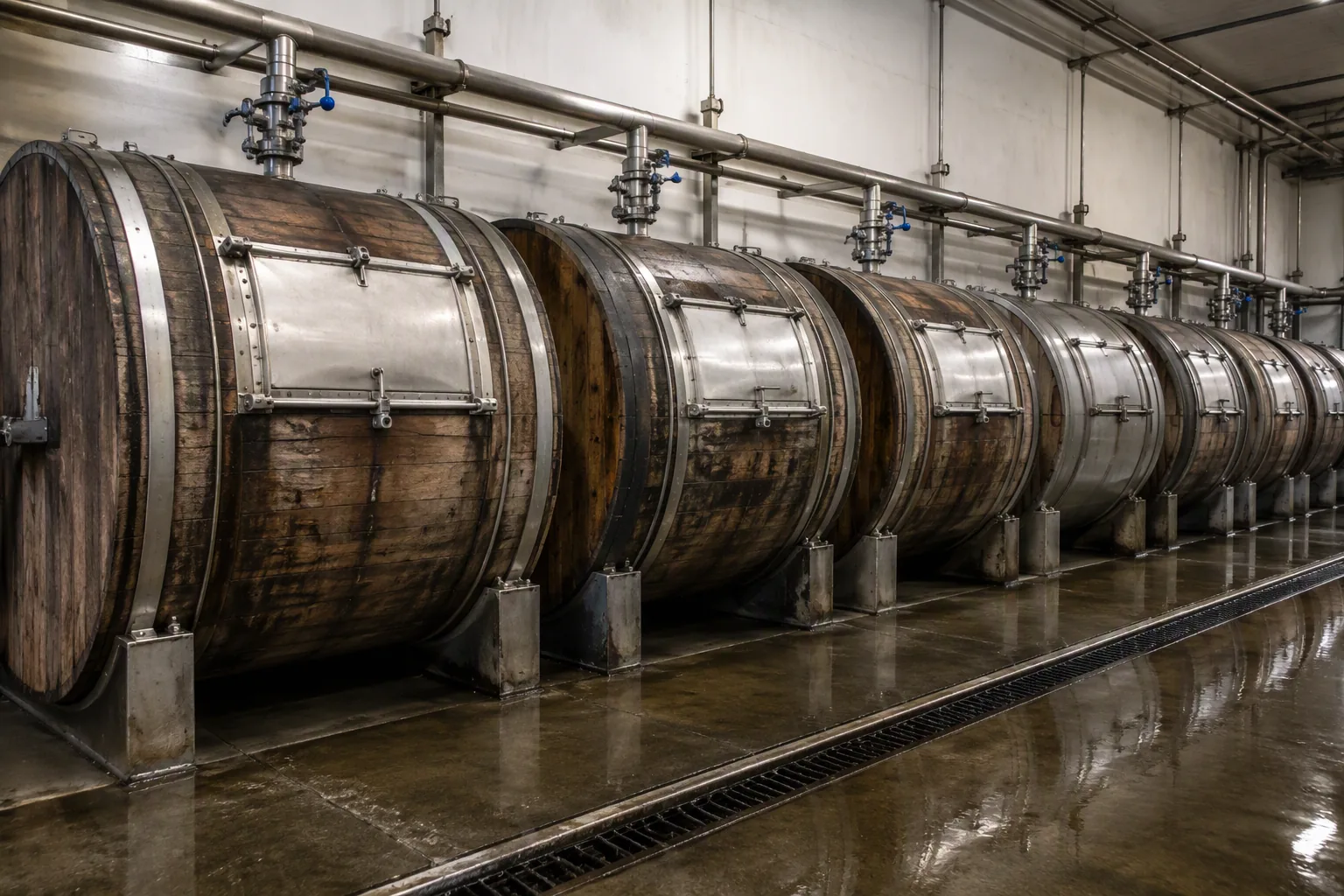
Tanning is the process that turns a raw hide into a material that will not rot, and the chemistry used to do it decides how the finished leather looks, ages, moves, tolerates moisture and — increasingly — how easily it can be sold into particular markets.
As a bag manufacturer, we specify and qualify tannages constantly, and we see the same confusion repeatedly: chrome-free treated as a marketing label, vegetable-tanned treated as a guarantee of quality, and conventional chrome tanning treated as something to apologise for.
This guide explains what the main tannage families actually are, how they change a finished bag, how the wet end is managed environmentally, and what a brand should ask and verify before committing a programme.
Tannage is a material decision with commercial consequences. It changes the colour range available, the temper you can specify, the way a bag ages, the documentation a supplier can provide and the price you will pay — so it belongs in the specification discussion, not in the marketing copy written afterwards.
- Why Tannage Matters to a Bag Brand
- The Main Tannage Families
- How Tannage Changes the Product
- Wet-End Process and Environmental Management
- Documentation, Schemes and Buyer Requirements
- Questions a Bag Manufacturer Should Ask
- Testing and Verification in Practice
- Cost, Volume and Availability
- Communicating Tannage to Customers
- Common Mistakes and How to Avoid Them
- Tannage and the Rest of the Bag
- Designing and Specifying for a Tannage
- Working Through a Tannage Transition
- Frequently Asked Questions
- The Bottom Line
Why Tannage Matters to a Bag Brand
Tannage is upstream of almost everything a customer notices.
What Tanning Actually Does
Tanning stabilises the hide’s protein structure.
A raw hide is a network of collagen fibres that will decay without intervention, and tanning agents bind within that structure to make it resistant to microbial attack and stable enough to be used. How the fibres are stabilised, and how much of the hide’s natural character is preserved or modified in the process, is what differs between tannage families.
Why the Choice Shows Up in the Product
The consequences reach the finished bag directly.
Different tannages produce different colour behaviour, different temper, different responses to moisture and heat, and different compatibility with finishes. A bag designed around a soft chrome-tanned article will not behave the same way when the material is changed to a firm vegetable-tanned one, even if the thickness and colour match.
Why It Is Now a Commercial Question
Tannage has moved from a technical detail to a procurement question.
Customers, retailers and marketplaces increasingly ask what a leather is tanned with, and some brands specify requirements at the material level before a product is even designed. A supplier who can answer clearly, with documentation, is easier to work with than one who cannot — and that difference now affects who can bid for which programmes.
The Main Tannage Families
Four broad groups cover most bag leathers.
Chrome Tanning
Chrome tanning is the industry standard for good reason.
Using chromium salts as the tanning agent produces leather that is soft, thermally stable, easy to dye in a wide range of colours and highly consistent between lots. It tolerates the retanning, dyeing and finishing steps that bag leather usually goes through, which is why the majority of bag leathers — particularly soft, deeply coloured and highly finished articles — are chrome tanned.
Vegetable Tanning
Vegetable tanning uses plant-derived tannins and produces a very different material.
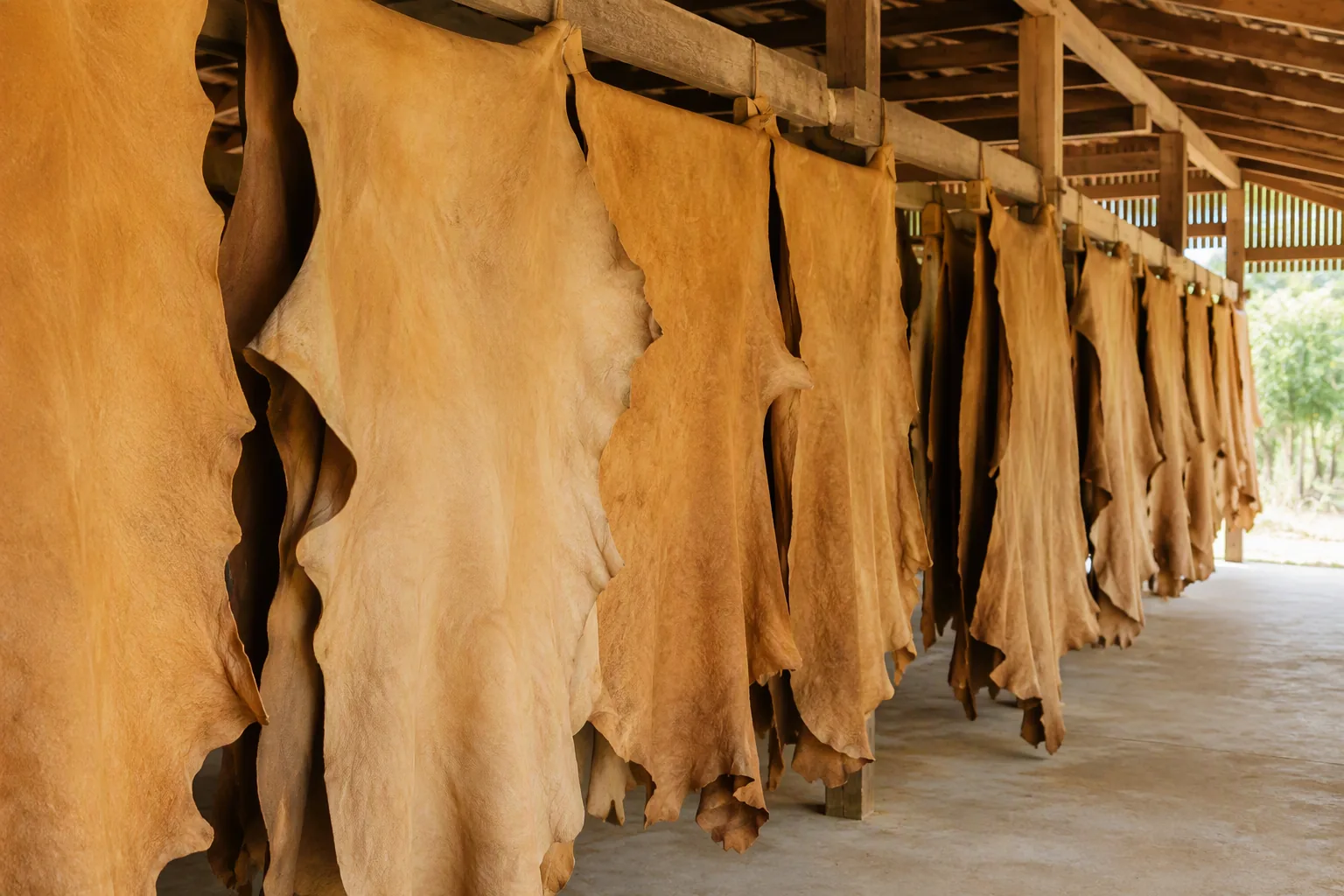
It is slower, and the leather is typically firmer, more structural and warmer in tone, with a natural surface that develops a patina and darkens with light and handling. Its colour range is narrower and its resistance to heat and prolonged moisture is lower than chrome-tanned leather, but for structured bags, straps, handles and products sold on natural character, it remains hard to substitute.
Chrome-Free and Metal-Free Systems
Chrome-free describes a family, not a single material.
Chrome-free tanning avoids chromium salts and uses alternatives such as aldehyde-based agents, synthetic tanning agents, or mineral systems based on other metals. Performance varies considerably within the family: some chrome-free leathers approach conventional chrome performance, while others behave more like a soft vegetable-tanned article. Treating all chrome-free leather as one material leads to sampling surprises.
Combination and Retanning
Most bag leather is the result of more than one step.
The initial tannage is usually followed by retanning with additional agents that adjust softness, fullness and grain tightness, and then by dyeing and finishing. A leather described as chrome-free may still be retanned with other agents, and a chrome-tanned article may be retanned to behave more like a vegetable-tanned one.
Tannage Families Compared
| Property | Chrome tanned | Vegetable tanned | Chrome-free systems |
|---|---|---|---|
| Colour range | Wide, deep and even shades | Narrower, warm natural tones | Moderate, varies by system |
| Colour behaviour over time | Relatively stable | Darkens and develops patina | Depends on system and finish |
| Temper | Soft to medium, easily adjusted | Firmer, more structural | Wide range, from soft to firm |
| Heat resistance | High | Lower | Varies, generally below chrome |
| Moisture behaviour | Coping well, recovers | Marks and stains more readily | Varies by chemistry |
| Consistency between lots | High | Variable by nature | Improving, still variable |
| Typical bag use | Soft bags, dyed colours, linings | Structured bags, straps, handles | Brand-specified programmes |
How Tannage Changes the Product
The differences are practical and predictable.
Colour and Ageing
Ageing behaviour is the most visible difference.
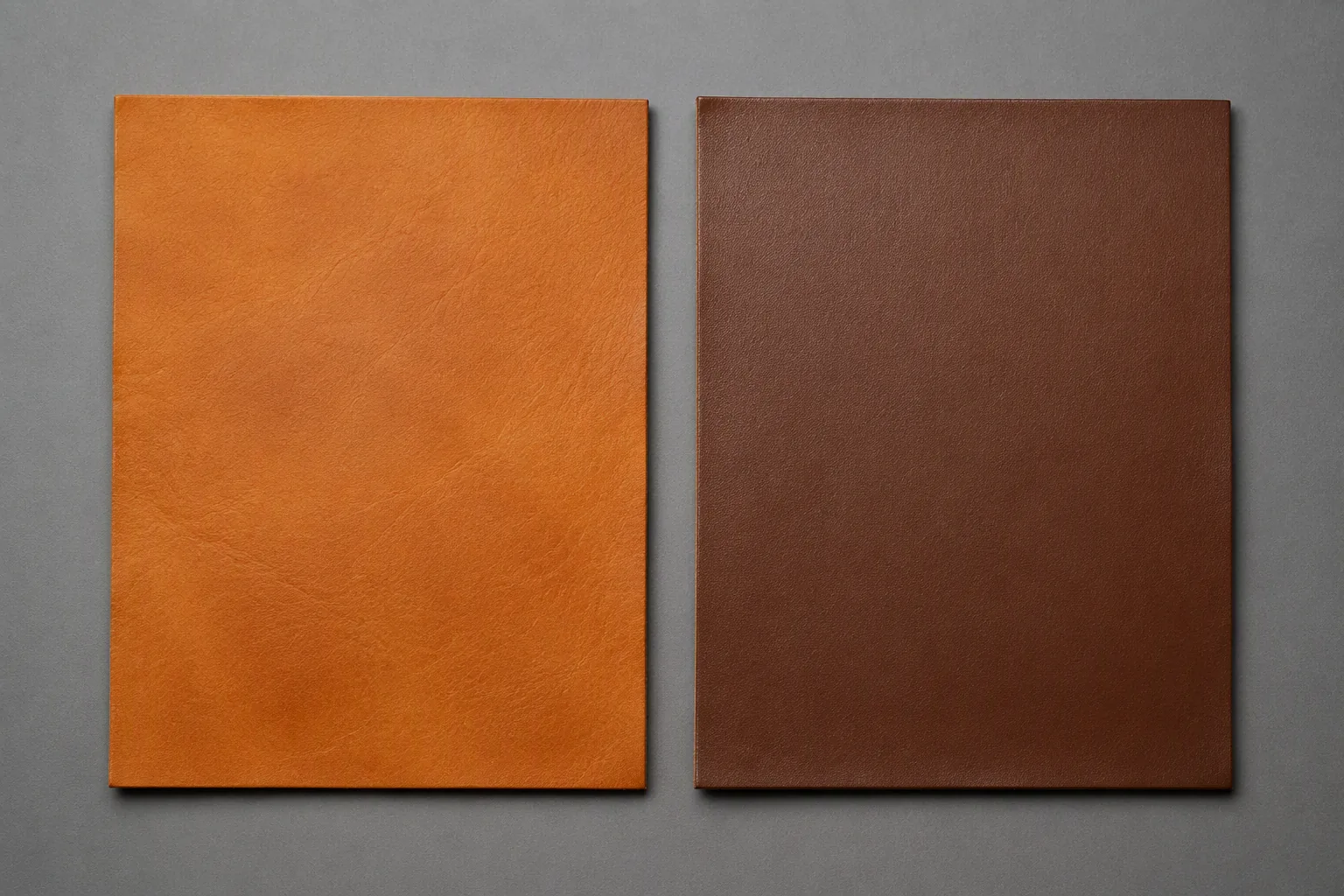
Chrome-tanned leathers tend to hold their dyed colour and dull gradually with wear, while vegetable-tanned leathers change tone as they are exposed to light and handling, which customers either love or dislike depending on what they were promised. Chrome-free articles sit between the two, and their ageing should be established by test rather than assumed.
Temper and Structure
Tannage is one of the strongest influences on temper.
Vegetable-tanned leather is naturally firmer and better at holding a shape, which suits structured bases, gussets and handles, while chrome-tanned leather is easier to make soft and drapey, which suits slouchy silhouettes and generous folds. Specifying a soft bag in vegetable-tanned material, or a crisp structured bag in a very soft chrome article, fights the material’s nature.
Moisture and Heat Behaviour
Wet and hot conditions separate the families.
Chrome-tanned leathers generally cope with moisture and temperature swings better, while vegetable-tanned leathers mark from water more readily and can be more sensitive to heat. Products intended for humid markets, kitchens, vehicles or outdoor use benefit from a tannage chosen with those conditions in mind.
Surface and Finishing Options
Not every finish works on every tannage.
Deep dyed colours, heavy pigment finishes and embossed effects are most straightforward on chrome-tanned material, while natural aniline finishes show their best character on hides with tight grain and even tone. Where a design depends on a specific surface effect, the tannage should be confirmed as capable of delivering it before sampling begins.
Bag Types and Tannage Fit
| Bag type | Natural tannage fit | Notes |
|---|---|---|
| Structured tote or briefcase | Vegetable tanned or firm chrome-free | Shape retention from firmer material |
| Soft shoulder bag | Chrome tanned | Drape and soft temper easy to achieve |
| Diaper and family bag | Chrome tanned outer, coated linings | Moisture and stain exposure in use |
| Backpack with coated panels | Chrome tanned base leather | Compatibility with laminating and coating |
| Wallet and small goods | Either, per finish | Thin skiving suits most tannages |
| Handles, straps and trim | Vegetable tanned or firm retanned | Wear resistance and edge finishing |
Wet-End Process and Environmental Management
The environmental story of leather is largely a wet-end story.
Water Use in the Wet End
Most water in a tannery is used before tanning finishes.
Soaking, liming, fleshing, deliming, bating, pickling and tanning all take place in drums with substantial volumes of water, and the resulting streams carry salt, lime, organic matter and process chemicals. Reducing water use — through drum process control, recirculation and better rinsing — reduces the load on everything downstream.
Chrome Management and Recovery
Chrome is a resource as well as a risk.
Conventional processes lose chrome in spent float and in shavings, and tanneries address this in two ways: recovering chrome from spent liquors for reuse, and confining chromium-bearing waste streams so they are treated separately rather than diluted into general effluent. Where recovery is practised, less chrome is purchased and less is discharged, which is why it is one of the most established environmental measures in the industry.
Vegetable Tanning Effluent
Vegetable tanning shifts the load rather than removing it.
Its process streams carry a high organic load from plant tannins and natural materials, which places different demands on biological treatment than chrome-bearing streams do. A tannery switching towards vegetable tanning changes its effluent profile, so treatment capacity and performance need to be reassessed rather than assumed.
Sludge, Salt and Solid Waste
Several solid streams need defined routes.
Physical and chemical treatment of wastewater produces sludge that must be dewatered and disposed of responsibly, and salt from curing and pickling is one of the largest dissolved loads in tannery effluent. Shavings, trimmings and offcuts from splitting and finishing represent another significant volume, and the more of this that is reused or converted, the lower the disposal burden.
Air and Odour
Air impacts are managed alongside water.
Ammonia and hydrogen sulphide from liming and deliming stages, and solvent emissions from finishing, are the main air considerations. Enclosure, extraction and treatment at the point of generation, together with the substitution of solvent-based finishing systems where feasible, are the standard responses.
Process Areas and Their Main Impacts
| Process area | Main environmental aspect | Typical control approach |
|---|---|---|
| Soaking and curing | Salt load in effluent | Salt-free or reduced-salt curing, recovery where possible |
| Liming and fleshing | High pH, organic load, solid waste | Process control, separate streams, waste reuse routes |
| Pickling and tanning | Chrome or tanning agent in spent float | Chrome recovery, high-exhaustion processes, segregated streams |
| Retanning, dyeing, fatliquoring | Chemical load, colour in effluent | Optimised uptake, chemical management programmes |
| Finishing | Solvent and particulate emissions | Extraction, water-based systems where suitable |
| Wastewater plant | Sludge generation and disposal | Dewatering, defined disposal routes, monitoring |
Documentation, Schemes and Buyer Requirements
Documentation is what turns a claim into something a buyer can act on.
Audit Schemes and Certificates
Industry audit schemes assess tanneries on environmental and traceability performance.
Leather industry environmental audit programmes assess factors such as effluent treatment, chemical management, waste handling, air emissions and traceability, and result in a rating or certificate that buyers use as a screening tool. The important practical point is that scope varies: a certificate covers specific sites or specific periods, so the current status and scope should be confirmed rather than assumed from a logo.
Restricted Substance Lists
Brand requirements often go beyond what any certificate covers.
Many brands publish restricted substance lists setting limits on specific chemicals, and some require chemical management programmes with testing at defined stages. Leather supplied into such programmes should come with test reports from an appropriately accredited laboratory, and the reports should be linked to the production lot rather than to a generic article code.
Traceability From Hide to Hide
Traceability is the part buyers question most.
Customers increasingly want to know where raw material came from, which tannery processed it, and how it moved through the supply chain. Traceability systems are only as good as the records behind them, so a supplier’s claim is best tested by asking for a specific lot’s paperwork and seeing whether it can be produced.
What Documentation Proves and Does Not Prove
Paperwork answers narrow questions well.
A test report addresses the specific parameter tested, on the specific sample submitted. An audit certificate addresses the site and period audited. Neither proves that the leather in a carton is the leather described, which is why lot linkage and incoming verification remain necessary in the factory.
Document Types and What They Answer
| Document | Question it answers | Limitation |
|---|---|---|
| Environmental audit certificate | How did the site perform when audited? | Covers a defined site and period |
| Test report from a laboratory | Did this sample meet this limit? | Applies to the sample submitted |
| Restricted substance declaration | Does the article meet the listed limits? | Depends on the scope declared |
| Traceability record for a lot | Where did this lot come from and how was it processed? | Only as complete as the records kept |
| Certificate of origin or declaration | Where was the material processed? | Does not describe performance |
| Specification sheet | How should this article behave? | Not evidence that it does |
Questions a Bag Manufacturer Should Ask
A short question list separates capable suppliers from confident ones.
About the Process
Start with the chemistry and the sequence.
Ask what the primary tannage is, whether any retanning agents are used and what they are, how the article is dyed and finished, and whether the process has changed recently. Suppliers who can answer precisely are also the suppliers who can hold a specification across repeat orders.
About Consistency and Capacity
Consistency is the property bag manufacturing depends on.
Ask how much lot-to-lot variation to expect in colour, temper and thickness, how quickly a repeat order can be produced, what the minimum quantity is per colour, and whether the article is a stock item or made specifically for the order. Programme planning depends on these answers more than on the headline price.
About Documentation
Ask what can be provided before you need it.
Request the current environmental audit status with its scope, the restricted substance position for the specific article, test reports linked to lots, and traceability documentation. Asking during development is far easier than asking after a shipment has been held at a customer’s goods-in.
About Transition and Sampling
Changing tannage is a project, not a substitution.
Ask what would change if the article moved to a different tannage: colour availability, temper, ageing behaviour, finish options, minimum quantities, lead time and price. Then sample real bags in the new material before committing, because a swatch cannot show how a handle wears or how a large panel behaves on a structured bag.
Testing and Verification in Practice
Verification splits between what can be measured and what can only be documented.
What Can Be Verified By Test
Some properties can be confirmed objectively.
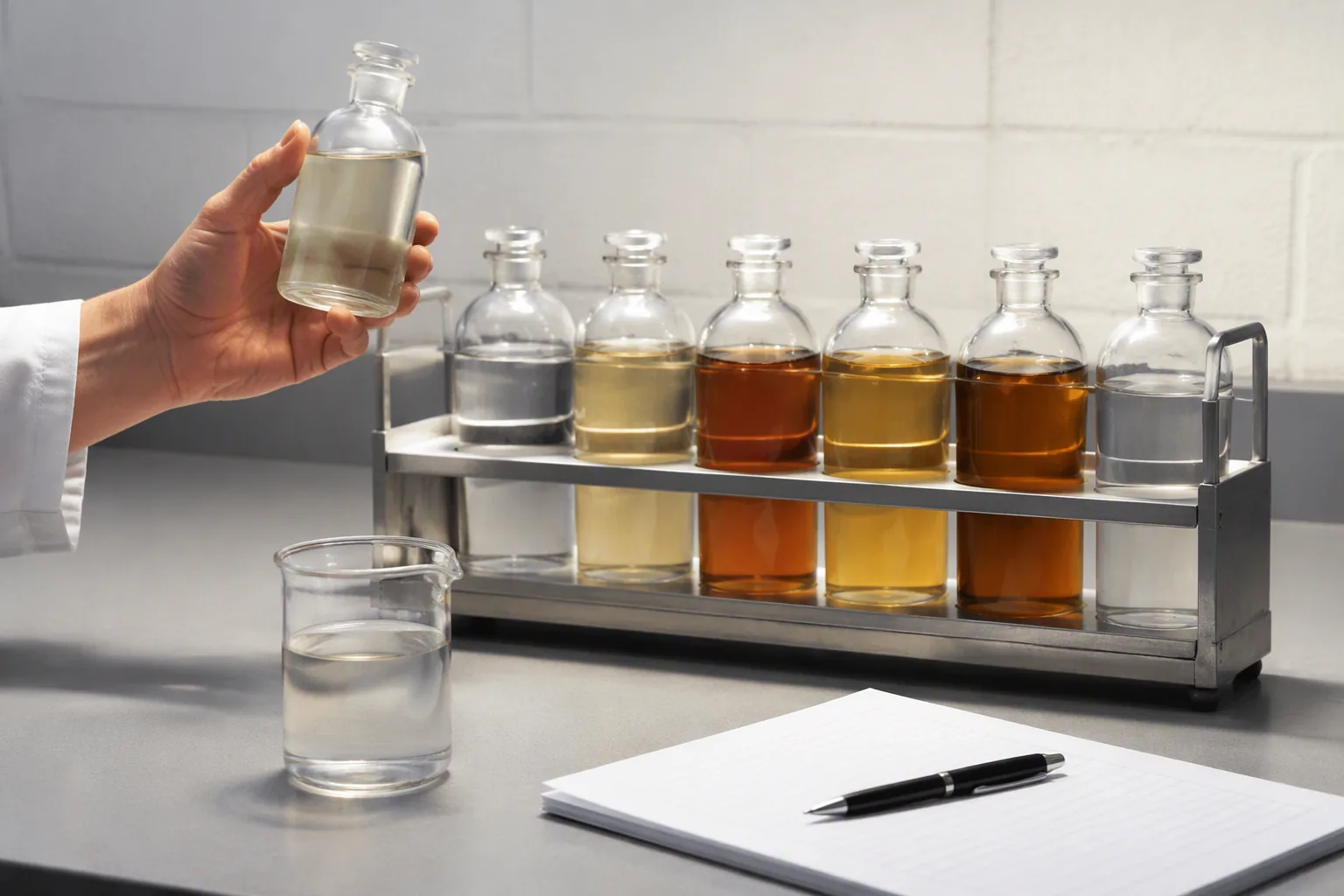
Physical properties such as thickness, tear strength, colourfastness to rubbing, finish adhesion and flexibility can be tested, and chemical parameters — including restricted substances and chromium VI where relevant — are tested by accredited laboratories. These results should be tied to the article and, ideally, to the lot.
What Depends on Trust and Records
Performance claims rest largely on records.
Statements about process chemistry, water management, traceability and audit performance cannot be verified by testing a piece of leather. They depend on the supplier’s records and the audits applied to them, which is why the practical approach is to ask for documentation, keep it on file, and confirm that its scope matches the material actually being bought.
Sampling After a Tannage Change
Sampling is the only reliable proof at product level.
When a tannage changes, the sample should be built as a real bag, in production materials and construction, and assessed for temper, panel behaviour, edge finishing, handle wear and colour under the light the customer will see. That process usually surfaces two or three differences that no swatch would have revealed.
Cost, Volume and Availability
Tannage choices carry commercial consequences.
Where the Cost Difference Comes From
Price differences reflect process, chemistry and scale.
Vegetable tanning takes longer and uses materials that cost more per unit of production, while chrome-free systems may use more expensive chemistry or require more careful process control. Colour availability compounds this: a wide colour range is easier to offer in chrome tanning, so a narrow-range tannage can force either a stock colour or a larger minimum quantity.
Minimum Quantities and Colour Range
Small brands feel minimums before they feel price.
Where a tannage offers a limited palette, a specific colour may only be available at a minimum quantity per shade, which changes how many styles can share a leather. Planning a range around a smaller number of shared articles is usually the most effective response.
Lead Times
Slower processes mean longer planning horizons.
Vegetable tanning and specialised chrome-free production generally take longer than conventional chrome tanning, and the difference matters most for seasonal ranges and reorders. Where a programme depends on short reorder cycles, lead time should be part of the tannage decision rather than discovered later.
Substitution Risk
The most common tannage problem is an undeclared substitution.
If a tannage is specified and a supplier substitutes a cheaper one without notice, the bag’s behaviour changes while every dimension and colour check still passes. Written specifications, lot-level documentation and sampling on reorders are the practical defences.
Communicating Tannage to Customers
Accurate wording protects both the brand and the customer.
Wording That Is Accurate
Describe the process, not the virtue.
Stating that a leather is vegetable tanned, chrome free or conventionally chrome tanned is a factual description of the process. Adding an impression of superiority or an environmental claim without evidence turns a description into a liability in several markets, so marketing language should be derived from the technical specification rather than written alongside it.
What to Avoid Claiming
Avoid claims that cannot be substantiated.
Broad claims about being eco-friendly, chemical free or fully sustainable are difficult to support in a material as process-intensive as leather, and chemical free is inaccurate for any tanned leather. Where a genuine improvement exists, describing it precisely and keeping the documentation on file is both defensible and more persuasive.
Care Implications
Care advice should follow the tannage.
Vegetable-tanned leather benefits from advice about water marks, light exposure and patina, while chrome-tanned articles need guidance on surface cleaning and avoiding harsh products. Chrome-free leathers should be tested for cleaning sensitivity and care instructions matched to the actual behaviour rather than to the general category.
Common Mistakes and How to Avoid Them
| Mistake | Consequence | Prevention |
|---|---|---|
| Treating chrome-free as one material | Sampling surprises, temper drift | Specify the system, not the label |
| Assuming vegetable tanned means better | Mismatch with product and price | Choose tannage against the product’s needs |
| Changing tannage without resampling | Colour, temper and ageing all shift | Build and approve a real bag in the new material |
| Relying on an audit logo alone | Scope may not cover the article or period | Confirm current scope in writing |
| Test reports not linked to lots | Disputes cannot be resolved | Require lot-level reports |
| Substitution left unnoticed | Field behaviour changes silently | Written specification and reorder sampling |
| Environmental marketing without evidence | Compliance and reputational risk | Describe the process factually |
Tannage and the Rest of the Bag
A tannage is only one part of a system, and the other parts have to agree with it.
Thread, Edge Finishing and Adhesives
Construction materials interact with the leather’s chemistry.
Thread selection is mostly about strength and abrasion, but edge finishing and adhesives are more sensitive: some finishes and adhesives adhere differently on a natural, oily or heavily retanned surface, and a vegetable-tanned edge that burnishes beautifully is not the same operation as an edge on a chrome-tanned article with a pigment finish. Matching the finishing method to the tannage is part of specifying it.
Hardware and Lining Pairing
Contact between materials causes avoidable damage.
Certain metals react with the substances used in tanning and finishing, particularly in humid conditions, and vegetable-tanned leathers are frequently paired with solid brass or stainless steel for exactly that reason. Linings should also be checked for colour transfer in both directions, because a dark lining can mark a light leather and vice versa under heat and pressure.
Coatings and Laminated Panels
Not every tannage accepts every coating.
Where a bag uses coated fabric panels, laminated reinforcements or hot-applied films, the leather’s surface energy and finish influence how well those systems bond. On programmes that combine several materials, the tannage should be reviewed with the laminating or coating supplier rather than treated as an independent choice.
Designing and Specifying for a Tannage
Good specifications remove most tannage surprises.
Writing the Tannage Into the Specification
The specification should name the chemistry, not the category.
State the primary tannage and the retanning approach, then the colour reference, temper, thickness with tolerance, finish type and the acceptable ageing behaviour. Adding the documentation required per lot turns a technical description into something a supplier can be held to.
Specifying Ageing Behaviour
Ageing is a specification, not an accident.
If a product is meant to darken and develop character, that should be written down so nobody treats the change as a fault later. If it is meant to hold its colour, that should be tested with exposure rather than assumed from a swatch under showroom light. Both directions are legitimate; the failure is leaving the customer to discover which one they bought.
Planning Around Availability
Range planning should follow what the tannage can supply.
Where a tannage has a narrow palette or long lead times, the product range should be built around shared articles and fewer colours rather than fighting the constraint at order stage. Design decisions made with availability in mind cost nothing; the same decisions discovered late cost margin.
Working Through a Tannage Transition
Changing tannage mid-programme is the highest-risk material change a bag factory handles.
Why Transitions Fail
Most transitions fail on the details nobody re-tested.
Temper shifts, colour reads differently under retail lighting, edge finishing behaves differently, adhesive performance changes, and the bag that was approved in the old material is suddenly not the bag the customer expects. None of these are visible in a swatch comparison, which is why a transition has to be treated as a new development.
What to Re-approve
Re-approval should follow the product, not the material.
Build a production-intent sample in the new tannage, assess it as a finished bag, approve it against a written ageing expectation, and update the documents that describe the product: specification, care information, labelling copy and listing text. Skipping the last two is how accurate technical work still reaches the customer as an inaccurate claim.
Managing the Overlap
Transitions need a defined cut-over point.
Mixing old and new tannage within one delivery is the failure customers notice most, because two bags bought together can differ visibly. A defined cut-over date or order number, plus a clear statement of which material any in-transit stock contains, prevents a claim that no amount of technical justification will settle.
Frequently Asked Questions
Is chrome-free leather better than chrome-tanned leather?
Not categorically. Chrome-free describes a group of alternative chemistries that vary widely in performance, and chrome tanning remains the standard for soft, deeply dyed and highly finished articles. The better question is which tannage suits the specific bag, market and price point.
Does vegetable-tanned leather last longer?
It ages differently rather than simply lasting longer. Vegetable-tanned leather is firmer and develops a patina, and it can be more sensitive to water marks and heat. A well-made chrome-tanned bag can easily outlast a poorly made vegetable-tanned one, because construction and leather selection matter as much as tannage.
Why is vegetable-tanned leather usually more expensive?
The process takes longer and uses plant-derived tanning materials that cost more per unit of production, and the achievable colour range is narrower. That combination raises both the material cost and the minimum quantity per colour, which matters most for smaller programmes.
Can I switch a bag to chrome-free leather without changing anything else?
Not safely. Different chrome-free systems produce different temper, colour behaviour and ageing, so the pattern, reinforcement and edge finishing may all need review. Build and approve a sample bag in the new material before committing a production order.
What does a tannery environmental audit certificate actually cover?
It reflects how a specific site performed during a defined audit period, and the scope varies between schemes. Ask for the current certificate, the sites covered and the validity period, then confirm it applies to the tannery actually producing your article.
How do I know whether a leather is really chrome free?
Test the article for the relevant substances through an accredited laboratory, and require the result to be linked to the production lot rather than to a generic article code. Documentation plus incoming verification is the only combination that reliably supports the claim.
Does chrome tanning mean chromium is released from the finished bag?
Finished chrome-tanned leather contains chromium bound within the fibre structure, and the compliance concern in the industry centres on restricted substances and on chromium in tannery waste streams rather than on release from a finished bag. Requirements are set by market rules and brand lists, so confirm the applicable limits for your markets.
What is the biggest environmental issue in tanning?
Water and the streams it carries. Most water is used in the wet end, and the main loads are salt from curing and pickling, organic matter, tanning agents and sludge from effluent treatment. Chrome recovery and reduced-salt processes address two of the largest loads, and solvent emissions in finishing are the main air consideration.
Can vegetable-tanned leather be used for a diaper bag?
It can, but it needs to suit the product’s use. Family bags face moisture, wiping and constant handling, so a vegetable-tanned outer generally needs more careful care advice and a finish that resists marking. Many programmes combine a chrome-tanned or coated outer with vegetable-tanned trim.
What should be specified on the leather specification sheet for tannage?
The primary tannage and chemistry, retanning and finishing systems, colour reference, temper, thickness with tolerance, acceptable ageing behaviour, restricted substance requirements, and the documentation required per lot. Precision here is what keeps repeat orders consistent.
How should tannage be described in marketing copy?
Factually. Naming the process — vegetable tanned, chrome free, chrome tanned — is accurate and useful to customers. Claims about environmental superiority or performance should be supported by specific documentation and kept to what the evidence shows.
The Bottom Line
Tannage is a material decision that reaches the customer.
Choose it against the product rather than against a label: chrome tanning for soft, deeply coloured and highly finished articles, vegetable tanning where structure, natural character and patina are the point, and chrome-free systems where a programme genuinely requires them — always specified precisely and sampled as a real bag.
Then treat the environmental side as a documentation discipline. Ask for current audit scope, lot-linked test reports and traceability records, keep them on file, and describe the process accurately in every market you sell into. That is what turns a tannage from a claim into a specification.
