
Leather Bag Cost Breakdown: What Drives the Price
Leather Bag Cost Breakdown: What Drives the Price
Two leather tote bags can look almost identical on a shelf and differ by a factor of three in cost. The difference is not a secret; it is a stack of specific decisions about leather, hardware, labor, and margin.
As a bag manufacturer, we build these numbers daily. This guide explains what actually goes into the cost of a leather bag, why quotations for the “same” bag vary so widely, and which levers reduce cost without reducing quality.
- Why Two Similar Bags Cost Different Amounts
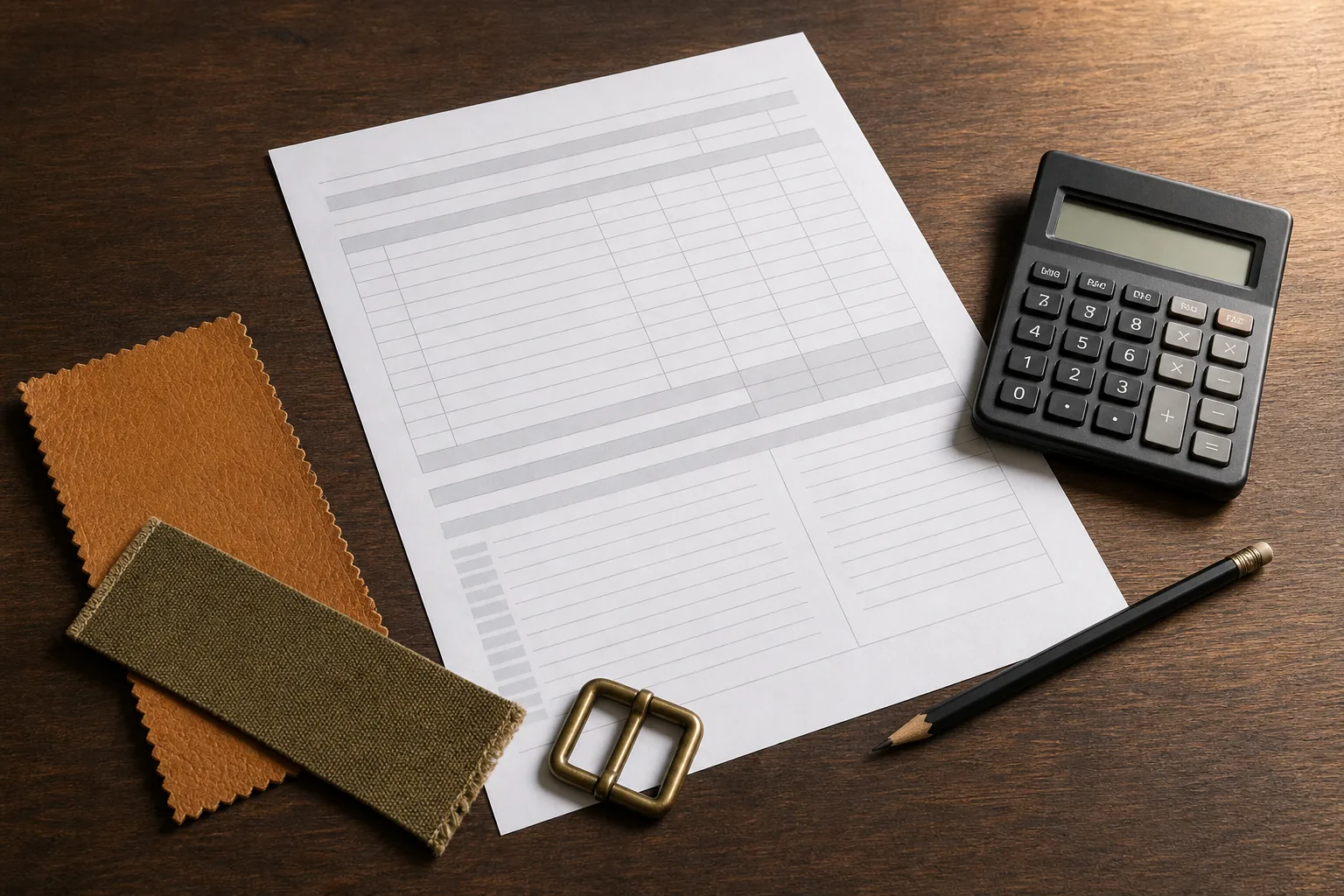
- The Cost Stack: What a Quote Contains
- Leather: The Dominant Variable
- Hardware: Small Parts, Real Money
- Labor: The Variable Nobody Estimates Well
- Lining, Interfacing and Structure
- Packaging and Presentation
- Development, Tooling and MOQ
- Freight, Duty and Landed Cost
- Where the Margin Sits
- Why Cheap Quotes Are Cheap
- Payment Terms, Currency and Cash Flow
- Reading a Factory Quotation Line by Line
- Cost Reduction Levers That Do Not Hurt Quality
- Reference Cost Shares at Three Tiers
- Frequently Asked Questions
- The Bottom Line
Why Two Similar Bags Cost Different Amounts
Price differences that look arbitrary from outside are usually arithmetic from inside.
The Same Design, Different Specifications
A design is a shape; a specification is a set of materials and operations, and that is where cost lives.
Two bags from the same pattern can use leather from different grades, hardware in different metals, linings in different fibers, and edge finishing by different methods. Each of those decisions moves cost, and the visible difference on a shelf is often small while the cost difference is large.
Where Buyers Get Surprised
The surprises come from assumptions rather than from hidden profits.
Buyers often assume leather is the whole cost, or that labor is trivial because machines do the stitching, or that a bigger order automatically cuts unit price in half. None of those assumptions survive contact with a real cost sheet.
Why the Cost Conversation Matters
Understanding cost structure is the only way to negotiate without damaging the product.
A buyer who knows which lines are compressible can reduce price without weakening the bag. A buyer who does not usually ends up cutting the parts customers feel first: hardware, lining, and edge finishing.
The Cost Stack: What a Quote Contains
A leather bag quotation is a stack of cost lines, each with its own logic.
The Eight Lines in a Bag Quote
Most factory quotations can be broken into these components.
- Leather (body, trim, handles, and waste allowance)
- Lining, interfacing and reinforcement materials
- Hardware and fittings
- Thread, adhesives and consumables
- Cutting, skiving, stitching and finishing labor
- Packaging, including dust bag and carton
- Factory overhead and management
- Margin
Manufacturer’s point: If a quotation lists only a single unit price with no breakdown, you cannot compare it with any other quotation. Ask for the cost structure before comparing numbers, or you will compare margin to margin instead of product to product.
What a Quote Usually Excludes
Exclusions are where quoted prices diverge the most.
Freight, insurance, duty, testing, compliance documentation, development and sampling, sales samples, and payment fees are frequently outside the quoted unit price. Two suppliers can quote comparable unit costs and differ enormously in what those costs include.
The Cost Stack at a Glance
| Cost line | Typically a large share when | Buyer control level |
|---|---|---|
| Leather | The bag uses large panels of quality leather | High — grade, size, thickness |
| Hardware | The design uses many metal fittings | High — metal, finish, weight |
| Labor | The design has complex shaping and edge work | Medium — complexity, order size |
| Lining and interfacing | The bag is structured and fully lined | High — fiber and weight |
| Packaging | Presentation matters for retail | High — dust bag, box, inserts |
| Overhead | Always present, allocated by order size | Low — factory dependent |
| Freight and duty | Shipment is heavy or travels far | Medium — mode, terms, origin |
| Margin | Always present | Medium — order size, relationship |
Leather: The Dominant Variable
Leather is usually the largest single material cost, and it is also the least uniform.
What Sets the Hide Price
Hide price is driven by several factors that compound.
- Grade and surface quality — full-grain of high grade costs more than sanded or split material
- Thickness — heavier leather uses more material per panel and costs more per square foot
- Hide size and usable area — larger hides with fewer defects reduce waste
- Origin and tannery — supply region, process quality, and certification all carry cost
- Color and finish — special colors and finishes add cost, especially in small batches
- Order volume — small leather orders rarely get the best price or the best selection
Yield Math: Cost per Bag, Not per Square Foot
The number that matters is leather cost per finished bag, which depends on yield.
Yield describes how much of the purchased leather ends up in the bag. A hide with many defects, tight curves in the pattern, or a careless cut plan produces a low yield, which raises the effective cost per bag even if the price per square foot looked attractive. Buyers who compare leather on price per square foot alone routinely pay more per bag.
How Grade and Thickness Change the Number
Small specification changes move leather cost sharply.
Moving from a sanded leather to a full-grain leather raises material cost. Increasing body panel thickness from a lighter to a heavier weight raises it again, and also increases labor in cutting and edge treatment. Each step should be justified by a specific benefit the customer will notice.
Waste and Defect Allowance
Every leather quotation contains an allowance for unusable area, and the allowance should be stated.
A realistic allowance accounts for natural defects and cutting losses. When a quotation shows an unusually low leather cost, the allowance is often unrealistically small, and the difference reappears as quality problems, short shipments, or a request for a price increase mid-production.
Hardware: Small Parts, Real Money
Hardware occupies little volume and a meaningful share of cost, especially in designs with many fittings.
Metal Type and Finish
The metal determines both durability and price.
- Zinc alloy — economical, suitable for lighter duty, finish quality varies widely
- Brass — durable, develops patina, higher cost
- Stainless steel — strong and corrosion resistant, machining adds cost
- Plated finishes — appearance driven; plating quality determines wear life
Specifying solid brass where the design only needs light fittings can double hardware cost with no visible benefit. Specifying plated zinc where the bag will see heavy use saves money up front and generates complaints later.
Zipper Tiers
Zippers are one of the clearest cost steps in bag hardware.
A basic coil zipper, a mid-range coil zipper with better tape and slider, and a metal zipper with a branded slider sit at very different price points. The tape and slider quality matter more than the teeth for most failures, so upgrading the tape is often the better buy than upgrading the metal.
Rivets, Snaps and Small Fittings
Small fittings add up because bags use many of them.
Rivets, snaps, D-rings, and adjustment sliders are inexpensive individually and meaningful in aggregate, especially when specified in solid metal. On a bag with twenty fittings, a small per-piece increase becomes a visible cost line.
Why Hardware Upgrades Are Cheap Relative to Impact
Hardware is often the best value upgrade in a leather bag.
The customer touches hardware constantly, and moving from a basic fitting to a solid metal one changes perceived quality more than an equivalent spend on leather usually does. When a brand wants to improve perceived quality without redesigning the bag, hardware is the first place to look.
Labor: The Variable Nobody Estimates Well
Labor is the cost line that varies most between suppliers and the one buyers understand least.
Minutes per Bag
Labor cost is computed from time, not from the size of the bag.
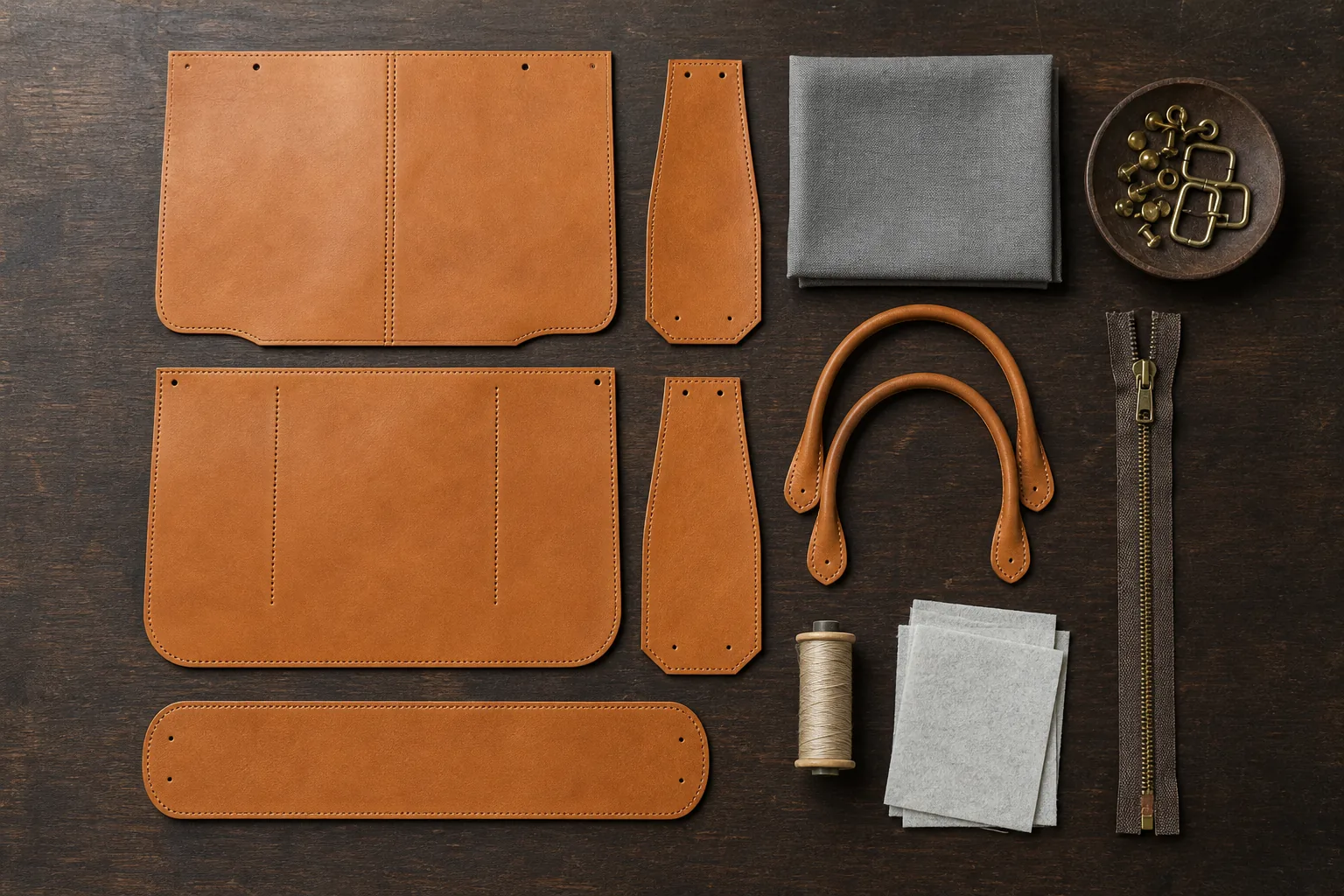
Factories estimate standard minutes for each operation: cutting, skiving, edge preparation, stitching sub-assemblies, assembly, hardware setting, edge finishing, and inspection. Multiply the total minutes by the labor rate and you have the labor cost. A design that adds twenty minutes of hand work per bag adds cost on every unit, forever.
Why Complexity Costs More
Complex designs cost more in labor than their material list suggests.
Curved panels, multiple gussets, small-radius corners, layered pockets, and hand-finished edges all increase handling time. The same leather and hardware in a simpler silhouette can cost noticeably less to make, which is why simplification is one of the most effective cost levers available.
Learning Curve and Order Size
First orders cost more than repeat orders, and quotations should reflect that.
The first production run involves slower work, more inspection, and more rework as the line learns the design. Factories often load part of that cost into the first order or into sampling. Buyers who place a small trial order and then a large one should expect the second order to be cheaper per unit.
Skiving, Edge Work and Hand Operations
Hand operations are where labor estimates diverge between factories.
Skiving edges, burnishing, hand-stitching details, and setting hardware carefully all depend on skill. A factory with experienced operators completes these faster and more consistently, which shows up as a lower unit labor cost at equal or better quality.
Lining, Interfacing and Structure
Internal materials are hidden, which makes them both a cost lever and a quality risk.
Lining Choices
Lining cost ranges widely depending on fiber and finish.
Cotton and twill linings cost more than synthetic alternatives and feel better in the hand. Nylon and polyester linings are cheaper, lighter, and more stain resistant. Since lining is the surface customers touch most often inside the bag, this is a poor place to cut without a clear reason.
Interfacing and Reinforcement
Interfacing determines whether a leather bag holds its shape, and it is inexpensive relative to its impact.
Adding reinforcement at stress points, behind hardware, and along the base costs a small amount per bag and prevents the failures that generate returns. Cutting interfacing is a false economy: the savings are cents and the cost is a bag that collapses or tears.
Structure and Weight
Structure costs money twice: once in materials and once in labor and freight.
A structured bag needs more reinforcement, more operations, and more careful assembly, and it weighs more, which affects shipping. Buyers should confirm that structure is intentional rather than a side effect of over-lining a soft leather.
Packaging and Presentation
Packaging is a real cost line, and in retail it is part of the product.
Dust Bags and Inner Packaging
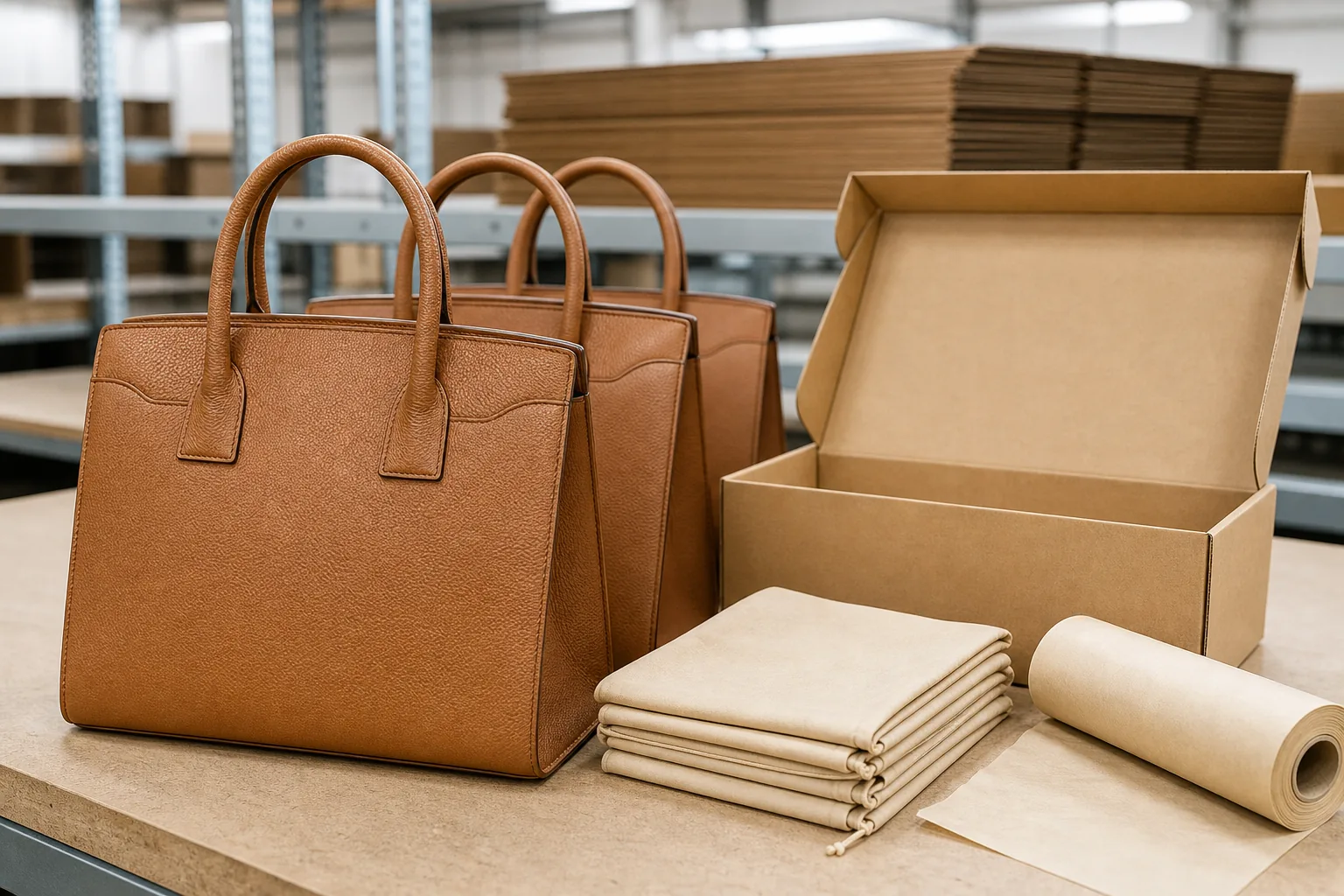
Dust bags range from thin non-woven to cotton with a printed logo.
Non-woven is inexpensive and functional; cotton or heavier fabric reads as premium and protects better in storage. Stuffing materials, tissue, and hardware protection all add small amounts per unit that accumulate across an order.
Retail Boxes and Inserts
Boxes are the most visible packaging cost and the most variable.
A plain corrugated shipper is a fraction of the cost of a printed rigid box with foam insert. E-commerce bags often need a box that survives parcel handling, while wholesale shipments usually need only cartons. Specifying retail packaging for a wholesale order is a common and expensive mistake.
Labels, Hangtags and Small Print
Small print items are cheap individually and easy to overlook.
Hangtags, care labels, barcode stickers, and origin markings each cost little per piece and matter for compliance and retail readiness. Missing one of them can hold a shipment, so they belong in the cost sheet rather than in a last-minute conversation.
Development, Tooling and MOQ
Costs before the first production unit are real and are often amortised into unit price.
Sampling Costs
Samples are charged, and they should be.
Material, labor, and shipping for samples are genuine costs. Factories sometimes waive sample fees for large committed orders, and sometimes credit sample charges against the first production order. Either way, sample cost should appear in the commercial terms rather than being silently absorbed into unit price.
Dies, Molds and Plates
Some designs require tooling that is paid once.
Die cutting plates, embossing plates, logo molds, and printing plates are one-time costs, usually owned by the buyer. On small orders they can dominate the per-unit cost, which is why tooling-heavy designs need volume to make sense.
MOQ and Unit Cost
Minimum order quantity affects unit price through material purchasing and line setup.
Higher volumes let factories buy leather more efficiently, cut more panels per hide, and run the line without frequent changeovers. Small orders are not inherently worse, but they carry a genuine cost premium, and buyers should treat that premium as a fact rather than a negotiating position.
Freight, Duty and Landed Cost
The price you pay the factory is rarely the cost of the goods in your warehouse.
FOB, DDP and Landed Cost
Trade terms determine which costs sit on which side of the transaction.
Under FOB terms, the buyer pays freight and insurance from the port of loading. Under DDP terms, the seller delivers to the destination with duty paid, which simplifies planning and hides the cost breakdown. Landed cost is the only figure that allows a real comparison between suppliers in different countries.
Duty, Origin and Trade Terms
Duty depends on the product classification and the origin of the goods.
Rules of origin can depend on where the leather was tanned and where the bag was assembled, and different markets apply different rates and preferences. Brands selling into several markets should confirm classification and origin treatment before committing to a sourcing plan.
A Landed Cost Illustration
| Cost element | Typical behaviour | Where buyers lose money |
|---|---|---|
| Factory unit price | Fixed per order | Comparing FOB quotes as if delivered |
| Freight | Scales with weight and volume | Over-structured bags shipping air |
| Insurance | Small percentage | Skipped, then a total loss |
| Duty | Percentage of declared value | Misclassified goods |
| Inland handling | Per shipment | Not budgeted for small shipments |
| Compliance testing | Per test | Assumed to be included |
Where the Margin Sits
Margin is not a single number, and understanding it prevents bad negotiations.
Factory Margin
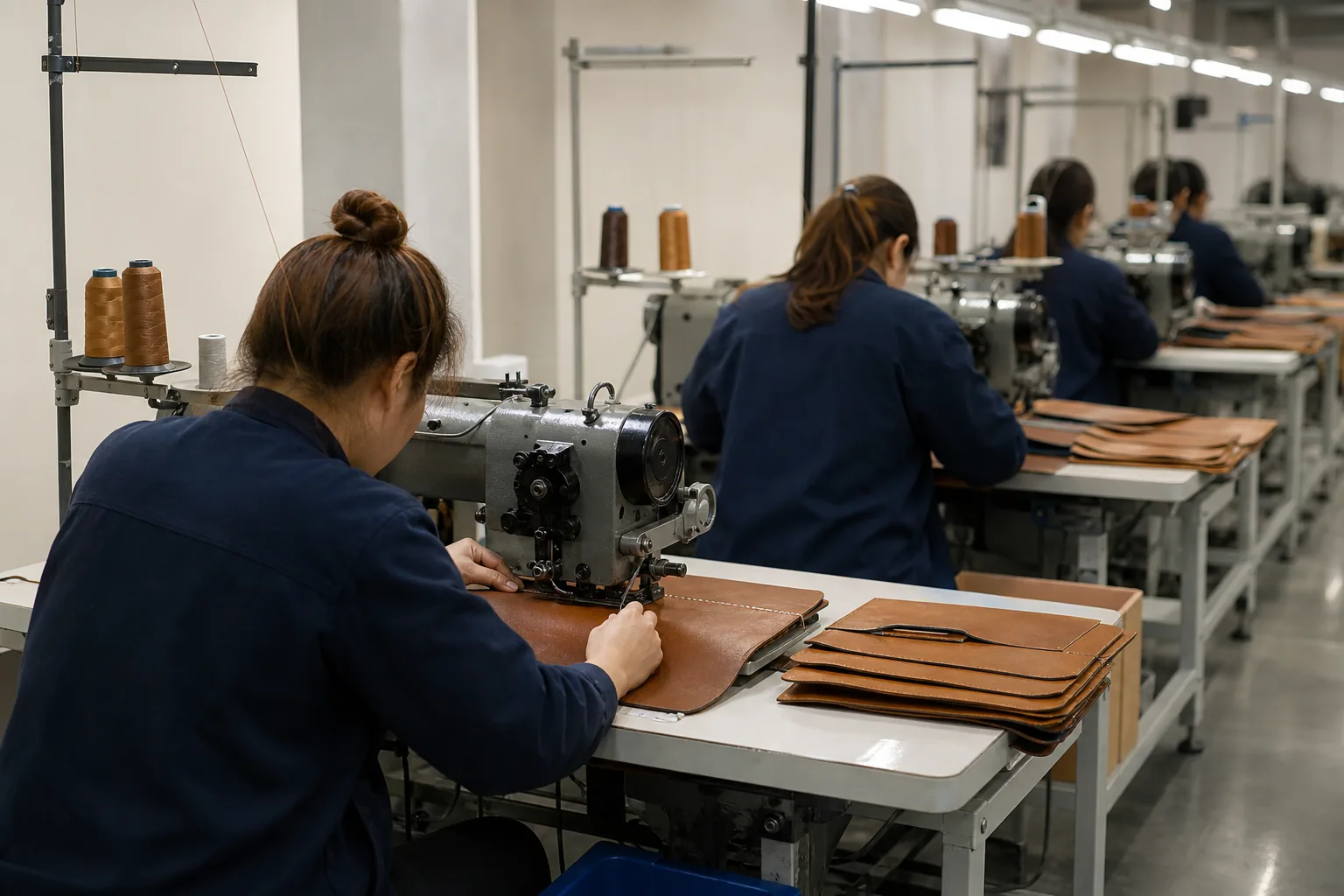
Factories work on thin margins relative to the material value they handle.
A supplier that appears expensive may simply be paying more for leather. A supplier that appears cheap may be using lighter material or a shorter process. Comparing unit prices without comparing specifications tells you which supplier is cheaper but not what you are buying.
Brand Margin and Pricing Power
Brands price to the market, not to cost.
Many successful products sell at several times their landed cost, because price reflects positioning, design, and demand rather than material. That gap is not a scandal; it is the difference between manufacturing and branding, and it explains why saving a dollar of cost is not always the most valuable improvement available.
Why Cost Reduction Has Limits
At some point, further cost reduction becomes a product change.
When a quotation is already lean, the remaining savings come from downgrading components or removing operations. Buyers should recognise that moment and decide deliberately whether the cheaper product is still the product they intend to sell.
Why Cheap Quotes Are Cheap
An unusually low quotation is a specification statement, whether or not it says so.
The Common Downgrades
- Thinner or lower-grade leather, sometimes substituted mid-production
- Split or layered material presented as full leather
- Lighter or plated hardware instead of solid metal
- Synthetic lining where premium lining was specified
- Reduced reinforcement, producing a bag that loses shape
- Simplified edge finishing, with edges that wear early
- Microscopic waste allowance, showing up as short shipments
- Skipped inspection, transferring defects to the customer
The Hidden Cost of a Cheap Bag
Cheap bags are expensive when they fail at scale.
Returns, replacements, freight both ways, marketplace penalties, and review damage all follow a wave of failures. The cost of a return is usually several times the cost of the component that failed, which is why the cheapest component is rarely the cheapest decision.
Manufacturer’s point: When a price looks too good, we ask which line was reduced. There is always an answer, and it is better to hear it before production than to discover it in customer reviews.
Payment Terms, Currency and Cash Flow
Two quotations at the same unit price are not equal if their payment terms differ.
Deposit and Balance Structures
Most leather bag orders run on a deposit with a balance on shipment.
Thirty percent deposit with seventy percent against documents is common, and some factories ask for a higher deposit when leather must be purchased specifically for the order. A lower deposit sounds friendlier, but it usually means the factory is financing your materials, which is either a sign of a strong partnership or a warning that cash flow is stretched.
Letter of Credit and Payment Risk
Letters of credit add bank cost and reduce risk on both sides.
For large orders between parties with limited history, a letter of credit protects the buyer against non-shipment and the factory against non-payment. The cost is a percentage plus documentation work, and it should appear in the total cost comparison rather than being treated as overhead on one side.
Currency Exposure
Currency movement can change the real cost of an order more than any negotiation.
If leather is bought in one currency and the bag sold in another, exchange rate movement between quotation and payment can erase a negotiated saving. Buyers ordering repeatedly should either price in a stable currency, agree a rate mechanism, or accept that the exposure is part of the cost. Ignoring it produces surprises that look like supplier price increases.
Reading a Factory Quotation Line by Line
A well-built quotation is the sign of a factory that understands its own costs.
What a Good Quote Looks Like
- Separate lines for leather, lining, hardware, labor, packaging and overhead
- Leather specification with grade, thickness, and tannery reference
- Hardware specified by metal and finish, not only by appearance
- Labor shown as operations or standard minutes
- Quantity tiers with the MOQ stated
- Trade terms, lead time, and payment terms clearly noted
- Sample and tooling costs listed separately
Questions That Reveal a Real Costing
Ask the factory to explain the leather yield assumption, the standard minutes, and the waste allowance.
Factories that cost properly answer immediately, because those numbers come from their own worksheets. Factories that quote by feel tend to answer with a range, then revise. The quality of the answers is more informative than the price itself.
Red Flags in Quotations
- No specification detail, only a price
- Leather described by appearance rather than grade
- Hardware described as “good quality” with no metal named
- No waste allowance or yield assumption
- Prices that change substantially after sampling
- Terms that shift between quotation and purchase order
Cost Reduction Levers That Do Not Hurt Quality
Some savings are free; others are paid for by the customer experience.
The Safe Levers, Ranked
- Simplify the design — fewer panels and straighter seams cut labor without weakening the bag
- Improve the cut plan — better nesting raises yield from the same hide
- Consolidate colors — fewer colors means better leather purchasing and less waste
- Increase order volume — better material pricing and fewer changeovers
- Standardise components — shared hardware and linings across styles
- Optimise packaging — match packaging to the sales channel instead of over-specifying
- Move leather where it matters — keep it on visible and handled surfaces, use textile elsewhere
The Levers That Cost You Later
- Downgrading leather grade on visible panels
- Reducing reinforcement at load points
- Switching to plated hardware on high-contact fittings
- Removing edge finishing steps
- Reducing inspection to save minutes
How to Choose Between Them
Rank each option by customer visibility and structural role.
If a change is invisible and non-structural, it is usually safe. If it is visible or load-bearing, treat it as a product decision rather than a cost decision, and price the consequences before committing.
Reference Cost Shares at Three Tiers
The table below shows indicative cost shares for three broad product tiers. Exact numbers vary with design, quantity and origin.
| Cost line | Entry tier | Mid tier | Premium tier |
|---|---|---|---|
| Leather | Moderate share, thinner grades | Large share, better grade | Largest share, full-grain |
| Hardware | Small, lighter metals | Moderate, solid where needed | Large, solid brass or steel |
| Labor | Moderate, simpler construction | Substantial, more operations | High, extensive hand work |
| Lining and structure | Basic synthetic | Woven lining, more reinforcement | Premium lining, full structure |
| Packaging | Minimal | Retail-ready | Presentation-grade |
| Overhead and margin | Proportionally larger | Balanced | Balanced on higher base |
How to Read This Table
The pattern is consistent: as tiers rise, leather and labor take a larger share while packaging and overhead shrink proportionally.
Entry-tier bags have a higher share of cost in overhead and margin because the material base is small. Premium bags concentrate cost in leather and hand labor, which is why premium pricing responds more to material upgrades than to volume alone.
Using Shares in Negotiation
Cost shares tell you where a negotiation can realistically move.
If leather is forty percent of cost, a five percent leather saving moves the total by two percent. If labor is forty percent, redesigning one operation can move the total far more than arguing about hardware prices. Negotiate on the largest lines first.
Frequently Asked Questions
What is the biggest cost in a leather bag?
Leather is usually the largest single material cost, and it often competes with labor for the largest share overall. In simple designs with good leather, material dominates. In complex designs with extensive hand work, labor becomes the larger driver.
Why do quotations for the same design vary so much between factories?
Because the quotations usually describe different specifications and different inclusions. Leather grade, hardware metal, lining, reinforcement, edge finishing, freight terms, testing and tooling all differ. Comparing unit prices without matching specifications compares margins rather than products.
How much does leather waste affect the cost of a bag?
It can be one of the largest hidden factors. A hide with defects or a loose cut plan can waste a substantial share of purchased material, which raises leather cost per bag even when the price per square foot looks good. Always ask for the yield assumption behind a quotation.
Is labor a big part of leather bag costs?
Yes, and it varies more than most buyers expect. Labor cost is driven by standard minutes per operation, so complex shaping, layered pockets, hand-stitching and edge finishing add substantial time per bag. Simplifying a design is often the most effective single cost lever.
How does order quantity change unit cost?
Larger orders spread tooling and setup costs, allow better leather purchasing, improve cutting yield, and reduce changeover time on the line. The first order of a design also carries learning-curve cost, which later orders do not. Expect a genuine premium on small quantities.
Should I upgrade leather or hardware to improve perceived quality?
Hardware is often the better value upgrade because customers touch it constantly, and moving from basic fittings to solid metal changes perceived quality noticeably for a modest cost. Leather upgrades matter more for durability and long-term appearance, which customers appreciate over time rather than at first touch.
What should a factory quotation include?
Separate lines for leather, lining, hardware, labor, packaging, overhead and margin, plus leather specification, hardware metal and finish, quantity tiers, MOQ, trade terms, lead time, and payment terms. Sample and tooling costs should be listed separately rather than folded into unit price.
Why is a suspiciously cheap quote risky?
Because it is a specification statement. Cheap quotations usually come from thinner or lower-grade leather, lighter hardware, reduced reinforcement, simplified edge finishing, minimal waste allowance, or skipped inspection. The savings are real, and so is the reason for them.
How do freight and duty affect the real cost of a leather bag?
Landed cost — factory price plus freight, insurance, duty, and inland handling — is the only figure comparable between suppliers in different countries. Weight and volume matter, so over-structured bags cost more to ship, and duty depends on classification and origin rules.
What is a safe way to reduce the cost of a leather bag?
Simplify the design, improve cutting yield, consolidate colors, standardise components across styles, increase order volume, and right-size packaging to the sales channel. Keep leather on visible and handled surfaces and reinforce load points. Avoid cutting inspection, reinforcement, or edge finishing.
How should a buyer compare two quotations fairly?
Compare matched specifications, not prices. Confirm leather grade and thickness, hardware metal and finish, lining and reinforcement, edge finishing method, packaging, trade terms, testing, tooling, MOQ, and lead time. Then compare landed cost per unit at the same volume.
The Bottom Line
A leather bag price is a stack of decisions, and every line in that stack can be explained.
Leather grade and yield usually set the largest material cost. Labor follows design complexity more than it follows bag size. Hardware costs little in volume terms and changes perceived quality more than most upgrades. Packaging, freight, duty, and tooling decide whether a good unit price becomes a good landed cost.
Buyers who learn to read those lines negotiate better and choose better. Ask for the breakdown, match specifications before comparing prices, reduce cost where customers cannot see or feel it, and protect the places they can. That is how a bag stays profitable and stays good.
