
Leather Thickness: Picking the Right Oz Weight for Every Bag
Leather Thickness: Picking the Right Oz Weight for Every Bag
Ask ten leather shoppers what “4 oz leather” means and most will shrug. Yet thickness is the single most important spec a bag maker checks before cutting a single panel. It decides whether a tote stands up or slumps, whether a wallet folds cleanly, and whether a strap survives real weight for years.
- What Leather Thickness Numbers Actually Mean
- How Leather Thickness Is Measured
- The Range: Thin, Medium, Heavy, and Very Heavy
- Matching Thickness to Bag Type
- How Thickness Affects Manufacturing
- Common Thickness Mistakes
- Thickness and Leather Quality: Not the Same Thing
- How Thickness Plays Into Leather Choice by Use
- How Leather Type and Finish Change the Thickness Story
- The Weight Math Most Buyers Never Do
- Thickness for Special Bag Details
- Frequently Asked Questions
- The Bottom Line
What Leather Thickness Numbers Actually Mean
Thickness is not measured in millimeters at the tannery. It is measured in ounces, and the system confuses almost every first-time buyer.
The Ounce System Explained
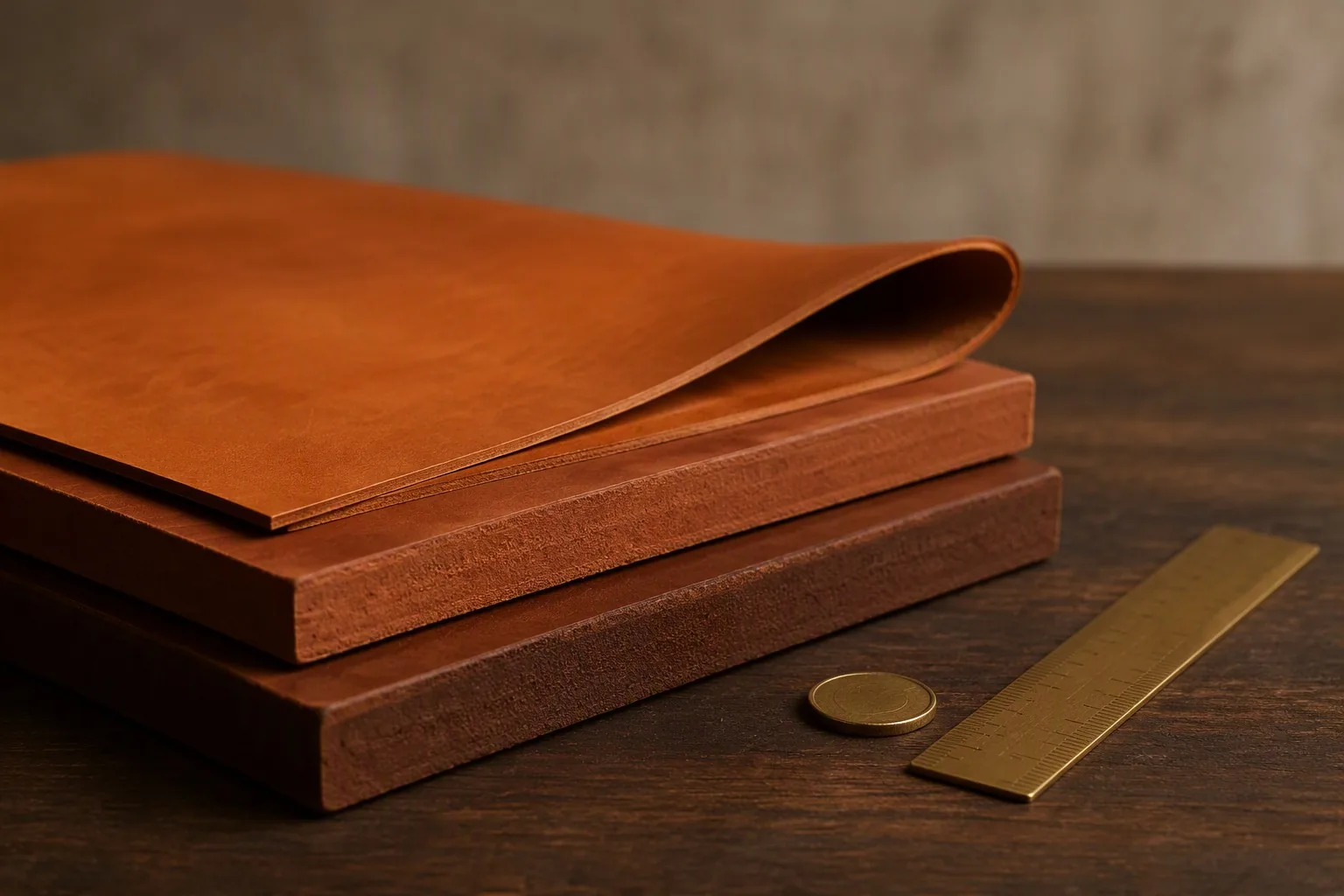
One ounce of leather thickness equals one sixty-fourth of an inch. A 4 oz leather is therefore four sixty-fourths, or about one sixteenth of an inch thick.
The system comes from the old practice of weighing a square foot of hide. Heavier leather is thicker leather, so the trade named the thickness by its weight. When a maker says “4 to 5 ounce leather,” they are really describing a hide that weighs four to five ounces per square foot.
From Ounces to Millimeters
Most shoppers think in millimeters, so the conversion is worth memorizing. The math is simple: multiply the ounce number by 0.4 to get millimeters.
A 2 oz leather is about 0.8 mm. A 4 oz leather is about 1.6 mm. A 7 oz leather is about 2.8 mm. The table below gives the full picture.
| Ounce weight | Inches | Millimeters | Typical use |
|---|---|---|---|
| 1–1.5 oz | 1/64–1.5/64 in | 0.4–0.6 mm | Linings, delicate goods |
| 2–2.5 oz | 2–2.5/64 in | 0.8–1.0 mm | Soft linings, light wallets |
| 3–3.5 oz | 3–3.5/64 in | 1.2–1.4 mm | Slouchy bags, soft trim |
| 4–4.5 oz | 4–4.5/64 in | 1.6–1.8 mm | Most handbags, totes |
| 5–5.5 oz | 5–5.5/64 in | 2.0–2.2 mm | Structured bags, work bags |
| 6–7 oz | 6–7/64 in | 2.4–2.8 mm | Briefcases, heavy duty |
| 8 oz+ | 8/64 in + | 3.2 mm + | Belts, straps, harness work |
Why Thickness Matters for Bags
Thickness is the difference between a bag that holds its shape and a bag that collapses into a puddle.
Thin leather drapes and folds; thick leather stands and resists. Every bag design starts with a question: should this piece stand firm or hang soft? The answer picks the ounce range, and every later decision — stitching, edges, hardware — follows from it.
How Leather Thickness Is Measured
Measuring leather is not as simple as running a ruler along a board. The hide itself is the challenge.
The Gauge and the Hide
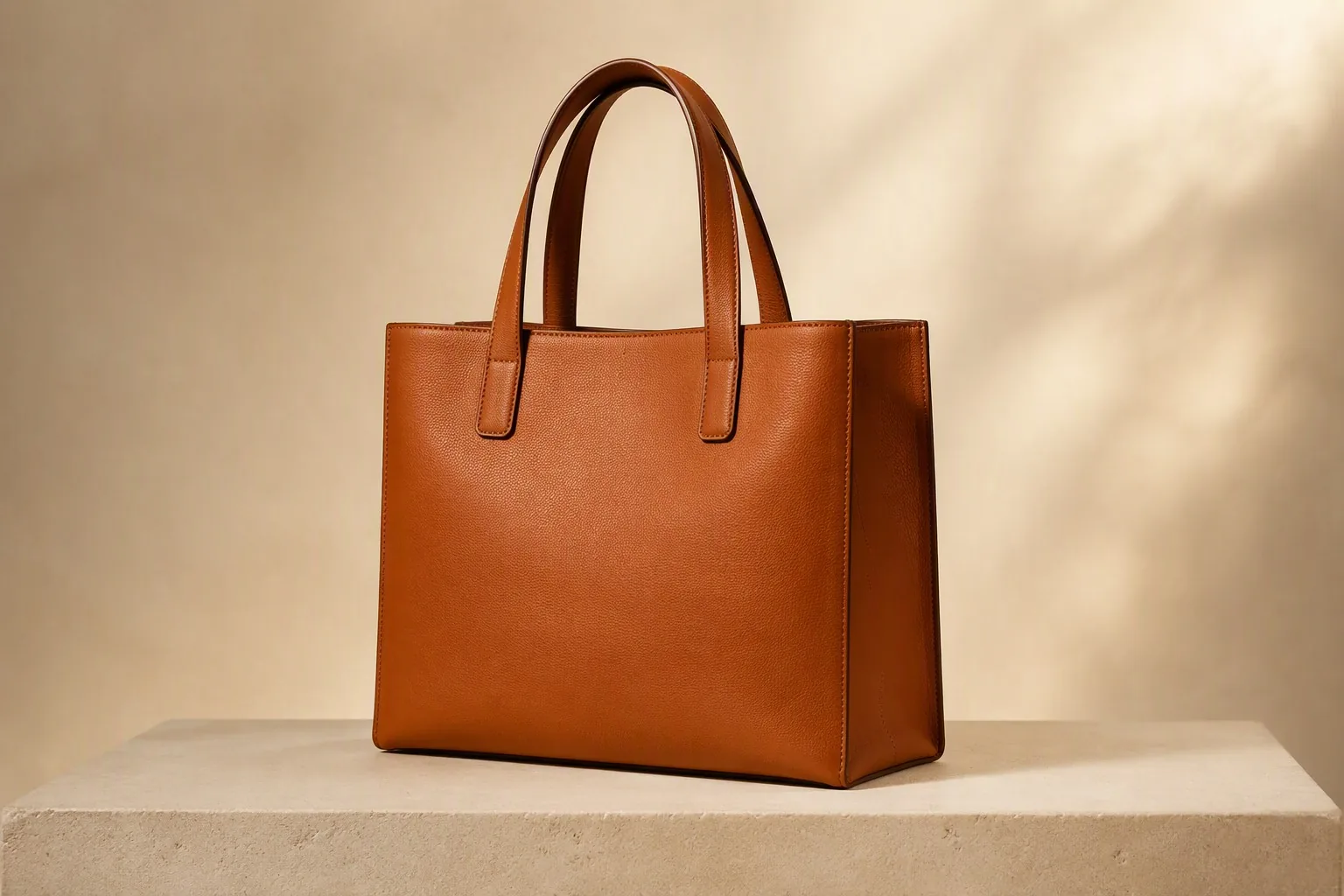
Tanners measure thickness with a gauge that reads in ounces or millimeters, but the reading depends on where on the hide you press the gauge.
A cattle hide is not uniform. The back and shoulder are thick and dense; the belly is thin and loose; the neck sits somewhere between. A single hide can easily span 3 oz of difference from its center to its edges.
Why One Hide Gives Many Thicknesses
This natural variation is why leather is sold in ranges rather than single numbers.
A tannery offering “4 to 5 oz” hides knows the hide averages that range across its usable area. The maker then sorts panels by the part of the hide they came from. This is standard practice, not a quality problem, but buyers who do not know it are often confused when two panels from one hide feel different.
What “Average Thickness” Means
When a supplier quotes an average thickness, they mean the hide’s central area, not its belly or neck.
The center of the hide is where the best panels come from, so the quoted number reflects the usable material. Ask a supplier about their thickness tolerance and they will usually answer honestly: plus or minus half an ounce across a hide is normal, and grading it tighter costs more.
Manufacturer’s point: Never design a bag around a single thickness number. Design around the range your tannery can actually deliver, then sort panels by zone. Expecting every panel to be exactly 4.0 oz is how production surprises happen.
The Range: Thin, Medium, Heavy, and Very Heavy
Leather used in bags falls into a few practical bands, and each band has a character of its own.
The Thickness Ladder
Think of thickness as a ladder with four rungs, from lining material to strap material.
| Range | Character | Best for |
|---|---|---|
| 1–2.5 oz | Soft, folds easily | Linings, light card holders |
| 3–4.5 oz | Supple with some body | Slouchy handbags, diaper bags |
| 5–6 oz | Firm, holds shape | Totes, backpacks, work bags |
| 7–9 oz | Stiff, very strong | Briefcase shells, straps, belts |
Soft and Drapey Versus Structured and Firm
The visual language of a bag comes straight from its ounce weight.
A 3 oz leather drapes around the body and gathers in soft folds; a 5.5 oz leather stands in a crisp architectural silhouette. Designers choose the ounce weight to express the bag’s personality. Floppy boho hobo and sharp executive briefcase are not different shapes — they are different thicknesses wearing different clothes.
How Thickness Changes Bag Weight
Thickness also changes the bag’s empty weight, which matters more than most buyers expect.
A full-size tote in 3 oz leather feels light and effortless. The same tote in 6 oz leather can weigh nearly twice as much empty, before a single item goes inside. A heavy bag that feels premium in the hand becomes a burden on a long commute. Weight is a real trade-off, not a footnote.
Matching Thickness to Bag Type
Every bag type has a natural thickness home, learned through years of making and years of returns. The list below is the one we use in the factory.
Totes
Totes carry weight and take abuse, but they also need to fold and feel approachable.
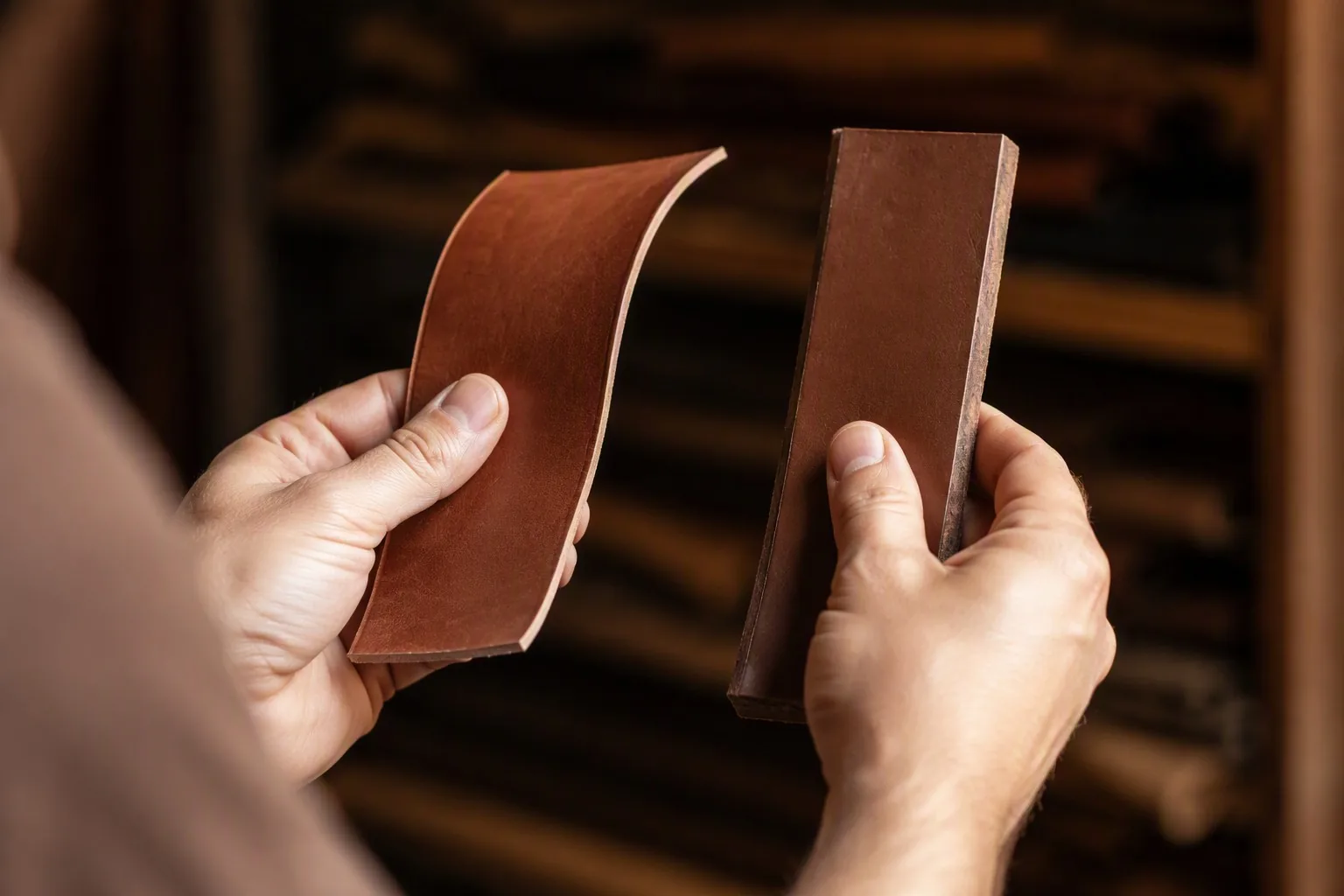
Most totes work best at 4 to 5.5 oz. At this weight the bag holds a sensible shape when filled, slouches gracefully when empty, and still folds enough to pack. A tote in 6 oz or heavier turns into a rigid box; one in 3 oz sags under a laptop and strains at the handles.
Backpacks
Backpacks demand a firmer hand because they carry structure on the back panel.
The back panel and base work best at 5 to 6 oz, giving the pack its shape and protecting the contents. The front pocket and side panels can drop to 4 to 4.5 oz for flexibility and weight savings. Mixing thicknesses within one backpack is not a cost cut — it is engineering.
Diaper Bags
Diaper bags need the practical middle: structured enough to stand open, light enough to carry one-handed with a baby on the other arm.
A 4 to 5 oz body hits that balance, with stiffer 5 to 6 oz base panels so the bag stands upright when set down. The softer body leather keeps the bag from feeling like luggage. Parents live in this bag, so weight and ease matter as much as durability.
Wallets and Small Goods
Small goods are where thin leather shines, because they fold, stack, and slide into pockets.
Wallets work best at 2.5 to 3.5 oz for the body and 4 to 5 oz for the card slots and reinforcement. Too-thick wallet leather creates a brick in the pocket; too-thin collapses and wears through at the fold. Small goods reward precision more than any other category.
Crossbody and Shoulder Bags
Crossbody bags should sit close and swing light, so their leather trends thinner.
A 3.5 to 4.5 oz body keeps a crossbody comfortable through a full day of walking. The strap is a separate question: it gets 5 to 7 oz or double-layered construction, because the strap carries the whole load and sees constant flex.
Briefcases and Work Bags
Work bags carry laptops, documents, and the impression they make in a meeting.
A 5 to 6 oz body gives a briefcase its confident structure and protects its contents. Many executive bags use 6 oz shells with 2.5 to 3 oz linings, pairing external firmness with internal softness. The result is a bag that stands at attention and still opens easily.
The Complete Bag Type Table
The quick reference below is the answer sheet for most design questions.
| Bag type | Body thickness | Notes |
|---|---|---|
| Tote | 4–5.5 oz | Firm enough to hold shape |
| Backpack | 5–6 oz back, 4–4.5 oz front | Mixed thickness by panel |
| Diaper bag | 4–5 oz body, 5–6 oz base | Stands open, light to carry |
| Wallet | 2.5–3.5 oz body, 4–5 oz slots | Folds thin, slots reinforced |
| Crossbody | 3.5–4.5 oz | Light, sits close |
| Briefcase | 5–6 oz shell | Structured, protective |
| Clutch | 3–4 oz | Soft drape, elegant folds |
| Travel duffel | 5–6 oz | Durable against handling |
How Thickness Affects Manufacturing
The factory sees thickness through a different lens: cutting, stitching, and finishing. Every ounce changes the making.
Cutting and Skiving
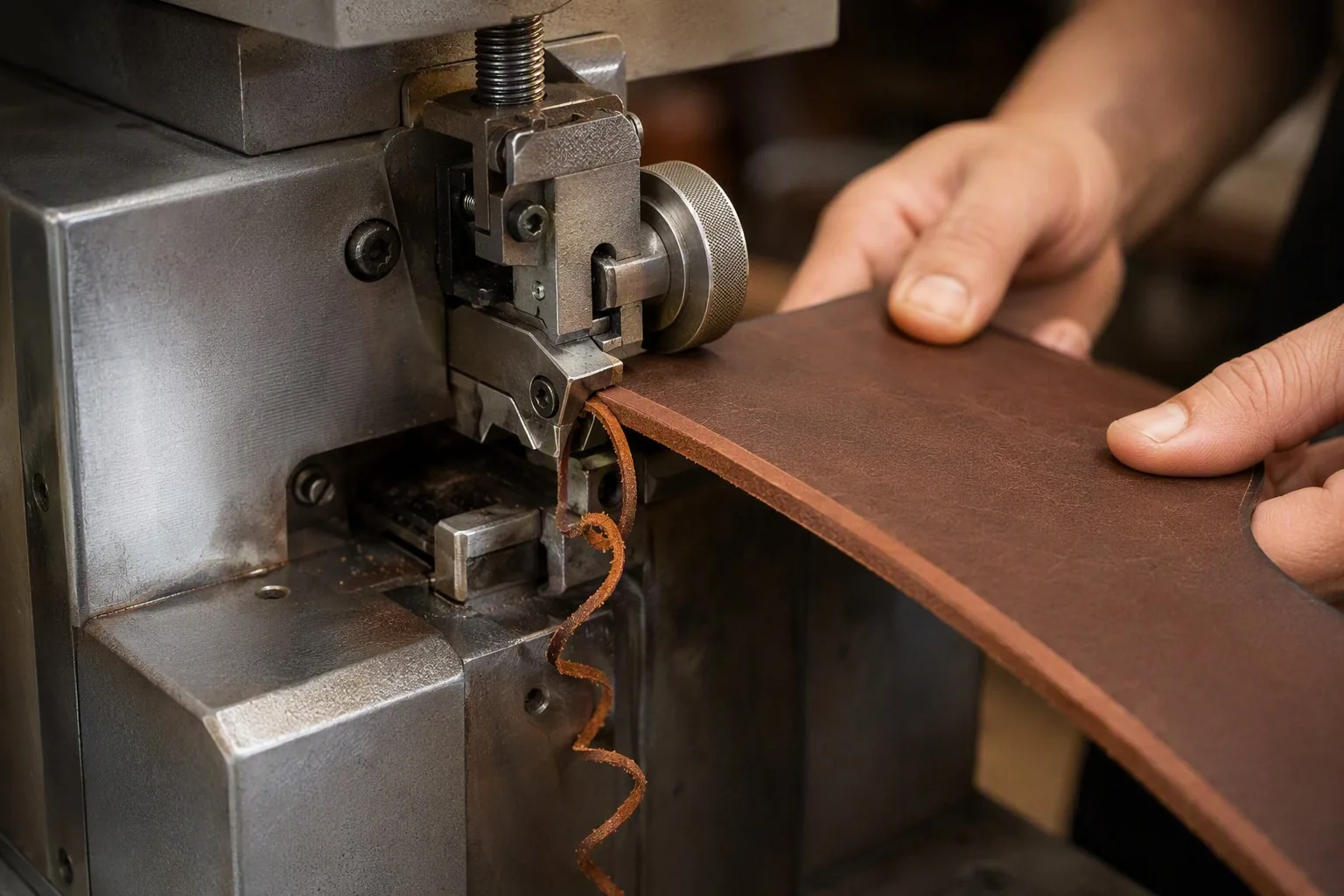
Thick leather is harder to cut cleanly and harder to fold at the edges, so makers skive it.
Skiving shaves the leather thinner at specific zones: the edges that will fold over, the seams that will join, the pockets that must stay slim. A skilled skiver turns one 6 oz panel into a piece that is 6 oz in the body and 2 oz at the fold. This is where craftsmanship becomes visible.
Stitching Constraints
Machines must match the leather thickness or the seam fails before the bag ships.
Thick leather needs larger needles, heavier thread, and lower machine speed. Thin leather needs the opposite, or the needle tears the material. A bag mixing 3 oz panels with 6 oz panels requires careful machine setup at every transition, which is why mixed-thickness bags cost more to make.
Folding and Edge Work
Edges betray the maker’s skill, and thickness decides which edge treatment is possible.
Thin leather folds into clean painted edges. Thick leather resists folding and often needs skived edges or bonded construction to turn a corner. The edge is the first place a customer looks for quality, and it is also the place where the wrong thickness shows first.
Hardware and Rivets
Hardware attachment is another thickness calculation, and the numbers are unforgiving.
Rivets and snaps have a working length range. Leather too thin for the hardware rattles and pulls through; leather too thick for the post simply will not close. Makers match hardware to the combined thickness of every layer at the attachment point, including linings and reinforcement.
The Hidden Cost of Thicker Leather
Thicker leather costs more than the raw hide price suggests, because it changes the whole production line.
Heavier leather yields fewer panels per hide, cuts slower, wears out blades faster, and needs stronger machines and thread. All of that lands in the final price. A 6 oz bag is not simply a 4 oz bag with more material; it is a different manufacturing problem with a different cost structure.
Common Thickness Mistakes
Most leather disappointments trace back to a thickness mismatch, and the mistakes repeat across the market.
Too Thin for the Job
A bag built too thin for its purpose fails in predictable ways, and the failures are easy to spot.
Thin leather stretches at the handles, sags under the load, and develops creases at the stress points. The bag that looked elegant in the shop becomes a sagging disappointment within months. If the design demands structure, the leather must supply it — no finish or lining fully replaces the missing thickness.
Too Thick for the Design
Too much thickness is less common but equally wrong, and its failures are comfort failures.
A too-thick wallet is a brick in the pocket. A too-thick crossbody digs into the shoulder and never drapes against the body. The bag feels heavy before it is filled and stiff long after it should have softened. Designers choose thin leather for softness just as deliberately as they choose thick for structure.
The Handle and Strap Exception
Handles and straps break every rule, because they live a different life from the bag body.
A strap must be thick or doubled to carry load, resist flex fatigue, and survive years of pulling. A 7 oz strap on a 4 oz body is not a mismatch; it is correct engineering. The exception explains why the same bag can feel soft in the body and stiff at the strap.
Checking Thickness Before You Buy
Buyers can check thickness in seconds with two fingers and a question.
Pinch the leather at the edge: thick leather resists the pinch and shows a substantial edge; thin leather compresses easily. Ask the seller for the ounce weight and compare it with the table above. Any honest seller can answer; a seller who cannot is selling something they do not understand.
Thickness and Leather Quality: Not the Same Thing
A common misunderstanding is that thicker leather is automatically better leather. Thickness and quality are separate axes.
Quality Is the Hide, Not the Number
The same ounce weight can hide very different leather underneath.
A 5 oz full-grain panel from a quality tannery is dense, strong, and beautiful. A 5 oz split or corrected panel can be soft, weak, and coated to hide its face. Thickness tells you how much material is there; grade tells you what that material is. Buyers who chase only ounces can pay top dollar for mediocre hide.
Thickness Ranges Overlap
Quality leathers are often sold in overlapping ranges, and the overlap protects the buyer.
A “4 to 5 oz” hide and a “5 to 6 oz” hide can both deliver a 5 oz panel. The difference is the distribution, the grade, and the tannery’s care. Comparing two leathers fairly means comparing grade and source, with thickness as one input among several.
What the Factory Actually Specifies
When we spec leather for a production run, the order names more than ounces.
A real spec lists the grade, the tannery, the finish, the thickness range, the color standard, and the batch tolerance. Thickness opens the conversation, but it never closes it. For buyers, the practical lesson is simpler: know the ounce range, then ask what the leather is underneath.
How Thickness Plays Into Leather Choice by Use
The ounce weight should follow the life the bag will live, and different owners need different thicknesses.
The Daily Commuter
A commuter bag lives on shoulders, public transport, and rainy streets, so it needs structure and resilience.
A 5 to 5.5 oz body with reinforced handles serves this life best. The bag stands when set down, protects a laptop from knocks, and shrugs off the daily grind. Commuters rarely regret firm leather; they regret floppy bags that never look right again.
The New Parent
A diaper bag answers to a different master: one-handed access, easy cleaning, and light weight.
A 4 to 4.5 oz body with a stiffer base gives parents the open top and standing shape they need without turning the bag into luggage. Every saved ounce of empty weight is an ounce the parent does not carry with a toddler on the other hip.
The Weekend Traveler
A weekend duffel should be durable enough for cargo holds and soft enough to stuff into overhead bins.
A 5 to 6 oz body balances those demands, with thin 2.5 oz lining keeping the interior light and flexible. Travel bags see the roughest handling of any bag, and thickness is the cheapest insurance against early failure.
The Style-First Buyer
Style-first buyers often prefer softer leathers that photograph beautifully and drape elegantly.
A 3 to 4 oz body gives that soft, lived-in look from day one. The trade-off is structure: a soft bag needs a well-designed interior to keep contents organized. Style-first leather is a valid choice when the buyer understands what it will not do.
How Leather Type and Finish Change the Thickness Story
The same ounce weight behaves differently across leather types, because type and finish change what the thickness actually delivers.
Full-Grain and Top-Grain
Full-grain leather keeps its natural surface, so its ounce weight is honest material.
A 5 oz full-grain panel is 5 oz of dense, strong hide. Top-grain is lightly sanded, which removes a little surface and makes it marginally more uniform. For bags, the practical difference at equal thickness is character: full-grain shows natural marks, while top-grain offers a cleaner canvas.
Suede and Nubuck
Suede and nubuck are softer at the same thickness, because their napped surfaces move independently.
A 4 oz suede feels more flexible than a 4 oz finished leather and needs careful handling at edges. The nap also means suede bags forgive scratches less visibly but punish water more. Thickness still matters, but the softness of the material changes the equation.
Pull-Up and Oiled Leathers
Oiled and pull-up leathers carry waxes and oils that change how thickness behaves in the hand.
The oils make the leather more pliable than its ounce number suggests, and they deepen with handling. A 4.5 oz pull-up can drape like a 3.5 oz finished leather. Buyers who judge only by the number will misjudge how an oiled bag will actually move.
Patent and Coated Leathers
Coated leathers add a stiff surface layer, which changes the feel at any given thickness.
A coated patent leather at 4 oz can feel firmer than a natural 5 oz, because the finish resists flexing. The coating also changes aging: no patina, and surface cracking becomes the failure mode. When comparing coated and natural leathers, thickness alone does not tell the story.
The Weight Math Most Buyers Never Do
Bag weight surprises almost everyone, because the empty weight compounds with every ounce of leather. The math is worth doing before purchase.
How Leather Weight Adds Up
A square foot of 4 oz leather weighs about 4 ounces, and a full-size bag uses several square feet.
A medium tote needs roughly 4 to 6 square feet of leather between body, lining, handles, and pockets. At 4 oz, the leather alone weighs about one to one and a half pounds before hardware, zippers, and stitching are added. A 6 oz version of the same bag jumps to nearly double that.
The Empty Bag Reality
Once hardware, zippers, linings, and trims join the leather, the empty bag weighs far more than the panels suggest.
A firm 6 oz work bag commonly weighs 3 to 4 pounds empty. Add a laptop, a water bottle, and the day’s essentials, and the shoulder carries 12 to 15 pounds. Buyers who love the sturdy feel in the shop rarely anticipate the loaded weight on a long commute.
The Simple Weight Test
The weight test takes ten seconds: hold the empty bag fully loaded the way you will actually carry it.
Swing it, sling it over a shoulder, and imagine a full day with it. A bag that feels satisfyingly solid for a minute can feel punishing by hour three. If weight matters to you, choose the lightest thickness that still delivers the structure you need.
Thickness for Special Bag Details
Beyond the main panels, specific details have their own thickness rules that separate well-made bags from the rest.
Gussets and Side Panels
Gussets join the front and back faces and see constant flexing, so they reward a slightly thinner hand.
A gusset at 3.5 to 4.5 oz folds and opens smoothly, while an over-thick gusset fights the bag’s natural movement. Many makers cut gussets from the same hide as the body but skive the fold lines so the bag opens wide without straining its seams.
Bases and Bottom Panels
The base carries the full load and meets every surface the bag is set on, so it deserves reinforcement.
Diaper bags and totes gain a 5 to 6 oz base panel or a stiffened insert under a standard-weight bottom. The base takes the wear, and a firm base also keeps the bag standing upright. This one detail does more for perceived quality than almost any other.
Pockets and Organizers
Interior pockets need to be thin enough to keep the bag slim, but strong enough to hold daily items.
Lining-weight leather at 1 to 2 oz keeps pockets flexible, while reinforced edges at 4 oz protect the openings that take the most stress. Pockets are where thin leather is not a compromise but a design choice, keeping the bag light and organized.
Zippers and Openings
The leather around an opening must be thick enough to anchor the zipper tape without becoming bulky.
Most makers use 3 to 4.5 oz around zippers, skived at the seam so the closure lies flat. A zipper set into over-thick leather bulges and binds; one set into too-thin leather tears at the anchor points. The opening is a precision zone, and the thickness spec shows it.
Frequently Asked Questions
What does oz mean in leather?
Leather thickness is measured in ounces, where one ounce equals one sixty-fourth of an inch. The system comes from weighing a square foot of hide. Four ounces equals about 1.6 mm, and seven ounces equals about 2.8 mm.
What thickness of leather is best for a bag?
Most bags work best at 4 to 5.5 oz. Soft slouchy styles use 3 to 4 oz, structured work bags and backpacks use 5 to 6 oz, and linings run 1 to 2.5 oz. Match thickness to the bag’s job, not to a single universal number.
Is thicker leather always better?
No. Thickness and quality are separate: a thick split leather can be weaker than a thin full-grain panel. Thicker leather suits structure and heavy use, while thin leather suits folding and drape. Choose the right thickness for the design, then check the grade.
How thick is 4 oz leather in millimeters?
Four-ounce leather is about 1.6 mm thick. As a quick rule, multiply the ounce number by 0.4 to get millimeters. Five ounces is about 2.0 mm, and six ounces is about 2.4 mm.
What leather thickness do wallets need?
Wallet bodies work best at 2.5 to 3.5 oz so they fold thin and sit comfortably in a pocket. Card slots and reinforcements use 4 to 5 oz for durability. A wallet built entirely of thick leather becomes a brick in the pocket.
Why are leather straps thicker than the bag body?
Straps carry the entire load and see constant flex, so they need more material. A strap is often 5 to 7 oz or double-layered while the body runs 4 to 5 oz. The thickness difference is engineering, not inconsistency.
Does leather thickness affect bag weight?
Yes, significantly. A full-size tote in 6 oz leather can weigh nearly double the same tote in 3 oz leather, before anything is packed inside. Heavier leather feels premium but becomes tiring on long carries, so weight is a real design trade-off.
Can a bag mix different leather thicknesses?
Yes, and good bags often do. Backpacks use firm back panels with softer fronts, and structured bags pair thick shells with thin linings. Mixed thicknesses raise production cost but put each ounce where it earns its place.
How can I check leather thickness before buying?
Pinch the leather at an edge: thick leather resists the pinch and shows a substantial edge, while thin leather compresses easily. Ask the seller for the ounce weight and compare it with the ranges for your bag type. An honest seller answers directly.
Is 5 oz leather good for a backpack?
Yes. Five to six ounces is the standard range for backpacks, especially for the back panel and base that carry structure and protect contents. Front panels can run slightly thinner to save weight without sacrificing strength.
The Bottom Line
Leather thickness is the quiet decision behind every bag that stands, slouches, folds, or fails.
Totes and diaper bags live at 4 to 5.5 oz, structured work bags at 5 to 6 oz, wallets at 2.5 to 3.5 oz, and linings at 1 to 2.5 oz. Thicker is not automatically better, and thinner is not automatically cheaper — the right ounce weight is the one that matches the bag’s real life.
Ask the ounce question before you buy, and your next leather bag will feel like it was made for you. It probably was.
