
Microfiber Leather vs Real Leather: Which Is Better for Bags
Microfiber Leather vs Real Leather: Which Is Better for Bags
Walk through any bag store and you will see the two materials side by side, often at very different prices. One is real leather, the other is microfiber. Both can look excellent, both can feel excellent, and neither one is simply “better.”
The honest answer depends on what you need: durability under certain conditions, feel over years, water resistance, ethics, or price. This guide compares microfiber leather and real leather from the factory floor, where we work with both every day.
- The Material Most Buyers Misunderstand
- What Microfiber Leather Actually Is
- The History: How Microfiber Improved
- Real Leather in Detail: The Grades Matter
- Microfiber Grades: The Labeling Maze
- Testing Both: Inside the Factory Lab
- Real Leather vs Microfiber: The Direct Comparison
- The Honest Advantages of Each
- Price and Value Over Time
- The Ethical and Environmental Angle
- Which Should You Choose?
- From the Factory: When We Recommend Each
- How to Tell Them Apart at Purchase
- Care Differences
- The Storage Question
- Frequently Asked Questions
- The Bottom Line
The Material Most Buyers Misunderstand
Microfiber leather is the most misunderstood material in the bag world. Its name confuses buyers, and its marketing confuses them further.
The Confusing Name
“Microfiber leather” sounds like a type of leather. It is not. It is a synthetic material engineered to imitate leather.
Real leather comes from animal hides. Microfiber is made from ultra-fine synthetic fibers, usually polyester and polyamide, bonded and coated to mimic leather’s look and feel. The name borrows the word “leather” for familiarity, which creates endless confusion at the point of sale.
Why Microfiber Entered the Market
Microfiber was developed to solve problems real leather cannot solve at scale.
Real leather varies in quality, costs steadily more, and carries ethical questions. Manufacturers wanted a material with consistent quality, stable pricing, and animal-free credentials. Microfiber delivers all three, which is why it now appears in everything from car seats to premium bags.
The Quality Confusion
The real confusion is that “microfiber” covers an enormous quality range, from thin, plasticky material to premium grades that genuinely rival leather.
The cheap end flakes and cracks. The premium end is soft, strong, and surprisingly convincing. Comparing “microfiber” with “leather” without specifying quality is like comparing “synthetic” with “natural” fabric — the grade decides everything.
What Microfiber Leather Actually Is
Understanding the manufacturing story explains the material’s behavior. Microfiber is an engineered product with precise, repeatable properties.
The Manufacturing Story
Microfiber starts as ultra-fine synthetic fibers, split and tangled into a non-woven web that mimics the collagen network of real hide.
The web is impregnated with polyurethane, which binds the fibers into a leather-like sheet. The surface is then finished, embossed with a grain pattern, and colored. The result is a material with the structure of fabric and the behavior of leather — designed layer by layer.
How It Differs from PU Leather
Microfiber is frequently confused with PU leather, and the two are cousins with different characters.
PU leather is a coating on a fabric base: a polyurethane layer over a knitted or woven backing. Microfiber is a three-dimensional fiber structure saturated with PU. The difference shows in durability: PU coating peels when the surface layer fails, while microfiber wears more like a solid material.
Grades and Quality Levels
The grade of microfiber decides everything, and the grade is visible in the price.
Entry microfiber is thin and stiff, with a coating that cracks under stress. Mid-grade microfiber has better fiber density and softness. Premium microfiber is dense, supple, and stable — the kind automotive manufacturers use for car interiors that must last a decade.
The History: How Microfiber Improved
Microfiber is the latest step in a long evolution of leather substitutes, and the generations explain today’s quality gap.
From Coated Fabric to Fiber Structure
The first leather substitutes were coated fabrics: a plastic layer over woven cloth. They looked like leather at a distance and failed quickly in use.
The breakthrough was the fiber structure. Instead of coating a fabric, manufacturers built a dense web of ultra-fine fibers and filled it with polyurethane. The result behaves more like hide than like coated cloth — flexible, strong, and tear-resistant in three dimensions.
Why Microfiber Reached Car Interiors
The automotive industry drove microfiber’s quality revolution, because car seats face brutal conditions.
Seats meet years of sun, sweat, friction, and cleaning. The automotive grades of microfiber developed for that duty are the same grades now appearing in premium bags. When a bag material traces its standard to car seats, the quality story writes itself.
The Generational Gap
Today’s market mixes old and new synthetic generations, and buyers cannot see the difference from labels alone.
Coated PU belongs to the first generation and flakes within years. Microfiber belongs to the third generation and behaves like a solid material. The price difference between them is small compared with the durability difference — which is why understanding microfiber matters more than ever.
Real Leather in Detail: The Grades Matter
Microfiber comparison is incomplete without understanding leather grades, because leather is not one material but a family of very different ones.
The Leather Ladder
Full-grain is the top of the ladder: the natural surface intact, strongest and most characterful. Top-grain is lightly corrected and more uniform. Genuine is split leather, thinner and weaker. Bonded is leather scraps bound together, the bottom of the ladder.
The grade decides how the leather compares with microfiber. Full-grain leather is a different product from bonded leather, and comparing either with microfiber without the grade named is comparing apples to a fruit basket.
The Grade Table
| Leather grade | What it is | Durability | Aging | Typical use |
|---|---|---|---|---|
| Full-grain | Natural surface intact | Highest | Patina | Premium bags |
| Top-grain | Lightly sanded surface | High | Even | Quality bags |
| Genuine | Split layer | Moderate | Faster wear | Entry leather |
| Bonded | Scraps + binder | Low | Short life | Budget items |
How Grades Affect the Microfiber Choice
The grade changes the comparison at every price point.
At entry prices, quality microfiber often outlasts genuine or bonded leather — the synthetic is engineered for consistency while the cheap leather is structurally weak. At premium prices, full-grain leather wins on every axis except water resistance. The honest comparison always names the leather grade.
Microfiber Grades: The Labeling Maze
Microfiber has its own grading system, and the labels used in retail rarely explain it. The factory perspective sorts the maze.
The Grade Names You Meet
Microfiber grades trace to their manufacturing specification: fiber fineness, density, PU content, and base construction.
The retail names are vaguer: “premium microfiber,” “eco leather,” “vegan leather,” and “micro-suede” all appear on products of very different quality. The trustworthy signals are density and weight: heavier, denser microfiber is stronger. A thin, light sheet labeled “premium” is premium only in its imagination.
The Automotive Standard
The automotive grade is the quality benchmark, developed for seats that must survive a decade of hard use.
Automotive microfiber passes abrasion, flex, heat, and light-fastness tests that consumer grades never face. When a bag maker specifies automotive-grade microfiber, the price rises and the durability follows. The specification, not the label, is the truth.
What to Ask About Microfiber
Three questions reveal a microfiber’s grade: what density, what backing, and what quality standard does it meet?
Density tells you the strength. The backing tells you the construction: non-woven base is the modern standard, knitted base is older. The standard tells you what tests it passed. A seller who answers all three knows the material; a seller who cannot is selling labels.
Testing Both: Inside the Factory Lab
We test both materials before recommending them, and the lab results explain the marketing claims in numbers.
The Abrasion Test
The abrasion test rubs the surface under pressure and counts cycles to failure.
Quality microfiber and finished leather both pass thousands of cycles. The surprise is usually at the edges: microfiber’s edge wear is cleaner, while leather’s edges fray first. The test shows where each material’s weak point actually sits.
The Flex and Aging Test
The flex test bends the material thousands of times to simulate years of opening and closing.
Both materials survive, but they fail differently. Microfiber cracks at the fold when its fiber web is stressed beyond design; leather softens and creases gracefully. The aging test then exposes both to heat and light, showing which fades, which stiffens, and which survives a decade.
The Honest Lab Conclusion
The lab does not crown a winner; it maps strengths. Microfiber wins abrasion consistency and water tests. Leather wins flex aging and recovery.
The conclusion matches real life: microfiber is the reliable workhorse, leather is the living material. The buyer’s values decide which test result matters most.
Real Leather vs Microfiber: The Direct Comparison
Putting the two materials side by side makes the differences concrete. The comparison below is the one we use when a brand asks us to choose.
Durability
Real leather’s durability depends on its grade and finish, but quality leather is genuinely tough, resisting tearing and flexing for decades.
Microfiber is also durable, and in some ways more consistent: no natural defects, no weak spots, and excellent resistance to abrasion. Premium microfiber outlasts cheap leather, while premium leather outlasts everything. The honest rule: compare like grades.
Feel and Appearance
Leather has an organic character no synthetic fully replicates: natural grain variation, warmth, and the way it softens and darkens with use.
Microfiber replicates the look convincingly at a glance, and premium grades feel close to the real thing. But the surface is a printed pattern, uniform across the entire sheet. Leather’s imperfection is its signature; microfiber’s perfection is its tell.
Water and Stains
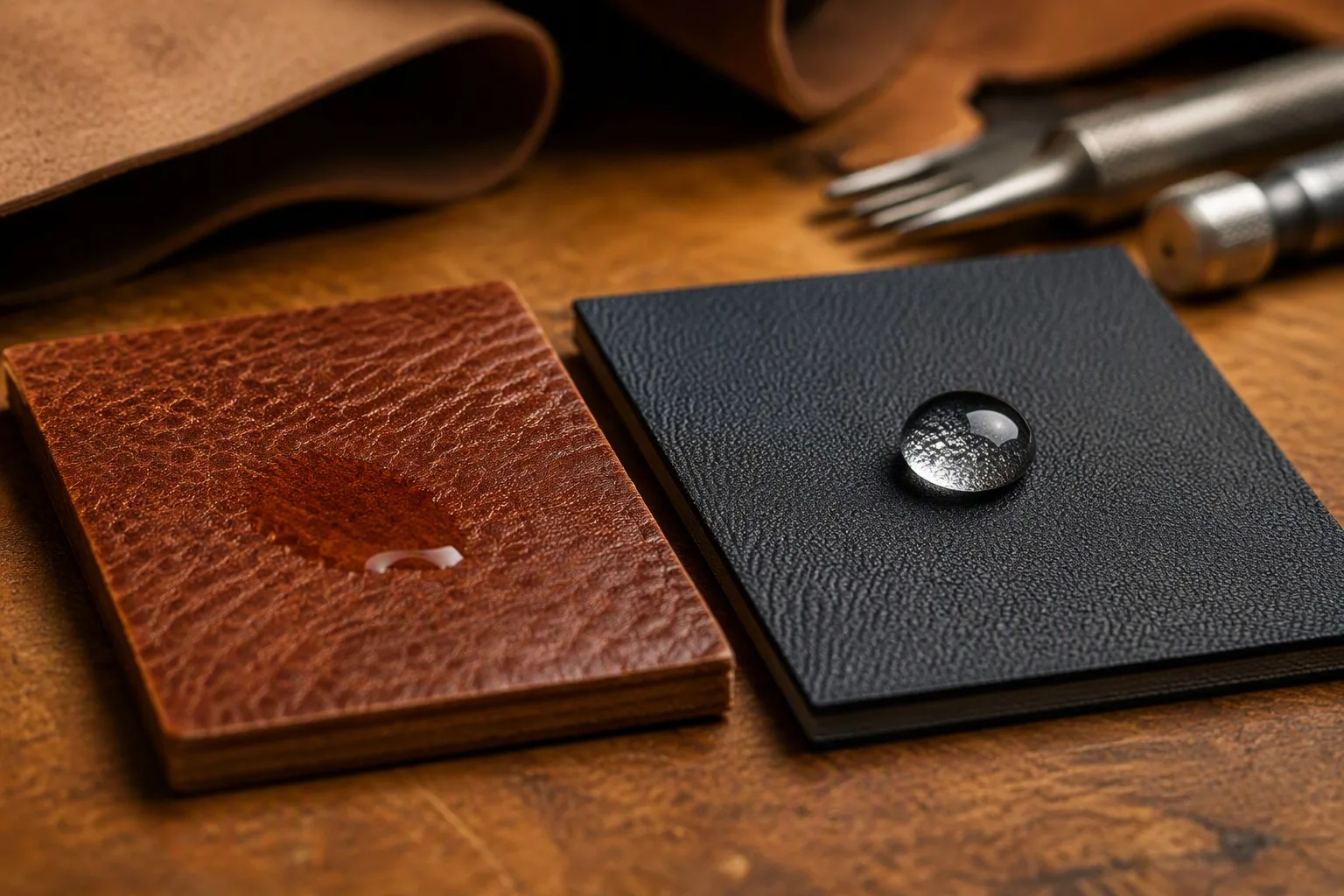
Water resistance is where microfiber clearly wins. Microfiber absorbs little and wipes clean, handling spills and rain better than most real leathers.
Real leather varies: finished leathers resist light moisture, while natural leathers drink water and stain. For bags that meet rain, spills, or children, microfiber is the practical choice.
Aging
Aging is where the two materials diverge most dramatically.
Real leather ages: it develops patina, softens, and gains character over years. Microfiber does not patina. It stays looking the same — until it starts to wear, at which point it can crack or flake rather than gracefully age. Leather is the only material that improves with use.
The Comparison Table
| Factor | Real leather | Microfiber |
|---|---|---|
| Durability | Decades (quality grades) | Years, consistent |
| Feel | Organic, natural variation | Uniform, close at premium |
| Water resistance | Varies by finish | Excellent |
| Spill cleaning | Depends on finish | Easy wipe |
| Aging | Patina, improves | No patina, then wears |
| Consistency | Natural variation | Perfectly uniform |
| Repairability | Leather shops repair | Harder to repair |
| Price range | Wide, high end | Wide, lower end |
The Honest Advantages of Each
Both materials have genuine advantages, and an honest comparison admits both sides. The winner depends on the buyer’s priorities.
Where Microfiber Wins
Microfiber wins on the practical axes: consistency, water resistance, price stability, and animal-free credentials.
It is also lighter than most leathers, which matters for large bags. For brands, microfiber offers uniform quality across thousands of units — no hide-to-hide variation, no grading surprises, no seasonal shortages. That reliability is a manufacturing advantage, not just a price one.
Where Real Leather Wins
Real leather wins on the emotional and long-term axes: feel, aging, character, and status.
It also wins on repairability: a leather bag can be reconditioned, re-stitched, and passed on. Leather’s resale value holds far better than microfiber’s. For buyers who see a bag as a long-term companion rather than a consumable, leather justifies its price.
The Manufacturer’s Honest View
Manufacturer’s point: We make bags in both materials, and we tell customers the truth. If you want consistency, water resistance, and a lower price, microfiber is the rational choice. If you want a material that ages beautifully and can be repaired for decades, buy real leather. Both are good materials; they are good for different people.
Price and Value Over Time
The price gap between microfiber and real leather is real, but the lifetime cost story is more interesting than the sticker price.
The Sticker Price Reality
Microfiber bags typically cost a fraction of comparable real leather bags, with the gap narrowing as quality rises.
Premium microfiber can approach mid-range leather pricing, which is when buyers should compare carefully. The premium microfiber at $120 might genuinely outperform the $120 leather of mediocre quality — grade beats material label at the same price.
The Cost Per Year Table
The lifetime math changes the picture. The table shows why cheap can be expensive.
| Scenario | Purchase price | Expected life | Cost per year |
|---|---|---|---|
| Budget microfiber bag | $80 | 2–3 years | $27–40 |
| Premium microfiber bag | $180 | 5–7 years | $26–36 |
| Quality leather bag | $300 | 15+ years | Under $20 |
| Luxury leather bag | $800 | 25+ years | Under $32 |
The Resale Difference
The second-hand market treats the two materials very differently.
Quality leather bags retain value and are resold, rehomed, and passed down. Microfiber bags have almost no resale value; the second-hand buyer assumes the material is worn out. For bags that may one day be resold, leather keeps its worth.
The Ethical and Environmental Angle
The ethics of animal products and the environment of manufacturing both enter the decision. The full picture is more complex than the marketing suggests.
What “Vegan Leather” Really Means
“Vegan leather” is a marketing term that usually means microfiber or PU, and it is not automatically environmentally friendly.
Microfiber is petroleum-based: polyester and polyamide come from fossil fuels, and the PU binder adds more. Its production is energy-intensive, and the material is not biodegradable. Choosing microfiber resolves the animal question but inherits the plastic question.
The Real Environmental Math
Real leather’s environmental story is also complicated, and the honest comparison has no easy winner.
Leather is a by-product of the meat industry — the hide is used rather than wasted — and vegetable tanning offers a lower-chemical route. But cattle farming has its own environmental footprint. The greenest choice may be neither new material but a second-hand leather bag that needs no new production at all.
What to Tell Yourself Honestly
The ethical choice is personal, and the honest framework helps buyers decide.
If animal use is the deal-breaker, microfiber is the practical answer. If environmental impact is the priority, the math is closer than the marketing claims, and buying used or keeping a bag longer matters more than the material label.
Which Should You Choose?
The decision matrix below matches buyers to materials. Find your profile and the answer becomes clear.
The Buyer Profiles
| Buyer profile | Best material | Why |
|---|---|---|
| Daily commuter in rainy city | Microfiber | Water resistance, wipe clean |
| Parent with young children | Microfiber | Spills, stains, washability |
| Premium buyer, values patina | Real leather | Aging, character, repair |
| Price-focused first leather bag | Real leather (entry) | Teaches the material |
| Consistent brand quality at scale | Microfiber | Uniformity across units |
| Long-term investment piece | Real leather | Resale, decades of life |
| Vegan or animal-sensitive buyer | Microfiber | No animal products |
| Gift for a lasting impression | Real leather | Status, emotional value |
The Three Questions Test
When unsure, ask three questions and the answers decide.
First, will this bag meet rain and spills regularly? If yes, microfiber. Second, do you want the bag to age and gain character? If yes, real leather. Third, is this a long-term purchase or a fashion purchase? Long-term points to leather, fashion to microfiber.
The Hybrid Option
Some bags combine both materials: leather on the visible panels, microfiber on the hard-working interior or base.
The hybrid approach is a legitimate engineering solution, putting each material where it wins. When a bag uses both, the price and the behavior both improve — and the buyer gets the best of each world.
From the Factory: When We Recommend Each
Our recommendations follow the use case, not the material bias. The factory perspective is practical by nature.
The Rainy Market Recommendation
For brands selling in rainy climates or to families, we recommend microfiber for everyday styles and reserve leather for premium lines.
The logic is simple: returns and complaints follow failed expectations. A microfiber bag that shrugs off rain creates fewer problems than a natural leather bag that stains in the first storm. Match the material to the market’s reality.
The Premium Line Recommendation
For premium lines, we recommend quality real leather with honest construction, because premium buyers buy the aging story.
The premium buyer is not comparing the bag to microfiber; they are comparing it to other leather bags. Leather is the language of that market. A premium microfiber bag, however good, speaks the wrong dialect to that buyer.
The Sample Test We Run
Before recommending either material, we test samples against the customer’s actual use case: load, climate, and care habits.
The test is simple: we make two identical prototypes, one in each material, and let the customer live with them for two weeks. The winner is usually obvious by day ten. Material choice is a practical question, and practice answers it best.
The Return Rate Lesson
The most honest teacher is the return rate, and it has taught us the pattern of material failures.
Microfiber returns cluster around peeling and cracking after the first year. Leather returns cluster around water damage and buyer expectations. The lesson for brands: match the material to the claim. A microfiber bag sold as low-care must be; a leather bag sold as natural must be allowed to show its life.
The Brand Story Question
For brands, the material is part of the story they tell, and the story must match the product.
A brand selling heritage and craft needs real leather to make the story credible. A brand selling practicality, modern ethics, or accessible luxury can tell its story through quality microfiber. The material and the message must agree, or the customer feels the mismatch at the first unboxing.
How to Tell Them Apart at Purchase
Whether you choose leather or microfiber, knowing which is which protects you at the point of sale. The tests take seconds.
The Look Test
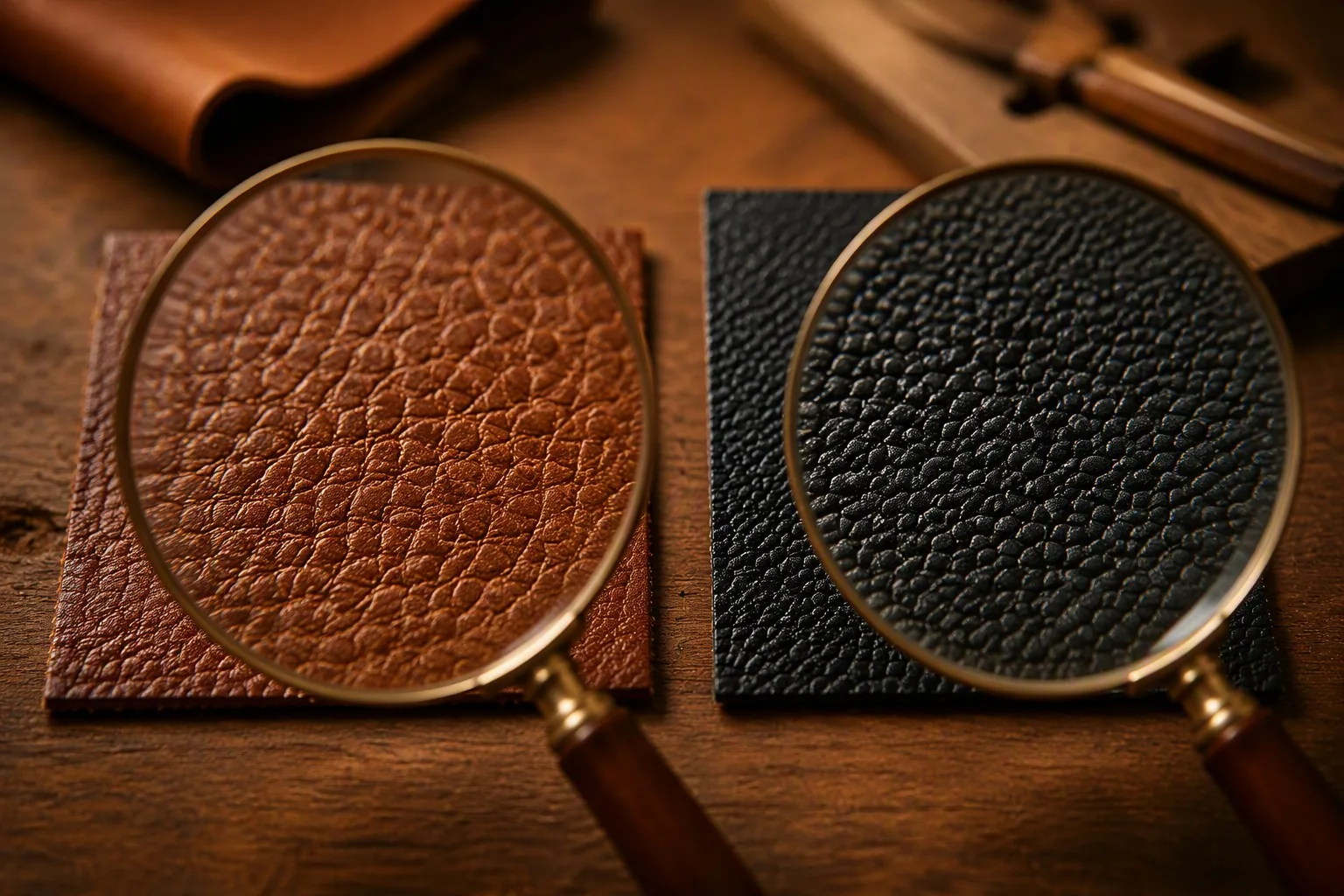
Look closely at the grain under light. Real leather has natural, irregular pores and subtle variation across the surface.
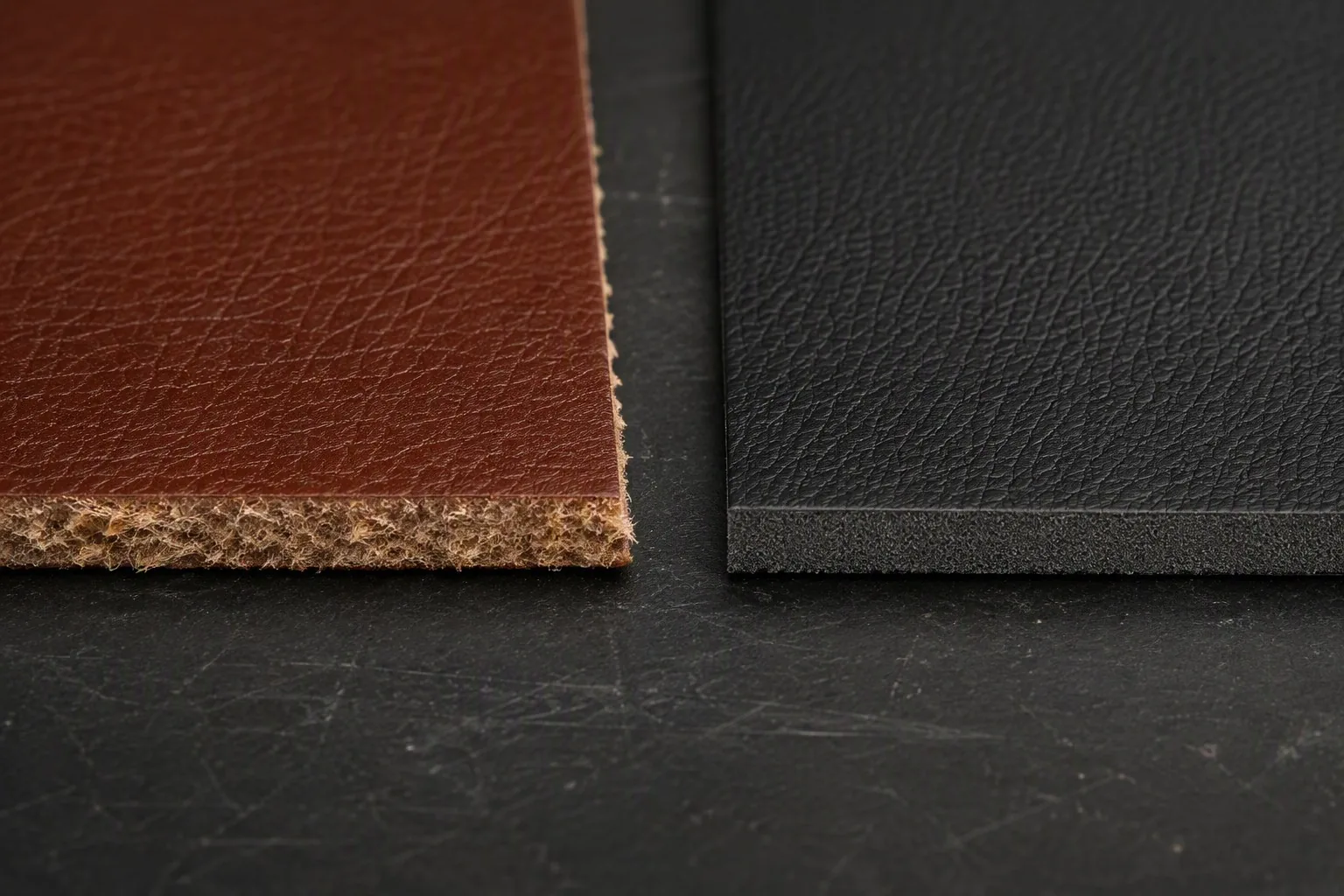
Microfiber’s grain is a printed pattern, perfectly repeated across the whole sheet. Move the bag under light: real leather shows organic depth and shadowing, while microfiber’s surface looks uniform from every angle.
The Touch and Edge Test
Touch and edge inspection reveal more than looking.
Real leather warms slightly under the hand and feels slightly fibrous at an unfinished edge. Microfiber feels cooler and more uniform, and its cut edge shows a clean, fiber-free construction. The back side also differs: leather has a suede-like flesh side, while microfiber shows a fabric-like base.
The Price Signal
Price is the bluntest signal, though not a perfect one.
Genuine leather costs more than microfiber at comparable quality. A bag priced far below the leather market is almost certainly microfiber or a lower leather grade mislabeled. Ask directly what the material is, and read the label carefully before you pay leather prices for microfiber.
Care Differences
The two materials need different care, and knowing the difference prevents damage.
Caring for Microfiber
Microfiber is the low-maintenance choice: wipe with a damp cloth and mild soap, and avoid heat.
Most stains lift with water and a gentle detergent. Avoid harsh solvents and excessive heat that can damage the PU binder. Microfiber needs no conditioning, which is its quiet advantage for busy owners.
Caring for Real Leather
Real leather needs the classic routine: keep it dry, condition twice a year, and treat stains promptly.
Leather drinks water, so blot rain and dry away from heat. Conditioner feeds the fibers and prevents cracking. Scratches on finished leather may be minimized with matching care products; the material ages and that is part of its value.
The Maintenance Comparison
| Care task | Real leather | Microfiber |
|---|---|---|
| Daily wipe | Yes, dry cloth | Yes, damp cloth |
| Spills | Blot immediately | Wipe freely |
| Conditioning | 2× per year | Never needed |
| Water exposure | Avoid soaking | Tolerates well |
| Sun exposure | Avoid long-term | Avoid long-term |
| Professional care | Leather specialist | Rarely needed |
The Storage Question
How a bag is stored matters for both materials, and the differences are easy to manage.
Storing Microfiber
Microfiber is forgiving in storage: it tolerates moderate temperature swings and needs no conditioning.
Keep it dust-free in a cloth bag and away from direct sun, which fades any synthetic surface. Avoid storing microfiber folded under heavy weight for long periods; the creases can set into the fiber structure. The material needs little, but it repays a little care.
Storing Real Leather
Leather storage has the stricter rules: stable humidity, no plastic, and light stuffing to hold shape.
Leather breathes, so store it in a cotton bag, never plastic. Keep it away from radiators and humid basements, which dry or mold the hide. Stuff the bag lightly to hold its shape, and store it upright or flat — never hung by the handles for months.
The Shelf Life Difference
The storage story repeats the material character: microfiber stays as it was, leather keeps living.
A microfiber bag stored well looks the same in five years. A leather bag stored well has aged, softened, and gained depth. Neither is wrong; they are simply different definitions of what a well-kept bag looks like after time.
Frequently Asked Questions
Is microfiber leather real leather?
No. Microfiber leather is a synthetic material made from ultra-fine polyester and polyamide fibers bound with polyurethane, engineered to imitate the look and feel of real leather. The word “leather” in its name is marketing, not material.
Which lasts longer, microfiber or real leather?
Quality real leather lasts longer — decades with care, aging into patina. Premium microfiber lasts years and stays consistent, but it does not age gracefully and eventually wears or cracks. Comparing like grades, leather wins on longevity.
Is microfiber leather better than PU leather?
Generally yes. Microfiber is a fiber structure saturated with polyurethane, while PU is a coating on fabric. Microfiber resists peeling and cracking far better than coated PU, which is why microfiber is the premium synthetic choice.
Is microfiber leather waterproof?
Microfiber is highly water-resistant: it absorbs little, dries fast, and wipes clean. It is not fully waterproof in every construction, but it handles rain and spills far better than most genuine leathers.
Does real leather always cost more than microfiber?
Yes at comparable quality, but the gap narrows as grades rise. Premium microfiber can approach mid-range leather pricing. The real cost difference shows over time: leather’s life and resale value beat microfiber’s lower upfront price.
Is microfiber leather environmentally friendly?
Not automatically. Microfiber is petroleum-based and not biodegradable, so it is not a clear environmental win. Real leather is a meat-industry by-product with its own footprint. The most eco-friendly choice is usually buying used or keeping a bag longer.
Why does real leather cost so much more?
Real leather pricing reflects raw hides, skilled tanning, natural variation and waste, and grading. Microfiber is manufactured in uniform rolls with stable costs. The leather price buys a natural material that ages, repairs, and holds value.
Which material should a first-time bag buyer choose?
It depends on the buyer’s priorities: microfiber for water resistance, low care and lower price; real leather for aging, character and long-term value. For a first serious bag meant to last years, quality leather teaches what the material can become.
The Bottom Line
Microfiber and real leather are both excellent materials, and neither deserves the other’s customers.
Microfiber wins on consistency, water resistance, price, and animal-free credentials. Real leather wins on feel, aging, repairability, and lasting value. The bag’s job, the buyer’s priorities, and the honest price decide which is better — for each person, on each purchase.
The best advice from the factory: choose the material that matches the bag’s real life, not the one that wins the argument at the counter.
