
Why Bag Hardware Tarnishes: Cleaning and Care Guide
Why Bag Hardware Tarnishes: Cleaning and Care Guide
A leather bag can age beautifully while its hardware ages badly. The leather develops a warm patina, and the zippers, buckles, and rivets turn dull, spotty, and green at the edges. The contrast ruins the whole impression, and the owner usually blames the bag.
The hardware is not failing because the factory chose badly. It is failing because metal has its own life cycle, and most owners never learn how to manage it.
This guide covers why bag hardware tarnishes and corrodes, which metals behave how, and the cleaning and protection routines that keep metal looking as good as the leather — straight from the factory that fits the hardware.
- The Forgotten Half of a Leather Bag
- The Anatomy of Bag Hardware
- Why Hardware Tarnishes and Corrodes
- Metal Types: What Each Does Over Time
- Hardware and Leather: How They Damage Each Other
- Special Care by Bag Type
- Cleaning Hardware the Right Way
- Protecting Hardware Day to Day
- Common Hardware Problems and Fixes
- The Problem-Fix Quick Table
- The Cost of Neglect
- When to Repair vs Replace
- From the Factory: Choosing Hardware That Lasts
- The Hardware Care Checklist
- The Hardware Quality Test at Purchase
- Frequently Asked Questions
- Hardware and the Bag’s Second Life
- The Bottom Line
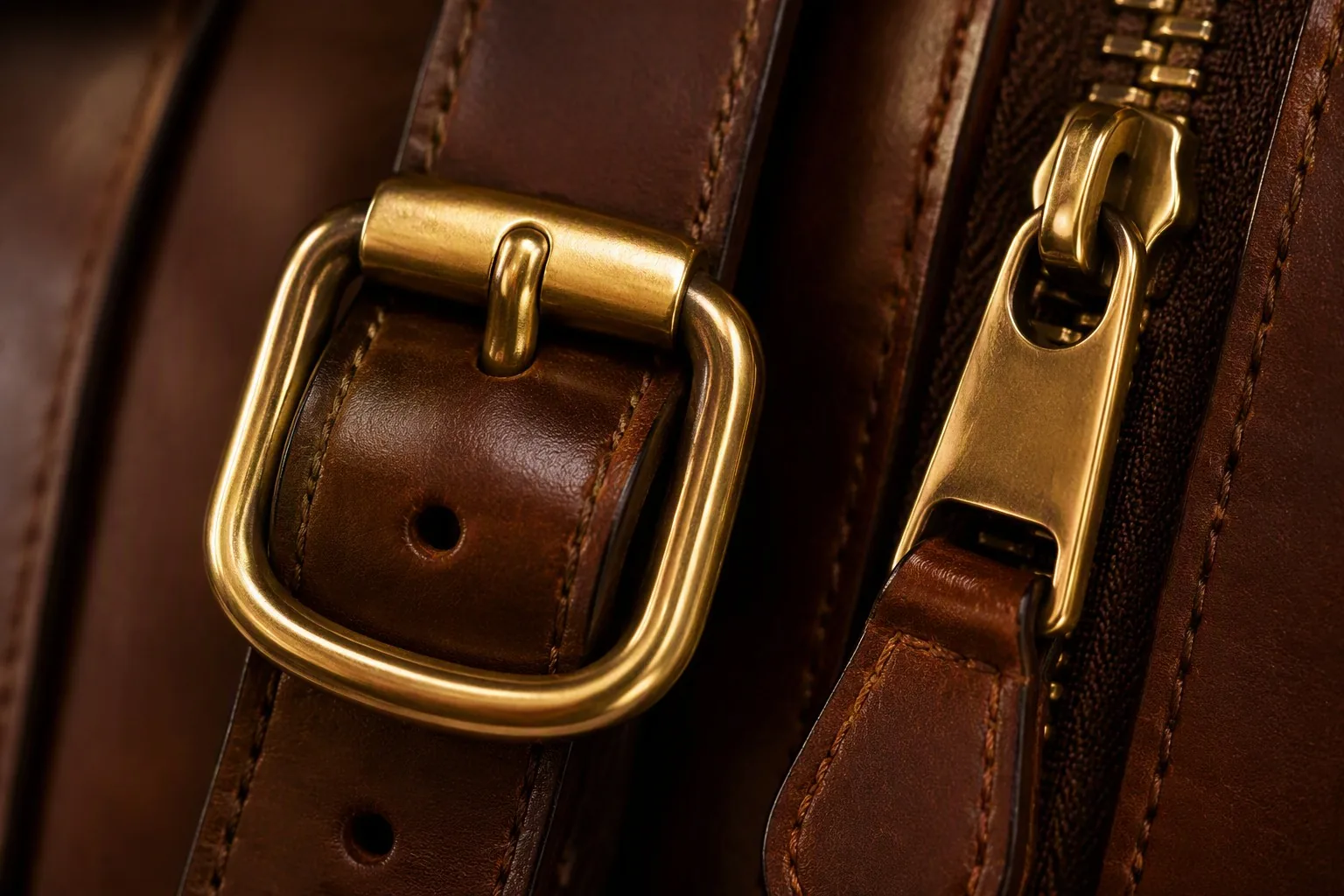
The Forgotten Half of a Leather Bag
Most of the care attention goes to the leather, and the hardware waits in silence until it fails. Hardware deserves half the attention, because it carries half the experience.
The Bag That Looks Old Too Soon
The classic disappointment: a two-year-old bag with lovely leather and ruined hardware. The zipper pull is dull, the buckle has green spots, and the magnetic snap has lost its finish.
The leather would have aged into character. The hardware aged into embarrassment. The difference is care, not quality.
Why Hardware Decides Quality Feel
Run your hand across a bag and the hardware is what you notice first: the weight of the zipper, the smoothness of the buckle, the snap of the clasp.
Cheap hardware feels light and rattles. Quality hardware feels solid and precise. That sensory difference is why serious factories spend real money on the metal parts.
Manufacturer’s point: Leather gets the compliments, but hardware gets the handling. A bag with beautiful leather and weak hardware fails the test every time it is opened.
The Anatomy of Bag Hardware
Every metal piece on a bag has a job, and each job creates different wear patterns. Knowing the parts is the first step to caring for them.
The Zipper: The Most Used Part
The zipper is the hardest-working hardware on any bag. It opens and closes hundreds of times a year, carries the tension of the contents, and meets rain, crumbs, and fingerprints.
Its vulnerable points are the slider, the teeth, and the tape. The slider wears from use, the teeth bend from force, and the tape frays where it meets the leather. A zipper that fails is usually a slider or teeth problem, not a hopeless one.
Buckles and Straps
Buckles take the load of the strap system and the constant motion of adjusting.
The prong presses into the leather with every fastening, and the pivot wears with every move. Leather around the buckle wears from friction even when the metal is fine. This is why buckle failure often shows first as leather wear.
Rivets and Screws
Rivets and screws hold the structural joints: straps to the bag, handles to the frame, hardware to the leather.
A loose rivet rattles, and a rattling rivet enlarges its hole in the leather. Screws can be tightened; rivets need replacement. Catching looseness early protects both the metal and the leather around it.
The Small Parts That Matter
The small metal pieces are easy to overlook and easy to lose.
Magnetic snaps, feet (bottom studs), D-rings, and zipper pulls all carry wear. Feet protect the leather bottom from the ground. D-rings connect straps. Zipper pulls are the piece everyone touches most. Each small part has a care rule and a failure mode.
Why Hardware Tarnishes and Corrodes
Metal does not fail randomly. Tarnish and corrosion follow chemistry, and understanding the chemistry makes prevention obvious.
The Chemistry of Tarnish
Tarnish is a surface reaction: metal meets oxygen, sulfur, or moisture, and forms a dull compound on the surface.
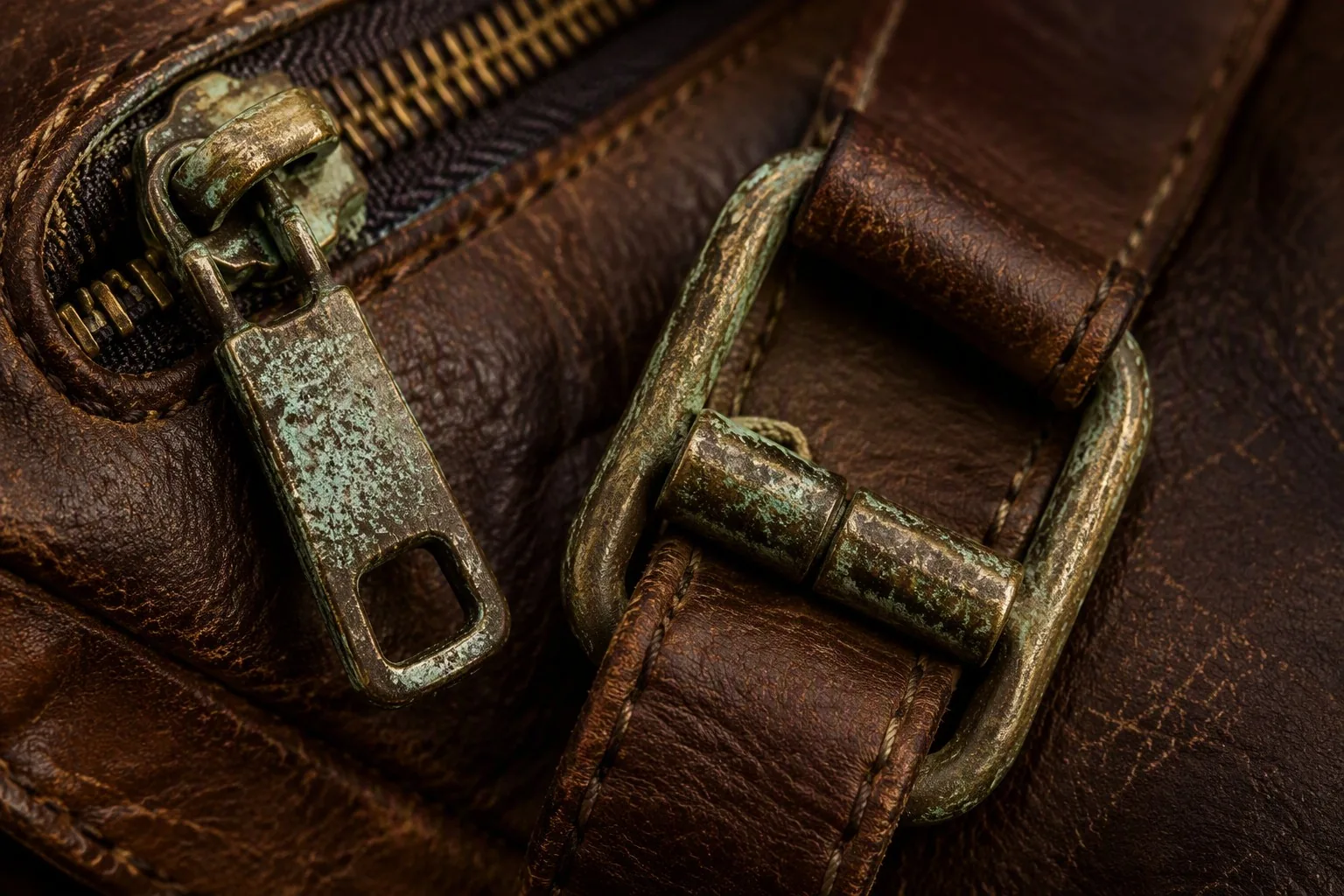
Silver darkens from sulfur. Copper and brass go green from oxygen and moisture. Zinc alloys form white powder when the plating wears. These reactions are slow but constant, and they accelerate with sweat, salt, and humidity.
Corrosion vs Tarnish vs Wear
The three conditions look similar and mean different things.
| Condition | What happens | Reversible? |
|---|---|---|
| Tarnish | Surface dulling from oxygen and sulfur | Yes, with polishing |
| Corrosion | Metal eaten away by moisture and chemicals | Partial, needs repair |
| Wear | Plating rubbed off by friction | No, needs replating |
| Patina | Controlled aging some metals show | Design choice |
The Environment Factor
The same hardware behaves differently in different lives. The variables are all environmental.
Salt air corrodes coastal bags faster than inland ones. Sweat and hand cream attack hardware where the bag is held. Humid climates speed every reaction. A bag carried daily in a city by the sea ages its hardware ten times faster than a bag used weekly inland.
The Corrosion Timeline
Corrosion does not appear overnight. It follows a timeline, and each stage gives you a chance to intervene.
Stage one is dulling: the surface loses its shine within months in harsh conditions. Stage two is spotting: small marks appear where moisture and salts concentrate. Stage three is pitting: the metal itself starts to erode beneath the surface. Stage four is structural failure: the part weakens, bends, or breaks.
Most owners notice at stage two and can still save the hardware. By stage four, replacement is the only honest option.
Why Some Hardware Never Tarnishes
Some bags keep their hardware bright for years with no visible effort. The reason is usually invisible: a protective lacquer or coating.
Clear lacquer over plated hardware seals the surface from oxygen and moisture. The protection lasts until the lacquer wears at friction points. The moment the coating goes, the metal underneath starts its normal aging — which is why hardware wears at the edges first.
Metal Types: What Each Does Over Time
Not all hardware metal is equal. The choice made at the factory determines how the hardware ages, and knowing the metals helps you choose and care.
Brass and Its Many Lives
Solid brass is the premium choice, and its beauty is in its aging. Unlacquered brass tarnishes gracefully into a warm antique tone that suits leather perfectly.
Lacquered brass stays bright until the lacquer wears, then tarnishes underneath. Polished solid brass is the hardware that develops a patina to match the leather.
Zinc Alloy: The Price Standard
Most bag hardware is zinc alloy with a plated finish: the base is cheap, and the plating provides the look.
The plating is the whole story. A thick plating of quality metal lasts years. A thin plating wears in months, exposing the grey zinc underneath. You cannot see the plating thickness, but the factory knows what they fitted.
Stainless Steel and Aluminum
Stainless steel resists corrosion almost completely and suits modern, minimalist hardware. It rarely needs care beyond wiping.
Aluminum is light and corrosion-resistant but soft, and it scratches and dents more easily than steel. Both work best in designs where the metal is part of the aesthetic rather than hidden structure.
What Plating Actually Means
Plating is a thin layer of one metal over another: brass over zinc, nickel over brass, gold over nickel. Each layer adds a property.
The thickness and quality of the plating determine how long the hardware looks new. Cheap plating is the reason identical-looking bags age completely differently.
Hardware and Leather: How They Damage Each Other
Metal and leather live together on a bag, and each can damage the other. Understanding the mutual risks prevents both kinds of harm.
Metal Marking Leather
The most common complaint is metal leaving marks on the leather: green residue from copper, dark streaks from worn plating, and pressure marks from buckles.
Green residue comes from moisture reacting with copper-based metal and transferring to the leather. Cleaning the hardware promptly and keeping the bag dry prevents most marking. Never scrub metal marks on leather with abrasive products; that damages the finish too.
Leather Marking Metal
Leather also attacks metal, mainly through the chemicals used in tanning and finishing.
Acidic leather can corrode the hardware it touches over years. Vegetable-tanned leather is naturally acidic; some finishes accelerate the effect. This is why quality factories test the compatibility of leather and hardware before production.
The Friction Zone
The biggest mutual damage is friction: hardware rubbing against leather every time the bag moves.
Strap buckles rub the shoulder area. Zipper pulls rub the panel behind them. Feet scrape floors and mark the bag’s bottom. Adding protective backing, keeping hardware aligned, and carrying the bag thoughtfully all reduce the friction damage.
Special Care by Bag Type
Different bags face different hardware lives, and the care should match the use.
Diaper Bags and Everyday Carriers
Diaper bags meet everything: spills, sand, playground dirt, and constant opening and closing.
Their hardware needs the most frequent cleaning. Wipe zippers and buckles weekly, check the magnetic flaps that open dozens of times a day, and keep the bag’s contents from pressing sharp metal against the lining.
Backpacks and Commuter Bags
Backpack hardware carries heavy loads and meets weather on commutes.
The buckles and zippers on backpacks take daily stress and outdoor exposure. Inspect the strap hardware monthly, since a failing buckle on a loaded backpack is a genuine safety issue, not just a cosmetic one.
Luxury and Occasion Bags
Occasion bags spend most of their lives in storage, and storage is where their hardware ages.
Store them dry, with hardware protected, and check them seasonally. The hardware that tarnishes fastest on a luxury bag is often the hardware that sat in a humid closet untouched for months.
Cleaning Hardware the Right Way
Cleaning hardware is simple when you match the method to the metal. The mistakes come from using the wrong product on the wrong finish.
The Routine Clean
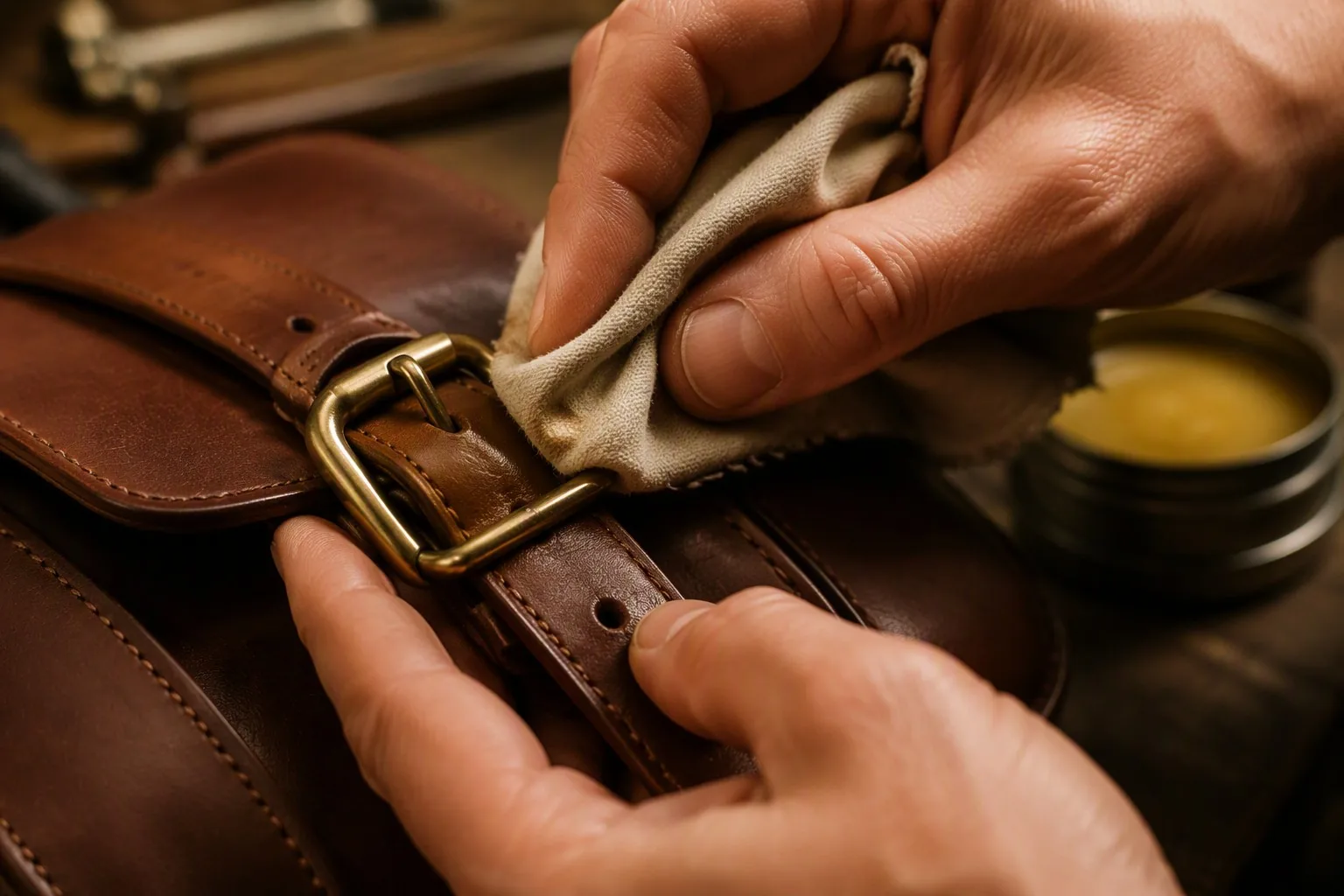
Start with the gentlest method and escalate only when needed. Most tarnish lifts with a soft dry cloth.
For dullness that resists dry cloth, use a barely damp cloth with mild soap, then dry immediately. For real tarnish on bare metal, use the right polish for the metal type. Always protect the leather around the hardware before polishing.
Cleaning by Metal
| Metal or finish | Safe cleaner | Notes |
|---|---|---|
| Solid brass (bare) | Brass polish | Polish then rinse residue |
| Lacquered brass | Mild soap and water | Never use abrasive polish |
| Plated zinc | Mild soap only | Polish strips the plating |
| Stainless steel | Glass cleaner or soap | Resists tarnish anyway |
| Antique finish | Dry cloth only | Polish removes the effect |
| Gold-plated | Soft dry cloth | Never use liquid polish |
What Never to Use
The products that ruin hardware are the ones that strip finishes rather than clean them.
- Abrasive metal polishes on any plated or lacquered surface.
- Acidic cleaners that eat plating and leave green residue.
- Ultrasonic jewelry cleaners on bag hardware with leather attached.
- Rubbing alcohol on painted or antique finishes.
- Submerging hardware in liquid while it is attached to leather.
Protecting Hardware Day to Day
Prevention beats repair, and hardware protection is mostly habit. The habits cost nothing and save the metal.
The Salt and Sweat Problem
Salt and sweat are the two fastest hardware killers, and they meet the bag where it is held.
Hands touch the buckle and strap hardware constantly, transferring sweat and hand cream. Beach air carries salt that settles on every metal surface. After a day at the coast or a hot day of carrying, wipe the hardware with a dry cloth in the evening.
Storage That Saves Metal
How the bag is stored between uses shapes the hardware’s life.
Store bags with hardware protected: buckles closed, zippers done up, and the bag in its dust bag in a dry place. Humidity is the enemy; a dry storage spot and silica packets in the dust bag slow every corrosion reaction.
The Seasonal Wipe
Twice a year, give every metal part a full wipe-down and inspection. It takes ten minutes and catches problems while they are small.
Look for dull spots, green residue, and plating wear. Treat tarnish while it is surface-deep, before it becomes corrosion.
The Lifestyle Factor
Your habits write the hardware’s story as much as the climate does.
Perfume and hand cream contain chemicals that attack plating where they touch. Sunscreen leaves residue that holds moisture against metal. Gym carry, beach days, and commute sweat all accelerate corrosion. After any of these, a quick evening wipe of the metal is the cheapest insurance.
Cleaning After a Hardware Event
Certain moments need immediate attention: a spill on the bag, a day in salt air, a soak in the rain.
After each event, dry the hardware with a cloth, check the moving parts, and treat any moisture that reached the metal. The ten minutes spent then save the replating cost later.
Common Hardware Problems and Fixes
Most hardware problems have simple fixes when caught early. Knowing the fix keeps a small issue from becoming a replacement.
Zipper Problems
Zippers fail more than any other hardware, and the fixes follow the symptom.
A sticking zipper needs cleaning and lubrication: wipe the teeth, then run a zipper-safe lubricant along the track. A zipper that separates needs the slider replaced, which any repair shop can do. A zipper that feels rough usually has bent teeth from forced closing.
Buckle and Rivet Issues
Buckles wear at the moving parts: the prong, the pivot, and the frame edges.
A loose prong can often be tightened. A worn pivot needs a new buckle. Loose rivets and screws should be tightened or replaced early, before the leather around them wears from movement.
Magnetic Snaps and Clasps
Magnetic snaps weaken with age, and the weakening is usually the magnet, not the mechanism.
A snap that barely holds needs a replacement magnet, fitted by a repair shop. A snap that sticks needs the edges checked for burrs. Never force a sticking snap; the leather around it will tear before the snap gives.
The Problem-Fix Quick Table
When hardware misbehaves, the symptom points to the fix. This table covers the common failures owners meet.
| Problem | Likely cause | Fix |
|---|---|---|
| Zipper sticks | Dirt in teeth, dry track | Clean and lubricate |
| Zipper separates | Worn slider | Replace slider |
| Zipper feels rough | Bent teeth | Straighten or replace |
| Buckle prong loose | Worn pivot | Tighten or replace |
| Rivet rattles | Loose or oversized hole | Replace rivet early |
| Snap barely holds | Weak magnet | Replace magnet |
| Green spots on metal | Moisture + copper | Clean, dry storage |
| Dull plating | Normal wear | Accept or replate |
| Metal marks leather | Corrosion transfer | Clean hardware promptly |
The Cost of Neglect
Hardware neglect is cheap to ignore and expensive to fix, and the math follows a pattern.
A zipper cleaned and lubricated costs nothing. A zipper replaced costs tens of dollars. A bag with a failed zipper that is carried anyway damages its contents and its leather. The escalation from free to expensive happens quietly over months.
The same logic applies to every part. A loose rivet tightened early is free. A loose rivet ignored for a year enlarges its hole, and the repair then involves the leather, not just the metal. Catch the small things and the large repairs never arrive.
When to Repair vs Replace
Hardware repair is cheap when the problem is caught early. The decision between repair and replacement depends on the part and the bag’s value.
The Repair-Replace Logic
- Zippers: always repairable, replacement is standard.
- Buckles: repairable if the frame is sound.
- Rivets: replace, never repair.
- Magnetic snaps: replace the magnet.
- Plating wear: not repairable without replating, which usually costs more than the part.
The Value Question
Before spending on hardware repair, compare it with the bag’s value.
A $40 buckle replacement on a $300 bag is obvious value. The same repair on a $40 bag is questionable. And for a beloved bag with irreplaceable leather, the hardware repair is always worth it — the leather is the point.
What a Repair Shop Should Do
A good repair shop protects the leather while working on the metal, uses matching hardware, and explains the options honestly.
Ask what hardware they will fit and whether the finish matches the rest of the bag. A mismatched buckle on a beautiful bag is worse than the original wear.
From the Factory: Choosing Hardware That Lasts
The hardware’s future is decided when the bag is specified, not when it is cleaned. Factories make choices that owners never see.
What We Test
Serious factories test hardware before production, and the tests predict real-world behavior.
The salt spray test exposes plated hardware to salt mist and measures when corrosion starts. The rub test checks how quickly plating wears. The pull test measures zipper and snap strength. A factory that cannot tell you its test results has not tested.
The Finish Question
The plating specification is the most important hardware detail, and it is also the easiest to cut costs on.
Ask what the plating is, how thick it is, and whether it is lacquered. The answers separate hardware designed for years from hardware designed for the showroom.
Solid vs Plated: The Spec Question
When a brand asks us to choose hardware, the first question is always solid or plated, and the answer depends on the bag’s life.
Solid brass suits premium bags that will be repaired and loved for decades; its tarnish is part of its character. Quality plated zinc suits fashion bags at accessible prices, where the finish outlives the style cycle. The honest advice is that neither is wrong — but each belongs in a different product.
Hardware Testing Standards
Professional hardware testing follows published standards, and knowing the names helps you ask precise questions.
The salt spray test (ISO 9227) measures corrosion resistance. Plating thickness is measured in microns, and quality bag hardware typically carries 1–3 microns of functional plating. When a factory cites its standards, the hardware has a spec; when it cannot, the hardware is whatever the supplier sent.
The Hardware Care Checklist
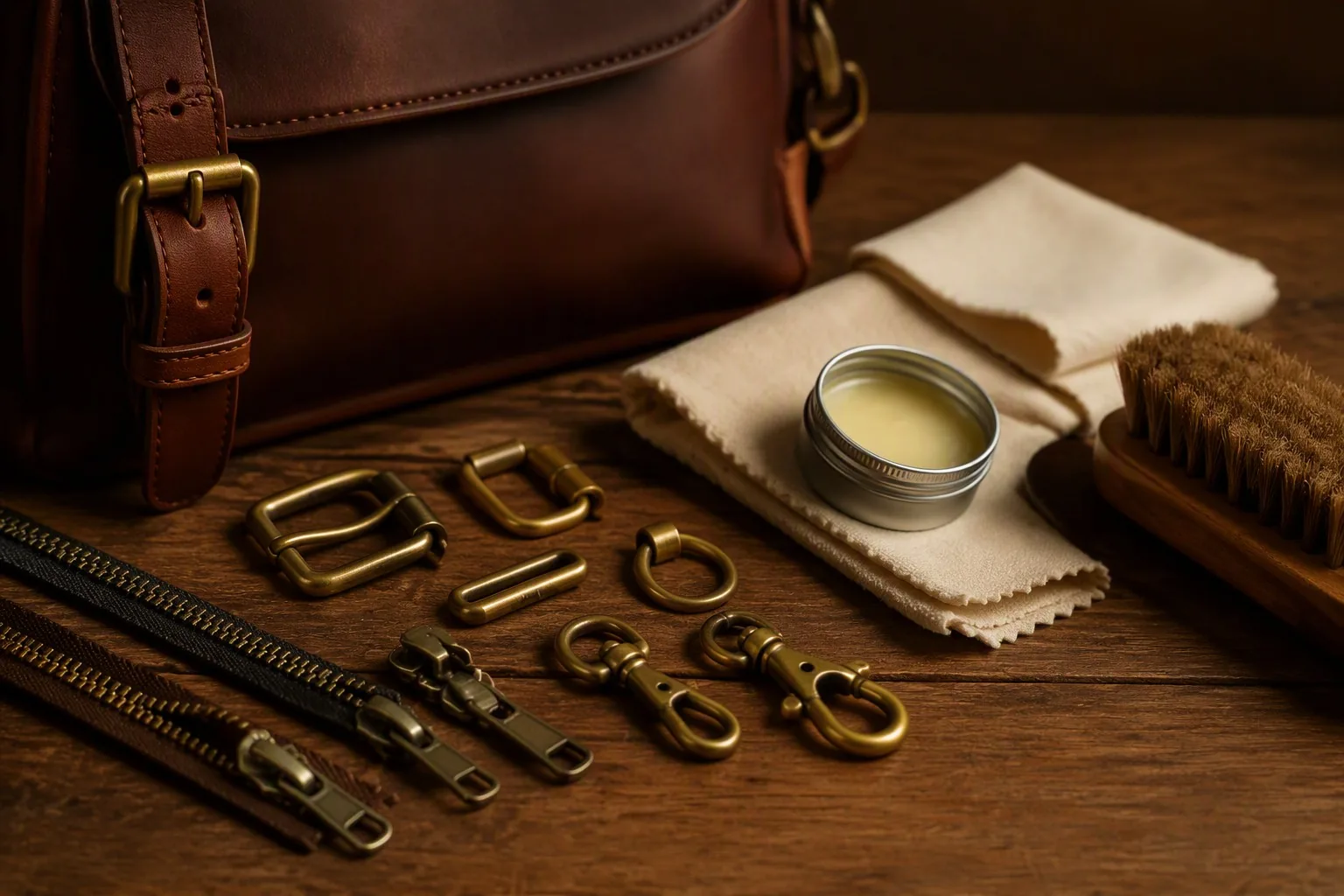
A simple checklist covers everything this guide teaches. Run it twice a year, or after any hardware event.
- Wipe all hardware with a dry cloth after damp or salty days.
- Clean zippers and check their action monthly.
- Tighten any loose rivets or screws immediately.
- Treat tarnish with the correct polish for the metal.
- Store the bag dry with hardware closed and protected.
- Inspect plating wear and green spots twice a year.
- Never use abrasive or acidic products on plated hardware.
- Repair failing parts early, before leather damage follows.
The Hardware Quality Test at Purchase
The best time to prevent hardware problems is before you buy. A sixty-second examination at the store reveals most future failures.
The Feel Test
Quality hardware feels solid in the hand. Zippers glide smoothly, buckles engage cleanly, and snaps close with confidence.
Light, rattling hardware signals thin metal and loose construction. Rough zipper action signals poor slider quality. Hardware that feels cheap now will feel broken later.
The Look Test
Inspect the metal finish in good light, looking for the details that matter.
Check for even plating, no bubbles or flaking, and consistent color across all the pieces. Look at the edges of buckles and frames, where thin plating shows first. Check that zipper teeth are even and aligned along the whole length.
The Ask Test
The most revealing test is the question you ask the seller or the factory.
Ask what the hardware is made of, whether it is solid or plated, and whether it is lacquered. A seller who knows the answers is selling quality. A seller who shrugs is selling whatever arrived.
Frequently Asked Questions
Why does the hardware on my leather bag tarnish?
Metal reacts with oxygen, moisture, sulfur, and salts in the air and on your hands. Humidity, sweat, and coastal salt accelerate the reaction. Tarnish is a surface condition and is usually reversible with the right polish.
How do I clean tarnished brass hardware on a bag?
For bare solid brass, use brass polish on the metal only, protecting the surrounding leather with tape. For lacquered or plated brass, use mild soap and water only; abrasive polish strips the protective layer.
Can I use jewelry cleaner on bag hardware?
No. Jewelry cleaners are too aggressive for plated bag hardware and can strip the finish, and submerging hardware that is attached to leather damages the leather. Use methods matched to the metal and finish instead.
What causes green spots on my bag’s hardware?
Green spots are copper oxide or verdigris, from moisture reacting with copper in brass or plating. They signal that moisture is reaching the metal. Clean them off and improve the bag’s storage conditions.
How do I stop a zipper from sticking?
Clean the zipper teeth with a dry cloth, then apply a zipper-safe lubricant along the track. If sticking continues, check for bent teeth or a worn slider, which a repair shop can replace.
Is it worth repairing hardware on an old leather bag?
Usually yes, if the leather is in good condition. Replacing a buckle, zipper, or snap costs a fraction of a new bag and can extend the bag’s life by years. Compare repair cost with bag value for cheap bags.
How long should bag hardware last?
With reasonable care, quality plated hardware lasts several years of daily use, and solid brass can last decades. Poor plating, salt air, and neglect shorten that dramatically.
What hardware should I look for when buying a leather bag?
Ask about solid versus plated metal, plating quality, and whether moving parts run smoothly. Solid brass and quality stainless are the safest long-term choices, and well-made zippers are worth paying for.
Hardware and the Bag’s Second Life
Leather bags outlive their first owners more than any other accessory, and hardware decides whether the second life happens.
The Resale Reality
The second-hand market judges bags on two things: the leather and the hardware. Bright, functioning hardware lifts resale value; tarnished, failing hardware cuts it sharply.
The same bag sells for very different prices depending on whether its zippers glide and its buckles shine. Hardware care is not vanity — it is the difference between a bag that holds value and one that is written off.
The Hand-Me-Down Test
A bag that passes to a child or a friend carries its hardware condition forward. Failing hardware at the handover becomes a repair bill for the new owner.
The bag that was cared for arrives working. The bag that was ignored arrives as a project. Most owners would rather pass on a working bag than a project.
The Legacy Standard
The bags that become heirlooms share one trait: their hardware was maintained. Solid brass that was polished, zippers that were lubricated, and parts that were repaired on time.
Leather ages into beauty on its own. Hardware ages into beauty only with help. The bags that last generations are the ones whose owners gave the metal the same attention they gave the leather.
The Bottom Line
Hardware is the working half of a leather bag, and it deserves the same care discipline as the leather.
Match the cleaning method to the metal, protect the hardware from salt and humidity, and repair problems while they are small. The bag that looks new at five years is the one whose owner cared for both halves.
Choose well at the factory level, care consistently at home, and the hardware will age as gracefully as the leather it holds together.
