
Is Leather Waterproof? How to Protect Bags from Water Damage
Is Leather Waterproof? How to Protect Bags from Water Damage
The rain starts without warning, and your leather bag is caught in it. What happens next decides whether the bag survives the season or joins the pile of leathers that never recovered.
Most owners do not know the answer to the simplest question: is leather waterproof? The short answer is no. The useful answer is more interesting, and it is the one this guide covers.
Leather is a natural material that drinks water when it can, and the drinking is what causes most water damage. But leather also survives rain better than its reputation suggests, when the owner understands the limits and the recovery routine.
This guide explains what water does to leather, which treatments actually protect it, and how to dry a wet bag without making things worse — all from the perspective of the factory that makes these bags.
- The Science of Water and Leather
- The Question Every Leather Owner Asks
- Is Leather Waterproof? The Honest Answer
- How Water Damage Happens
- Protection by Leather Type
- Waterproofing Treatments: What Actually Works
- Reading the Signs: Water Damage Diagnosis
- Restoring a Water-Damaged Bag
- Drying a Wet Bag Correctly
- Water-Resistant Leathers: Do They Exist?
- Daily Habits for Wet Weather
- From the Factory: How We Make Bags Rain-Ready
- The Cost of Ignoring Water
- The Myth List
- Water and the Forgotten Parts
- Frequently Asked Questions
- The Bottom Line
The Science of Water and Leather
The physics behind water damage explains why some leathers survive rain and others never recover. The science is simple once you see it.
The Fiber Network
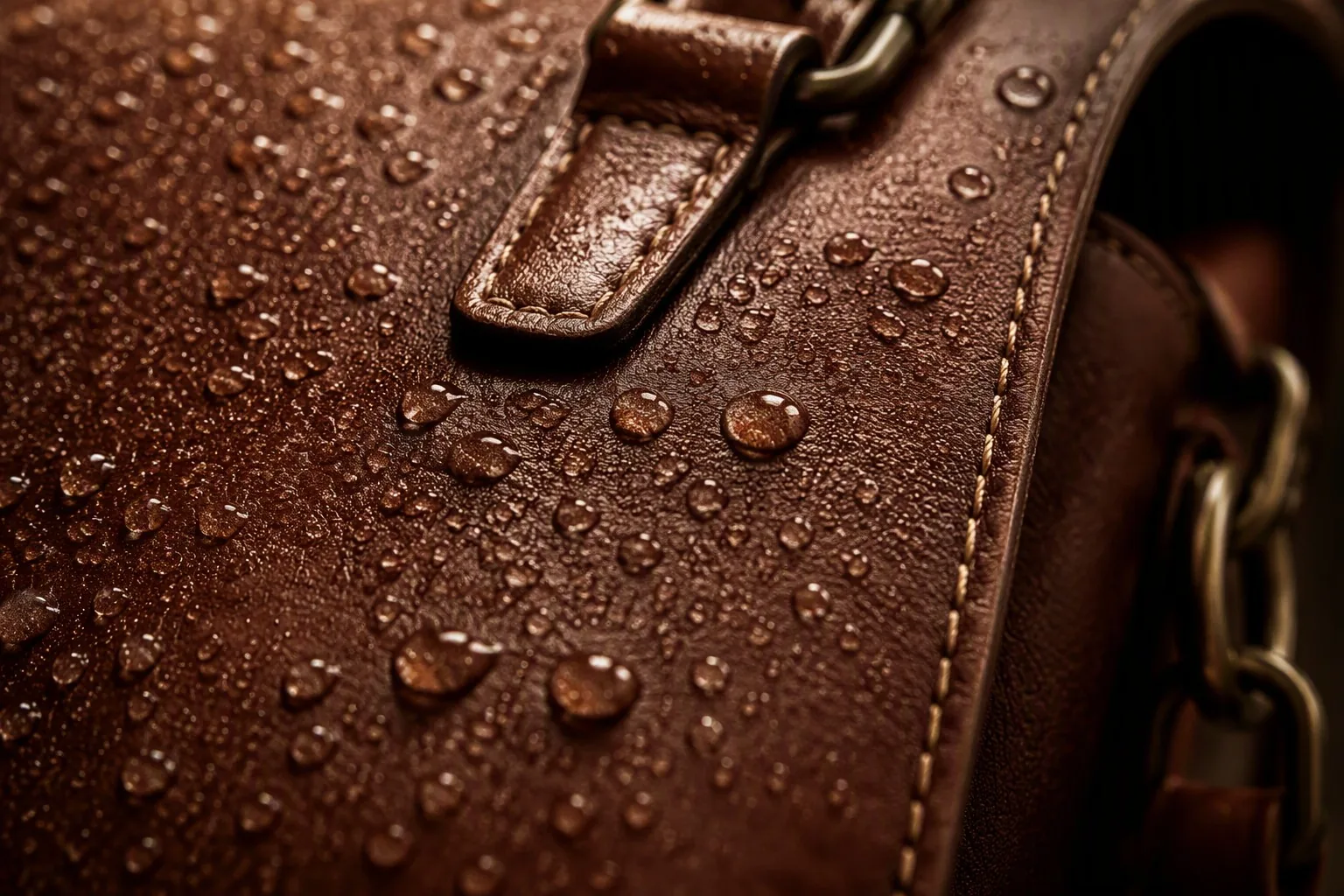
Leather is a network of collagen fibers, and water moves through it the way it moves through a sponge. The rate depends on the fiber density and the finish.
Tight fibers with a sealed finish slow water dramatically. Loose fibers with an open finish drink it within seconds. The same rainstorm can bead on one bag and soak another in minutes.
Moisture and the Air
Leather constantly exchanges moisture with the air around it. In humid air, leather absorbs; in dry air, it releases.
This breathing is why leather feels comfortable and ages gracefully — and why sealing it completely with heavy products does more harm than good. A leather that cannot breathe cannot regulate its own moisture.
The Oil Balance
Natural leather oils keep the fibers supple. Water displaces those oils, and when the water evaporates, the oils do not fully return.
This is why wet leather dries stiff and why conditioning after drying matters. The conditioner replaces what the water took away.
Why Some Leathers Handle Water Better
The tannage determines the baseline. Chrome tanning binds the fibers tightly and leaves them naturally more water-tolerant.
Vegetable tanning leaves the fibers open and thirsty. Oil tanning and wax loading add water resistance by filling the spaces between fibers with water-repelling material.
The Question Every Leather Owner Asks
Every leather owner eventually faces the rainy day moment. How you handle it determines whether the bag comes out better or worse.
The Rainy Day Moment
A few drops land on the bag. They sit on the surface, then sink in, leaving dark patches that spread slowly across the leather.
The owner’s instinct is to wipe the water away immediately. That instinct is often wrong, and this guide explains why before you do it next time.
What Water Actually Does to Leather
Water does not dissolve leather the way it dissolves paper. The damage is slower and more subtle, and it builds over repeated exposures.
The fibers absorb water, the tanning agents migrate, and the leather stretches, stains, and stiffens. One rainstorm rarely kills a bag. A hundred small exposures change its character permanently.
The Core Question: Waterproof or Water-Resistant?
The honest language matters: waterproof means no water passes, ever. Water-resistant means water is slowed and repelled, but not stopped.
Leather can be made water-resistant with care and treatment. It can never honestly be called waterproof, because the material itself breathes and absorbs.
Manufacturer’s point: When a seller calls a leather bag waterproof, ask what they mean. Most mean water-resistant at best. The difference protects your purchase and your expectations.
Is Leather Waterproof? The Honest Answer
No leather is truly waterproof, and understanding why helps you protect it intelligently instead of fearfully.
Why Leather Absorbs Water
Leather is tanned animal skin, and skin is a network of collagen fibers. Between those fibers lie microscopic gaps that act like tiny channels.
When water meets the surface, it is pulled into those channels by capillary action. The tighter and more finished the leather, the slower the pull; the more open and natural the leather, the faster it drinks.
The Tannage Difference
Vegetable-tanned leather absorbs water readily and shows water stains quickly. Chrome-tanned leather is more resistant because the tanning fills more of the fiber structure.
Oil-tanned and waxed leathers (like pull-up) carry natural water resistance from their oils. This is why the same rainstorm affects different bags very differently.
Leather vs Other Materials
| Material | Water behavior | Real-world rain performance |
|---|---|---|
| Vegetable-tanned leather | Absorbs, stains easily | Needs treatment and fast drying |
| Chrome-tanned leather | Absorbs slowly | Survives light rain well |
| Oil/waxed leather | Beads and sheds | Best natural resistance in leather |
| PU/PVC (faux leather) | Does not absorb | Waterproof surface, may peel with age |
| Coated nylon | Sheds water | Near waterproof, dries fast |
| Rubber/canvas | Impermeable | Fully waterproof, no leather feel |
How Water Damage Happens
Water damage follows patterns, and recognizing them is the first step to prevention.
The Six Ways Water Hurts Leather
Each type of damage has a different mechanism and a different prevention.
- Water stains: dissolved tannins and dyes migrate, leaving dark rings when the leather dries unevenly.
- Stiffening: absorbed water displaces the natural oils, and the fibers dry rigid and brittle.
- Stretching: wet leather is soft and stretches under load, changing the bag’s shape permanently.
- Mold and mildew: trapped moisture in a closed space grows fungus that spots and weakens the leather.
- Salt and mineral marks: dried water leaves mineral residue on the surface, visible as white haze.
- Delamination: repeated wetting breaks down finishes and edge paint, causing peeling at edges.
Water Stains Explained
The dark ring left after a water drop dries is not dirt. It is the leather’s own tannins and oils, redistributed by the water.
When the water evaporates, the dissolved material settles unevenly, and the boundary of the drop leaves a visible line. This is why quick, even drying matters more than frantic wiping.
Why Wiping Makes It Worse
Rubbing a wet spot spreads the water into a larger area and pushes it deeper into the fibers.
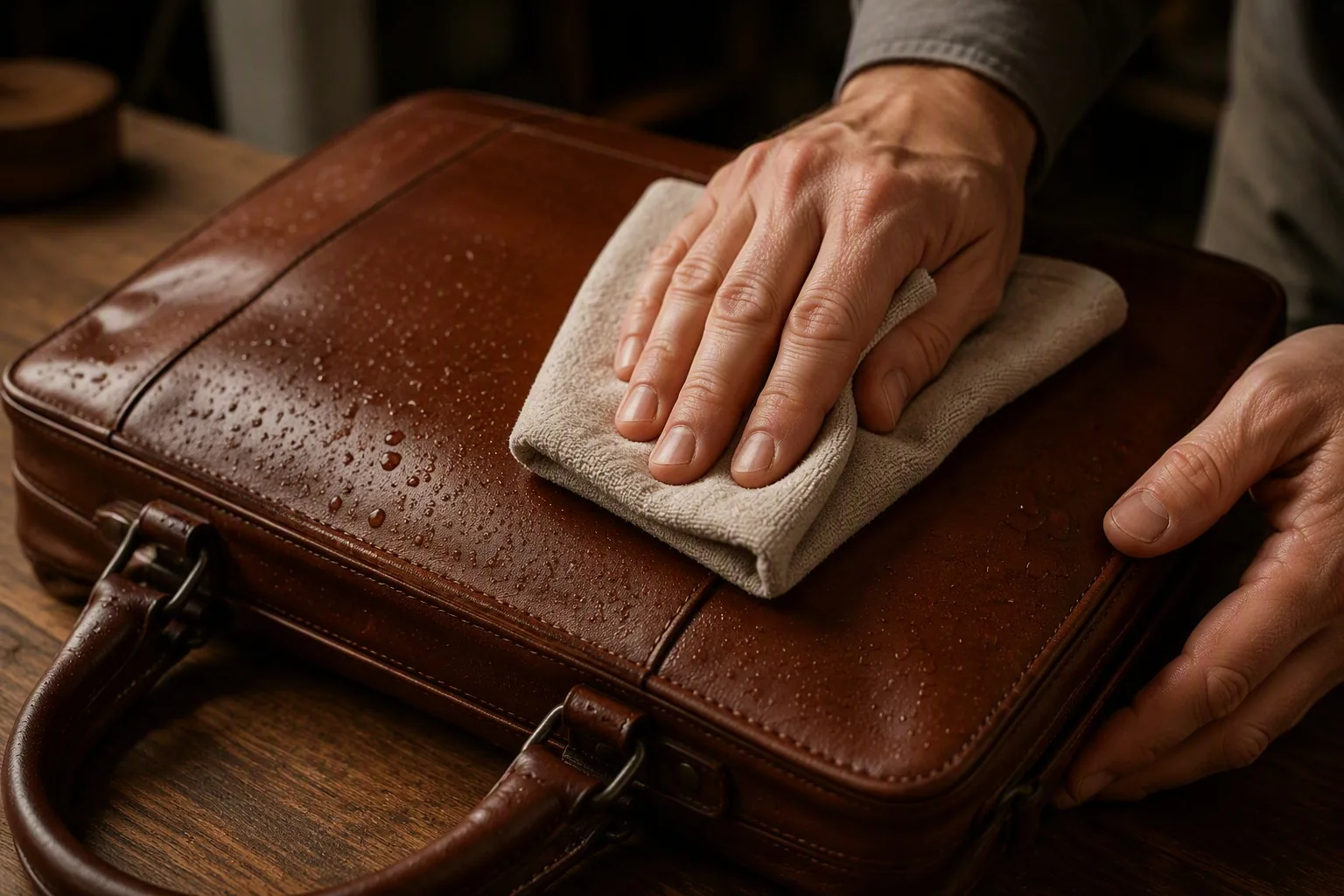
It also abrades the surface and lifts the finish. The correct response is blotting, not wiping — press with a dry cloth to lift water, never scrub across the surface.
Protection by Leather Type
Not every leather needs the same protection. Matching the treatment to the leather is half the battle.
Smooth Finished Leather
Sealed, pigmented leather already resists water through its finish. A light spray treatment adds a layer of protection without changing the look.
Avoid heavy wax on finished leather; it builds up on the surface and dulls the finish. A breathable spray every few months is usually enough.
Aniline and Semi-Aniline
Aniline leather has no protective pigment layer, so it absorbs water and shows stains more readily. Semi-aniline adds a light protective coat.
For aniline bags, use products designed for aniline leather and test them on a hidden area first. The beauty of aniline comes with genuine vulnerability to water.
Suede and Nubuck
Suede and nubuck are the most water-sensitive leathers because their surface is open fiber. Water marks them quickly, and the marks are hard to remove.
Dedicated suede protectors create a barrier without flattening the nap. Reapply them regularly, and accept that suede is a fair-weather friend in steady rain.
The Protection Matrix
| Leather type | Natural resistance | Best protection | Reapply |
|---|---|---|---|
| Finished top-grain | Good | Light spray | Every 3–6 months |
| Chrome-tanned | Good | Light spray | Every 3–6 months |
| Aniline | Low | Aniline-safe spray | Before each wet season |
| Vegetable-tanned | Low | Conditioning wax | Monthly in use |
| Oil/waxed (pull-up) | Good | Replenishing oil | Every 3–4 months |
| Suede/nubuck | Very low | Suede protector | Before wet seasons |
Waterproofing Treatments: What Actually Works
Treatments can make leather genuinely water-resistant. The market is full of options, and only some of them deserve your money.
Sprays: The First Line of Defense
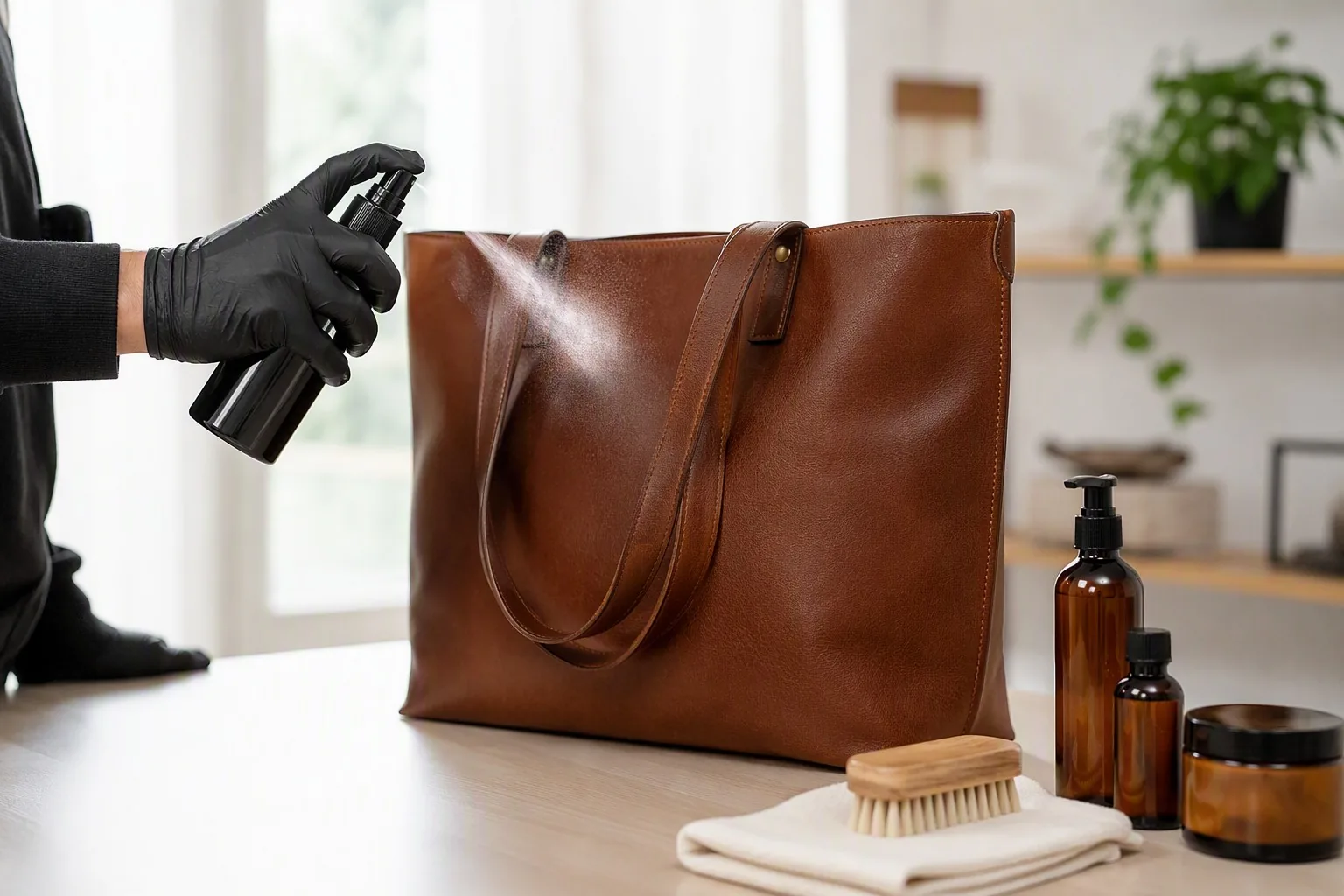
Silicone-free waterproofer sprays create a breathable barrier that makes water bead on the surface instead of sinking in.
Apply them in thin, even coats to clean, dry leather, and reapply after conditioning or every few months. A good spray treatment is invisible and changes neither the feel nor the color of the leather.
Waxes and Creams: Protection with Conditioning
Wax-based products add water resistance while feeding the leather. They suit smooth leathers and give a soft sheen.
The trade-off is that heavy wax builds up over time and can darken the leather. For light-colored bags, sprays are usually the safer choice than waxes.
Factory-Level Water Resistance
Some leathers are treated at the tannery or the factory, with water resistance built into the finish.
Finished leathers with a sealed surface resist water by design; natural anilines and nubucks do not. Ask the factory what the leather’s finish actually does before trusting a “waterproof” label.
What Never to Use
Some products promise waterproofing and deliver damage instead.
- Silicone-heavy sealants block the leather’s breathability and cause cracking.
- Household polish or wax contains solvents that strip the finish.
- Vaseline or cooking oils attract dirt and never dry properly.
- Waterproofing sprays on suede can flatten the nap permanently unless the spray is made for suede.
Reading Product Labels Like a Factory
Product labels hide more than they reveal, and a few minutes of reading prevents most treatment mistakes.
Look for the leather type the product names, the solvent base, and the breathability claim. A product that says “for leather” but lists no leather type is usually a general polish in disguise. Products that promise “full waterproofing” for leather are marketing, not engineering.
The Product Types Compared
| Product type | Water resistance | Conditioning | Best leathers |
|---|---|---|---|
| Silicone-free spray | Good | No | Most smooth leathers |
| Wax balm | Good | Yes | Vegetable-tanned, rugged bags |
| Conditioning cream | Light | Yes | Regular upkeep, not storms |
| Suede protector | Good | No | Suede and nubuck only |
| Oil dressing | Moderate | Strong | Pull-up, oil-tanned leather |
Reading the Signs: Water Damage Diagnosis
Damage appears in stages, and reading the stage tells you whether the bag can be saved at home or needs a professional.
Stage One: Fresh Wetness
The leather is damp but not stained, and the shape is unchanged. This stage is fully recoverable with correct drying.
Blot, air dry, and condition. Most bags at stage one come through with no visible trace.
Stage Two: Water Stains and Stiffness
The bag dried with rings or patches, and the leather feels stiff in the affected areas. Recovery is still possible at home.
Conditioning softens stiffness and may fade light stains. Repeat conditioning over several days before considering anything stronger.
Stage Three: Shape Loss and Mold
The bag stretched out of shape, or mold has appeared. Home recovery is partial at best.
Professional cleaning can address mold and reshape the structure, but the leather has lost strength. This stage is where a bag’s lifespan shortens noticeably.
Stage Four: Cracking and Delamination
The surface cracks when flexed, or the finish peels at the edges. The structure itself has weakened.
At this stage, repair costs often approach replacement value. Prevention was the only real cure, and the lesson is the one this guide teaches: dry fast, condition well, treat before the rain.
Restoring a Water-Damaged Bag
A damaged bag is not automatically finished. A staged restoration routine saves many of them.
The Basic Restoration Routine
Dry the bag fully at room temperature first. Never work on damp leather.
Condition generously and let it absorb overnight, then buff. Repeat daily for a week on heavily affected areas. Most water stiffness and many stains respond to patient conditioning.
When to Try Deep Cleaning
If stains remain after conditioning, a leather cleaner designed for the specific leather type may lift them.
Clean a small hidden area first, then the visible stains in gentle circles. Rinse residue with a barely damp cloth and condition again after drying.
When to Call a Professional
Certain damage belongs to professionals: mold deep in the lining, structural reshaping, delamination repair, and stains that survived home treatment.
A good leather specialist can often reverse what looks hopeless. The earlier you bring the bag, the better the odds and the lower the bill.
The Restoration Decision Table
| Damage level | Home treatment | Professional needed? |
|---|---|---|
| Light dampness | Blot, dry, condition | No |
| Water rings | Condition repeatedly | Only if stubborn |
| Stiffness | Condition over a week | If persists |
| Mold | Dry and brush surface | Yes, for deep mold |
| Shape loss | Stuff and reshape | Often yes |
| Cracking | Prevent further damage | Yes, structural |
Drying a Wet Bag Correctly
When the bag does get wet, the first minutes and hours decide the outcome. The routine is simple, but every step matters.
The First 10 Minutes
Blot the surface gently with a dry, clean cloth or paper towel to lift standing water. Do not rub, and do not apply heat.
Empty the bag completely so nothing presses against the wet leather from inside. Stuff it lightly with dry cloths or paper to hold its shape while it dries.
Drying Methods Compared
| Method | Speed | Safety | Verdict |
|---|---|---|---|
| Air dry at room temperature | Slow (24–48h) | Safest | Always preferred |
| Fan at low speed | Moderate | Safe | Good for speeding up |
| Sunlight | Fast | Risky | Fades and cracks leather |
| Hair dryer or heater | Fast | Dangerous | Never use |
| Microwave or oven | Fast | Destructive | Never, ever |
The Never List
Heat is the enemy of wet leather. It drives moisture out so fast that the fibers shrink, crack, and lose their oils.
Sunlight fades the color while it dries, leaving a light patch where the bag dried fastest. And never store a damp bag in a closet or dust bag, where trapped moisture grows mold overnight.
After the Bag Is Dry
Once fully dry, the leather needs its oils restored. Apply a light conditioner made for leather, let it absorb, and buff gently.
A water stain that dried in may soften with conditioning. If it remains, a professional leather cleaner can often lift it. Conditioning after drying is what separates bags that recover from bags that scar.
Water-Resistant Leathers: Do They Exist?
Some leathers genuinely shrug off rain better than others. Knowing which ones helps you choose the right bag for a rainy climate.
Treated vs Naturally Durable
The most rain-friendly leathers combine two things: a dense, tight grain and a finish that seals it.
Chrome-tanned, pigmented leathers with a sealed finish resist water well. Smooth, finished top-grain outperforms open-pored aniline and suede in the rain. The trade-off is the tactile richness of the more natural leathers.
Choosing Leather for Rainy Climates
For buyers in wet regions, the practical order of preference runs from most to least rain-tolerant.
- Sealed, pigmented leather (smooth, finished)
- Chrome-tanned leather with treatment
- Waxed or oiled leather (natural resistance, needs care)
- Vegetable-tanned leather (beautiful, but stains easily)
- Suede and nubuck (avoid in steady rain)
The Diaper Bag Question
Diaper bags meet water constantly: bottle leaks, wipe spills, and rain at the school gate. For a mom or dad carrying everything, water resistance is not a luxury.
A wipe-clean exterior — sealed leather, or a washable fabric — protects the contents and the bag itself. Ask the factory about the finish before choosing a leather diaper bag for a young family.
Daily Habits for Wet Weather
Protection is a habit, not a product. A few routines keep a leather bag happy through the wettest seasons.
Before the Rain
Apply a waterproofer spray before the season starts, not after the first storm. Treated leather gives you time to get out of the rain; untreated leather gives you none.
Keep a travel-sized protector in your bag for reapplication, and check the surface periodically for water beading to know when the treatment has worn off.
During the Rain
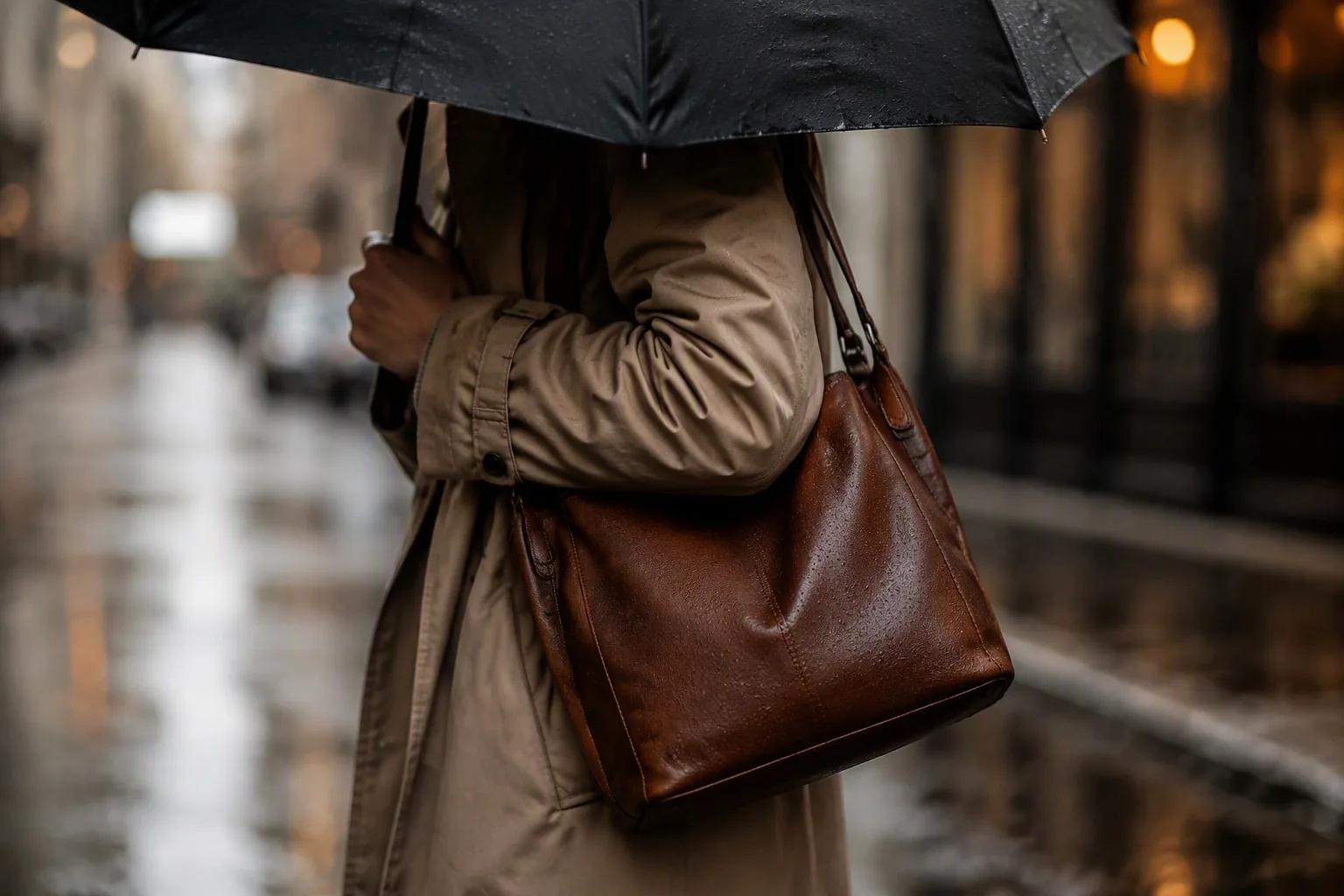
Carry the bag under an umbrella or against your body, protected by your coat. Hold it high when crossing streets where puddles gather.
If the bag must travel unprotected, zip it fully and tuck any loose straps inside so they do not absorb water and transfer it to the body of the bag.
After the Rain
Blot, dry at room temperature, and condition if the bag got genuinely wet. Treat a damp bag the same evening, not the next weekend.
The difference between a rainy-season survivor and a ruined bag is usually one evening of proper drying.
The Traveler’s Water Kit
Travelers meet weather they cannot choose, and a small kit carries the whole protection routine.
Pack a travel-sized waterproofer, a soft cloth, and a mini conditioner. Treat the bag before departure, blot any rain the same day, and condition once mid-trip. The kit weighs nothing and turns an unexpected monsoon into a manageable evening.
Seasonal Check-Ins
Twice a year, give the bag a protection review: before the wet season and after it.
Before the season, clean, condition, and apply fresh protector. After the season, check for stains, stiffness, or mold signs and address them while they are small. The ten-minute check-in prevents the hundred-dollar repair.
From the Factory: How We Make Bags Rain-Ready
Factories make choices that determine a bag’s rain performance before it ever reaches the customer. These choices are worth asking about when you buy.
The Finish Conversation
The single biggest rain factor is the finish. A sealed, pigmented finish resists water; an open, natural finish drinks it.
When a brand orders bags for a rainy market, we discuss the finish first. The same leather, with a different finish, behaves completely differently in rain.
Testing Before Production
Serious factories test leather for water behavior before production. The simple tests are worth knowing about.
A water droplet test shows how quickly the surface absorbs. A rub test checks whether the finish holds. A flex test shows whether the leather cracks when bent wet or dry.
The Care Card We Ship
Every quality bag ships with care instructions, and water guidance is the most important paragraph.
The card should say what the finish tolerates, whether treatment is recommended, and what to do after rain. If a bag ships with no care card, the brand is leaving the owner to learn the hard way.
The Cost of Ignoring Water
Water damage is not just cosmetic. The numbers explain why prevention is cheaper than repair.
The Price of a Ruined Bag
A quality leather bag costs between one hundred and several hundred dollars. One night in the rain, improperly dried, can end its life entirely.
The replacement cost is the obvious price. The hidden cost is the loss of a bag that was broken in, loved, and exactly right — a bag that no new purchase instantly replaces.
The Price of Repair
Professional leather restoration runs from tens of dollars for cleaning to over a hundred for structural work, plus shipping and weeks without the bag.
Prevention costs far less: a protector spray, a few minutes of drying discipline, and a conditioner. The ratio is often ten to one in favor of prevention.
The Real Lesson
Factories see the same pattern every season. The bags that die young are rarely the cheapest ones; they are the ones whose owners never learned the water routine.
A bag that costs $200 and dies at two years cost $100 a year. A bag that costs $250 and lives fifteen years cost under $17 a year. Water care is how the second bag happens.
The Myth List
Leather water myths survive because they sound reasonable. Each one below costs owners real bags.
- “Leather is waterproof once treated.” Treatment makes it water-resistant; no treatment makes it truly waterproof.
- “Wipe water off immediately.” Blot, do not wipe. Wiping spreads the water and damages the surface.
- “Heat dries leather faster.” Heat cracks and shrinks leather. Air drying is slower and safer.
- “Water stains mean the bag is ruined.” Many stains lift with conditioning or professional cleaning.
- “Suede can never touch water.” Suede survives light rain with correct drying, though it needs more care than smooth leather.
- “All leathers react to water the same.” Tannage and finish change everything. Know your leather.
Water and the Forgotten Parts
The leather gets the attention, but water attacks the whole bag. Hardware and lining have their own vulnerabilities.
Hardware in the Rain
Zippers, buckles, and rivets face water differently depending on their metal and plating.
Solid brass and stainless steel tolerate moisture well. Plated zinc corrodes where the plating wears, leaving green or dark marks that spread to the leather. After a wet day, dry the hardware with a cloth and let the bag air out fully before storage.
Linings and Contents
A soaked lining holds moisture against the leather from inside, and damp contents press wet fabric into the walls.
Empty a wet bag completely and dry the lining with the leather. If the lining itself is soaked, stand the bag open in moving air until both surfaces are dry. Checking pockets and compartments is part of the drying routine.
The Zipper Lesson
Zippers are where bags fail most after water exposure. Water gets into the zipper tape, rusts the slider, and stiffens the mechanism.
Keep zippers clean and lightly lubricated with a zipper-safe product. If a zipper starts sticking after a wet season, address it before the mechanism fails at the worst moment.
Frequently Asked Questions
Is leather waterproof?
No. Leather is a natural, breathable material that absorbs water through its fibers. It can be made water-resistant with treatments and finishes, but no genuine leather bag is truly waterproof.
What happens if my leather bag gets wet?
Blot standing water gently with a dry cloth, empty the bag, stuff it lightly to hold shape, and air dry at room temperature away from heat and sunlight. Condition the leather after it dries to restore oils.
Can leather bags be worn in the rain?
Yes, with preparation and care. Treated, sealed leathers handle light rain well. Carry the bag protected when possible, and dry it properly the same day if it gets genuinely wet.
What is the best waterproofing product for leather bags?
A silicone-free waterproofer spray made for leather is the safest general choice. Apply thin, even coats to clean, dry leather and reapply every few months or after conditioning.
How do I remove water stains from leather?
Let the leather dry fully, then condition it lightly; many stains soften and fade. Stubborn stains respond to professional leather cleaning. Never scrub a water stain while the leather is wet.
Does waterproofing change the look or feel of leather?
A quality silicone-free spray is invisible. Heavy waxes and creams can darken leather and add sheen, so test any product on a hidden area before treating the whole bag.
Why does my leather bag smell or grow mold after rain?
Trapped moisture in a closed space grows mold. After the bag gets wet, dry it fully in open air before storing, and never put a damp bag into a dust bag or closet.
Which leather is best for rainy climates?
Sealed, pigmented, chrome-tanned leather resists rain best among genuine leathers. Waxed and oiled leathers are also practical. Suede and unlined vegetable-tanned leather need the most care in wet weather.
The Bottom Line
Leather is not waterproof, and that is not a flaw — it is the nature of a material that breathes, ages, and feels alive.
The practical answer is water-resistance through finish, treatment, and habit. Choose the right leather for your climate, treat it before the season, and dry it correctly when the rain wins.
A leather bag that survives its first rainy season with proper care has proven itself for the years ahead. The knowledge in this guide is what turns a nervous first rain into a routine that protects the bag for a lifetime.
