
Leather Edge Paint and Edge Finishing: A Manufacturer’s Guide to the Craft That Makes Bags Look Premium
Leather Edge Paint and Edge Finishing: A Manufacturer’s Guide to the Craft That Makes Bags Look Premium
Look at a leather bag from the front and you see the surface — the grain, the color, the stitching. Look at it from the side, and you see something most buyers never think about: the edges. Those thin lines of material where panels meet are the quiet test of a bag’s quality. A cheap bag has edges that look unfinished — raw fiber, uneven color, a faint fringe. A premium bag has edges that look like a single molded piece — smooth, sealed, perfectly even.
The difference between those two edges is a craft called edge finishing, and it is one of the most underrated skills in leather manufacturing. It is also one of the clearest signals of where a bag was made, how carefully, and how long it will last. A beautiful surface can be printed on plastic; a beautiful edge can only be made by hand and patience.
This guide is written from the manufacturer’s workbench. It covers what edge finishing actually is, why it matters, the two great families of edge treatment, the full process inside a factory, the materials, the defects that ruin edges, and — most usefully for buyers — how to judge edge quality at a glance. Whether you are buying your first leather bag or commissioning your first production run, this is the craft knowledge that separates the premium from the merely pretty.
- What Edge Finishing Actually Is
- Why Edge Finishing Matters
- The Two Great Families: Painted Edges vs Burnished Edges
- Inside the Edge Paint Process
- Edge Paint Materials: What Goes Into the Bottle
- Common Edge Defects and How to Avoid Them
- How Edge Finishing Affects Durability and Care
- How to Judge Edge Quality When You Buy
- The Cost and Time Reality
- Matching Edge Finish to Leather Type
- Frequently Asked Questions
- Final Word from the Factory
What Edge Finishing Actually Is
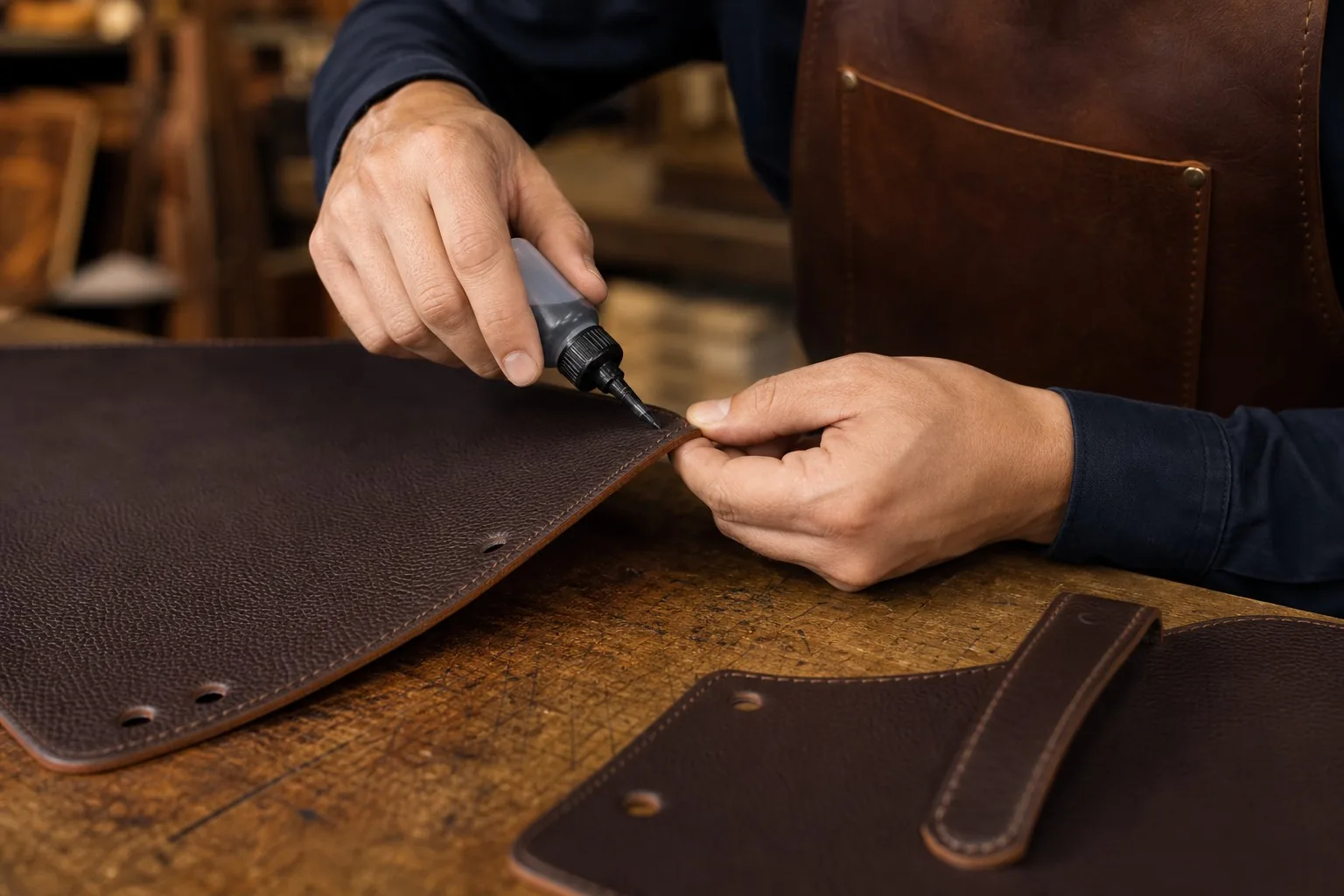
Every piece of leather has a cut edge — the raw face of the hide where it was trimmed to shape. That edge is a cross-section of the material: fiber, dye, and finish all exposed in a thin, fragile line. Left raw, a leather edge frays, absorbs moisture, and looks unfinished. Edge finishing is the family of techniques that transforms that raw edge into a sealed, smooth, protective surface.
The raw edge problem. A cut leather edge is structurally weak. The fibers at the edge are exposed and unbound; they catch on fabric, drink up water, and gradually fray and darken. Over months of use, a raw edge becomes the first part of a bag to look old. Every edge-finishing technique exists to solve this problem: bind the fibers, seal the edge, and give it a finished face that resists everything the surface resists.
What finishing does. At minimum, edge finishing binds the edge fibers and seals them against moisture. At its best, it creates a durable coating that flexes with the leather, resists wear, and looks like part of the material — a seamless, rounded edge that makes a bag look precision-made rather than hand-cut. Finishing is simultaneously a protective measure and a cosmetic one, and the best finishing is indistinguishable from the material itself.
Where edges exist on a bag. Edges appear everywhere on a leather bag: the outer perimeter of panels, the sides of straps and handles, the flaps, the gussets, the edges of pockets and tabs. Some edges are visible from across the room — the sides of a tote are the most prominent example. Others are hidden — the inside of a handle, the underside of a flap — but they still need finishing, because hidden edges still fray and still absorb moisture. A well-made bag has no raw edges anywhere.
Why Edge Finishing Matters
If the edges are the quiet test of quality, the reasons behind that test are worth understanding. Edge finishing matters for four separate reasons, and a bag that skips it pays for the savings in every one of them.
Appearance. The edge is where craftsmanship becomes visible. A perfectly finished edge — smooth, even, rounded — makes a bag look expensive from any angle. An unfinished or poorly finished edge makes the same bag look like a prototype. This is the most obvious reason, and it is the reason premium brands invest heavily in the craft: the edge is the detail that photographs well, catches the eye in stores, and signals quality to anyone who looks closely.
Durability. A sealed edge is dramatically more durable than a raw one. The coating protects the edge fibers from abrasion, moisture, and the daily friction of use. Bags with properly finished edges show their age far more slowly — the edge stays clean and tight, while an unfinished edge frays, darkens, and weakens within months. Edge finishing is not cosmetic decoration; it is structural protection.
Water resistance. Raw leather edges are like wicks — they draw moisture into the core of the material. A sealed edge stops that wicking at the boundary, protecting the entire panel from water damage. This is especially important for bags that meet rain, spills, and damp environments — which, for most bags, is most of their lives. The edge is the leather’s first line of defense against water, and finishing is its armor.
The quality signal. Because edge finishing is labor-intensive and unforgiving, it is a reliable signal of overall quality. A factory that finishes edges carefully is a factory that does everything else carefully — the edge work correlates with stitching, hardware, and material selection. Buyers who check edges are checking the whole bag; manufacturers know this, which is why the edge is where quality control pays its highest dividend.
The Two Great Families: Painted Edges vs Burnished Edges
There are two fundamentally different ways to finish a leather edge, and they produce different looks, different durability, and different costs. Understanding the two families explains most of what you see on leather bags in the market.
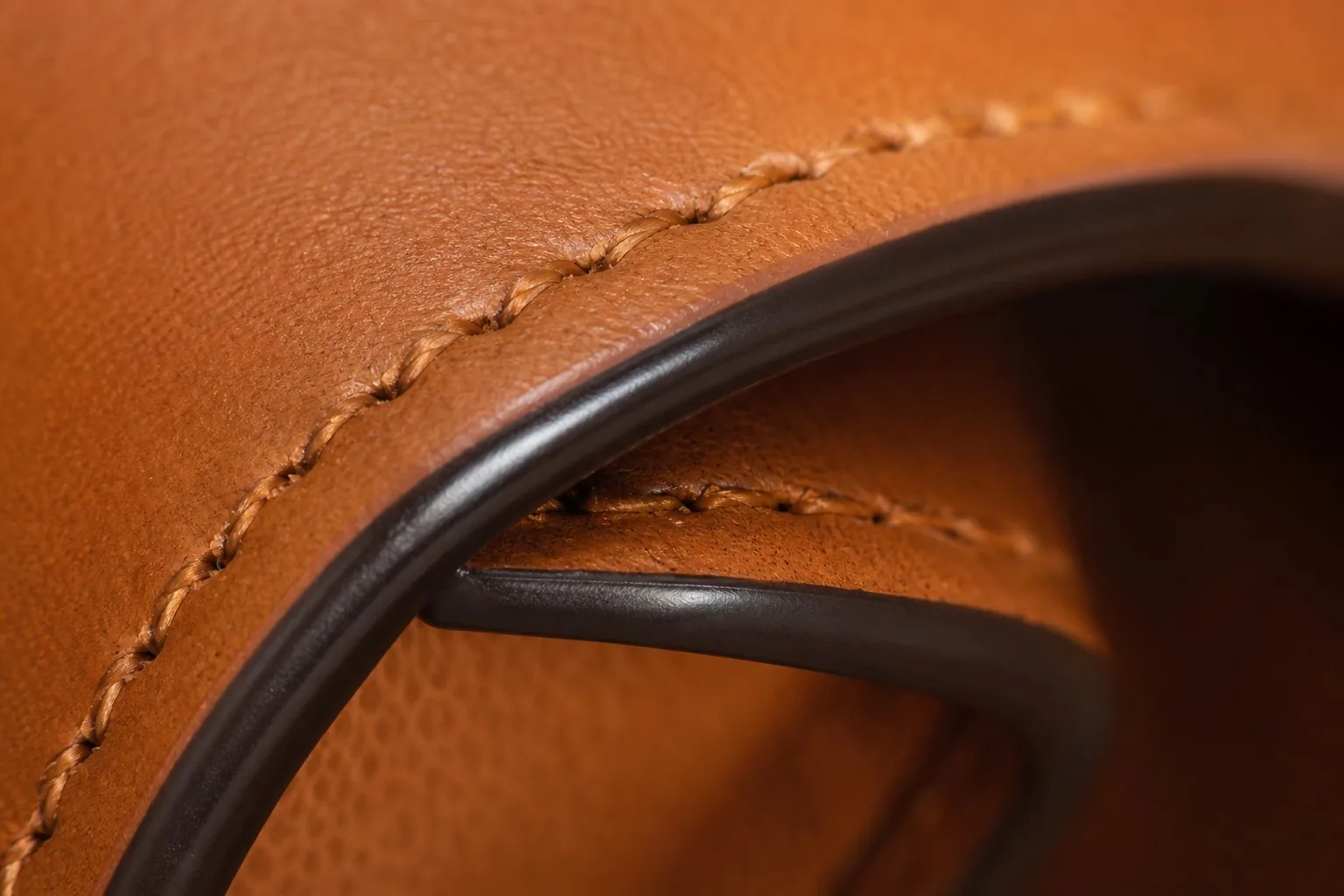
Painted edges (edge paint). This is the method most premium bags use today. The edge is beveled and sanded, then coated with a flexible resin — edge paint — applied in several thin layers, sanded between coats, and polished to a smooth, rounded finish. Painted edges can be made in any color, matched to the leather or contrasting with it, and they give bags that seamless, molded look associated with luxury brands. The process is slow — multiple coats with drying time between — which is why painted edges are a premium feature.
Burnished edges (edge burnishing). This is the traditional method, used for centuries and still favored for vegetable-tanned leather. The edge is sanded smooth, then rubbed vigorously with a wooden or canvas tool until the friction melts and compresses the leather’s own fibers into a hard, glossy, self-sealed surface — often with a touch of wax or gum tragacanth to help the burnish. Burnished edges have a warm, natural, slightly glossy look that ages beautifully and grows shinier with use. They are limited to natural leathers — synthetic materials cannot burnish — and they cannot be color-matched beyond the leather’s own tone.
Which is better? Neither family is universally better; they suit different leathers and different design languages. The table below is the honest comparison.
| Criterion | Painted edge (edge paint) | Burnished edge |
|---|---|---|
| Look | Seamless, molded, precise | Natural, warm, glossy with use |
| Best for | Chrome-tanned, finished leathers; color-matched designs | Vegetable-tanned leather; classic, rustic aesthetics |
| Durability | Excellent if flexible paint used | Excellent; self-renewing with use |
| Water resistance | High — sealed coating | Moderate — needs periodic wax |
| Color options | Any color, matched or contrasting | Leather’s own tone only |
| Labor intensity | High — multiple coats, sanding between | Moderate — sanding plus vigorous rubbing |
| Repair | Can be re-coated | Re-burnished with friction |
| Typical price signal | Premium, luxury | Craft, artisanal |
The two families also coexist: many bags use painted edges on visible panels and burnished or raw-finished edges inside. What matters is not which family a bag uses, but whether the edge it has is done well.
Inside the Edge Paint Process
Painted edges look simple, but the process is anything but. Here is the full sequence as it runs through a factory — the same sequence that produces those seamless edges on premium bags.
Step 1 — Cutting with the right knife. The edge quality begins at cutting. A sharp, properly shaped knife or die leaves a clean edge; a dull blade crushes and tears the fibers, and no amount of finishing fully repairs a crushed edge. In our factory, we change blades on a schedule, because edge quality is decided before the first coat of paint is ever applied.
Step 2 — Beveling. The cut edge is trimmed with an edge beveler — a small, precision tool that removes the sharp corners and rounds the edge profile. Beveling does two things: it reduces the visual thickness of the edge (making it look finer) and it gives the paint a rounded surface to grip. An unbeveled edge looks boxy; a well-beveled edge looks slim and elegant.
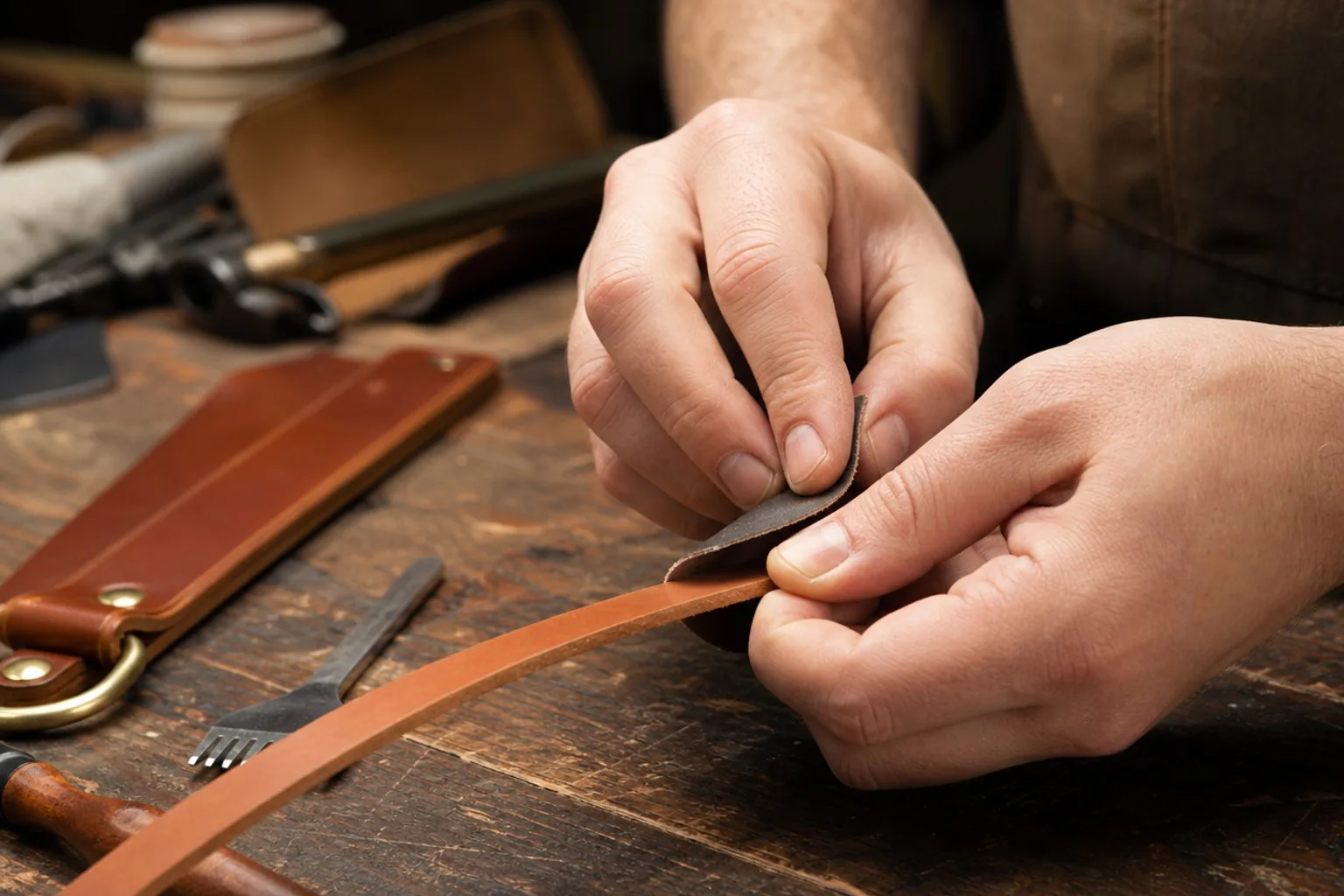
Step 3 — Sanding. The beveled edge is sanded smooth with fine-grit sandpaper. Sanding removes the last irregularities, opens the fiber structure slightly for better paint adhesion, and creates the smooth base the finish needs. This is detail work — uneven sanding shows through as uneven paint.
Step 4 — Base coat. A thin first layer of edge paint — often a primer-like base — is applied. The base coat binds the edge fibers and creates the foundation for the layers above. It is deliberately thin; thick base coats crack.
Step 5 — Multiple color coats. The color coats are applied in several thin layers — typically three to five — with drying time between each. Each coat is sanded lightly after drying to keep the surface smooth and to build the paint up gradually. This is the slow part of the process: hours of drying time separate each layer, and rushing it is the most common cause of edge defects.
Step 6 — Final sanding and polishing. The last coat is sanded with ultra-fine grit, then polished with a soft cloth to a smooth, even sheen. The finished edge should feel like glass — smooth, rounded, uniform from end to end.
Step 7 — Inspection. Every finished edge is inspected under good light, and defects are sent back for touch-up. The inspection is the quality gate: edges that fail go back to sanding, never forward to assembly. A factory that inspects edges is a factory that ships quality.
Edge Paint Materials: What Goes Into the Bottle
Not all edge paint is created equal. The material science behind the bottle determines whether an edge lasts two years or twenty, and the differences matter to manufacturers and buyers alike.
Solvent-based edge paint. The traditional and most common type. Solvent-based paint dries to a tough, durable film, adheres well to leather, and has been the industry standard for decades. Its drawbacks are the solvent fumes (ventilation required) and the longer drying time. For durability, solvent-based paint remains the benchmark.
Water-based edge paint. The modern, environmentally friendlier option. Water-based paint dries faster, has minimal odor, and cleans up with water — but it can be less durable than solvent-based on high-wear edges, and it requires a skilled hand to avoid raising the leather’s fibers or under-binding the edge. Premium water-based formulations have closed most of the gap, and they are increasingly the default in well-regulated factories.
UV-cured edge paint. The high-tech option: a UV-reactive resin that cures in seconds under ultraviolet light instead of air-drying over hours. UV paint enables faster production and very hard, durable edges — but it requires specialized equipment (the UV lamp and a controlled application line), which puts it out of reach of small workshops. It is the choice of high-volume, high-quality factories.
| Paint type | Drying time | Durability | Fumes | Equipment | Typical use |
|---|---|---|---|---|---|
| Solvent-based | Hours | Excellent | Yes | Basic | Standard premium |
| Water-based | Minutes–hours | Good–excellent | Minimal | Basic | Eco-conscious lines |
| UV-cured | Seconds | Excellent | Minimal | Specialized lamp | High-volume premium |
What to look for in paint quality. Three properties separate good edge paint from cheap: flexibility (the dried film must flex with the leather without cracking), adhesion (it must bond to the edge fibers rather than sit on top), and build (it must layer smoothly without bubbles or streaks). These properties come from the formulation, and they are the reason two bottles of edge paint can differ enormously in price. A premium edge is not made by the paint alone — but it cannot be made without it.
Common Edge Defects and How to Avoid Them
Every edge defect has a cause, and every cause is a lesson. These are the failures we see most often in edge finishing — and the habits that prevent them.
Bubbles and pinholes. Tiny air pockets in the paint film, visible as small craters. Cause: applying paint too thickly, or working in a dusty or humid environment. Prevention: thin coats, clean air, and patience between layers.
Peeling and flaking. The paint film separates from the edge in flakes. Cause: poor surface preparation — an unbeveled or unsanded edge, or a base coat skipped. Prevention: proper beveling, sanding, and base coat before any color.
Cracking. The paint film cracks at flex points. Cause: paint that is too rigid for the leather, or too thick a coat. Prevention: flexible paint matched to the material, thin layers, and allowing full cure before the edge is bent.
Bleeding and off-color. The paint discolors or spreads beyond the edge. Cause: incompatible paint and leather finish, or paint applied to a contaminated surface. Prevention: testing paint compatibility on each leather, and cleaning edges before coating.
Uneven thickness. The edge looks wavy — thick in places, thin in others. Cause: inconsistent application or skipped intermediate sanding. Prevention: steady application technique and sanding between every coat.
Edge lifting at stitching. The paint cracks or lifts where stitches run close to the edge. Cause: stitching tension pulling on the finished edge, or paint applied before the leather’s structure settled. Prevention: sequencing — stitch first where possible, finish edges after assembly, and keep stitch lines clear of the edge.
A manufacturer’s rule: the edge finish is only as good as the edge preparation. Ninety percent of edge defects are sanding defects. The paint is the final layer of a process that is decided hours earlier.
How Edge Finishing Affects Durability and Care
Edge finishing is not only about looks — it is a major factor in how a bag ages, and how much care it needs.
The durability dividend. A well-finished edge protects the most vulnerable part of the bag — the thin line of exposed fiber that takes constant friction. Sealed edges resist fraying, moisture absorption, and the gradual darkening that comes from handling. All else equal, a bag with quality edge finishing lasts longer than the same bag without it, because the edges are the first thing to fail on an unfinished bag.
The care requirement. Finished edges change how a bag should be cared for. Painted edges need little maintenance — occasionally wipe them clean, and re-coat professionally if they wear through after years. Burnished edges benefit from periodic re-waxing to keep the seal and sheen. Raw or unfinished edges need the most attention — regular conditioning to keep the fibers supple and prevent moisture damage. The care instructions for a bag should always mention its edges; most bags never get them.
The aging story. Painted edges age gracefully when the paint is flexible — they wear gradually and evenly, and can be re-coated to restore them. Burnished edges age even more beautifully — the friction of use burnishes them further, so a ten-year-old burnished edge is glossier than a new one. Both are aging stories that an unfinished edge can never tell, because an unfinished edge ages by deteriorating, not improving.
What care to avoid. Never use harsh solvents or abrasive cleaners on finished edges — they strip the paint and dull the finish. On painted edges, wipe with a soft cloth; on burnished edges, re-wax rather than clean. And keep finished edges away from prolonged heat, which softens and damages edge paint just as it damages the leather itself.
How to Judge Edge Quality When You Buy
For buyers, the edge is the fastest quality check in leather — and it takes ten seconds. Here is what to look for.
Run your finger along the edge. A quality finished edge feels smooth and rounded — like glass, with no rough patches, no bumps, and no catch points. An unfinished or poorly finished edge feels rough, fibrous, or wavy under the finger. Your fingertip is the best edge-inspection tool ever made.
Look at the color and evenness. The edge should be one even color from end to end — no light spots, no streaks, no patches. Uneven color means rushed application; even color means the coats were applied and sanded properly. Check both sides of straps and handles, where edges are most visible.
Check the transition at corners and curves. Corners and curves are where edge finishing gets hard. On a quality bag, the edge finish follows the curve smoothly, with no cracks, gaps, or build-up at the corner. Cracks or breaks at curves are the first sign of low-quality finishing.
Look at the inside edges. A quality bag finishes every edge, including hidden ones — the inside of handles, the underside of flaps. A bag with raw edges hidden inside is a bag that saves money where you cannot see it. Check the hidden edges; they reveal the factory’s true standard.
Compare edges across the bag. All edges on a quality bag look consistent — same color, same finish, same quality. Inconsistency between edges — one strap finished well, another poorly — signals inconsistent workmanship and quality control. The edge is the fingerprint of the factory; consistent fingerprints mean a consistent factory.
The Cost and Time Reality
Edge finishing looks like a small detail, but it is a significant share of a bag’s production cost — and understanding why explains the price difference between bags that look similar.
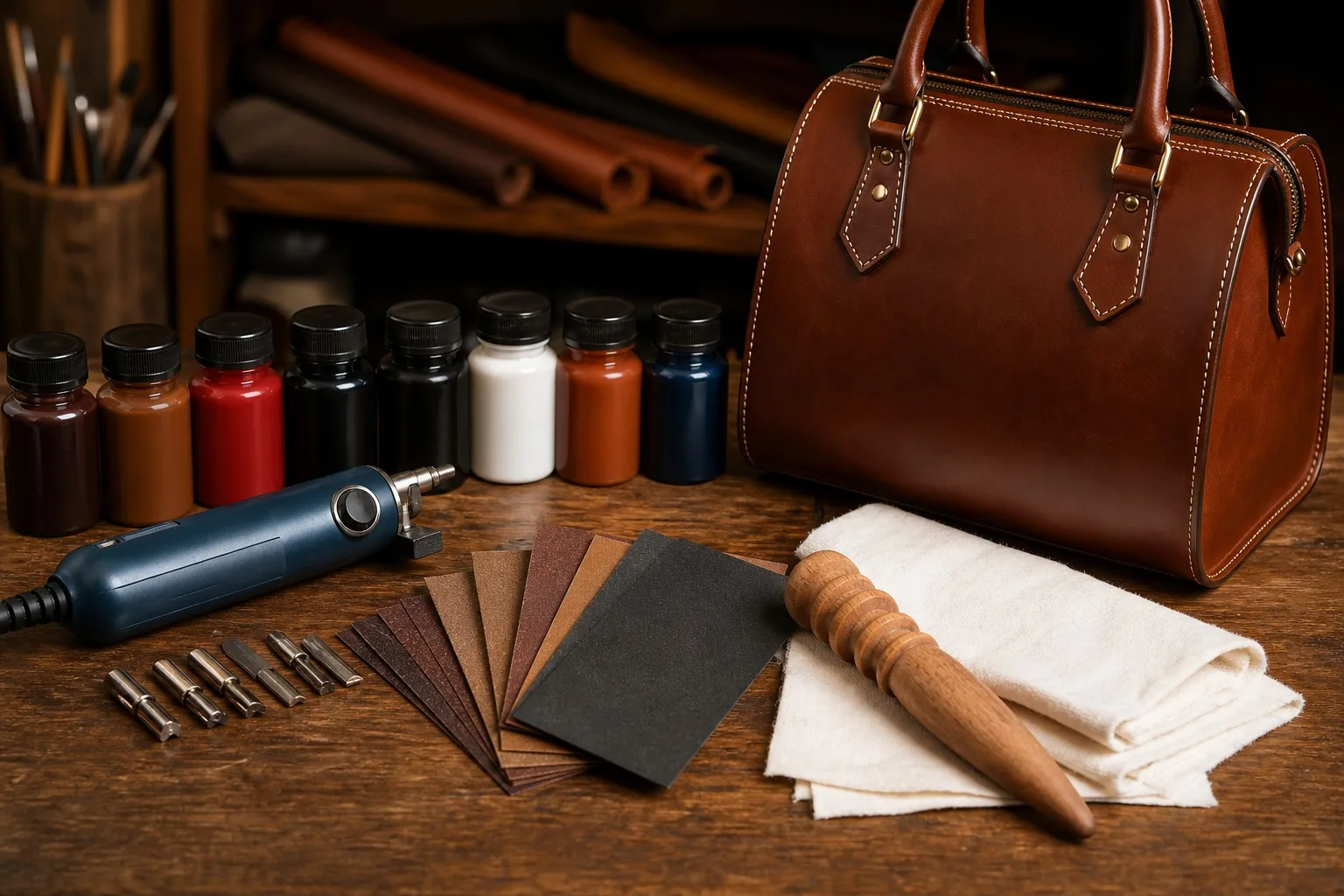
The time math. A quality painted edge involves cutting, beveling, sanding, a base coat, three to five color coats with drying time between each, final sanding, and polishing. With drying time, a single edge can take the better part of a day to complete — and a bag has many edges. The labor and time alone put finished edges firmly in the premium column.
The skill factor. Edge finishing is one of the harder skills to learn well. The application has to be steady, the sanding has to be even, the layers have to be patient — a skilled edge finisher produces work that looks machine-perfect, and an unskilled one produces wavy, bubbled, uneven edges. Skilled labor costs more, and the price of a bag reflects the skill sitting at the bench.
The material cost. Quality edge paint — flexible, durable, well-formulated — costs more than cheap paint, and the consumables (sandpaper, applicators, polishing cloths) add up across a production run. In high-volume production, the paint is a line item; in small-batch production, it is a real share of the unit cost.
What the price tells you. A bag with premium edge finishing cannot be the cheapest bag in its category — the labor alone prevents it. When you see a bag with flawless edges at a suspiciously low price, one of two things is true: the finishing is thinner or lower quality than it looks, or the price is subsidized elsewhere. Either way, the edge is telling you something about the product that the label is not.
Matching Edge Finish to Leather Type
Not every leather takes every finish equally, and the right pairing is part of the craft. Here is how the leather itself shapes the edge decision.
Vegetable-tanned leather and burnishing. Vegetable-tanned leather is the natural home of burnished edges. Its fibers compress and seal beautifully under friction, and its warm, natural tone is exactly what burnishing produces. Many vegetable-tanned bags skip edge paint entirely — the burnished edge is the authentic, traditional finish for this leather, and painted edges on it can look out of place.
Chrome-tanned and finished leathers and edge paint. Chrome-tanned leather is more porous and less compressible than vegetable-tanned, which makes burnishing less effective. Edge paint is the standard finish here: it seals the looser fiber structure, matches the finished surface, and produces the clean, modern look these leathers are known for. If a chrome-tanned bag has burnished-looking edges, they are likely painted — and that is the right choice.
Suede and nubuck edges. Suede and nubuck are finished differently by design: their edges are usually left as the soft, fibrous nap, which is part of their aesthetic. The protection comes from the nap itself and from care, rather than from paint or burnish. Some suede bags use a painted edge for contrast, but the classic suede look leaves the edge soft.
The manufacturer’s rule of thumb. Match the finish to the leather’s nature: burnish what will burnish, paint what needs sealing, and leave alone what is designed to be soft. The best edge finishes never fight the material — they complete it. When you commission a bag or choose one to buy, the pairing of leather and edge finish is one more sign of whether the maker understands their material.
Frequently Asked Questions
What is edge paint on a leather bag?
Edge paint is a flexible resin applied to the cut edges of leather to seal the fibers and create a smooth, protective, finished surface. Applied in thin layers and sanded between coats, it transforms raw, fragile edges into the seamless, rounded edges seen on premium leather bags.
What is the difference between edge painting and edge burnishing?
Edge painting coats the edge with a colored resin in multiple layers; edge burnishing compresses and seals the leather’s own fibers with friction until they form a glossy, self-sealed surface. Painted edges offer any color and a molded look; burnished edges are natural, warm, and limited to the leather’s own tone.
Why do some leather bags have raw, unfinished edges?
Raw edges are a cost and labor decision. Edge finishing takes time, skill, and materials, so budget bags often leave edges unfinished to keep prices low. Raw edges fray, absorb moisture, and age faster than finished edges — which is exactly why premium bags never leave them unfinished.
How can I tell if a leather bag has good edge finishing?
Run your finger along the edge — it should feel smooth and rounded, with no rough or wavy patches. The color should be even from end to end, the finish should follow corners and curves without cracks, and the hidden inside edges should be finished to the same standard as the visible ones.
Do painted edges crack over time?
Quality painted edges, made with flexible paint and properly layered, flex with the leather and wear gradually — they can last decades and be re-coated when they finally wear. Cheap, rigid paint applied too thickly cracks and peels early. The durability is in the material and the method, not in the paint itself.
Is edge finishing worth the extra cost?
Yes, for any bag you want to last. Finishing protects the most vulnerable part of the bag — the exposed edge fibers — from abrasion and moisture, and it is the clearest visual signal of overall craftsmanship. The extra cost buys durability and appearance that a raw edge can never offer.
Can edge paint be repaired?
Yes. Worn or damaged painted edges can be re-sanded and re-coated by a professional leather repairer, restoring them close to their original condition. Burnished edges can be re-burnished with friction and wax. Edge repair is one of the more straightforward leather repairs — another reason quality edges are a good investment.
Does edge finishing matter for waterproofing a bag?
Yes, significantly. Raw leather edges act like wicks, drawing moisture into the material’s core. A sealed edge stops that wicking at the boundary, protecting the whole panel from water damage. Edge finishing is the leather’s first line of defense against rain, spills, and damp environments.
Final Word from the Factory
The edge is the detail that most people never notice — and the detail that tells an expert everything. It is where the leather’s raw fragility meets the craftsman’s patience, and where a bag either becomes premium or remains merely adequate. A perfect edge is not an accident: it is cutting with a sharp blade, beveling with precision, sanding with care, layering paint with patience, and inspecting with honesty. It is hours of work compressed into a thin, seamless line.
At our factory, we treat edges as the signature of the product. We change blades on schedule because edge quality begins at the cut. We bevel, sand, layer, and polish because the edge is what customers touch, what photographs well, and what survives years of use. And we inspect every edge before a bag ships, because the edge is the standard we hold ourselves to — visible to anyone who looks closely enough.
When you buy a leather bag, look at its edges. Run your finger along them, check the evenness, look at the corners and the hidden sides. The edge will tell you how the bag was made, how long it will last, and how much the maker cared. It is the quietest test in leather — and the most honest one. The next time you hold a leather bag, look at the thin line of sealed material running along its side. If it is smooth and even and seamless, you are holding a bag made by people who care about the details. And in leather, the details are everything.
