
How to Tell Real Leather from Fake Leather: A Manufacturer’s Guide to Spotting Genuine Leather, PU, PVC and Bonded Materials
How to Tell Real Leather from Fake Leather: A Manufacturer’s Guide to Spotting Genuine Leather, PU, PVC and Bonded Materials
Every week, someone sends us a bag — or a photo of a bag — with the same question: “Is this real leather?” Sometimes the answer is obvious at a glance. Sometimes it takes a magnifying glass, a drop of water, and a look at the cut edge. And sometimes, the answer surprises people: the bag they paid a premium price for is not leather at all.
The confusion is not the buyer’s fault. The market is full of materials that imitate leather so convincingly that they can fool even experienced shoppers — and it is full of labels that blur the truth with words like “genuine,” “vegan,” and “leather-like.” As a manufacturer who works with real leather every day, I want to give you the identification skills we use in our own factory: the tests, the signs, and the label-reading knowledge that separate genuine leather from its imitators.
This guide covers what each material actually is, the quick in-store checks, the five-minute home tests, how to read labels and prices honestly, and the professional inspection checklist we use before we accept any material into production. By the end, you will be able to look at almost any bag and know what you are really holding.
- Why Telling Real from Fake Matters More Than Ever
- The Materials You’re Actually Looking At
- The Quick Tests: What You Can Do In-Store
- The Five-Minute Home Tests
- Reading the Label: What the Words Actually Mean
- Reading the Price: The Honest Cost Signals
- The Manufacturer’s Inspection Checklist
- Common Fakes and How They Deceive
- The Identification Decision Table
- When in Doubt: Buying and Verification Advice
- Special Cases: Suede, Patent Leather and Exotics
- The Hidden Costs of Buying Fake Leather
- The Five-Step Buying Verification Routine
- Frequently Asked Questions
- Final Word from the Factory
Why Telling Real from Fake Matters More Than Ever
The ability to identify leather is not a party trick — it is a protection. The price gap between genuine leather and its imitators is often tenfold, and that gap is exactly what dishonest sellers exploit. A bag labeled “leather” and priced like leather can quietly be made of bonded scrap or printed plastic, and the customer pays the difference.
The stakes for buyers. The most obvious stake is money: overpaying for a material that costs a fraction of what was charged. But the deeper stake is durability and aging. A real leather bag can last a decade, be repaired, and develop a beautiful patina. A fake — however convincing on day one — will peel, crack, and fail in a fraction of that time. Buyers who cannot identify leather are buying a lottery ticket disguised as an investment.
The stakes for the industry. Mislabeled materials damage the entire leather trade. Every customer burned by a fake labeled “leather” learns to distrust the label, which punishes the honest manufacturers and the genuine products. In our factory, we support clearer labeling laws and we label our own products truthfully — because the alternative, a market where “leather” means nothing, hurts everyone except the dishonest sellers.
The good news. Identification is a learnable skill. Real leather has consistent physical signs — natural grain, warm touch, fibrous edges, irregular texture — and imitations have equally consistent tells. Once you know what to look for, the fakes become visible, and the genuine articles become recognizable at a glance.
The Materials You’re Actually Looking At
Before the tests, the vocabulary. The market contains a handful of materials, and most “leather” confusion comes from not knowing what these words mean.
Genuine leather family. As covered in our grading guide, “genuine leather” in industry practice usually means split or corrected leather — real animal hide, but from the lower layers or with a sanded surface. Full-grain and top-grain are the premium layers of the hide. All of these are real leather: they come from an animal, they have natural fiber structure, and they behave like natural material.
Bonded leather. Ground-up leather scraps and fibers mixed with adhesives and pressed into sheets. It is marketed with the word “leather” but is closer to a composite material — and it peels and fails in ways real leather does not.
PU leather. Polyurethane coating over a fabric backing. It imitates leather’s look and, in good quality, even some of its feel — but it is a synthetic with a short lifespan and no natural grain.
PVC leather. Polyvinyl chloride coating over fabric — the older, glossier, stiffer synthetic. It reads as “plastic” to trained hands and fails by cracking.
Microfiber “leather.” A dense microfiber base with a polyurethane surface. The best microfiber products are remarkably convincing — often the hardest synthetics to identify — but they remain synthetics with synthetic aging.
The Quick Tests: What You Can Do In-Store
You can learn a great deal about a material in thirty seconds, without tools, right in the store. These are the checks we use as a first pass on any unknown material.
The touch test. Real leather warms quickly in your hand and feels slightly porous — almost alive. Synthetics feel cooler, smoother, and more uniform. PU has a plasticky smoothness; PVC feels like plastic with no doubt at all. The touch test is the fastest discriminator and surprisingly reliable — your hand is a sensitive instrument.
The press test. Press a fingertip firmly into the surface and watch what happens. Real leather shows a subtle network of fine wrinkles that relax slowly. Finished synthetics spring back instantly with no wrinkle pattern, because the coating is elastic. The wrinkle response is one of the most reliable visible tests, because it comes from the leather’s natural fiber structure — something no coating reproduces exactly.
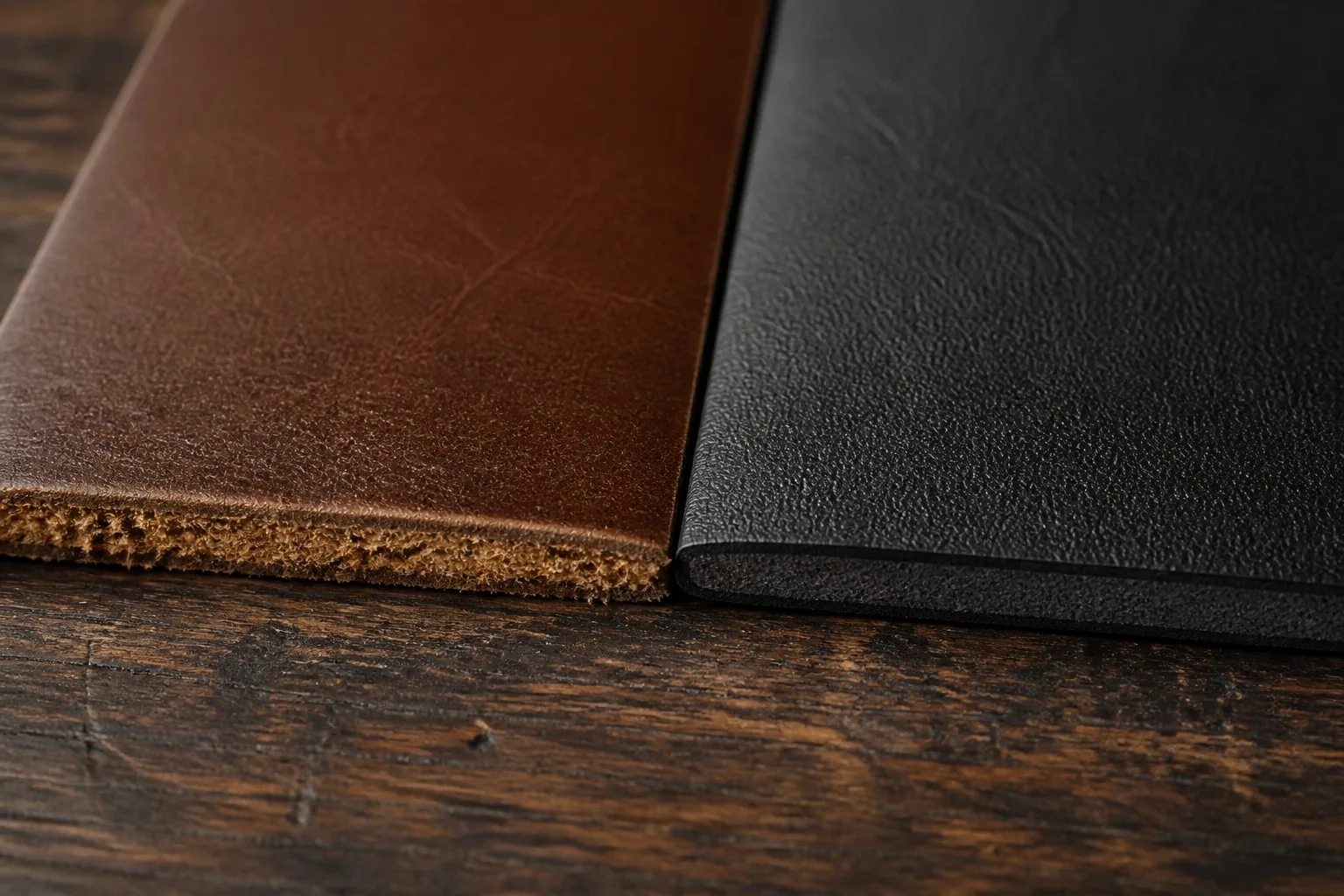
The edge test. Look at the cut edges of the material — the edge of a strap, a flap, or a seam. Real leather edges show a fibrous, suede-like structure — the cut ends of the hide’s fibers. Synthetic edges look like a uniform coating over a woven or nonwoven base, often with a visible line where the coating meets the backing. The edge is where fakes are most honest, because it is hard to fake.
The flex test. Gently bend the material and watch the surface. Real leather flexes with a soft, natural crease; finished synthetics flex with a stiffer, more mechanical fold, and cheap ones may show cracking or whitening at the fold line. Real leather also relaxes back to shape more slowly, while synthetics snap back.
The smell test. Real leather has a distinctive, earthy, slightly animal smell that no synthetic replicates. PU and PVC smell faintly chemical or plasticky, and bonded leather often smells of adhesive. If you cannot smell leather, the odds shift sharply toward synthetic.
The Five-Minute Home Tests
The in-store tests are quick but not conclusive. For a firmer verdict, the home tests add another layer — and they are the tests we use before accepting material into production.
The water drop test. Place a drop of water on the surface and watch. Real leather absorbs water slowly, darkening where the drop lands, and dries leaving a mark that fades. Finished synthetics bead the water, which sits on the surface and can be wiped away. This test is not foolproof — heavily finished real leather beads too — but it is a strong signal when combined with the others.
The fiber test. Find a cut edge or an unfinished surface and look closely — a magnifying glass helps. Real leather shows individual fibers. Synthetics show a uniform coating layer. Microfiber shows a dense, felted synthetic fiber structure — fibers, but synthetic ones, which is the key distinction.
The scratch test. Lightly scratch an inconspicuous area with a fingernail. Real leather’s surface may show a light mark that can often be buffed out — the material is fibrous beneath. PU and PVC show a scratch in the coating that does not heal, and on cheap synthetics the scratch can reveal the fabric backing. Never perform this test on a bag you do not own — but on your own bag, it is revealing.
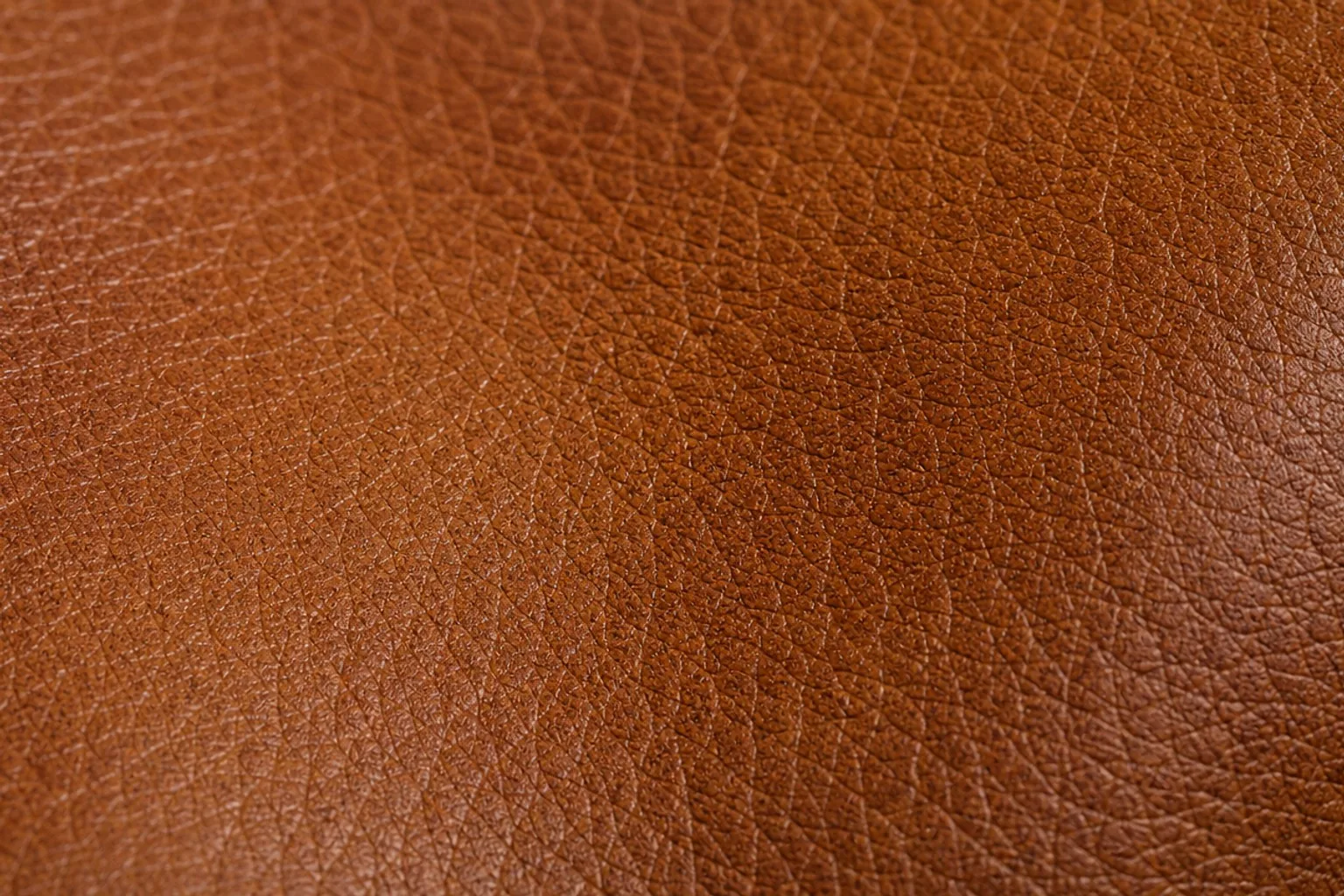
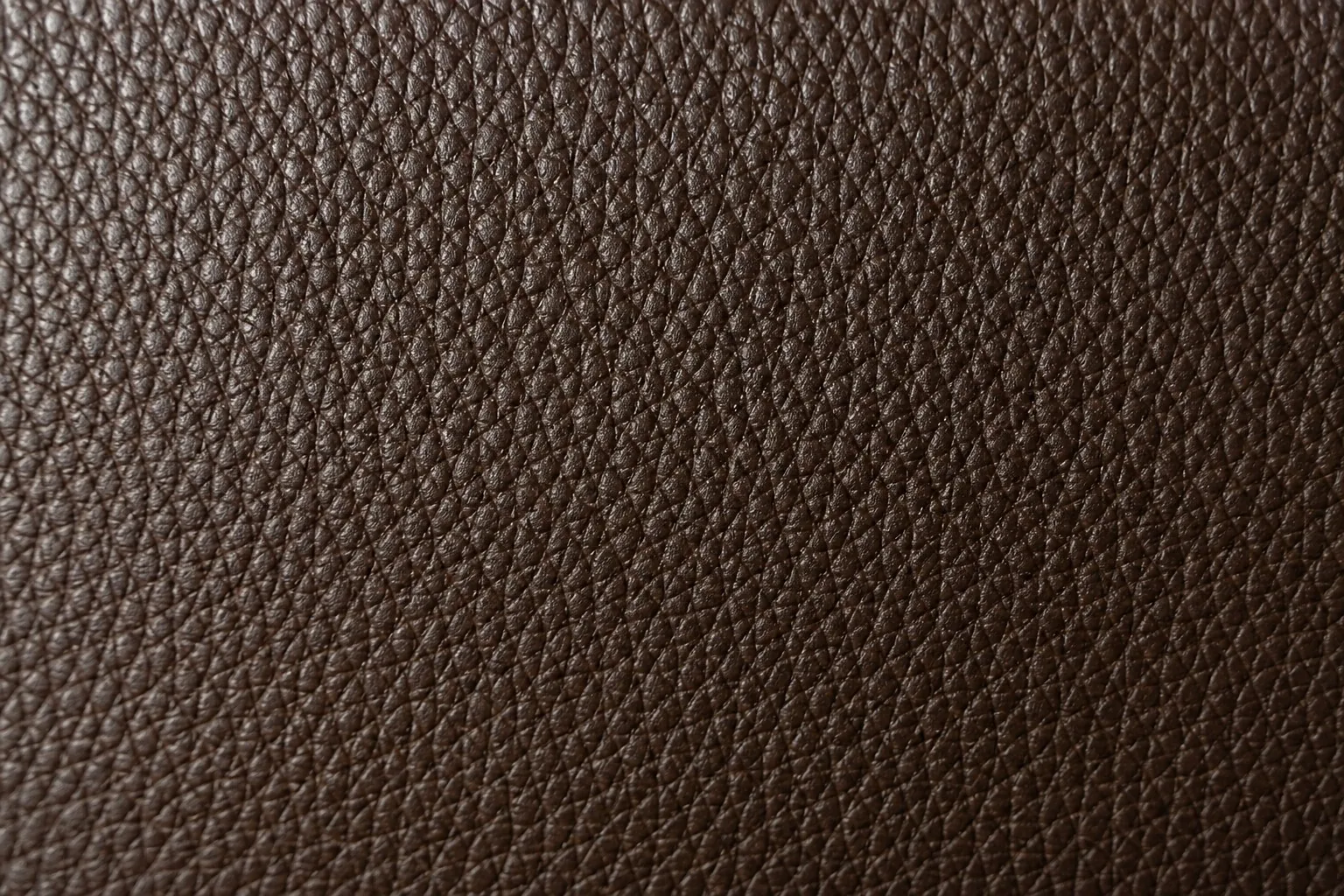
The grain test. Look at the surface under magnification or in strong light. Real leather has irregular, organic grain — pores and markings that never repeat identically. Printed synthetic grain is uniform and repetitive — the same pattern repeating across the surface, like wallpaper. This single observation, once you have seen it, makes fakes obvious forever.
A manufacturer’s rule: no single test is conclusive. Real leather can fail one test; a good synthetic can pass several. The verdict comes from the weight of evidence — three or four tests pointing the same way.
Reading the Label: What the Words Actually Mean
Labels are where the industry’s honesty problem lives, and knowing the vocabulary is half the battle.
| Label you see | What it usually means | Reality check |
|---|---|---|
| “Genuine leather” | Split or corrected leather | Real leather, but entry-level — not a quality claim |
| “Top-grain leather” | Sanded top layer | Real leather, mid-quality, consistent |
| “Full-grain leather” | Untouched top layer | Real leather, premium |
| “Bonded leather” | Scraps + adhesive | Mostly not leather; will peel |
| “PU leather” | Synthetic coating | Not leather at all |
| “PVC leather” | Plastic coating | Not leather at all |
| “Vegan leather” | Usually PU or microfiber | Marketing term; check the composition |
| “Leather-like / faux” | Synthetic | Honest label; material unknown |
| “100% leather” | Could be bonded | Check the fine print and the edge |
The three label questions. When you read any label, ask three things. First, what does the phrase actually mean in industry practice — “genuine” means entry-level, not premium. Second, is the material described or just suggested — a label that says “leather” without specifying grain, cut, or source is hiding something. Third, where is the fine print — bonded leather and synthetics often hide their real composition in tiny type or a materials list. The label is a starting point for questions, never an ending point for trust.
What honest manufacturers do. We label our products with the specific material: “full-grain vegetable-tanned cowhide,” “chrome-tanned goatskin,” “microfiber PU.” The specificity is the honesty — if a seller can name the material precisely, the material is probably real. Vagueness in a label is the first red flag.
Reading the Price: The Honest Cost Signals
Price is not a test of material, but it is a powerful prior. Leather has real production costs, and a price far below the honest cost of leather is itself evidence.
The cost floor of real leather. As we covered in our material guides, real leather costs more at every stage — raw hides, tanning, labor, yield losses. A genuine leather bag cannot honestly be produced at the price of a PU bag. When a bag is labeled “leather” and priced like synthetic, one of two things is true: the label is wrong, or the production cut corners that will show within months. Neither is a good reason to buy.
Where the price signals get complicated. Premium synthetics — especially microfiber PU — can carry premium prices, and a high price does not guarantee real leather. Some of the most convincing fakes are priced high precisely to exploit the assumption that price means material. The reverse is also true: entry-level genuine leather can be affordable. Price narrows the odds; it does not decide the question.
The practical guidance. Use price to set expectations, then verify with the physical tests. If the price says “too good to be true for leather,” test hard. If the price says “premium,” verify anyway — because premium pricing is the easiest fake of all to believe.
The Manufacturer’s Inspection Checklist
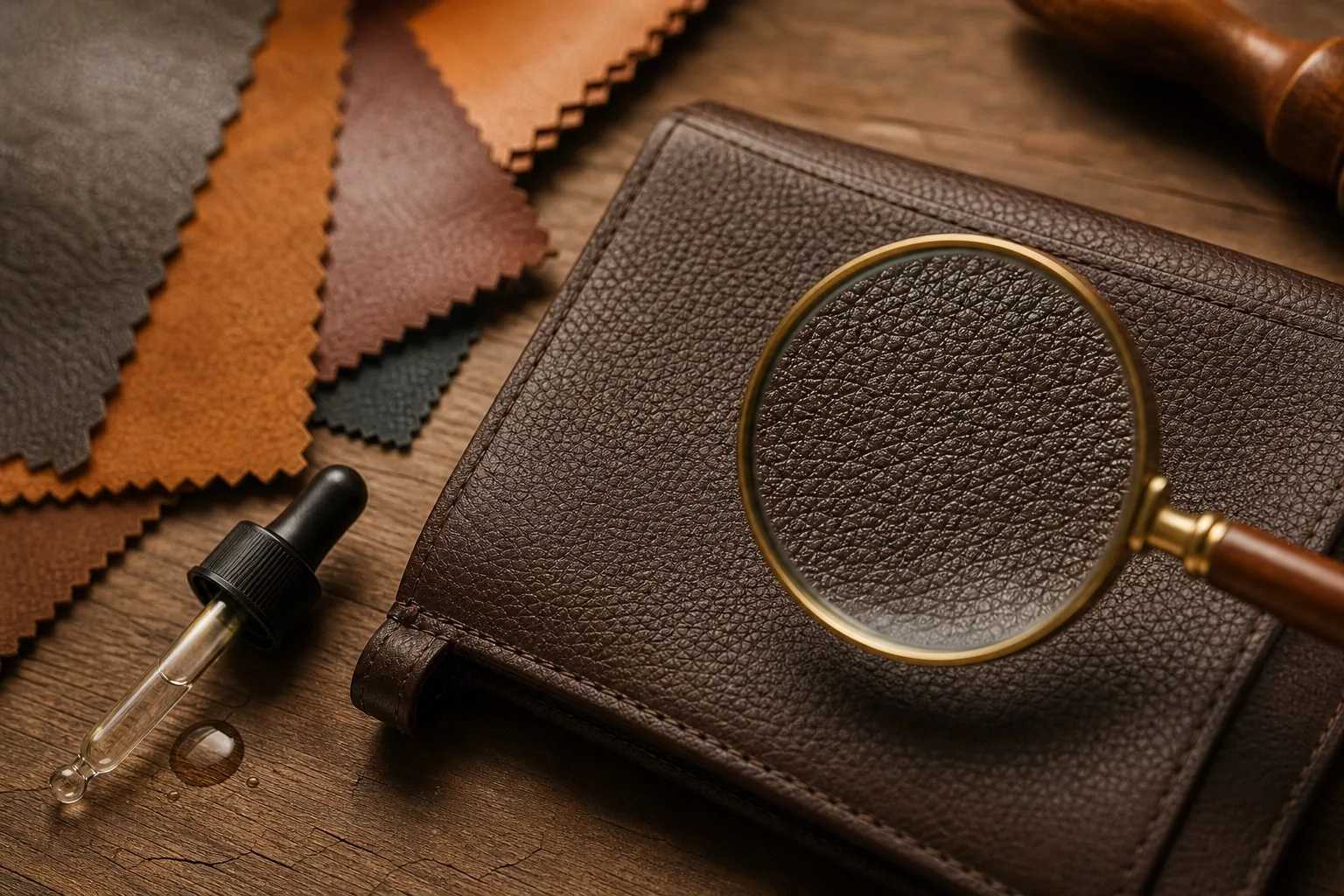
The tests above are the consumer’s toolkit. In our factory, material identification is a professional discipline — every incoming lot is checked against the specification before it enters production. Here is the checklist we use, refined by years of receiving leather, synthetics, and the occasional mislabeled surprise.
1. Verify the paperwork first. The material declaration and supplier documentation come first. A professional supplier states the material precisely: species, tannage, thickness, and finish. Vagueness in the paperwork is treated as a warning, not a detail.
2. Check the grain under magnification. We inspect every lot with a magnifier or microscope. The grain must be organic — irregular pores and markings that never repeat. Printed or embossed grain repeats like wallpaper, and repetition is the synthetic’s signature.
3. Look at the cut edge. We examine the edges of every sample. Real leather shows a fibrous structure — the cut ends of the hide’s fibers, soft and suede-like. Synthetics show a coating layer over a backing, often with a visible boundary line. The edge never lies.
4. Measure the thickness and check the temper. We gauge the thickness against the specification and flex the material to feel its temper — the combination of softness and firmness that real leather has and synthetics approximate. Real leather also has a memory: it creases softly and relaxes slowly.
5. Run the water test on a sample. A drop of water on the unfinished back or a test piece tells us whether the material absorbs like hide or beads like coating. Combined with the fiber test, this separates leather from microfiber with high confidence.
6. Check the smell. Fresh leather has a recognizable smell — earthy, organic, slightly animal. Bonded leather smells of adhesive; PVC smells faintly chemical. A material that smells like neither leather nor a distinct synthetic deserves extra scrutiny.
7. Test the aging behavior. We flex samples repeatedly and expose them to heat and light to preview aging. Real leather softens and darkens gracefully; synthetics show coating stress, cracking, or peeling. The aging preview is the test that separates materials over time — which is exactly when the customer will discover the truth.
Common Fakes and How They Deceive
The imitators are not all equal, and knowing how each one deceives is the deepest layer of identification.
The embossed full-grain fake. Some corrected or split leather is embossed with a deep, convincing grain pattern that imitates full-grain. The tell: the embossed grain repeats — look closely, and the same pattern appears again and again. Real full-grain never repeats. This is the hardest fake to catch without magnification.
The printed top-grain fake. Heavily finished top-grain with a printed grain and glossy coating can pass as premium at a distance. The tell: the finish. Real top-grain has some natural variation and a matte warmth; the printed version is too uniform and too perfect.
The microfiber suede fake. Microfiber suede is the most convincing imitation of suede in the market — soft, dense, and fiber-like. The tell: the fibers. Real suede fibers are animal fibers, irregular and natural; microfiber fibers are synthetic, uniform, and slightly waxy to the touch. A magnifier settles it.
The bonded leather trap. Bonded leather is often sold with the word “leather” prominent and the word “bonded” in small print. The tell: the edge and the surface. Bonded leather’s edge shows a pressed composite, not fibers, and its surface is a thin coating that will eventually peel. If a “leather” product is suspiciously cheap, bonded is the most likely culprit.
The label game. The most common deception is not in the material — it is in the label. “Genuine leather” for split, “leather” for bonded, “vegan leather” for PU: each phrase is technically arguable and practically misleading. The defense is the vocabulary table above — knowing what each label means before you read it.
The Identification Decision Table
| Observation | Genuine leather | Bonded leather | PU | PVC | Microfiber |
|---|---|---|---|---|---|
| Grain | Organic, irregular | Printed/embossed | Printed, uniform | Printed, glossy | Printed/brushed |
| Touch | Warm, porous | Dry, composite | Cool, smooth | Cool, plasticky | Soft, waxy-smooth |
| Press response | Fine wrinkles | Minimal wrinkles | Springs back | Springs back | Soft, minimal |
| Edge | Fibrous | Composite | Coating over backing | Coating over backing | Dense synthetic fibers |
| Smell | Earthy leather | Adhesive | Chemical | Plasticky | Faint chemical |
| Water drop | Absorbs, darkens | Absorbs slowly | Beads | Beads | Beads |
| Aging | Patina, softens | Peels | Cracks/peels | Cracks | Wears, can peel |
| Lifespan (typical) | 10+ years | 2–4 years | 3–5 years | 2–4 years | 3–6 years |
Read the table as a whole, not row by row: the verdict comes from the combination of observations. One ambiguous row is normal; four rows pointing the same way are a conclusion.
When in Doubt: Buying and Verification Advice
Even with all these skills, some products remain ambiguous — and the correct response to ambiguity is not a guess, it is a question.
Ask for the material declaration. A legitimate seller can state precisely what the product is made of — species, tannage, and finish. “It’s leather” is not a material declaration; “full-grain chrome-tanned cowhide” is. Ask the question in writing, and treat a vague answer as the answer.
Ask for a sample. If you are buying in volume — for a brand, a resale business, or a large purchase — request a physical sample and run the tests from this guide on it. A seller confident in the material is happy to send a swatch; a seller with something to hide is not.
Consider independent verification. For high-value purchases, professional material testing is available and definitive. Laboratories can identify the material, the species, and the tannage with certainty. When the purchase matters enough, the cost of verification is trivial next to the cost of being wrong.
Know when to walk away. If the material, the label, and the price do not agree — if it is priced like leather but labeled vaguely, or labeled “genuine” but priced like PU — walk away. There are honest products at every price point, and the dishonest ones are not worth the risk, whatever the discount.
Special Cases: Suede, Patent Leather and Exotics
The tests above assume the classic smooth-leather bag, but three special cases need their own notes — because each one plays by different identification rules.
Suede and nubuck. Suede is the flesh side of the hide, sanded to a soft nap; nubuck is the grain side, sanded to a finer nap. Both are genuine leather with a fibrous surface. The identification question is real suede versus microfiber suede. The answer is in the fibers: real suede fibers are irregular, natural, and slightly variable in color; microfiber fibers are uniform, dense, and even. Rub the surface — real suede changes shade subtly as the nap moves; microfiber stays eerily constant. And the smell: real suede has the leather scent; microfiber does not.
Patent leather. Patent is genuine leather with a high-gloss lacquered coating — the coating is so complete that the grain test fails, the touch test fails, and even the water test can be ambiguous. Patent is one of the few materials where surface tests are nearly useless. The decisive check is the cut edge and the underside: if the material is patent leather, the edges still show leather fibers, and the underside still shows the hide’s natural texture. Never judge patent from the surface alone.
Exotic embossing. Crocodile, snake, and ostrich are premium exotics with unmistakable natural textures — and all three are heavily imitated with embossed cowhide and printed synthetics. The tell is repetition: genuine exotic scales and patterns are organic and irregular, never repeating exactly. Embossed imitation repeats. Magnification settles it, and for high-value exotic purchases, laboratory verification is the only professional standard.
The Hidden Costs of Buying Fake Leather
The price difference is the visible cost of a fake — but it is the smallest one. The hidden costs are where the real damage lives.
The durability cost. A fake bag that looks perfect on day one often fails within two to five years: peeling coatings, cracking surfaces, fraying edges. Spread over its short life, the fake is rarely cheaper than a genuine bag bought once and kept for a decade. The “bargain” is a payment plan with interest.
The repair cost. Fake leather cannot be repaired the way genuine leather can. Leather can be re-stitched, re-conditioned, re-dyed — a fake that peels cannot be restored, because the coating failure is the material failing, not a fixable flaw. When the fake fails, the entire product is dead, and the purchase is lost entirely.
The expectation cost. The worst damage is psychological. A buyer who believes they bought leather and discovers it is plastic loses trust — in the seller, in the market, and often in leather itself. That distrust follows them into every future purchase, and it is the cost that honest manufacturers feel most keenly, because it taxes every genuine product they will ever sell.
The environmental cost. Short-lived synthetics multiply waste: each discarded fake is a petroleum-based product that fails fast and is replaced by another. A genuine leather bag kept for a decade is one of the more sustainable purchases in fashion. The fake is the opposite: manufactured, discarded, and replaced on a cycle that the buyer pays for twice — in money and in conscience.
The Five-Step Buying Verification Routine
When you are considering any leather purchase, run this routine. It takes two minutes and it covers every layer of identification in this guide.
Step 1 — Read the label before you touch the product. Identify the claimed material, then translate the vocabulary: “genuine” means entry-level, “bonded” means composite, “vegan” means synthetic. A specific, honest label — “full-grain cowhide” — is a good first signal.
Step 2 — Touch and press. Warmth, porosity, and the wrinkle response separate natural material from coating in seconds. Real leather wrinkles; coatings spring back.
Step 3 — Inspect the edge and the grain. The cut edge shows fibers or coating, and the grain shows organic irregularity or printed repetition. These are the two most reliable visual tests.
Step 4 — Weigh the price against the material. Ask whether the price is consistent with the claimed material’s honest production cost. An inconsistency is evidence, not a coincidence.
Step 5 — Ask the seller the specific questions. “What species, what tannage, what finish, and what cut of hide?” A seller who answers specifically is confident; a seller who repeats the label is not answering.
Run these five steps and you will make the vast majority of identification decisions correctly — and for the rare genuinely ambiguous case, you will know exactly when to walk away or seek professional verification.
Frequently Asked Questions
What is the most reliable test for real leather?
No single test is conclusive, but the combination of three is highly reliable: the press test (real leather shows fine wrinkles that relax slowly), the edge test (real leather has fibrous edges), and the grain test under magnification (real grain is irregular, never repeating). Three tests agreeing is a verdict.
Does “genuine leather” mean good quality?
Not necessarily. In industry practice, “genuine leather” usually refers to split or corrected leather — real animal hide, but entry-level rather than premium. The term is technically true and practically uninformative. Always ask what layer of the hide and what tannage were used.
Is bonded leather real leather?
Partly — it contains leather scraps and fibers mixed with adhesive and pressed into sheets. It is marketed with the word “leather” but behaves like a composite: it lacks leather’s strength, does not age gracefully, and typically peels within a few years. For bags, treat bonded leather as a budget material.
How can I tell real leather from microfiber?
The fiber test is decisive: real leather edges and unfinished surfaces show natural animal fibers, while microfiber shows dense, uniform synthetic fibers. Under magnification, real grain is organic and irregular; microfiber is printed and repetitive. The water test also differs — real leather absorbs slowly, microfiber beads.
Why does real leather feel different from PU?
Real leather has a natural fiber structure with pores and oils; it warms in the hand, feels slightly porous, and wrinkles subtly when pressed. PU is a uniform resin coating over fabric — cooler, smoother, more elastic, and without the organic response. Once you have felt both side by side, the difference becomes unmistakable.
Is expensive “vegan leather” real leather?
No — vegan leather is a marketing term for synthetic materials, usually PU or microfiber. It is not leather, and it does not age like leather. It can be a legitimate ethical choice, but it is not a material claim: always check the actual composition behind the label.
What should I do if I think I was sold fake leather?
Gather evidence first: photos of the labels, the material, the edges, and your test results. Then contact the seller with the specific questions — what species, what tannage, what finish — and request a material declaration or refund. If the seller cannot answer, escalate through the platform or consumer protection. Document everything.
How long should a real leather bag last?
With reasonable care, a quality genuine leather bag should last a decade or more — it can be conditioned, repaired, re-stitched, and re-dyed. Synthetic imitations typically last two to five years before coating failures. Lifespan is one of the clearest signals of material, which is why honest sellers never need to hide it.
Final Word from the Factory
The ability to identify leather is a small skill with a large payoff. It protects your money, your expectations, and your trust in the market — and it is a skill anyone can learn, because real leather is honest in ways synthetics cannot imitate. The natural grain never repeats. The edges show fibers. The material warms in the hand and wrinkles under pressure. These are not obscure laboratory details; they are visible to anyone who looks.
At our factory, we identify materials professionally every day, and the skill has never stopped paying for itself. We have caught mislabeled lots, exposed substandard hides, and protected our clients from materials that would have failed in the field. The same discipline, in simpler form, is available to every buyer: look at the grain, press the surface, check the edge, read the label, and trust the weight of evidence over the weight of words.
The market will always contain imitators — that is the price of leather’s value. But the imitators only win when buyers cannot see them. Learn the tests, ask the questions, and buy with open eyes. A genuine leather bag, honestly bought, is one of the best long-term purchases in fashion: durable, repairable, and more beautiful every year. The fakes cannot say that — and now you know how to tell the difference.
