
Genuine Leather vs. PU Leather vs. PVC: A Bag Manufacturer’s Guide to Choosing the Right Material for Your Bags
Genuine Leather vs. PU Leather vs. PVC: A Bag Manufacturer’s Guide to Choosing the Right Material for Your Bags
Ask ten shoppers what their bag is made of and most will answer with one word: leather. Ask the same question on our factory floor, and the answer gets complicated fast. Between the material that is genuinely leather, the material that is marketed as leather, and the material that merely looks like it from a distance, the differences in cost, durability, and customer satisfaction are enormous — and they are almost invisible in a product photo.
Every week, brands come to us with a price point and a sketch, and the first decision we make together is material. Genuine leather, PU leather, and PVC leather are the three pillars of the bag industry, and each one has a legitimate place. The problem is not that synthetics exist — it is that too many products are sold with labels that blur the line between them, creating disappointed customers and damaged brands.
This guide looks at all three materials from a manufacturer’s perspective: what each one actually is, how it behaves on a cutting table and in a customer’s hands, what it costs to produce honestly, and how to match the material to the bag — and to the promise you make when you sell it.
- What These Materials Actually Are (and Why Labels Confuse Buyers)
- Genuine Leather: The Natural Material, Honestly Explained
- PU Leather: The Most Common Synthetic
- PVC Leather: The Budget Synthetic
- The Three Materials Side by Side: A Manufacturer’s Comparison Table
- From the Factory Floor: Material Selection Checklist
- Matching Material to Bag Type: A Decision Matrix
- Durability, Care and the Real-World Test
- The Honest Cost Analysis
- Environmental Considerations
- Frequently Asked Questions
- Final Word from the Factory
What These Materials Actually Are (and Why Labels Confuse Buyers)
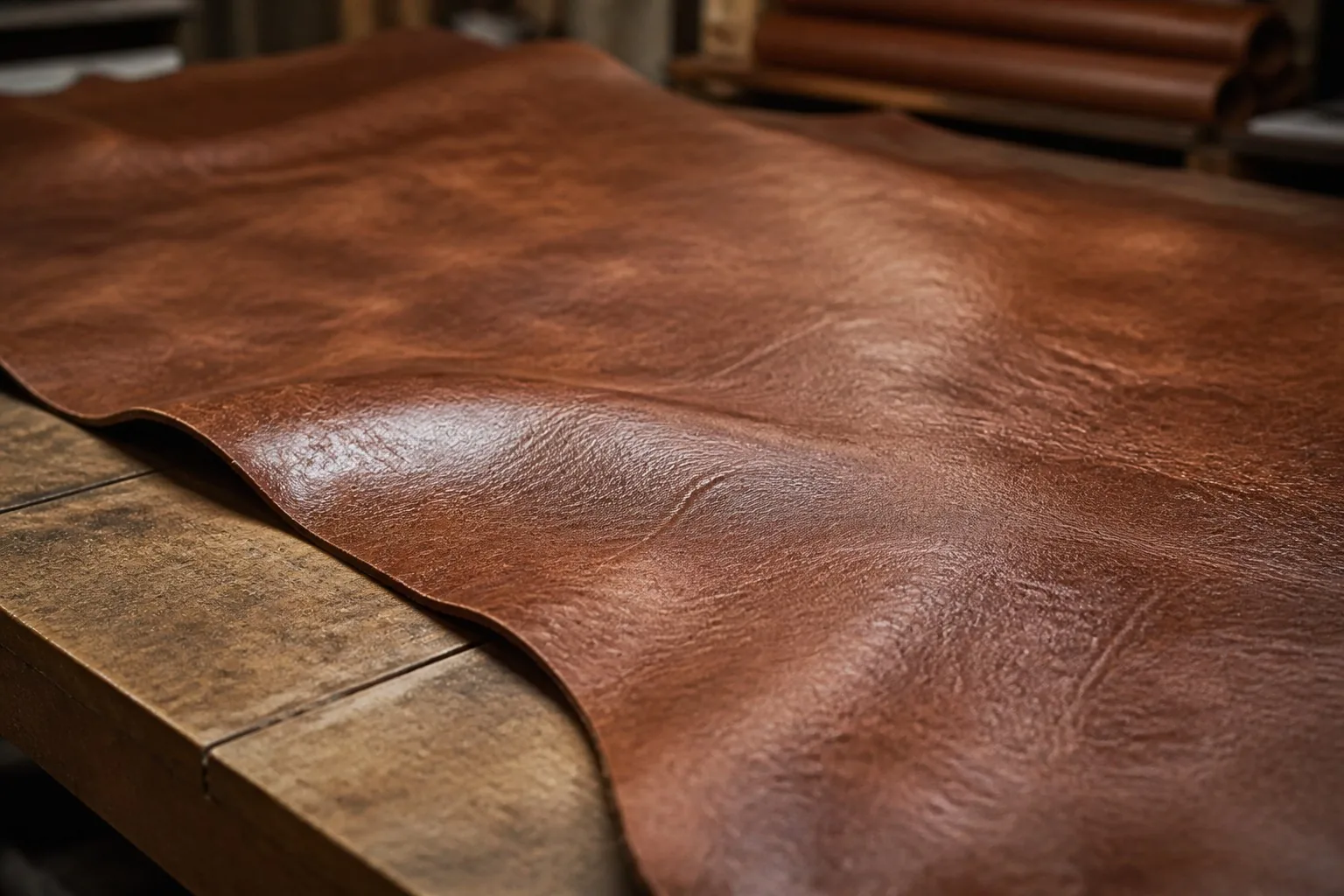
Genuine leather is the animal hide itself — cowhide in the overwhelming majority of bags — processed through tanning to become stable and durable. It is a natural product with natural variation: every hide has its own grain, its own character, and its own limits. As we covered in our guide to leather grades, the word “genuine” in industry practice usually refers to split leather or heavily corrected hides rather than premium full-grain, but the defining fact remains: genuine leather comes from an animal, and it behaves like a natural material.
PU leather — short for polyurethane leather — is a synthetic material built in layers. A fabric backing, usually polyester or microfiber, is coated with a layer of polyurethane resin that is textured and finished to imitate the look and feel of leather. High-quality PU, often built on a microfiber base, can be remarkably convincing; low-quality PU is essentially printed plastic over cloth. The performance range within “PU leather” is wider than most buyers realize.
PVC leather — polyvinyl chloride — is the older, harder synthetic. A fabric backing is coated with a layer of PVC plastic that is typically thicker, glossier, and less flexible than PU. PVC has been used in bags, upholstery, and luggage for decades, and while it is cheap and durable in its own way, it has significant drawbacks that have pushed the industry steadily toward PU.
Why the confusion exists. Marketing has blurred these categories for so long that many shoppers — and even some sellers — genuinely cannot tell them apart. Products are labeled “leather” when they are PU, labeled “PU leather” when they are PVC, and described with invented terms like “vegan leather” and “faux leather” that tell you nothing about the actual material. The result is a market where the label on a product often describes the price point rather than the material, and where the customer’s disappointment is the factory’s phone call.
A manufacturer’s rule: the material should be chosen for what the bag must survive, and the label should describe the material truthfully. Both halves of that sentence are non-negotiable.
Genuine Leather: The Natural Material, Honestly Explained
Genuine leather is a live material in a way no synthetic can match. It breathes, it absorbs oils from your hands, it develops a patina, and it tells the story of its own age. For premium bags, it remains the benchmark that synthetics are constantly trying to imitate.
What makes it special. No two leather bags are identical, and leather enthusiasts value exactly that. A genuine leather bag softens and darkens with use, developing character over years. It is also genuinely tough: the dense collagen fibers of the hide resist tearing and abrasion far better than any thin synthetic coating, and a well-made leather bag can be repaired — re-stitched, re-conditioned, even re-dyed — decades after it was made. When customers say they want a bag that will outlive trends, they are describing what genuine leather does.
What it costs — honestly. Real leather is expensive because the raw material is expensive, the tanning process takes time, and natural variation means lower cutting yields. A genuine leather bag also demands more skilled labor: skiving, edge finishing, and quality inspection are all more demanding with natural material. The result is a product that cannot be honestly made at the price of a synthetic bag, and brands that try to do so are usually cutting corners that customers will discover within months.
The trade-offs to respect. Leather is not waterproof, and it needs care — conditioning, protection from prolonged sun and heat, and prompt attention to spills. It is heavier than most synthetics. And it is a natural product, which means visible variation that some customers misunderstand as defects. These are not flaws in the material; they are the properties of a natural material, and the brands that succeed with leather teach their customers to love them.
PU Leather: The Most Common Synthetic
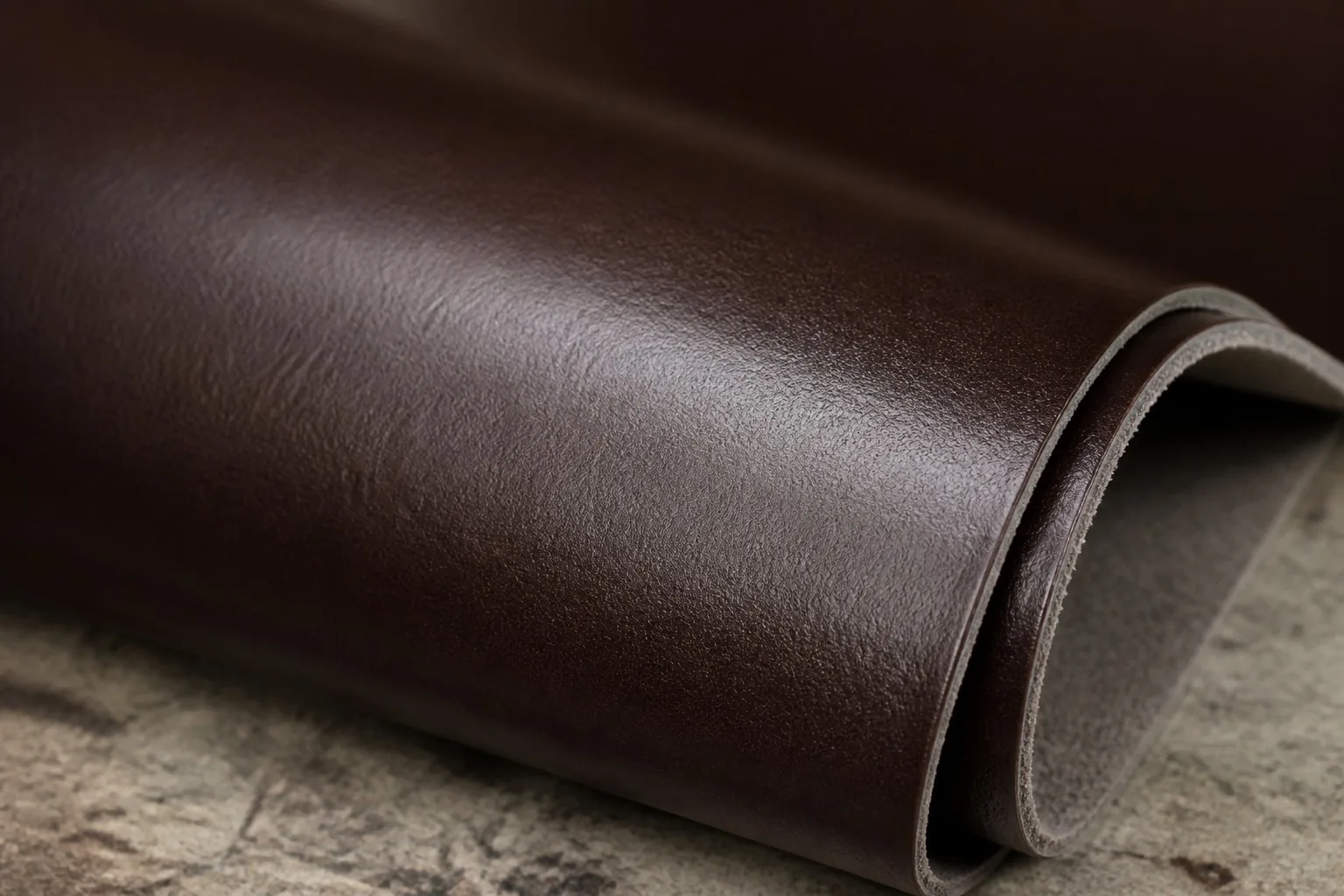
PU leather dominates the mid-range bag market, and for good reason: it delivers a leather-like appearance at a fraction of the cost, in a virtually unlimited range of colors and textures.
How it is made. A backing fabric — polyester, nylon, or increasingly microfiber — is coated with polyurethane resin, which is then embossed with a grain pattern and finished. The quality of the result depends almost entirely on the quality of the base and the thickness of the coating. A microfiber-backed PU with a thick, well-formulated coating can pass casual inspection as leather and perform respectably for years. A thin PU over cheap polyester can peel and crack within months.
What it does well. PU leather is uniform, which makes it easy to match across a product line — no natural variation to manage. It takes any color, including brights and pastels that are difficult or impossible in vegetable-tanned leather. It is more water-resistant than most genuine leather, easy to wipe clean, and light. For fashion-forward products, mid-range everyday bags, and children’s products, PU is often the most sensible choice on the market.
Where it fails. The word everyone in the industry knows is “peeling.” When a PU coating degrades — from heat, flexing, or simple age — it cracks and peels away from the backing, and the result is unrecoverable. Cheap PU fails fastest; quality microfiber PU lasts much longer, but no PU ages as gracefully as leather. A PU bag is typically a three-to-five-year product, and the brands that sell it honestly tell customers exactly that.
The microfiber upgrade. Within the PU family, microfiber PU deserves special mention. Its backing is a dense microfiber nonwoven that mimics the structure of leather fibers far better than woven polyester, giving it a softness, durability, and resistance to peeling that approaches entry-level genuine leather. Many premium “vegan leather” products are actually microfiber PU, and it is the synthetic we recommend when a brand wants leather-like performance at a non-leather price.
PVC Leather: The Budget Synthetic
PVC leather is the oldest and least expensive member of the family, and in the bag world it now plays a limited but real role.
What it is. PVC is a plastic coating, typically thicker and stiffer than PU, applied over a fabric backing. It is glossy, cheap to produce, and extremely consistent. You will find it in promotional bags, budget luggage, and low-cost products where price is the only consideration.
What it does poorly. PVC is less flexible than PU, which means it cracks more readily on creased areas like bag corners and strap attachments. It is also less breathable and less comfortable against the skin or clothing — it feels like plastic because it is plastic. In cold temperatures, PVC stiffens and can crack; in heat, it can soften and emit a characteristic smell. It does not age gracefully: the plasticizer that keeps it flexible migrates and evaporates over time, leaving the material dry, brittle, and prone to cracking after a few years.
The honest verdict. PVC has a narrow but legitimate niche: ultra-budget products, promotional items, and certain industrial uses where low cost outweighs every other consideration. For any bag meant to be carried daily and last, we advise against PVC, and we tell clients exactly that before quoting.
The Three Materials Side by Side: A Manufacturer’s Comparison Table
| Property | Genuine Leather | PU Leather | PVC Leather |
|---|---|---|---|
| Source | Animal hide (tanned) | PU resin over fabric | PVC plastic over fabric |
| Look & feel | Natural grain, warm | Imitates leather well | Glossy, plastic-like |
| Durability | Highest, repairable | Medium, can peel | Low, cracks with age |
| Patina / aging | Beautiful with age | Wears, may peel | Cracks, stiffens |
| Water resistance | Moderate, needs care | Good | Good, but cold-stiff |
| Color range | Natural tones + dyed | Unlimited | Unlimited |
| Breathability | Yes | Low | Very low |
| Weight | Heavier | Light | Light |
| Relative cost | $$$$ | $$ | $ |
| Typical lifespan | 10+ years | 3–5 years | 2–4 years |
| Repairability | Yes (stitch, condition, re-dye) | No | No |
| Best bag uses | Premium bags, heirlooms | Mid-range everyday, fashion | Budget, promotional only |
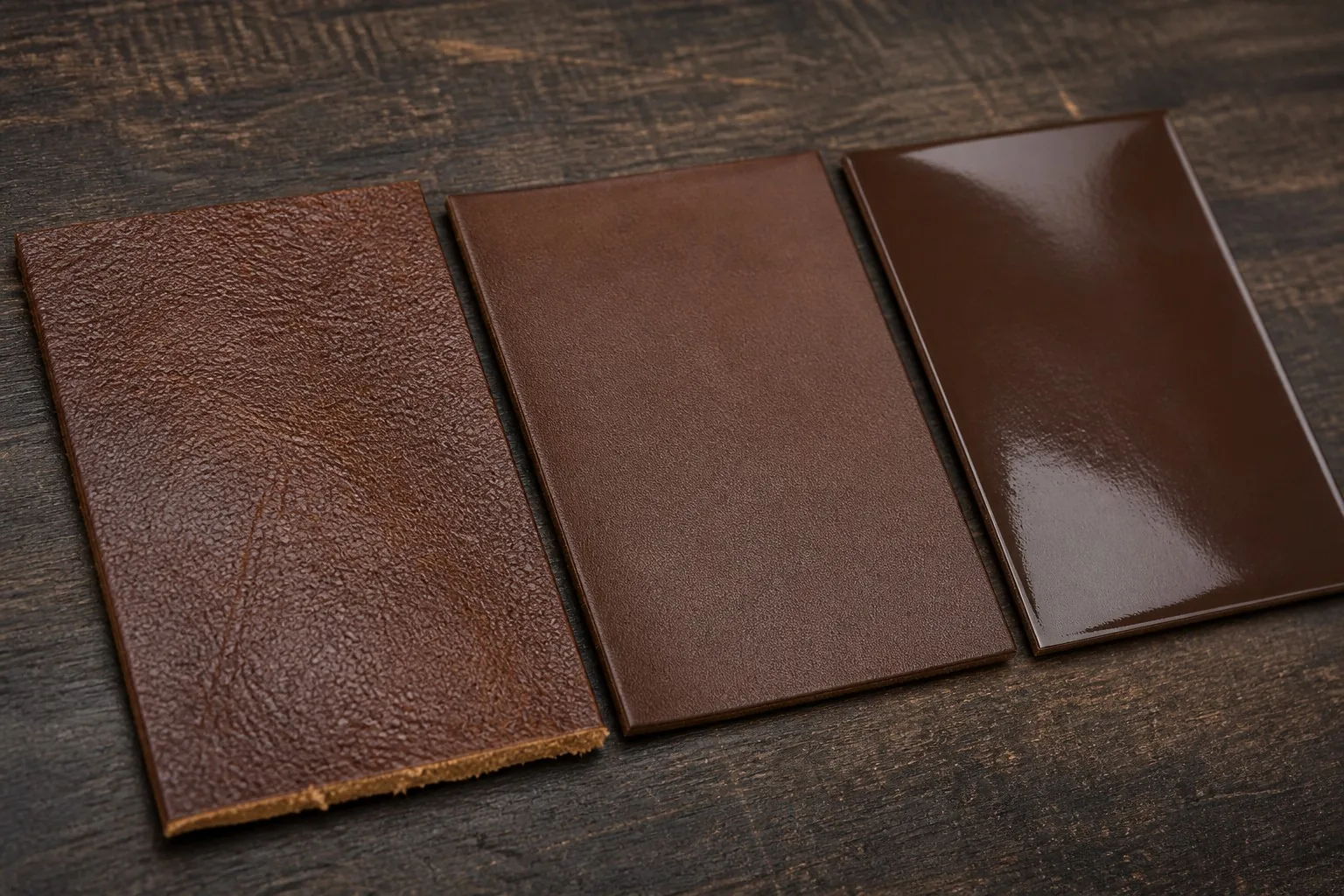
As the table makes clear, these are not three versions of the same product — they are three different materials with three different life stories. The right choice depends entirely on what the bag is for, who buys it, and what promise the brand can honestly keep.
From the Factory Floor: Material Selection Checklist
When a new order lands on our desk, the material conversation follows the same disciplined path every time. Here is the checklist we use — the same one you can use when briefing any manufacturer.
1. Define the bag’s real life. Where will this bag be carried, how often, by whom, and for how long should it last? A school bag that gets thrown around daily, a fashion tote worn on weekends, and a luxury gift bag have completely different material requirements. Write the answers down before you look at any sample.
2. Set the honest lifespan target. Decide how many years of normal use the product must survive, then work backwards. A five-year target points to quality microfiber PU or genuine leather. A two-year target opens the door to standard PU. A one-year promotional product can reasonably use PVC. Matching the material to the lifespan promise is the single best way to prevent returns and one-star reviews.
3. Run the physical tests on every sample. We flex samples repeatedly to check for coating cracks. We rub them with a damp cloth to check color fastness. We scratch the surface with a fingernail to see how easily it marks. We bend them in cold conditions to check stiffness. These five minutes of abuse reveal more than any specification sheet, because they simulate exactly what customers do to bags every day.
4. Price the finished product, not the material. Genuine leather costs more per square foot, yields less, and needs more labor. Quality microfiber PU costs more than cheap PU but far less than leather. PVC is the cheapest of all. The material decision ripples through every other cost in the bag, and the final price must be honest about what is inside — a leather-priced bag made of PVC is a brand-destroying mistake.
5. Match the manufacturing workflow. Leather and synthetics are cut, stitched, and finished differently. Leather demands edge finishing and careful skiving; synthetics are typically edge-folded or bound. A factory optimized for one workflow will quote the other less competitively, so check that your chosen material fits the factory’s strengths before you commit to samples.
6. Test the label against the material. Decide exactly what the product will be called and verify the label is truthful under the regulations of your target market. The penalties for mislabeled materials — and the customer backlash — are far more expensive than using the correct term on a label.
Matching Material to Bag Type: A Decision Matrix
| Bag type | Best material choice | Why |
|---|---|---|
| Premium / heritage tote | Genuine leather | Patina, repairability, heirloom positioning |
| Mid-range fashion handbag | Quality microfiber PU or genuine split leather | Look at an accessible price |
| Everyday work backpack | Genuine leather or high-quality PU | Balance of durability, weight, and cost |
| Diaper bag | Water-resistant PU or genuine leather with reinforced stress points | Spills, weather, and daily abuse |
| School bag for kids | Durable PU, wipe-clean | Light, affordable, easy to clean |
| Crossbody / casual bag | Microfiber PU | Soft, light, many colors |
| Promotional / giveaway bag | PVC or economy PU | Lowest cost, short lifespan expected |
Durability, Care and the Real-World Test
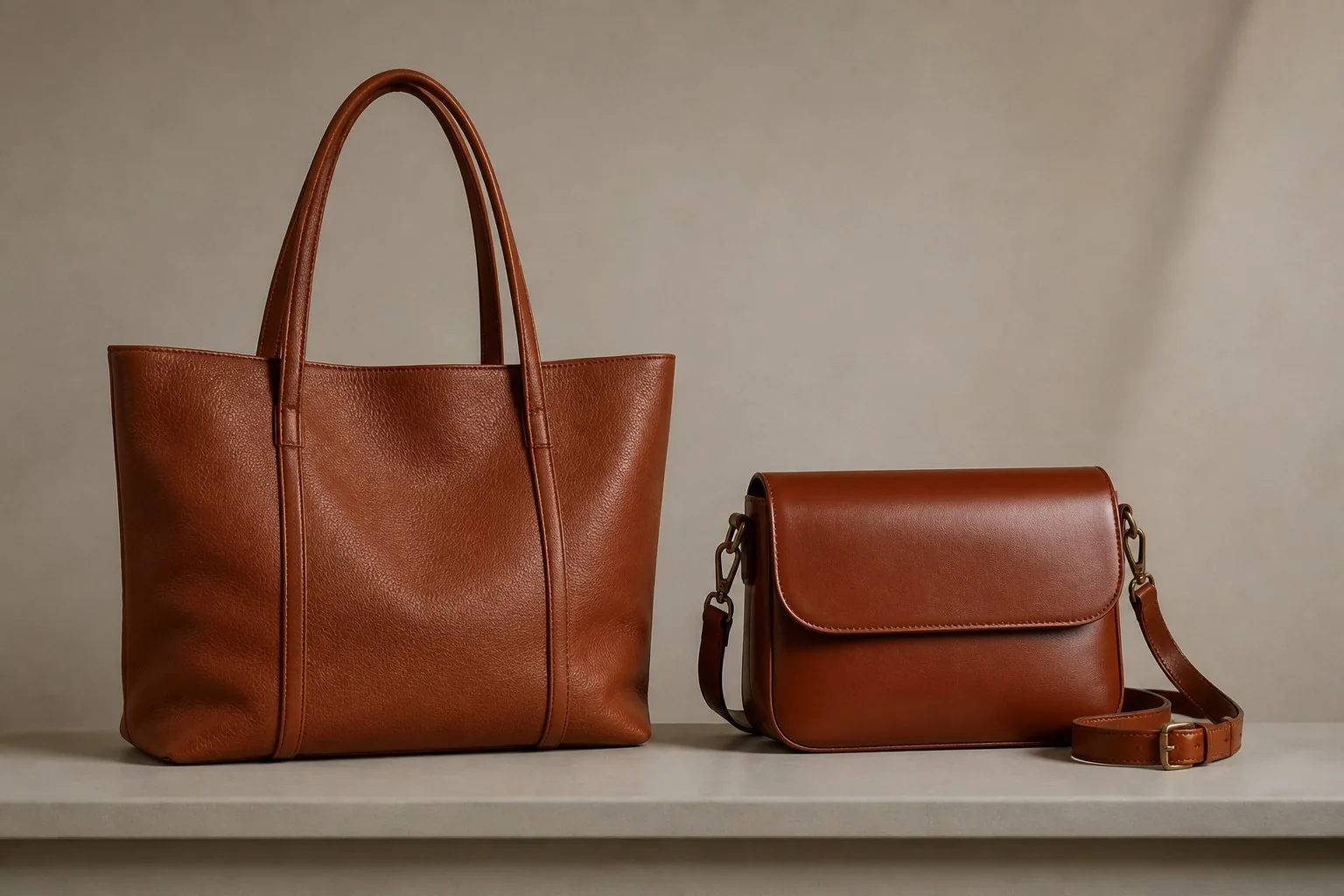
The material decision shows up in the customer’s hands within weeks, and it shapes the brand’s reputation for years. Here is what each material actually promises in daily life.
The first month. A genuine leather bag may need a short break-in period and a warning about water. A quality PU bag is comfortable immediately and shrugs off light rain. A PVC bag feels stiff and plasticky, and in cold weather it may feel board-like. First impressions belong to the synthetics; long-term impressions belong to the leather.
The first year. Leather is developing its patina and needs occasional conditioning. Good PU looks much as it did on day one, requiring only wiping. Cheap PU may already be showing wear at flex points, and PVC may be developing small cracks at the corners. The quality gap within the synthetics becomes visible by year one, which is why the “PU” label alone tells you so little.
The third year and beyond. A genuine leather bag looks better than it did when new — this is the material’s defining gift. Quality microfiber PU may still be going strong, though its coating is thinning at the edges. Standard PU is likely showing peeling at stress points, and PVC bags are usually past their best. By year five, the leather bag is an heirloom, the microfiber PU bag is a veteran, and the budget synthetics have been replaced once or twice.
Care guidance worth sharing. Leather: condition a few times a year, protect from prolonged sun and soaking, embrace the patina. PU: wipe clean, avoid heat and prolonged direct sun, store away from creasing. PVC: keep it cool, avoid folding at sharp creases, and set expectations low for longevity. A printed care card with the product is cheap insurance against complaints.
The Honest Cost Analysis
The price gap between a genuine leather bag and a PVC bag of the same design can be tenfold or more, and the entire gap is legitimate — but only if the brand is honest about what each price buys.
Where leather money goes. Raw hides, tanning, skilled labor for cutting and finishing, quality control, and the slow, careful processes that make leather last decades. A leather bag’s price reflects real, traceable costs, and it can be honestly justified to any customer.
Where PU money goes. A fraction of the material cost, faster production, higher yields, and far less skilled labor. Quality microfiber PU deserves a mid-range price; economy PU belongs at the budget end. The danger is not PU itself — it is selling economy PU at a mid-range price by calling it “leather.”
Where PVC money goes. Almost nowhere — it is the cheapest coating material in the industry, and it shows. A PVC bag priced like a leather bag is the worst value in the market; a PVC bag honestly priced as a promotional product is fine.
What we tell brands. Price the material honestly, describe it truthfully, and let the customer choose. A customer who knowingly buys a $30 PU bag and gets three good years is a satisfied customer who will buy again. A customer who pays $60 for a mislabeled PVC bag and watches it crack in a year is a lost customer who will tell everyone they know.
Environmental Considerations
Material choice is increasingly an environmental decision, and the honest picture is more nuanced than the marketing suggests.
Genuine leather’s story. Leather is a byproduct of the meat industry — the hide is used rather than wasted — and quality leather goods last for decades, which is the most sustainable outcome any product can have. The environmental concerns are real but manageable: tanning uses water and chemicals, and the answer is sourcing from certified tanneries with proper effluent treatment, such as LWG-rated suppliers.
PU and PVC’s story. Synthetics are petroleum-based, and their production and disposal have their own environmental costs. They also wear out and are discarded in years rather than decades, multiplying their footprint. PVC in particular has persistent concerns around its plasticizers and disposal. The “vegan leather” label is not automatically an environmental win — a short-lived synthetic may have a larger footprint than a long-lived natural material.
The manufacturer’s balanced view. The most sustainable material is the one that is produced responsibly and lasts longest. For a brand with serious sustainability goals: source certified leather for long-life products, choose quality microfiber PU for price-driven lines, and never buy into the myth that “vegan” automatically means “green.” Report your material choices and their sourcing honestly, and let informed customers decide.
Frequently Asked Questions
Which is better, genuine leather or PU leather?
It depends on the product and the promise. Genuine leather lasts longer, ages beautifully, and can be repaired, but costs significantly more and needs care. PU leather is affordable, uniform, and easy to clean, but it wears out in a few years and can peel. Choose based on the bag’s purpose, price point, and lifespan target.
How can I tell whether a bag is genuine leather or PU?
Several clues help. Genuine leather feels warm and slightly irregular, wrinkles gently when pressed, and its unfinished edges look fibrous. PU feels cooler and more uniform, and its edges look like a coating. The water test is a strong indicator: a drop of water slowly darkens genuine leather, while it beads on PU. When in doubt, ask the seller for the material declaration and check it against the product.
Is PU leather waterproof?
PU is water-resistant, not waterproof. It handles rain and spills far better than untreated leather, and it wipes clean easily, but soaking it, or prolonged exposure to heat and sunlight, will eventually degrade the coating. PVC is similarly water-resistant but stiffens in cold and cracks with age.
Why does PU leather peel, and can it be fixed?
PU peeling happens when the resin coating degrades and separates from the fabric backing — driven by heat, flexing, and age. Once peeling starts, it cannot be repaired, which is why quality of the PU base matters so much. Microfiber-backed PU resists peeling far longer than cheap polyester-backed PU.
Is “vegan leather” the same as PU leather?
Usually, yes. Most products marketed as vegan leather are PU leather, often microfiber PU. The term describes what the material is not (animal-derived) rather than what it is, so always check the actual composition — some “vegan leather” is PVC, which is a different and generally lower-quality material.
Which material should I choose for a diaper bag?
A water-resistant, wipe-clean material is essential. Quality PU leather handles spills and weather well at a sensible price. If the budget allows, genuine leather with reinforced stress points offers the best longevity — but it needs more care. Avoid PVC for daily-use diaper bags; it cracks at stress points too quickly.
Does genuine leather always cost more than PU?
Yes, significantly. The raw material, tanning process, labor, and lower yields all make genuine leather genuinely more expensive. If you see a bag labeled “genuine leather” priced like a PU bag, the label is almost certainly inaccurate — a red flag worth investigating before you buy.
Final Word from the Factory
The material decision is the first and most consequential choice in any bag project, and it deserves the same rigor as the design itself. Genuine leather, PU leather, and PVC are not competitors in a beauty contest — they are three tools for three different jobs, and the skilled manufacturer’s job is to match the tool to the task, the price to the material, and the label to the truth.
At our factory, we produce bags in all three materials every week. We have seen leather bags come back for repairs ten years after they were made, and we have seen cheap synthetics fail in a season. We have also seen well-made PU bags give customers years of honest service at a price they were happy to pay. The pattern is always the same: the brands that thrive are the ones that chose the material deliberately, priced it honestly, and taught their customers exactly what they were buying.
When you plan your next bag line, make the material decision with your eyes open. Ask what the bag must survive, set an honest lifespan target, test samples like a customer would, and label the product truthfully. A bag that meets its promise — whether it is made of leather, PU, or PVC — builds the trust that turns first-time buyers into lifelong customers. That trust, more than any material, is what a bag brand is really selling.
