
Who Should Pay for Leather Bag Samples in Product Development?
Who Should Pay for Leather Bag Samples in Product Development?
Almost every first conversation between a brand and a bag factory contains the same sentence, phrased one way or another: can you make a sample for free? It sounds like a small request. It is actually a question about who funds development, and the answer shapes the relationship for years.
A sample is not a gift. It consumes leather bought by the metre or the square foot, pattern work, machine time, hardware, a technician’s hours and an international courier bill. Somebody pays for all of it. The only real question is whether the cost is visible now, hidden in the unit price later, or absorbed by a factory that will recover it from the next customer who does not ask.
This guide treats sample cost as a commercial structure rather than a courtesy. It covers what a sample actually consumes, the three models used in the trade, how refunds against orders are calculated, who owns the physical sample and the pattern, where the hidden costs sit, and what a fair agreement looks like in one page. It does not cover how a sample is constructed or how a bag’s price is built up, both of which are covered elsewhere.
- Why Sample Cost Is a Negotiation, Not a Price
- What Goes Into a Sample
- The Three Commercial Models
- Sample Fees and Their Refund Logic
- Development Cost Versus Production Cost
- Who Owns the Sample
- Materials Bought for Sampling
- Courier, Duty and the Hidden Sample Bill
- Sample Rounds and Revision Discipline
- When the Factory Should Absorb the Cost
- When the Brand Should Pay
- The Sample Agreement in One Page
- Red Flags on Both Sides
- Sample Cost and the Real Unit Price
- Counter-Samples and Approvals
- Working With Agents and Trading Companies
- How a Factory Should Quote a Sample
- What Happens When the Sample Is Rejected
- Pricing Development for a Long Programme
- What Belongs in the Purchase Order
- Comparing Sample Offers Between Factories
- Common Mistakes
- A Fair Split in Practice
- Frequently Asked Questions
- Conclusion
Why Sample Cost Is a Negotiation, Not a Price
Three Costs Wearing One Word
The word “sample” covers a pre-production prototype, a salesman sample in a standard colour, and a counter-sample made to match a competitor’s product. They cost very different amounts to produce. A quotation that does not say which one is being discussed cannot be compared with anything.
What a Sample Actually Consumes
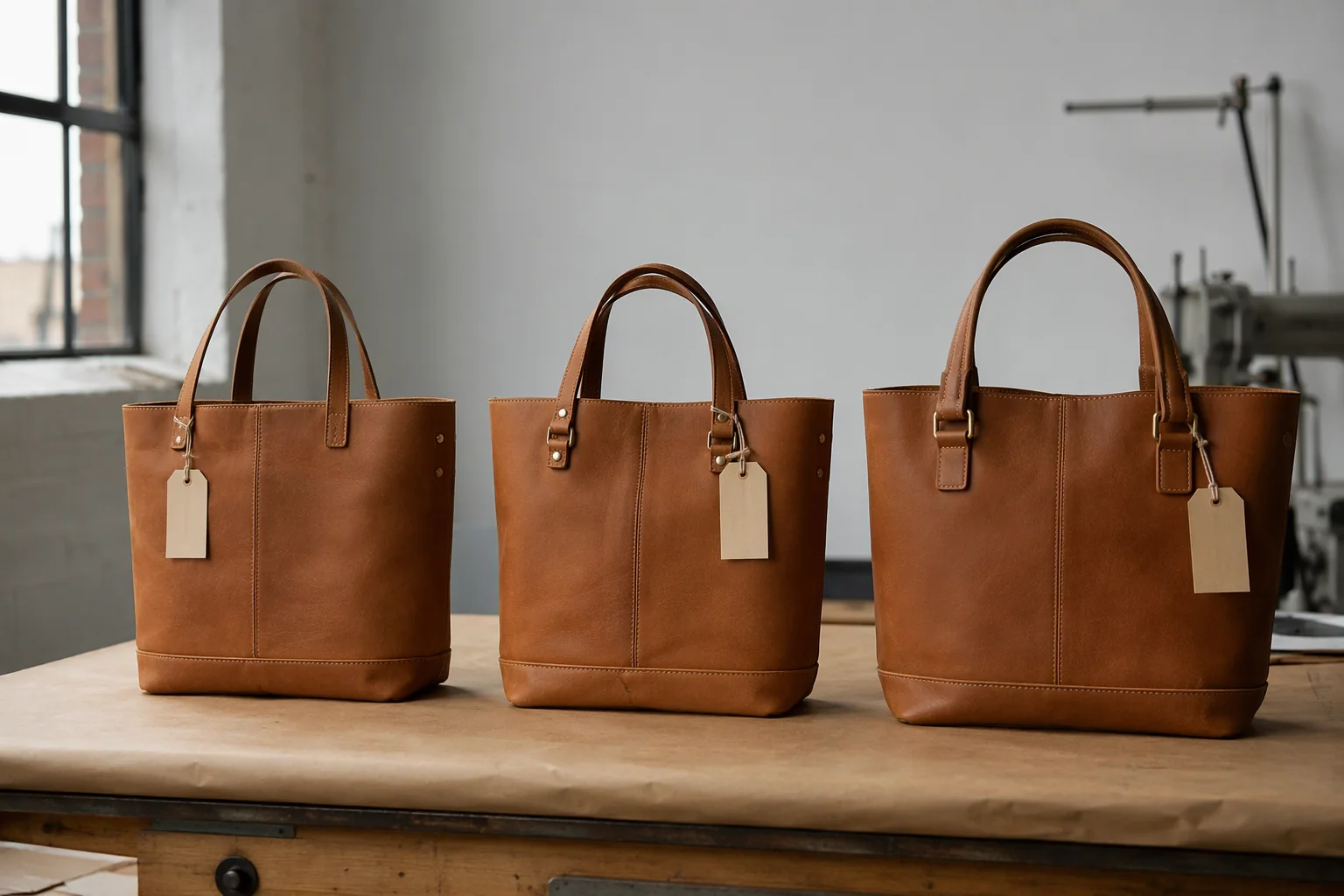
A first sample of a new leather bag typically absorbs a hide or part of one, several hours of pattern work, two to four hours of a sample-maker’s time, hardware, lining, thread, and a technician’s supervision. That is before the courier. The materials are often bought in minimum quantities larger than the sample needs.
Why Free Is Never Free
A factory that offers free samples is either investing in a customer it expects to win, or pricing the cost into future production. Both are legitimate. What is not legitimate is a factory that pays for samples it cannot afford and then recovers the loss through shortcuts on the order, which is exactly how cheap development becomes expensive production.
What Goes Into a Sample
Material
Leather dominates the material cost, because a sample needs a real hide in the right article and colour, not a substitute. Where the article is not in stock, the factory must buy a minimum quantity and carry the remainder.
Labour and Machine Time
Sample-making is slower than production, because each step is a first attempt. A sample room works with one operator per bag rather than a line, and the same bag that takes forty minutes in production can take four hours as a prototype.
Tooling and Pattern Work
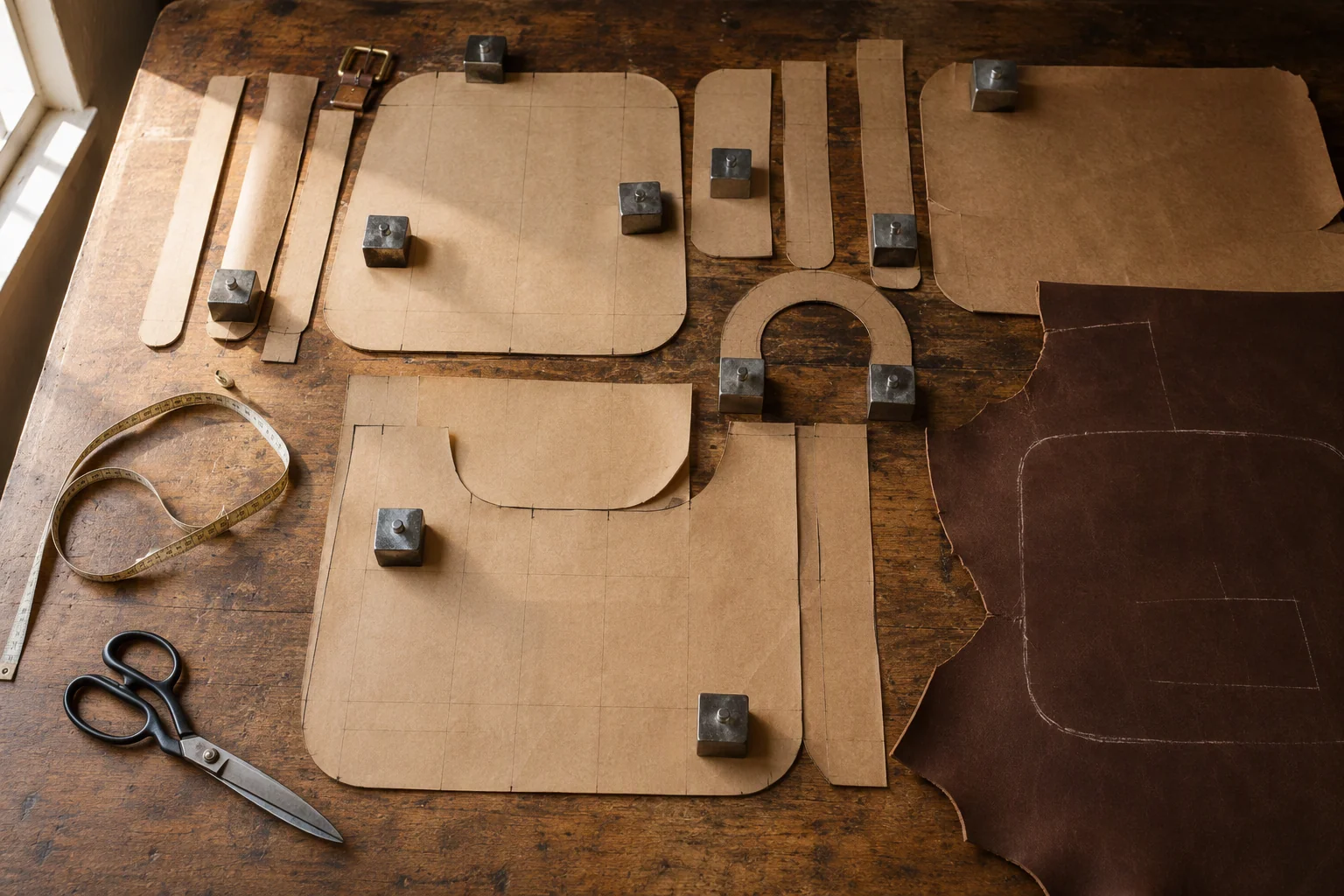
Patterns, templates and any cutting dies are made for the sample and reused for production. Their cost is development cost, and it belongs to whoever will own the production. Charging it twice, once as a sample fee and again inside the unit price, is a common and quiet form of double billing.
| Cost element | Who usually bears it | Typical treatment | What to write down |
|---|---|---|---|
| Leather | Factory, then recovered | Charged or refunded | Article, colour and quantity used |
| Lining and interlining | Factory | Absorbed in the fee | Included or excluded |
| Hardware | Factory | Absorbed in the fee | Whether specials are charged |
| Pattern and template | Shared | Charged once | Who owns the files |
| Sample-maker labour | Factory | The core of the fee | Hours assumed per round |
| Courier and duty | Brand, in most cases | Paid by the receiver | Who books and who pays |
| Photographs and labels | Brand | Usually free | Delivery format and timing |
Reading the Table
The value of the table is not the allocation but the act of allocating. A factory and a brand that fill it in together discover within twenty minutes whether they are describing the same transaction.
The Three Commercial Models
Free With Order
The factory produces the sample at its own cost and recovers it through the production order. This is the most common arrangement for standard articles and established relationships, and it works when the order is likely and the sample is not complex.
Charged and Refunded
The brand pays a sample fee, and the fee is credited against the first production order above a stated value. This is the fairest model for custom development, because it prices the work honestly and returns the money when the work leads somewhere.
Charged Outright
The brand pays and the payment is not refundable. This is appropriate where the sample is genuinely a one-off, where the brand takes the sample to another factory, or where the development is speculative. It is not a penalty; it is a price for a service.
Sample Fees and Their Refund Logic
Why Factories Charge
A factory that gives away samples to every enquiry funds its competitors’ development. Enquiries that never become orders are common, and the sample room is a fixed cost that must be covered by someone. A modest fee filters serious buyers, which is why many factories prefer it.
How the Refund Is Calculated
The usual mechanism is a credit equal to the fee, applied to the first order above a minimum value, and often capped at a percentage of that order. The details matter: whether the credit applies per style or per order, whether it expires, and whether it covers the courier.
The Threshold That Makes It Work
A threshold set too high discourages small brands, and one set too low turns the programme into a discount. The practical threshold is the order value at which the sample cost becomes immaterial to the factory’s margin, which most factories can state from their own experience.
Development Cost Versus Production Cost
The First Sample Is the Most Expensive
The first sample carries pattern development, material purchase and the learning curve. Later samples reuse the patterns and the knowledge, so their marginal cost falls sharply. A fee schedule that charges the same for every round misprices both.
Rounds Add Up
Three rounds of sampling can cost as much as a small production run, and the cost is invisible in a unit price quoted months later. Where a brand expects multiple rounds, budgeting development as a separate line is more honest than negotiating each round.
When Development Should Be Paid Separately
Where the article is genuinely new, where the brand intends to own the pattern, or where the factory is being asked to invest in machinery, development should be a paid service with a defined deliverable. Mixing it into a sample fee produces disputes about what was bought.
Who Owns the Sample
Physical Ownership
The sample is normally the brand’s property once paid for, and the factory’s if given free. This matters when the brand wants to show the sample to a buyer, photograph it, or take it to a second factory for comparison. The answer should be agreed before the sample is made.
The Pattern and the Spec
Patterns, technical files and specifications are a separate question from the physical bag. A brand that paid for development usually expects to own the files; a factory that developed the pattern for its own range does not. Where both contributed, ownership is usually shared and should be written.
Rights When the Order Goes Elsewhere
A factory that developed a pattern and lost the order to a cheaper competitor has a legitimate grievance. Many therefore charge a development fee that is not refundable, or retain the pattern. Both are reasonable when stated in advance and unreasonable when discovered afterwards.
Materials Bought for Sampling
Minimum Purchases
A tannery or a hardware supplier sells in minimums, and a sample needs a fraction of one. The factory buys the minimum and holds the difference. That stock is a real cost, and it is the reason a sample can cost more than its material content suggests.
Leftover Stock
Leftover leather from sampling can be used for the production order if the order follows, and becomes dead stock if it does not. A fair arrangement recognises this: a refund against a real order is easy, a refund against no order is not.
Charging for Leather Offcuts
Charging for the exact leather consumed is defensible and easy to verify. Charging a flat material allowance is simpler and usually generous to the factory. Either is fine if written; neither is fine if argued after the fact.
Courier, Duty and the Hidden Sample Bill
Air Freight Reality
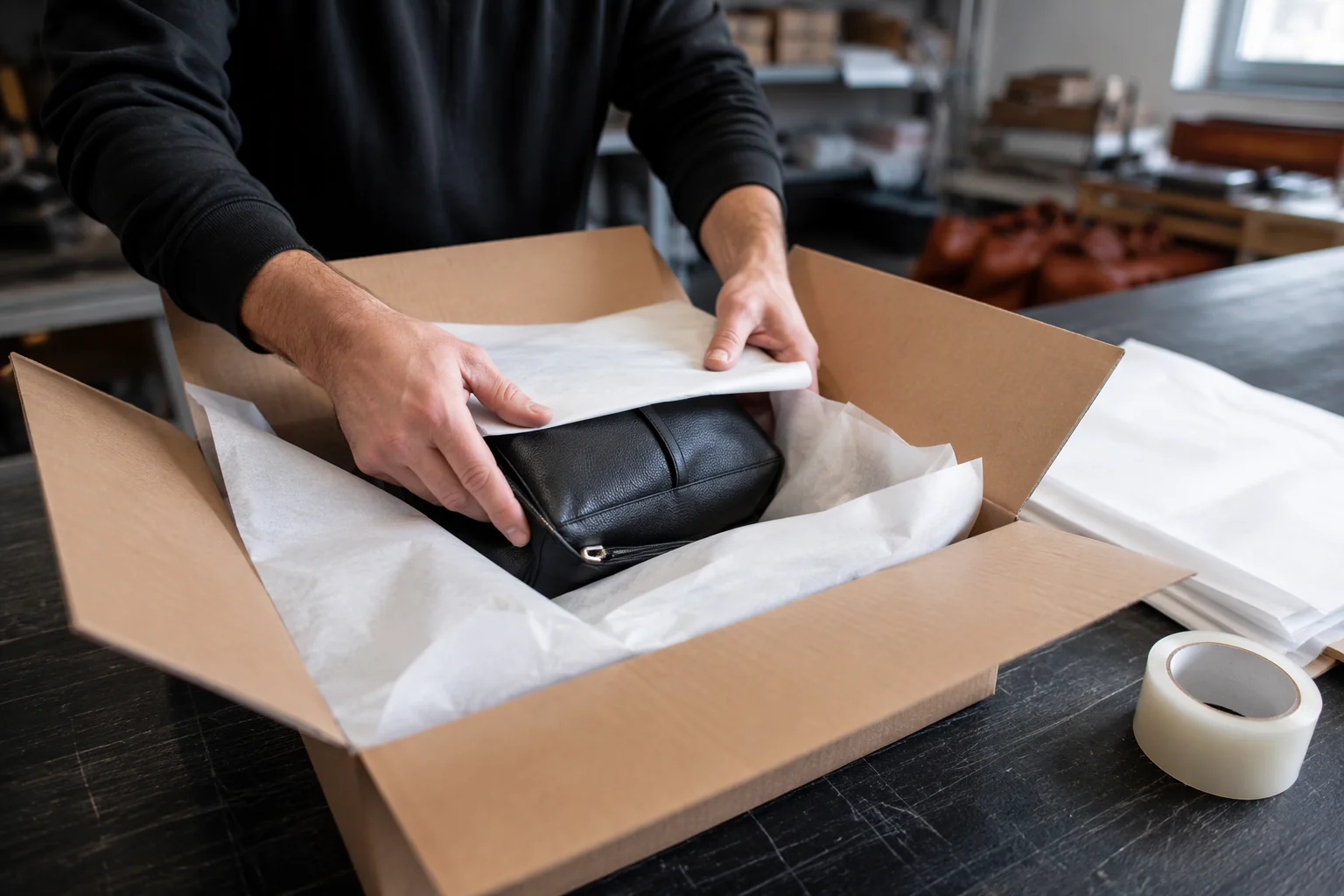
Samples travel by air, in small parcels, at rates that bear no relation to production freight. A single sample bag can cost more to ship than to make, particularly to a distant market, and this is the line most often omitted from the discussion.
Customs on Samples
Samples cross borders with documentation, and some destinations charge duty or tax on them even when marked as samples. The charge usually falls on the receiver, which is the brand, and it should be expected rather than disputed on arrival.
Who Books the Shipment
A factory with a courier account gets better rates than a brand arranging collection. Where the factory books, the freight should appear as a separate line rather than buried in the fee, so both sides can see what the logistics actually cost.
Sample Rounds and Revision Discipline
Rounds One to Three
The first round establishes construction, the second corrects it, and the third confirms it. Beyond three rounds the process has usually stopped being sampling and become product development, which deserves a different budget and a different conversation.
Revision Versus Redesign
A revision changes a detail within the agreed construction: a pocket position, a stitch length, a buckle finish. A redesign changes the construction or the silhouette, which invalidates the pattern work already done. Pricing them the same encourages redesigns and penalises the factory that has to absorb them.
Charging for Changes of Mind
Where a brand changes direction after approving a specification, the remake is a new sample rather than a revision. Charging for it is fair; declining to make it for free is also fair. The relationship survives when the distinction is explained once, at the start.
When the Factory Should Absorb the Cost
Genuine Capability Demonstrations
A factory showing what it can do for a new customer is marketing, and marketing is a cost the factory chooses. A standard article made from existing patterns and stock material is cheap to produce, which is why free samples usually come from this category.
Factory Error and Remakes
A sample that fails because the factory misread the specification is a remake at the factory’s cost. This is not negotiable and should not be negotiated. A factory that argues about this is telling the brand something useful about how production disputes will go.
Strategic Investment
Where a factory wants a long-term programme, absorbing development cost is an investment with a return it can calculate. That calculation should be explicit, because an investment that is never counted becomes a habit that is never questioned.
When the Brand Should Pay
Custom Development
A brand asking for its own silhouette, its own hardware or its own finish is asking for work that did not exist. Paying for it is normal in every other industry and should be normal in this one.
Small Volumes
A first order of two hundred bags cannot carry the development cost of a new article. Where volume is small, the sample fee is the honest way to fund development, and the brand should expect it rather than negotiate it away.
Multiple Factories in Parallel
Sending the same brief to three factories and asking each for a free sample is a real practice and a poor one. It converts three factories’ development budgets into a competition, and the two that lose will price the next enquiry accordingly.
The Sample Agreement in One Page
A short written agreement prevents nearly every dispute in this area. It needs eight lines.
- The number of samples and the rounds included
- Whether a fee applies, its amount and currency
- What the fee covers: material, labour, tooling, courier
- The refund condition, the threshold and the expiry
- Who pays freight, duty and any inspection
- Who owns the sample, the pattern and the technical files
- The specification version the sample will be made to
- The turnaround date and the delivery address
Why One Page Is Enough
A longer document invites legal review and delay. One page, signed by both sides, is used. It also forces the two parties to name the specification version, which is the single most useful clause because it removes the argument about what was agreed.
Red Flags on Both Sides
Brand-Side Red Flags
A brand that asks for free samples from several factories at once, provides no specification, and requests photographs before committing is shopping rather than developing. Factories learn to recognise this within one exchange.
Factory-Side Red Flags
A factory that quotes a sample fee with no breakdown, refuses to state a refund condition, or claims to have patterns it cannot show is improvising. So is one that offers an unusually low fee and an unusually high unit price, which is the same money moved to a place that is harder to question.
What They Predict
Both sets of flags predict the same thing: a production order where the specification is disputed and the remedy is unclear. The sample stage is where that pattern is set, which is why it deserves more attention than its cost suggests.
Sample Cost and the Real Unit Price
Amortising Development
Development cost belongs to the first order, not to the product forever. A brand that spreads it across three years of production is accounting; a factory that spreads it across the first order is recovering. Both are reasonable if the assumption is shared.
Why Cheap Samples Become Expensive Bags
A factory that funds development from its margin must recover it somewhere. Recovery usually appears as a slightly higher unit price, a slightly lower grade of lining, or a slightly later delivery. None of these is visible in the sample quote.
The Comparison That Matters
| Model | Cash paid now | Who carries the risk | Best suited to |
|---|---|---|---|
| Free with order | Nothing | Factory | Standard articles, known buyers |
| Charged and refunded | Sample fee | Shared | Custom development with real volume |
| Charged outright | Full development cost | Brand | One-offs, multi-factory comparisons |
| Paid development service | Fee plus files | Brand, with ownership | New articles and proprietary designs |
Using the Table
The right model follows from who will own the result. Where the brand will own the pattern and sell the product for years, paying is cheaper over time. Where the factory is demonstrating a standard capability, free is the market norm.
Counter-Samples and Approvals
What a Counter-Sample Proves
A counter-sample made from a competitor’s bag proves that a factory can copy a construction. It does not prove that the factory can engineer one, and it says nothing about consistency at volume. Brands often pay for counter-samples expecting the second thing and receive the first.
Who Pays for the Second Round
Where the counter-sample reveals a capability the brand wants to use, the second round is development and should be paid. Where it was produced to win an order and the order follows, the fee is normally credited.
Documentation
Every sample should leave the factory with a record: the specification version, the material lots, the date and the name of the person who approved it. That record is what makes a later dispute about “what we agreed” answerable in a minute rather than a month.
Working With Agents and Trading Companies
Bundled Sample Charges
Agents and trading companies often bundle the sample fee with their service, which simplifies the brand’s paperwork and obscures the cost. The bundle is acceptable when the total is competitive, and unhelpful when the brand needs to know what development actually costs.
Visibility
A brand that never sees the components cannot judge whether a factory is expensive or merely thorough. Asking for the sample fee to be shown separately, even inside a bundled quote, restores that judgement at no cost.
Control
Where an agent manages the sample process, the brand’s specification can be paraphrased on the way to the factory. The version that arrives at the sample room should be the version the brand signed, and checking that is a five-minute task with a large payoff.
How a Factory Should Quote a Sample
Quote the Components
A sample quotation that lists leather, labour, hardware, pattern work and courier allows the brand to see where the money goes. It also protects the factory, because a brand that understands the components argues less about the total.
State the Assumptions
How many sample-maker hours, which article of leather, how many patterns, which hardware. Assumptions turn a number into a proposal, and a proposal can be accepted or amended rather than merely refused.
Make the Refund Mechanical
A refund condition that requires interpretation becomes a negotiation. One stated as a formula, applied to the first order above a stated value, is executed without discussion, which is better for both sides.
What Happens When the Sample Is Rejected
Rejection for Cause
A sample outside the agreed specification is the factory’s responsibility, and the remake is at its cost. The conversation is short when the specification version is recorded and the sample is compared against it rather than against memory.
Rejection for Taste
A sample that meets the specification but does not please the brand is a change of direction. It should be priced as a new sample, and the brand should expect to pay for it. Factories that absorb these quietly end up subsidising indecision.
Salvage and Reuse
A rejected sample still contains leather and hardware. Where the factory keeps it, the material may be reused; where the brand keeps it, it becomes a reference. Agreeing which of the two happens prevents an awkward conversation later.
Pricing Development for a Long Programme
Development as an Investment
A programme of ten styles with its own hardware and colours is a development project, not a series of samples. Pricing it as a project, with rounds, deliverables and a total, is clearer than multiplying a single sample fee by an unknown number.
Sharing the Risk
Where the volume is uncertain, the two parties can share the development cost and the credit. A partial fee with a larger refund on a larger order distributes risk without turning either side into a speculator.
Reviewing the Assumption
Development budgets are estimates, and they should be reviewed at the point when the first order is placed. A review that confirms the estimate is as useful as one that corrects it, because it converts an assumption into a fact.
What Belongs in the Purchase Order
Reference the Approved Sample
A production order should reference the approved sample by date and specification version, not by description. This single line resolves most quality disputes before they begin, because it names the physical object both sides accepted.
State the Development Credit
Where a sample fee is refundable, the credit should appear as a line in the purchase order rather than as a private understanding. An undocumented credit is the kind that disappears when the person who agreed it leaves.
Cover the Courier Question
Production freight terms and sample freight terms are different, and the order should not silently apply one to the other. Naming both avoids a charge that arrives after the goods.
Comparing Sample Offers Between Factories
Normalising the Offers
Three sample quotes for the same brief are rarely comparable. One includes pattern work, another charges it separately, a third assumes the brief is a standard style. Normalising means reducing each offer to the same scope before comparing totals.
The Hidden Lines
The lines that decide the comparison are the ones usually left out: pattern ownership, refund threshold, courier, duty, and the number of revisions included. Two offers at the same fee can differ by a factor of three once those lines are filled in.
A Simple Scoring Sheet
- Sample fee, and what it covers
- Refund condition and threshold
- Rounds included, and the cost of a further round
- Pattern and file ownership
- Courier and duty, paid by whom
- Turnaround in working days
- Specification the sample will be made to
Score each offer on those seven lines, not on the fee alone. The factory that looks expensive on line one is often the cheapest on the total.
Compare offers on scope, not on totals. A fee that includes what another quote excludes is not a higher price.
Common Mistakes
Asking for Free Samples From Strangers
The first message to an unknown factory is a poor place to ask for free work. A brand that opens with a specification and an offer to pay the sample fee receives faster and better responses, because it looks like a buyer rather than a collector.
Paying Without a Specification
A sample fee paid against a verbal brief buys a bag that cannot be judged. The specification is the deliverable’s definition, and paying before it exists means paying for someone’s interpretation.
Treating the Fee as the Price
The sample fee is a development charge, not a discount on production. Brands that negotiate it to zero often find the difference returned in the unit price, where it is harder to see and impossible to remove.
Ignoring the Files
Brands that pay for development and never ask for the pattern files discover, at the second factory, that they own a bag but not the means to make it. The files are usually available for the asking at the moment the fee is paid, and rarely afterwards.
A Fair Split in Practice
Most working relationships settle into a simple pattern, and it is worth stating because it is more common than any formal scheme.
- The factory makes one standard-article sample at its own cost to show capability.
- The brand pays a fee for the first custom sample, with the pattern work included.
- Revisions within the agreed construction are included up to a stated number.
- A change of direction is a new sample, paid.
- The fee is credited against the first order above an agreed value.
- The brand owns the approved sample and the pattern files it paid for.
- Courier is paid by the receiver, booked by whoever gets the better rate.
Whoever pays for development should own what development produced. Everything else in this negotiation follows from that sentence.
Frequently Asked Questions
Is it normal for a factory to charge for samples?
Yes, particularly for custom development. Many factories offer a free sample of a standard article to demonstrate capability, and charge for anything that requires new patterns, new material or new hardware.
How much should a leather bag sample cost?
It varies with the article and the market, and it should be quoted by component. A sample that uses a full hide, new patterns and several hours of sample-room time costs multiples of one made from stock material and existing patterns.
What does “refundable sample fee” actually mean?
Usually that the fee is credited against the first production order above a stated value. The details that matter are the threshold, whether the credit expires, and whether it applies per style or per order.
Who pays the courier for samples?
In most cases the receiver, which is the brand. The factory often books the shipment because its account has better rates, and the freight should then appear as a separate charge rather than inside the sample fee.
Should I ask three factories for samples at once?
Comparing capability is reasonable, but asking three factories for free development is not. Where a comparison is intended, pay each factory for its sample, or ask for standard-article samples that cost them little.
Who owns the pattern after I pay for development?
This should be written into the agreement. A brand that pays for pattern development normally expects to own the files; a factory that developed a pattern for its own range retains it. Shared development is usually shared ownership.
How many sample rounds are reasonable?
Three is typical: first construction, correction, confirmation. Beyond that the work has usually become development, and it should be budgeted and priced as such rather than absorbed round by round.
Should a factory remake a sample for free if it is wrong?
If the sample does not meet the agreed specification, yes. If it meets the specification and the brand has changed its mind, no. The distinction depends entirely on whether the specification was written down.
Can I get a sample before paying anything?
From some factories, for standard articles, and usually after a conversation that establishes that the enquiry is serious. A factory that offers a free custom sample to an unknown buyer is either investing heavily or has not costed its own work.
Does a higher sample fee mean a better factory?
Not necessarily. A high fee with a clear breakdown and a written refund condition is a professional signal; a high fee with no breakdown is not. The breakdown matters more than the number.
What if the factory refuses to show the sample fee separately?
Ask once, in writing, and treat the answer as information. Where a bundled quote cannot be decomposed at all, the brand has no way to judge whether development is being funded fairly, which is a poor basis for a long programme.
Conclusion
The sample fee is a small number that carries a large amount of information. It shows whether a factory costs its own work, whether it expects a real order, and whether it intends to own the design or lend it. A brand that reads that information at the start avoids most of the disagreements that appear later.
The fairest arrangement is also the simplest to explain: the party that funds development owns what development produced, and the party that benefits from the order credits the cost against it. Written in a page, with a specification version and a refund formula, that arrangement survives staff changes, currency movements and the ordinary friction of a long relationship.
For a bag manufacturer, the practical value is in quoting by component and stating assumptions. A sample quotation that can be read as a proposal is more persuasive than a number, and it turns the first commercial conversation into a technical one, which is where a factory is strongest.
