
Vegetable-Tanned vs. Chrome-Tanned Leather: A Bag Manufacturer’s Guide to Choosing the Right Tannage
Vegetable-Tanned vs. Chrome-Tanned Leather: A Bag Manufacturer’s Guide to Choosing the Right Tannage
When buyers compare two leather bags, they usually look at the grain, the color, and the price. When manufacturers compare two leathers, we look at something entirely different: the tannage. The tannage is the chemical process that turns a raw animal hide into stable, usable leather, and it determines more about the final product — its firmness, its water resistance, its patina, its lifespan, and its honest price — than any other single decision in the entire supply chain.
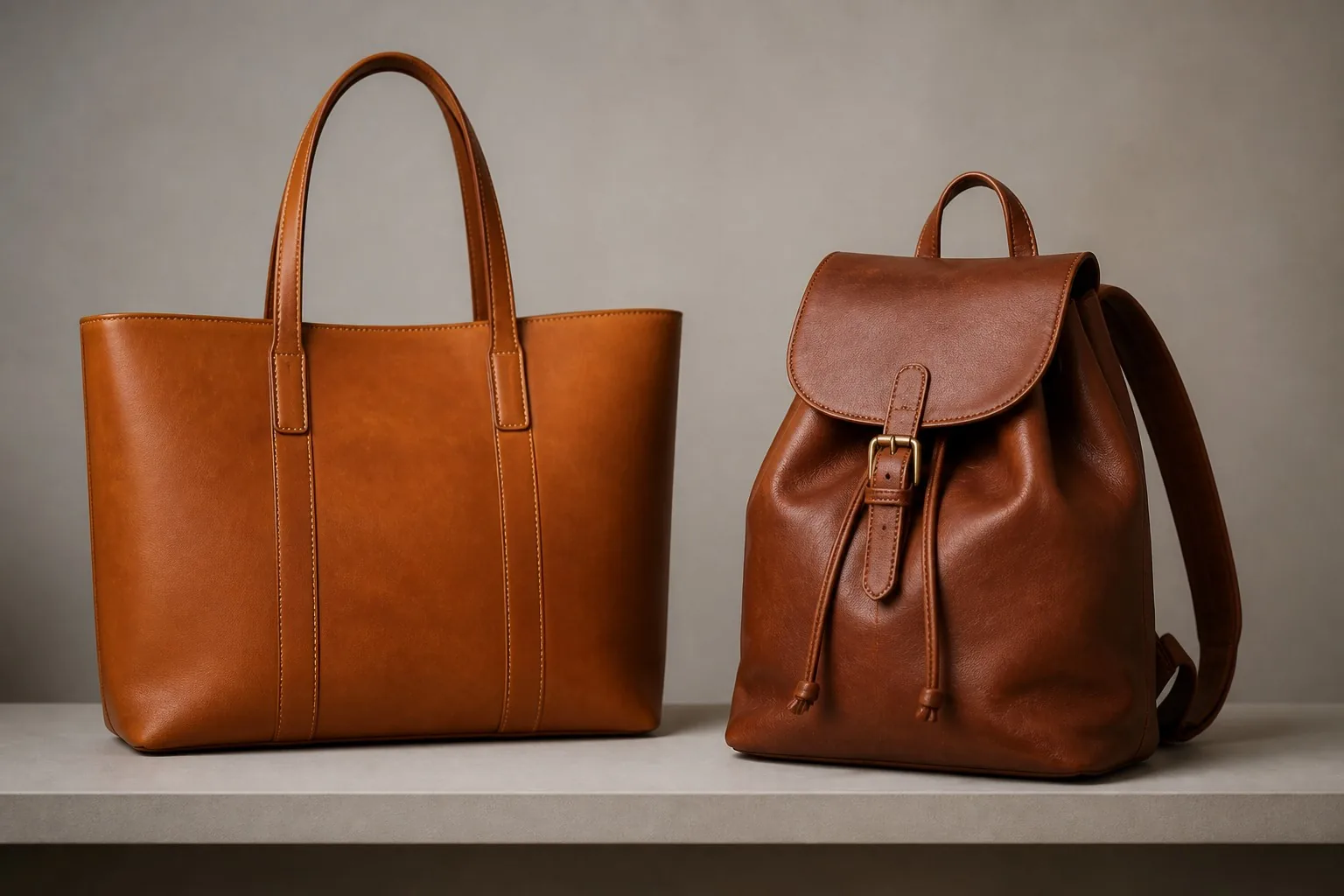
Walk into our factory’s material room and you will find shelves organized by tannage before anything else. Vegetable-tanned leathers sit on one side, chrome-tanned leathers on the other, and the difference between them is not a matter of taste. It is a matter of physics, chemistry, and decades of practical experience with what survives daily use and what does not.
This guide explains both processes from a manufacturer’s perspective: how each tannage works, what it does to the leather’s behavior on our cutting tables and sewing machines, which bags each one suits best, and how to make an informed choice for your product line.
- What “Tannage” Actually Means (and Why It Matters More Than You Think)
- How Vegetable Tanning Works
- How Chrome Tanning Works
- Vegetable-Tanned Leather: Strengths and Trade-Offs
- Chrome-Tanned Leather: Strengths and Trade-Offs
- Vegetable vs. Chrome: The Manufacturer’s Comparison Table
- From the Factory Floor: How We Choose Between the Two
- Matching Tannage to Bag Type
- Durability, Patina and Care: What Customers Will Experience
- Environmental Considerations: The Nuanced Truth
- Frequently Asked Questions
- Final Word from the Factory
What “Tannage” Actually Means (and Why It Matters More Than You Think)
A raw hide is mostly protein, water, and fat. Left untreated, it rots. Tanning is the process of bonding the hide’s protein fibers with chemical agents so that they become stable, durable, and resistant to decay. The word “tanning” itself comes from “tannin,” the natural compounds found in tree bark — a reminder that the oldest method of tanning is literally a plant-based recipe.
The tannage determines the leather’s fundamental character. Two hides from the same animal, tanned by different methods, will behave like two completely different materials. One may be firm enough to hold a structured bag shape on its own; the other may drape and fold like fabric. One may darken beautifully with age; the other may keep its color for years. One may resist water well; the other may stain if it gets wet. None of these differences come from the hide itself — they come from how the hide was tanned.
For a brand owner, understanding tannage matters for three practical reasons. First, it determines which bag designs are even possible: a structured tote needs a firm leather, while a slouchy crossbody needs a supple one. Second, it determines how the product will age, which is a core part of the customer promise you are making. Third, it determines the price you can honestly charge, because the two tannages have very different production costs.
How Vegetable Tanning Works
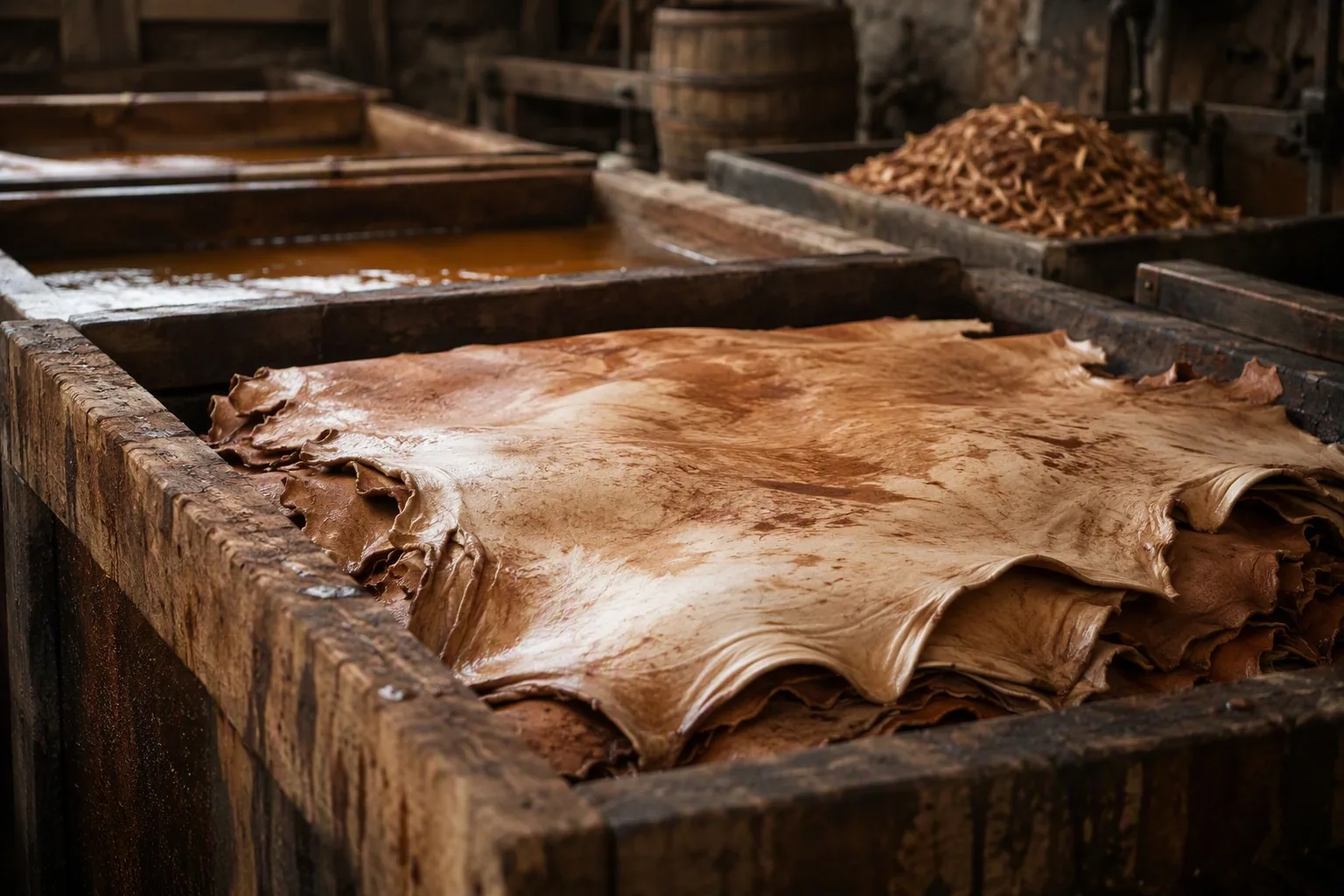
Vegetable tanning is the oldest leather-making method in human history, and it is still the benchmark for quality in many parts of the industry. The process uses tannins extracted from plant sources — most commonly mimosa bark, chestnut, quebracho, and oak — to convert the hide into leather.
The process is slow by design. Fresh hides are first cleaned, limed, and de-fleshed. They are then moved into a series of tanning pits or slowly rotating drums containing progressively stronger tannin solutions. A full vegetable tan can take anywhere from several weeks to several months, depending on the desired firmness and the tannery’s methods. The hides are moved from weaker to stronger baths, absorbing tannins gradually so the fibers bond evenly. Rushing this process produces leather that is hard on the surface but weak in the middle — the classic sign of a cut-corner vegetable tan.
The result is a leather with distinct personality. Vegetable-tanned leather is firm and dense, with a natural, matte appearance. It can be stamped, embossed, carved, and edge-burnished to a glassy finish — which is why it has been the leather of choice for tooled goods, belts, and structured bags for centuries. Its most famous trait is the patina: with use, exposure to sunlight, and natural oils from your hands, vegetable-tanned leather darkens and develops a rich, warm glow that no factory finish can replicate. Many leather lovers buy vegetable-tanned goods precisely for this aging story.
The honest trade-offs. Vegetable tanning is slow, which makes the leather more expensive. It is also generally less water-resistant than chrome-tanned leather — a wet vegetable-tanned bag needs to be dried carefully to avoid staining or stiffening. And it is firmer, which means it needs a break-in period: a new vegetable-tanned bag can feel stiff for the first weeks of use before it softens to the shape of your body and habits.
How Chrome Tanning Works
Chrome tanning was developed in the mid-nineteenth century and revolutionized the leather industry by compressing a process that once took months into a matter of days. Instead of plant tannins, it uses chromium salts — most commonly chromium sulfate — to stabilize the hide’s fibers.
The process is fast and precise. After the same preparatory steps, the hides go into large rotating drums with the chromium solution, where the tanning chemistry works in roughly 24 to 48 hours. The drums also carry out the dyeing and fatliquoring — the addition of oils that keep the leather soft — in the same cycle. What takes weeks in a tanning pit happens in a single day inside a drum, and the result is far more consistent from batch to batch.
The result is a different kind of leather. Chrome-tanned leather is soft, supple, and drapes naturally. It takes dyes brilliantly and uniformly, which is why it is available in a vastly wider range of colors than vegetable-tanned leather. It is also significantly more resistant to water and heat, because the chromium-bonded fibers are more stable and the leather is typically finished with protective coatings. This is the leather that dominates the modern bag, shoe, and garment industries precisely because it combines softness, color range, water resistance, and a production speed that keeps prices accessible.
The honest trade-offs. Chrome-tanned leather does not develop a patina in the same romantic way; it tends to keep its original color and finish, and what wear it shows is usually less graceful. The protective finishes that give it water resistance can eventually crack or peel on heavily flexed areas, especially in lower-quality versions. And chrome tanning has a significant environmental footprint, which we will address honestly later in this guide.
Vegetable-Tanned Leather: Strengths and Trade-Offs
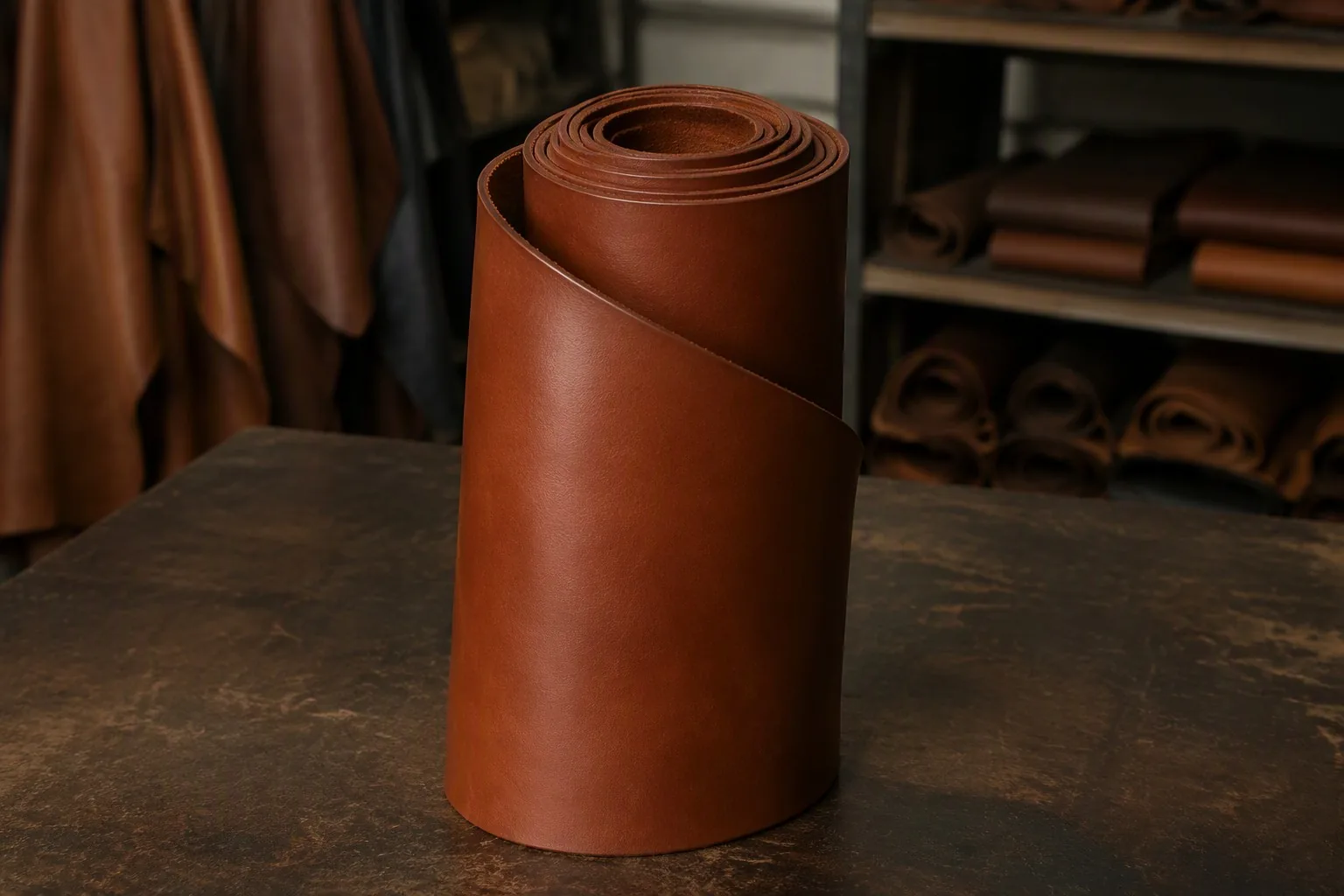
Strengths from a manufacturer’s bench. Vegetable-tanned leather is a joy to work with for structured products. It cuts cleanly, holds its edge when skived, and edge-burnishes to a beautiful polished finish without artificial paint. It takes hardware — rivets, buckles, snaps — exceptionally well, because the dense fibers grip fasteners firmly. It can be tooled, stamped with logos, and embossed with patterns, which makes it the default choice for brands that want customization. And because it is a natural product with no heavy surface coatings, it develops that celebrated patina that turns a bag into a heirloom.
Where it struggles. Vegetable-tanned leather is less forgiving in wet environments. Water can leave dark marks, and repeated wetting can stiffen or even distort the leather. It is also firmer, so soft, slouchy designs are difficult to achieve without splitting it thinner, which reduces durability. Its natural surface variation means more careful cutting and lower yield — a factor that pushes cost upward. Finally, the slow tanning process and higher raw-material standards make vegetable-tanned leather genuinely more expensive at every stage.
The verdict. Choose vegetable tanning when the product’s story is about natural character, long-term patina, structure, and craftsmanship — heritage-style totes, tooled goods, belts, and any bag positioned as an heirloom purchase.
Chrome-Tanned Leather: Strengths and Trade-Offs
Strengths from a manufacturer’s bench. Chrome-tanned leather is the workhorse of modern bag manufacturing for excellent reasons. It is soft and supple, which makes it ideal for bags that need to drape, fold, and conform — crossbody bags, slouchy totes, backpacks with flexible bodies. It accepts a huge range of colors with excellent uniformity, so a brand can offer twenty colorways without consistency problems. Its water resistance means fewer customer complaints about weather damage. And because the process is fast and yields are high, chrome-tanned leather delivers the best price-to-performance ratio in the industry.
Where it struggles. The patina story is weaker — chrome-tanned leather ages by wearing, not by glowing. The protective finish that provides water resistance can crack over years of heavy use, particularly on creased areas like bag corners and strap attachments, and lower-grade versions are more prone to this. Chrome tanning’s environmental impact — chromium waste and higher water use — is a legitimate concern that responsible manufacturers and buyers increasingly weigh, though modern tanneries with proper effluent treatment mitigate much of it.
The verdict. Choose chrome tanning when the product needs softness, color range, water resistance, and an accessible price point — everyday backpacks, diaper bags, travel bags, fashion handbags, and anything that will face real-world weather.
A manufacturer’s rule of thumb: vegetable tanning sells the future of the bag; chrome tanning sells the present of the bag. Both are honest products — the question is which promise your customer is buying.
Vegetable vs. Chrome: The Manufacturer’s Comparison Table
| Property | Vegetable-Tanned | Chrome-Tanned |
|---|---|---|
| Tanning time | Weeks to months | 1–2 days |
| Firmness | Firm, holds structure | Soft, supple, drapes |
| Patina with age | Rich, natural, desired | Minimal; wears rather than glows |
| Water resistance | Low–moderate | High |
| Color range | Limited, natural tones | Virtually unlimited |
| Customization | Tooling, stamping, edge burnishing | Printing, coating, embossing |
| Relative cost | Higher | Lower |
| Edge finishing | Burnished natural edge | Painted or folded edge |
| Break-in period | Yes (weeks) | Minimal |
| Best bag types | Structured totes, heritage, tooled goods | Everyday bags, travel, fashion, diaper bags |
| Environmental footprint | Lower, natural inputs | Higher, chromium waste (mitigable) |
| Manufacturer’s verdict | Heirloom quality | Best price-to-performance |
From the Factory Floor: How We Choose Between the Two
Every leather order that reaches our factory triggers the same practical evaluation. The tannage decision is rarely about which is “better” — it is about which performs correctly for the product, the price, and the promise. Here is the checklist we run through, which you can reuse when briefing any manufacturer.
1. Define the bag’s structure first. Will the bag stand up on its own when set down, or is it meant to slouch? A structured tote, a diaper bag with firm walls, and a briefcase all need the body that vegetable tanning provides — or a thicker, firmer chrome-tanned hide. A slouchy crossbody or a soft backpack needs the drape of chrome tanning. Decide the silhouette before you decide the leather; the leather must serve the shape, not fight it.
2. Ask about the leather thickness in ounces. Tannage and thickness interact. A 4-5 oz vegetable-tanned leather is stiff enough to hold a structured bag shape unaided. The same weight in chrome-tanned leather is noticeably more flexible — often a benefit. A 2-3 oz vegetable-tanned leather can be too floppy for bags and is usually reserved for linings and small goods. Always specify both the tannage and the ounce weight in writing when you request samples.
3. Consider the finishing workflow. Vegetable-tanned leather is finished by edge burnishing — rubbing the cut edges to a polished, natural shine. Chrome-tanned leather is finished by edge painting — applying a colored edge coating. These are different skills, different machines, and different labor costs. A factory that mostly runs one workflow will quote the other less competitively, so matching your product to the factory’s strengths matters as much as matching it to the leather.
4. Run a water test on every sample. We pour a few drops of water on each sample and watch what happens. Vegetable-tanned leather darkens where the drop lands and dries slowly; chrome-tanned leather beads water and dries clean. This single five-minute test tells you more about the leather’s real-world behavior than any specification sheet, and it predicts how the bag will handle rain, spills, and the general chaos of daily use.
5. Price the full product, not the square foot. Vegetable-tanned leather costs more per square foot, yields less usable area because of natural variation, and requires more labor hours for edge finishing and break-in-related quality checks. Chrome-tanned leather is cheaper per square foot, yields better, and moves faster through production. The gap in final product cost can be significant — and it should be reflected honestly in your retail price, not absorbed into margins.
6. Test the patina promise with real users. If your marketing tells customers the bag will develop a beautiful patina, make sure the leather actually does. Some modern vegetable-tanned leathers are heavily finished and patina slowly; some chrome-tanned leathers are marketed with “vintage” treatments that age artificially. Put samples through a few weeks of real use before you commit your brand story to a material behavior.
Matching Tannage to Bag Type
| Bag type | Recommended tannage | Why |
|---|---|---|
| Structured tote | Vegetable-tanned, 4–5 oz | Holds shape, burnished edges, heirloom patina |
| Everyday / travel backpack | Chrome-tanned, 4–5 oz | Supple, water-resistant, comfortable on the back |
| Diaper bag | Chrome-tanned, 4–5 oz, reinforced stress points | Weather-proof, easy to wipe down, survives daily abuse |
| Crossbody bag | Chrome-tanned, 3–4 oz | Soft drape against the body, light weight |
| Wallet / small goods | Vegetable-tanned, 2–3 oz | Skives cleanly, holds stitching, best patina in the lineup |
| Heritage / tooled bag | Vegetable-tanned, 5–6 oz | Tooling and stamping need dense, firm fibers |
| Fashion handbag | Chrome-tanned, 3–4 oz | Wide color range and consistent finish |
Durability, Patina and Care: What Customers Will Experience
The tannage choice shows up in the customer’s hands within the first month, and it keeps showing up for years. Set the right expectations and you turn the differences into selling points instead of complaints.
The first month. A chrome-tanned bag is comfortable from day one — soft, flexible, already broken in. A vegetable-tanned bag may feel stiff, and the customer needs to know this is normal and temporary. Brands that sell vegetable-tanned goods should say so in the product description: “This bag will soften and shape itself to you over the first weeks of use.” That one sentence prevents more returns than any warranty.
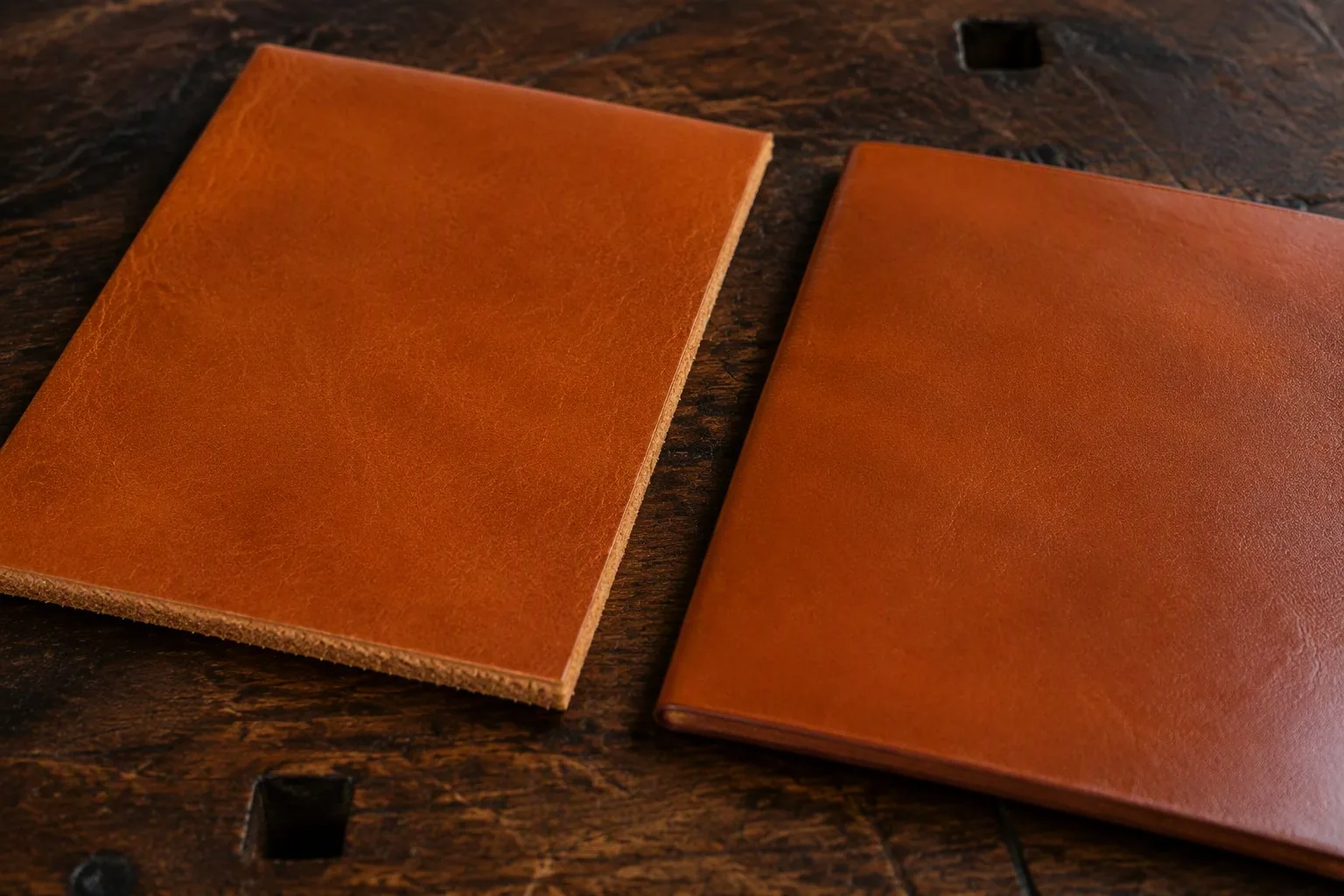
The first year. Chrome-tanned leather resists rain and spills with minimal care. Vegetable-tanned leather needs a little more attention — wiping water off promptly and conditioning occasionally — but in return it is developing the warm, rich color that made the customer buy it. By year one, the vegetable-tanned bag looks lived-in in the best way, while the chrome-tanned bag looks much as it did on day one.
The long term. A well-made chrome-tanned bag lasts for years with reasonable care, aging by gradual wear. A well-made vegetable-tanned bag ages like fine wood — darker, richer, more beautiful every year, and it can be repaired, re-conditioned, and even re-dyed decades later. This is why vegetable-tanned goods are the default for “buy it for life” positioning.
Care guidance to share with customers. For both tannages: store bags away from direct sunlight and heat, stuff them lightly to hold shape, and wipe spills promptly. For vegetable-tanned leather specifically: condition a few times a year with a natural leather conditioner, avoid soaking, and expect and embrace the patina. For chrome-tanned leather: clean with a damp cloth, and treat the finish gently on creased areas. A simple care card included with the product dramatically reduces both complaints and early replacements.
Environmental Considerations: The Nuanced Truth
Buyers increasingly ask which tannage is more eco-friendly, and the honest answer is: it depends on how you measure it, and the industry is changing fast.
Vegetable tanning looks greener on the surface. It uses renewable plant extracts, produces biodegradable waste, and its waste streams are far less hazardous. Traditional pit tanning has a romantic, artisanal image that fits sustainability branding perfectly. The catch is that vegetable tanning is slow and land-intensive, and heavily finished vegetable leathers may still use synthetic coatings that complicate their “natural” story.
Chrome tanning carries a real environmental burden — with an important caveat. The chromium process uses water and chemicals intensively, and improperly managed tannery effluent can be genuinely harmful. However, modern tanneries with certified effluent treatment recycle their water, recover chromium, and meet strict discharge standards. The industry’s most credible certifications — such as LWG (Leather Working Group) gold and silver ratings — audit exactly these practices. A chrome-tanned leather from an LWG-rated tannery can have a smaller environmental footprint than a vegetable-tanned leather from an unregulated source.
What we tell our clients. Ask for your supplier’s tannery certifications and water-treatment records regardless of tannage. If sustainability is your brand pillar, request LWG-rated sources and consider vegetable tanning for hero products while using certified chrome tanning for the rest of the line. The greenest leather is the one that is produced responsibly — and the bag that lasts, because a bag that lasts ten years instead of two is the most sustainable choice of all.
Frequently Asked Questions
Which is better, vegetable-tanned or chrome-tanned leather?
Neither is universally better. Vegetable tanning gives firmness, natural patina, and heirloom character; chrome tanning gives softness, water resistance, color range, and affordability. Choose based on the bag type and the customer promise, not on abstract quality rankings.
Does vegetable-tanned leather really develop a patina?
Yes. With use, exposure to sunlight, and natural body oils, vegetable-tanned leather darkens and develops a rich, warm glow over months and years. This aging is one of the main reasons people buy it — and why it is positioned as a long-term investment piece.
Is chrome-tanned leather waterproof?
It is water-resistant, not waterproof. Its chromium-bonded fibers and protective finishes handle rain and spills far better than vegetable-tanned leather, but no leather should be soaked, and heavy water exposure will eventually damage any material.
Why is vegetable-tanned leather more expensive?
The tanning process takes weeks to months instead of days, the raw hides must be higher quality, natural variation lowers cutting yield, and edge finishing demands more skilled labor. All of these add up to a genuinely higher production cost, which an honest brand passes on with a higher retail price.
Can a chrome-tanned bag be edge burnished like a vegetable-tanned bag?
Not in the traditional sense. Chrome-tanned leather edges are usually finished with edge paint because the fibers do not burnish to the same polished, natural shine. Vegetable-tanned leather is the material for classic burnished edges.
Which tannage should I choose for a diaper bag?
Chrome-tanned leather at 4-5 oz with reinforced stress points is the best choice. It resists weather and spills, wipes clean easily, and stays soft and comfortable — exactly what daily parenting life demands. Save vegetable tanning for structured, low-abuse products.
How can I tell whether a bag is vegetable- or chrome-tanned?
Several clues help. Vegetable-tanned leather feels firmer, has a matte natural surface, and its unfinished edges show a light, fibrous look. Chrome-tanned leather feels softer, comes in a wider color range, and typically has painted or folded edges. The water-drop test is conclusive: vegetable-tanned leather darkens where the drop lands, chrome-tanned leather beads it.
Final Word from the Factory
If the leather grade is the question of “how much of the hide’s surface you keep,” the tannage is the question of “how you transform the hide into leather at all.” The two decisions work together: a full-grain vegetable-tanned hide and a full-grain chrome-tanned hide are both premium materials, but they make completely different bags. Understanding tannage gives you a level of control over your product that most competitors never exercise — you can decide not just how your bag looks, but how it feels, how it ages, and what story it tells after years of use.
At our factory, we produce in both tannages every week, and we have learned to respect each one’s limits. We have also learned that the brands that succeed are the ones that make the tannage decision deliberately — matching the material to the design, pricing it honestly, and teaching the customer to love the way their bag ages.
When you brief your next bag project, ask your manufacturer not just “what leather do you recommend,” but “what tannage, what thickness, and what finish — and why?” A factory that answers those questions with samples, water tests, and production data is a factory worth building a product line with. The right tannage, chosen deliberately, is the difference between a bag that merely carries things and a bag that becomes part of someone’s life.
