
Do Take-Back and Repair Programmes Actually Work for Leather Bags?
Do Take-Back and Repair Programmes Actually Work for Leather Bags?
Every few months a brand announces that it will take its bags back, repair them, and keep them out of landfill. The announcement is easy. What follows is a bench, a queue, a parts bin, a shipping account and a set of decisions about who pays for what. Most programmes that quietly disappear do not fail because customers dislike the idea. They fail because the operation was never designed.
From the factory side, this is familiar territory. Repair is not a marketing concept; it is a small production line with its own skills, its own parts inventory and its own cost structure. A bag that comes back is a bag with unknown history, and the first task is always assessment rather than repair.
This guide looks at take-back and repair programmes as an operations problem: what the scheme actually promises, what can realistically be repaired, how bags travel backwards, what a repair bench needs, how parts availability constrains design, and how to measure whether the programme is doing anything. It does not cover how an owner should clean or condition a bag, which is a separate subject with its own methods.
- What a Take-Back Programme Actually Is
- Why Repair Is Easier Than Take-Back
- The Bag That Comes Back
- Reverse Logistics From Customer to Bench
- Repair Operations on a Factory Floor
- Storage, Humidity and Returned Stock
- Customer Communication Through a Repair
- Spare Parts and the Design Decisions Behind Them
- Designing a Bag That Can Be Repaired
- Working With the Factory on Repairs
- The Economics of a Repair Bench
- What Resale Does to the Programme
- Warranty, Guarantee and Programme Boundaries
- Quality Feedback: The Real Return
- Environmental Claims
- Measuring Whether It Works
- Small Brand Versus Large Brand
- Insurance, Liability and Lost Parcels
- Setting Up a Repair Bench From Scratch
- What Repair Data Tells You About Design
- Repair, Replacement and Refund Boundaries
- Choosing a Destination for Each Returned Bag
- Common Failure Modes
- A One-Page Programme Design
- Frequently Asked Questions
- Conclusion
What a Take-Back Programme Actually Is
Three Different Schemes Wearing One Name
The phrase covers at least three different things: a repair service where the owner keeps the bag, a buy-back or trade-in where ownership transfers, and a collection scheme where the bag is dismantled or recycled. They have different costs, different logistics and different claims. Confusing them in a policy document is the most common reason a programme underdelivers.
What the Brand Promises
A promise to repair is a promise about parts and labour. A promise to take back is a promise about logistics and disposal. A promise to recycle is a promise about what happens to mixed materials, which is the hardest of the three to honour. Each promise should be written in terms of what physically happens to the bag.
What the Factory Is Asked to Do
Factories are usually asked for one of three things: to repair at cost, to supply parts, or to receive returns and grade them. Each has a different implication for capacity. A repair bench competes with production for the same skilled operators, and that competition is the constraint nobody plans for.
Why Repair Is Easier Than Take-Back
The Repair Case
Repair keeps the bag with its owner and moves only parts and labour. There is no inventory of used goods, no authentication question and no resale channel. For a first programme it is the cheapest to run and the easiest to explain, which is why most brands that succeed start here.
The Take-Back Case
Take-back creates a flow of used goods that must be graded, stored, cleaned, decided upon and either repaired, resold, dismantled or disposed of. Each step has a cost and a decision. The moment a brand owns the bag, it also owns the problem of what to do with the ones that cannot be saved.
Where the Two Overlap
Both need parts, both need a bench, and both need a way to get a bag from a customer to a workbench and back. A brand that builds the repair route first can add take-back later on the same rails, which is far cheaper than building both at once.
The Bag That Comes Back
Condition Grading
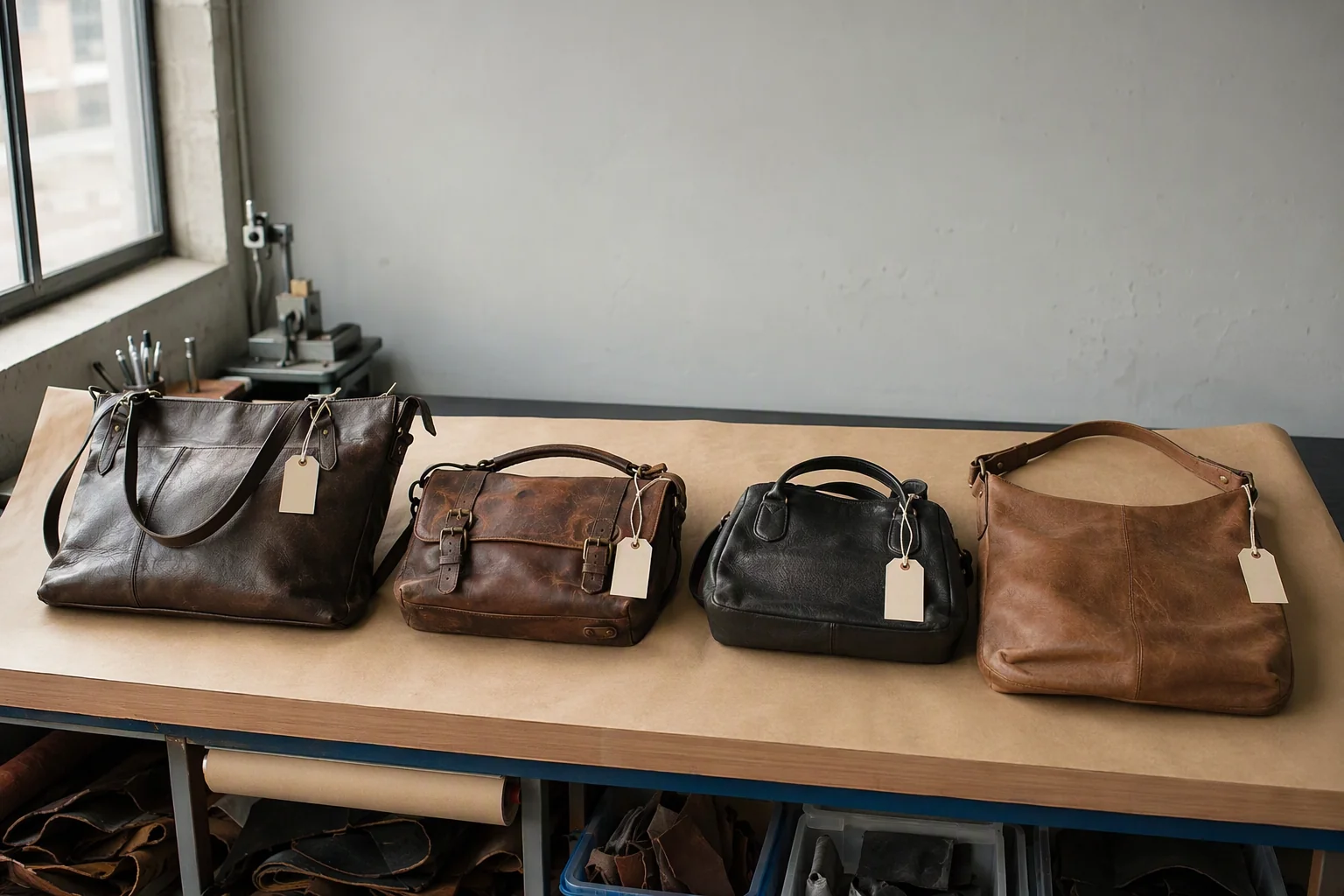
Grading is the first real operation. A simple scale of light wear, repairable damage, and beyond economic repair is enough to start, provided the definitions are written and applied consistently. Grading done by eye without definitions drifts within weeks, and drift makes the programme’s data worthless.
What Can Be Repaired
Stitching, edge finish, linings, zips, hardware, straps and handles are all repairable in principle. So are small leather tears, provided the repair is designed rather than improvised. The limit is usually access: a repair that requires opening a fully stitched bag costs more than the same repair on an open panel.
What Cannot
Cracked and delaminated leather, torn panels in high-stress areas, and damage caused by mould or chemical exposure are generally beyond economic repair. A programme that does not say this clearly will spend its budget on bags it cannot save and disappoint the customers who sent them.
Reverse Logistics From Customer to Bench
Collection Points
Returns can move through post, a retail counter, a partner cobbler or a consolidator. Each adds a handling step and a delay. The choice should follow the geography of the customer base rather than the convenience of the brand’s head office.
Cross-Border Returns
A bag crossing a border in reverse faces the same paperwork as a new one, plus the question of whether it is a return, a repair or an import. Duty and documentation can exceed the repair cost, which is why regional benches usually beat a single central one.
Cleaning and Quarantine
Bags arrive dirty, sometimes damp, occasionally infested. A receiving step that inspects, cleans and quarantines protects the bench, the staff and the stock. Skipping it transfers a small cost into a large one the first time mould enters a storage room.
Repair Operations on a Factory Floor
The Repair Cell
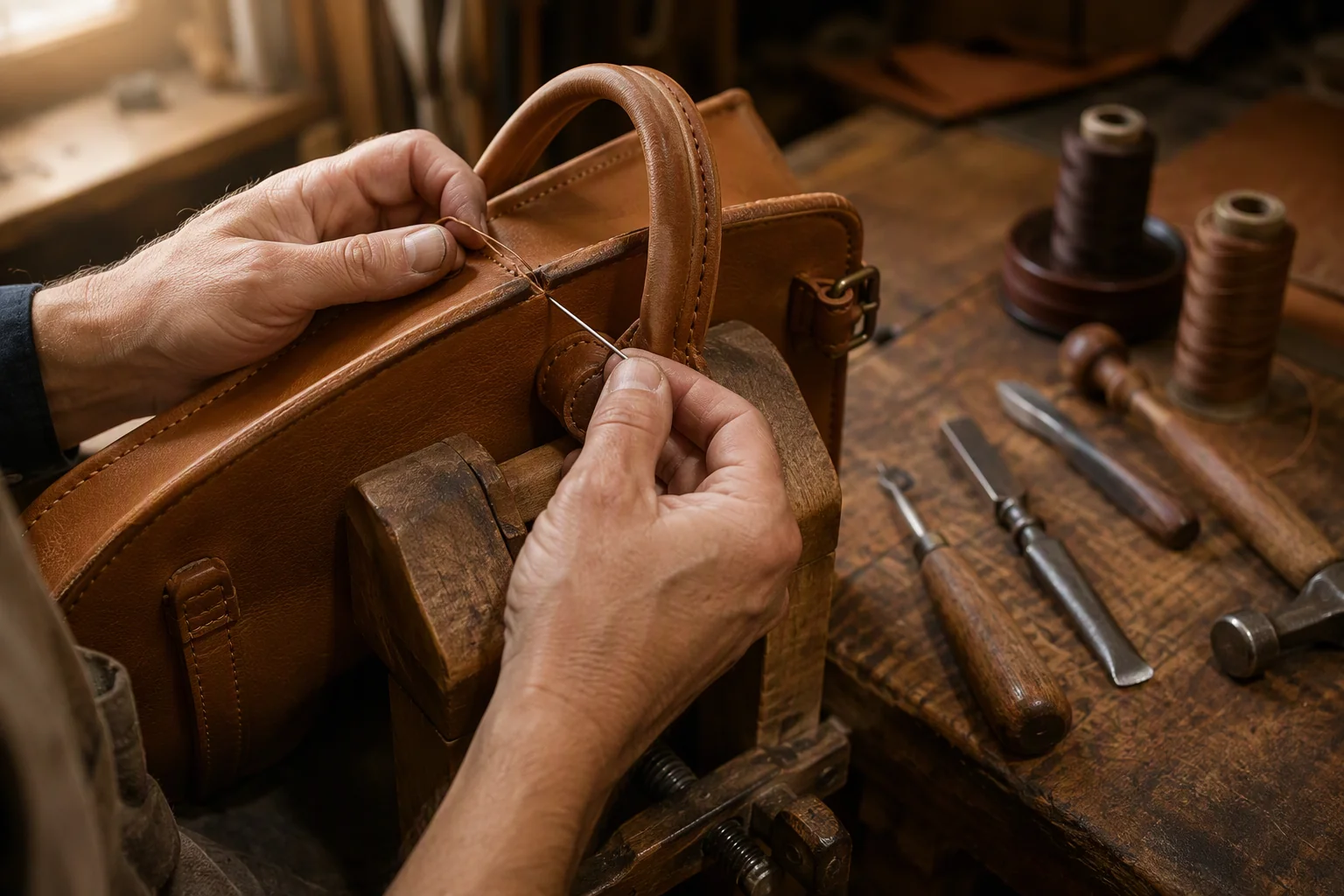
A repair cell needs a bench, a stitching machine, hand tools, a light, a parts bin and space to hold bags in progress. In a busy plant it should be physically separate from production, or it will be absorbed by it. The most common failure is a repair area that exists on paper and disappears when orders peak.
Skills and Staffing
Repair demands a different temperament from production: diagnosis, patience with one-off problems, and willingness to work on a bag with no pattern. The best repairer is often an experienced sample-maker rather than the fastest line operator.
Queue Management and Turnaround
A queue that grows faster than it clears destroys trust faster than a refusal. Publishing a realistic turnaround, and refusing work that cannot be met, is better for the programme than accepting everything and returning bags late.
Storage, Humidity and Returned Stock
Holding Bags Waiting for Parts
A bag awaiting a component occupies space for weeks. In a humid climate, that bag is also exposed to the conditions leather tolerates least. Storage for returned goods should be dry, ventilated, off the floor and away from exterior walls.
Marking and Identification
Every bag in the system needs a reference that survives handling without damaging the leather. Tags on strings, labels inside a pocket and a photograph on receipt all achieve this. Writing a job number on a lining with permanent marker does not.
Insurance on Stock
Ownership of a customer’s bag creates a liability that most factories do not carry by default. Where a programme stores customer property, the insurance question should be answered before the first bag arrives rather than after the first loss.
Customer Communication Through a Repair
The Diagnosis Message
The first message sets the programme’s reputation. It should say what was found, what can be done, what it costs and when it will return. A message that says only “we received your bag” wastes the one moment when the customer is paying full attention.
When the Answer Is No
Declining a repair is a service, provided the reason is specific and the alternatives are named. A customer told that a panel cannot be saved, and offered a discount on a replacement, is more likely to return than one who receives a vague refusal weeks later.
Returning the Bag
Packing matters more on the way back than on the way out, because the customer is now judging the whole transaction. A bag that arrives repaired but creased in transit reads as a failed repair, not a logistics problem.
Spare Parts and the Design Decisions Behind Them
Parts are the hidden constraint. A repair is only possible if the component exists, and components stop existing when a supplier changes a range or a tannery discontinues a shade.
| Component | Repair frequency | Design decision that helps |
|---|---|---|
| Zips and sliders | High | Standardise on one family across styles |
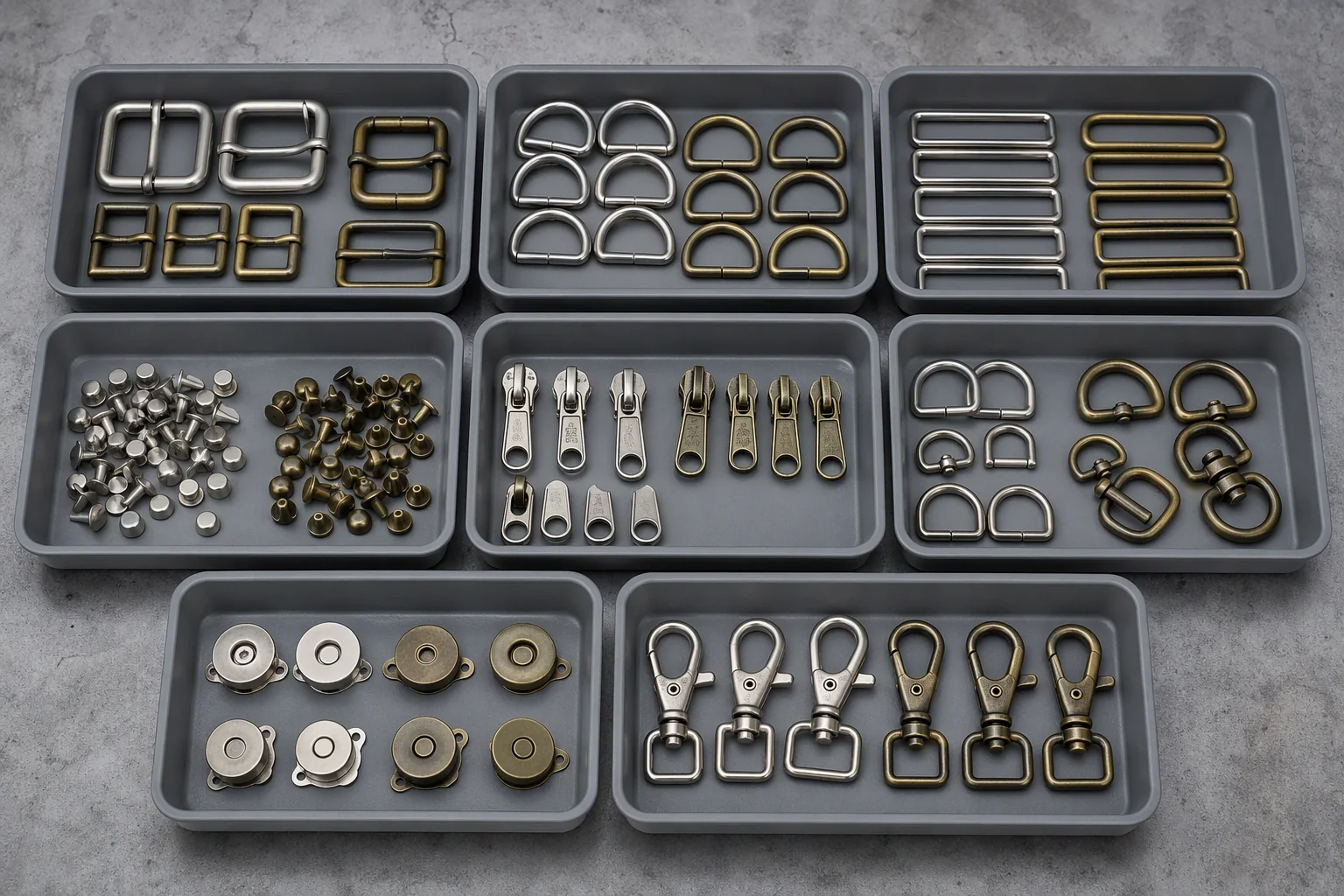
| Buckles and rings | Medium | Hold a service stock at launch |
| Handle and strap leather | High | Reserve matching leather from the production lot |
| Linings | Medium | Use a lining that remains available |
| Thread | Low but critical | Record the exact ticket number used |
| Feet and studs | Medium | Choose a shape with a long production life |
Hardware Standardisation
A brand that uses twelve zip types across twenty styles has twelve service lines to hold. Reducing that number is a design decision with a service consequence, and it costs nothing at the drawing stage.
Leather Availability Over Time
Leather is the part that cannot be re-ordered years later. Reserving a quantity of the production lot for service is the only reliable answer, and it has to be decided when the order is placed rather than when the first repair arrives.
Linings and Thread
Linings are replaced often, so a lining that stays in a supplier’s range for years is worth more than one that matches a season. Thread should be recorded by ticket number, because a near-match is visible on a repaired seam.
Designing a Bag That Can Be Repaired
Access Rather Than Accessories
A repair is a question of access. Bags designed with an open lining seam, a removable base board and a serviceable strap attachment cost a fraction to repair compared with bags that must be opened through the main construction.
Stitched Rather Than Bonded
Adhesive construction resists disassembly, and heat-fused edges cannot be reworked without visible damage. Stitched construction allows a seam to be opened and closed again, which is the entire premise of a repair programme.
Reversible Fastenings
Screwed hardware, snap-in feet and clipped rings can be replaced with hand tools. Riveted and crimped components can be replaced too, but only with the matching tool and a higher risk of marking the leather. The choice is made at the design stage and paid for at the bench.
Working With the Factory on Repairs
A Service Rate
Where a factory repairs for a brand, the rate should cover labour, handling and administration rather than bench time alone. A rate built on bench time alone makes every repair look profitable and the programme look unprofitable, which is a confusing combination for both sides.
Capacity in a Peak Season
Repair capacity disappears when production peaks, unless it is protected. The practical arrangement is a fixed weekly slot in the repair cell, agreed in advance, and honoured even when the line is busy.
Who Holds the Parts
Parts can sit at the factory, at the brand’s warehouse or at a regional partner. Each location implies a different lead time and a different owner for reordering. The important point is that one party is named, because parts held by nobody are the most common cause of a two-month repair.
The Economics of a Repair Bench
Labour and Handling
Handling usually costs more than the repair. Receiving, grading, cleaning, quoting, packing and shipping are all labour, and they occur whether the repair takes ten minutes or two hours. Programmes that price only the bench time underprice themselves.
Parts and Freight
Parts are cheap individually and expensive in aggregate once minimum order quantities and freight are included. Freight in both directions can exceed the part value on a low-cost bag, which is why the programme’s economics depend on the bag’s own value.
Pricing the Service
A repair service can be free, charged at cost, or charged at a margin. Free service is a marketing expense and should be budgeted as one. Charged service that covers handling but not overhead is a slow subsidy that nobody notices until the year ends.
Where the Loss Sits
Losses concentrate in three places: bags that arrive unrepairable, repairs that cost more than quoted, and returns whose shipping exceeded the estimate. Naming these three in the internal budget makes the programme honest and keeps it alive.
What Resale Does to the Programme
Refurbish and Resell
Refurbishing a returned bag and reselling it recovers value but creates a second-hand channel with its own pricing, photography and customer expectations. It also requires a grading standard strict enough that a buyer receives what the listing promised.
Authentication
Where a brand resells its own returns, authentication is simple because the goods came back through its own route. Where it accepts bags from other sources, authentication becomes a specialist function and a reputational risk that most programmes are not equipped for.
Effect on New Sales
Resale cannibalises some new sales and expands access for others. The honest position is that the effect is uncertain and small at modest volumes, and that it should be measured rather than argued. A brand that refuses resale for this reason usually has a bigger problem with its price architecture.
Warranty, Guarantee and Programme Boundaries
What Warranty Covers
A warranty covers manufacturing defect for a defined period. That is a narrow, defensible promise: a seam that fails, a rivet that pulls through, a zip that breaks under normal use. It is not a promise that the bag will remain new.
What It Should Not
Wear, colour change, creasing and the effects of neglect are not defects, and a programme that repairs them for free teaches customers that the product is fragile. Boundaries protect both the budget and the product’s reputation.
Language That Survives
Terms such as “reasonable care” and “normal use” survive scrutiny better than promises of durability for a number of years. Where a period is stated, it should be one the factory can actually honour with the parts and labour it has.
Quality Feedback: The Real Return
Failure Patterns
Repairs are a sample of how the product fails in use, collected at the brand’s own expense. A repair log with component, failure mode and use duration is a data set most brands pay consultants to obtain.
Feeding Back to Production
The value is realised only if the log reaches the people who specify and make the bag. A monthly summary of the top three failure modes, sent to design and to the factory, closes the loop that a satisfaction survey never closes.
Supplier Consequences
Where a component fails repeatedly, the log becomes the evidence for a supplier conversation. That conversation is far easier with counts than with impressions, and it improves the next order rather than the last one.
Environmental Claims
What a Repair Avoids
A repair avoids the material and processing of a new bag, which is the larger part of a bag’s environmental burden. That is a defensible statement when expressed as avoided production rather than as a precise saving.
What a Take-Back Does Not
Collecting a bag does not by itself reduce anything. If the bag is stored, shipped long distances or landfilled, the collection may have added impact. A programme’s claim should describe the destination, not the gesture.
Keeping Claims Defensible
Avoid percentages that cannot be traced, and describe the mechanism instead: how many bags were repaired, how many returned to use, what happened to the rest. Mechanisms are checkable. Percentages without a method are not.
Measuring Whether It Works
Five numbers are enough to run the programme and to report it honestly.
| Metric | Definition | What good looks like |
|---|---|---|
| Repair rate | Bags repaired ÷ bags received | High, with a stable grading standard |
| First-time fix | Repairs completed without rework | Rising over the first year |
| Turnaround | Days from receipt to dispatch | Stable and published |
| Cost per repair | Total cost ÷ repairs completed | Falling as the bench matures |
| Return to use | Bags back with owners ÷ received | The number that matters most |
Benchmarks Are Internal
Published industry benchmarks for repair rates rarely survive contact with a specific product mix. The useful comparison is a brand against its own previous quarter, on a consistent grading standard.
Reporting
Report received, repaired, replaced and retired, with the period and the definition of each. A programme that reports only the repaired number is reporting its best case rather than its performance.
Small Brand Versus Large Brand
Starting With Repair Only
A small brand should start with repair, run it for a year, and learn the failure patterns before accepting a single returned bag. The data from that year is what makes a take-back scheme affordable later.
Outsourcing to the Factory
Most brands outsource repair to the factory that made the bag, at cost or at a service rate. This works when the factory holds parts and when volumes justify a dedicated bench. It fails when repair competes with production and loses.
Regional Service Partners
Cobblers and leather workshops can handle many repairs closer to the customer. The requirement is a standard, a parts kit and a price list, plus a quality check on the first batch from each partner.
Insurance, Liability and Lost Parcels
Who Owns the Bag in Transit
Ownership determines who bears a loss. A bag in transit under a repair programme is either the customer’s property being handled or the brand’s property after transfer, and the programme documents should say which.
Damage During Repair
A bag damaged on the bench is the programme’s liability. A written note at receiving, with photographs, protects both sides and prevents the argument that arises months later.
Writing the Terms
Terms that fit on one page get read. Terms that run to eight pages get accepted without reading and disputed later. The essential clauses are ownership, liability, turnaround, price and what happens to unrepairable goods.
Setting Up a Repair Bench From Scratch
The list below is what a bench needs on day one. Everything on it can be bought or borrowed, which is why the barrier to starting is much lower than most brands assume.
- A bench with a vice and good task lighting
- One industrial stitching machine, serviced
- Hand tools: awls, needles, edge beveler, skiver, hammer, pliers
- A stitching pony or clamp for handles and straps
- Thread in the recorded tickets and a small lining stock
- A parts bin with the ten most common components
- A scale, a camera and a grading sheet
- Packing materials and a courier account
Equipment List
Nothing on that list is specialised except the stitching machine and the pony. A bench that starts with a borrowed corner of a sample room and grows into its own space is more likely to survive than one that waits for a dedicated room.
First Hundred Repairs
The first hundred repairs teach more than any plan. They reveal which components fail, which styles come back, how long handling really takes and where the quoting is wrong. Recording them properly is the foundation of everything that follows.
When to Add a Second Bench
A second bench is justified when the queue is consistently longer than the published turnaround, not when it is occasionally busy. Adding capacity for a seasonal spike leaves a bench idle for the rest of the year.
What Repair Data Tells You About Design
Component Ranking
Sorting failures by component produces a ranking that is stable across most leather bag ranges: zips, handle attachments, linings and edge finish at the top, structure and panels at the bottom. The ranking is a design agenda written by customers.
Style-Level Patterns
Some styles fail in specific ways because of their geometry: a heavy tote loads its handle roots, a slim crossbody stresses its strap anchors. Style-level analysis turns an anonymous defect into a specific drawing change.
Design Changes Worth Making
The changes worth making are the cheap ones: a reinforcement behind a handle root, a longer zip tape, a wider seam allowance at a stress point. Each adds a small cost in production and removes a recurring cost in service.
Repair, Replacement and Refund Boundaries
When Replacement Beats Repair
Replacement is correct when the repair would not restore function or would cost more than the item. A bag replaced under warranty should have its fault recorded, because replacement without diagnosis hides a design problem rather than solving it.
When Refund Is Correct
A refund is a commercial remedy rather than a technical one, and it belongs where the product failed to meet its description. Mixing refund decisions into the repair queue slows both and confuses the customer about what the programme is for.
The Grey Zone
Most disputes sit in a grey zone of partial fault: a bag that was overloaded, or one that was cleaned with the wrong product. A written grading standard with photographs resolves most of these before they become conversations, which is a service to everyone involved.
The cheapest repair is the one the design made possible. The second cheapest is the one the customer was told about honestly.
Choosing a Destination for Each Returned Bag
Every returned bag needs a decision, and the decision tree is short. Working through it in a fixed order prevents both sentimentality and waste.
- Can the bag be repaired to a wearable standard within the quote?
- If not, can it be refurbished and sold as a service item with a clear description?
- If not, can usable components be recovered for the parts bin?
- If not, which recycling route accepts the material mix?
- If none, how is it retired and recorded?
The Destination Matrix
A repair returns the bag to its owner. A refurbishment returns it to the market. Dismantling returns components to stock. Recycling returns material to a processor, and retirement returns nothing. Each step down the list recovers less value, which is why the first question is asked first.
What Each Choice Requires
Repair needs a bench and parts. Refurbishment needs a grading standard and a sales channel. Dismantling needs a technician with time and a place to keep recovered parts. Recycling needs a partner who will actually take the material. Retirement needs only a record, and the record is the part most often missing.
A Hierarchy That Survives Scrutiny
Ordering options by recovered value is defensible because it is measurable. A brand can report how many bags took each route, and that report is checkable in a way that a recycling percentage is not.
Common Failure Modes
The Programme Nobody Uses
A programme launched without a route to reach it, or priced above what customers will pay, receives almost no bags and is declared a failure. The usual cause is that nobody tested the customer journey before the announcement.
The Parts That Never Arrive
A repair promised in three weeks becomes three months because a buckle is on backorder. Parts planning, not bench capacity, is the most common operational blocker.
The Repair That Costs More Than the Bag
Without a quoting step, the programme repairs bags whose repair exceeds their value. A quote, and the willingness to decline, is a control rather than a discourtesy.
A One-Page Programme Design
- Scope: which styles, which countries, which period
- Route: how a bag reaches the bench and returns
- Grading: three categories with written definitions
- Parts: what is held, where, and who reorders
- Bench: location, staffing, capacity per week
- Pricing: free, at cost, or charged, and to whom
- Terms: ownership, liability, turnaround, disposal
- Metrics: the five numbers, and who reports them
A programme is defined by what happens to the bag that cannot be repaired. Everything else is a service level.
Frequently Asked Questions
Should a small brand start with take-back or with repair?
Repair. It requires no inventory of used goods, no authentication and no resale channel, and it produces the failure data that makes a later take-back scheme affordable. Most brands that succeed begin with a bench and a parts bin.
How long should a repair take?
Long enough to be honest about parts availability, short enough to be worth the customer’s effort. Two to four weeks is a common range for domestic work; cross-border repairs need more. Publish the number and refuse work that cannot meet it.
Can a factory repair bags it did not make?
It can, but the work is different: no pattern, no matching leather and no known construction. Many factories decline for this reason. Where a brand wants a universal service, it needs a workshop rather than a production line.
How many spare parts should be held?
Enough to cover the expected failure rate over the warranty period, plus a buffer for discontinued components. The right quantity is calculated from the repair log after the first year, not guessed at launch.
Does a repair programme reduce new sales?
It can delay a replacement purchase, and the effect is real but usually small at modest volumes. The counter-effect is that a brand known to repair attracts customers who value longevity. Both should be measured rather than assumed.
What is the biggest cost in a repair programme?
Handling, not bench time. Receiving, grading, cleaning, quoting, packing and shipping occur on every bag regardless of how quick the repair is, and they dominate the cost of low-value items.
Can a take-back scheme be called circular?
Only if the bag returns to use. Collection that ends in storage or disposal is not circular, whatever the scheme is named. Describe the destination rather than the label.
Should repairs be free?
Free repairs within warranty are a cost of quality. Free repairs outside warranty are marketing, and should be budgeted as such rather than absorbed invisibly. Mixing the two makes both unmanageable.
How do we handle a bag that arrives mouldy?
Quarantine it before it enters the bench area, assess whether the leather is sound, and treat or decline. Mould that reaches stored stock becomes a much larger loss than one refused bag.
What records should a repair bench keep?
Style, date received, condition grade, fault, parts used, hours, cost and outcome. Those eight fields support costing, quality feedback and any environmental claim the brand wants to make.
What happens to bags that cannot be repaired?
They are either dismantled for usable components, passed to a recycling route that accepts mixed materials, or retired. The choice should be written into the programme terms so the customer knows before sending the bag.
Conclusion
A take-back or repair programme is a small industrial operation attached to a consumer promise. It works when the promise matches the bench: parts are held, grading is defined, turnaround is published and the bags that cannot be saved are dealt with honestly. It fails when the announcement arrives before the operation, which is the usual order.
For a factory, the useful contribution is not enthusiasm but precision. Which components fail, which can be replaced, what a repair costs in handling and labour, and how long parts will remain available are all questions a factory can answer from its own records. A brand that asks those questions before launch ends up with a programme that survives its second year, which is the only test that matters.
